
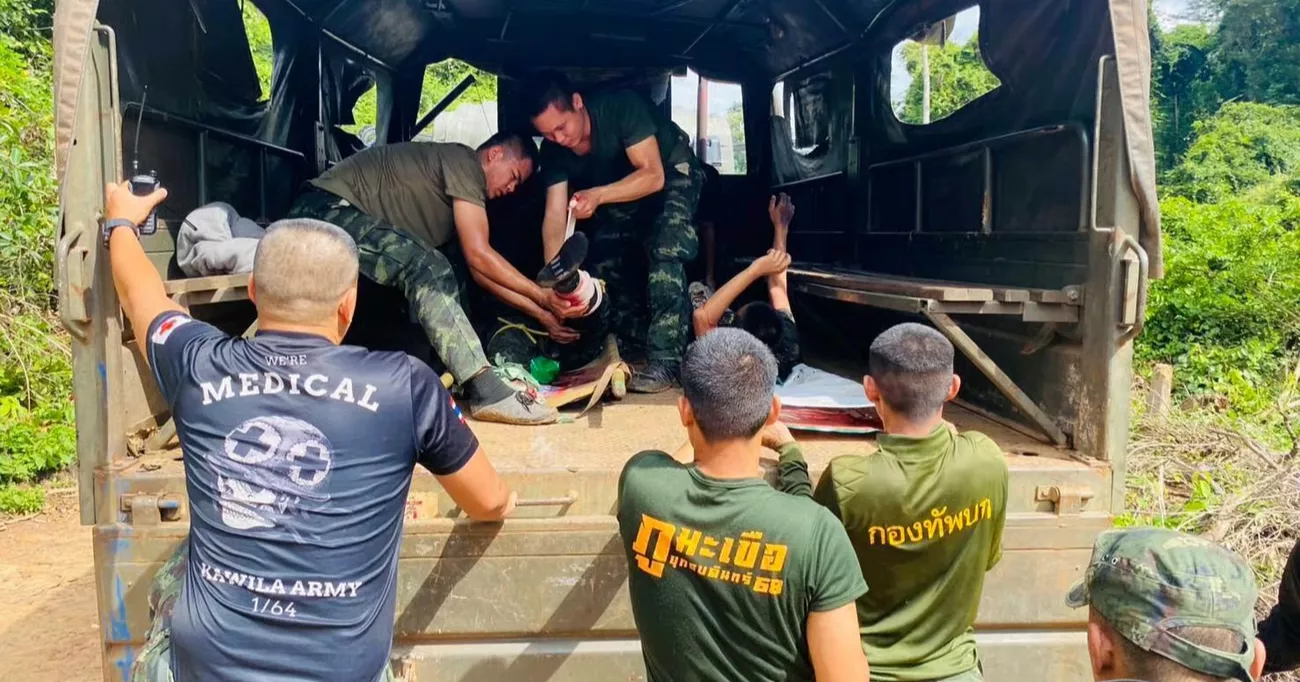
Thailand has indefinitely suspended a U.S.-brokered ceasefire with Cambodia following a land mine explosion on Monday that injured four Thai soldiers along the shared border, officials said Tuesday.
Prime Minister Anutin Charnvirakul visited the injured troops in Sisaket province, where one soldier lost his right foot and three others sustained minor injuries. The Thai army accused Cambodia of planting new mines in violation of the truce signed last month, though Cambodia denied responsibility.
Thai Foreign Ministry spokesperson Nikorndej Balankura described the incident as showing “Cambodia’s utter lack of sincerity” and demanded an apology, a full investigation, and measures to prevent further explosions. Thailand also announced it would indefinitely postpone the return of 18 Cambodian soldiers held since the July conflict. Nikorndej said tensions could be de-escalated if Cambodia sincerely meets these conditions.
Cambodia’s Defense Ministry spokesperson Maly Socheata said the explosion was caused by “remnants of past conflicts” and advised Thai forces to avoid patrolling old minefields. She emphasized that Cambodia remains committed to working with Thailand to ensure peace, stability, and civilian safety along the border.
The ceasefire agreement, initially mediated by Malaysia and later signed under U.S. pressure at the ASEAN summit in October, required both countries to release prisoners and begin removing heavy weapons and land mines. Some progress on arms removal has been reported.
Matthew Wheeler, a Southeast Asia senior analyst with the International Crisis Group, said the truce was “predictably fragile,” noting it was largely concluded to appease former U.S. President Donald Trump on trade and diplomatic optics rather than resolve the underlying conflict. He added that strong nationalist sentiment in Thailand has complicated efforts to adopt a conciliatory approach.
The incident underscores ongoing tensions in the region, as Thailand and Cambodia continue to navigate disputes over border security and the legacy of past conflicts.