asia

Beijing ranks among world’s megacities with high biodiversity
Beijing is now home to more than 7,000 recorded species, ranking its biodiversity among the highest of the world’s major megacities, the city’s ecology and environment bureau said Thursday.
The bureau added that Beijing’s ecological environment has continued to improve steadily during the 2021–2025 period under the 14th Five-Year Plan. A total of 151 types of natural and semi-natural ecosystems and 7,121 species were documented through citywide surveys, demonstrating remarkable outcomes in biodiversity conservation and placing Beijing at the forefront of global megacities in this regard.
By international standards, a city recording 3,000 to 5,000 species is considered to have a high level of biodiversity, while more than 5,000 represents an extremely high level.
Over the past five years, Beijing has continuously advanced biodiversity conservation. The city has enforced a regulation on ecological protection and green development of Beijing's ecological conservation areas and issued its first medium- and long-term plan for biodiversity conservation. A joint meeting system has also been established to facilitate cross-department coordination on key tasks.
The city has designated ecological conservation redlines covering 27.5 percent of its land area and protected natural areas covering about 19 percent, providing effective spatial safeguards for biodiversity.
In urban areas, over 700 nature zones, including biodiversity demonstration zones and ecological conservation communities, have been created to expand habitats and breeding spaces for flora and fauna. Regular inspections of ecological issues are carried out within protected natural areas and ecological redlines, ensuring that identified problems are promptly addressed.
In terms of species and genetic resource conservation, Beijing has strengthened its conservation system centered on botanical gardens, zoos and wildlife rescue centers. The China National Botanical Garden has collected and preserved over 18,000 plant species, while technical systems for the assessment, preservation, breeding and utilization of more than 20 nationally protected wild plant species have been established.
Meanwhile, pilot surveys on traditional knowledge related to biological genetic resources have been conducted in Beijing's Fangshan and Huairou districts, documenting over 700 items of traditional knowledge of biodiversity.
Cao Zhiping, an official at the bureau, said that Beijing's efforts in biodiversity conservation as a megacity have gained international recognition. During the 16th meeting of the Conference of the Parties to the UN Convention on Biological Diversity, Beijing was named a "Biodiversity Charming City," presenting to the international community a model for harmonious coexistence between megacities and biodiversity.
2 months ago

Why is India’s Gen Z rallying behind the ‘Cockroach Janta Party’?
A satirical online political movement dubbed the “Cockroach Janta Party” has gained massive traction across India after controversial remarks by the country’s chief justice comparing some unemployed young people and activists to cockroaches.
The controversy erupted on Friday when Chief Justice Surya Kant, during a Supreme Court hearing, referred to “parasites” attacking the system and remarked that some unemployed youths become activists or social media commentators and begin criticizing institutions.
“There are youngsters like cockroaches, who don’t get any employment or have any place in the profession. Some of them become media, some of them become social media, RTI activists and other activists, and they start attacking everyone,” he said.
The comments triggered widespread criticism, particularly among India’s Gen Z population, many of whom face rising unemployment, inflation and growing social tensions.
Although Justice Kant later clarified that his remarks were aimed at individuals obtaining fraudulent degrees rather than the country’s youth, the explanation did little to quell the backlash online.
Capitalising on the outrage, Abhijeet Dipke, a 30-year-old public relations graduate, posted a tongue-in-cheek message on social media asking what would happen if all “cockroaches” united.
The joke quickly evolved into the “Cockroach Janta Party” — a parody of Prime Minister Narendra Modi’s ruling Bharatiya Janata Party (BJP).
Within days, the movement attracted millions of followers on social media and hundreds of thousands of membership applications.
The party describes itself as “a political front of the youth, by the youth, for the youth” and uses humour and satire to highlight issues such as unemployment, political accountability, media independence and concerns over democratic institutions.
Supporters say the movement reflects growing frustration among young Indians struggling with limited job opportunities despite the country’s economic growth. Official data show graduate unemployment remains significantly higher than the national average, reports Al Jazeera.
Former civil servant Ashish Joshi, who joined the movement, said many Indians feel increasingly hesitant to express dissent and view the satirical campaign as a rare outlet for public frustration.
Prominent lawyer and activist Prashant Bhushan also criticised the chief justice’s remarks, arguing they reflected broader prejudice against young people and activists. He said the popularity of the movement demonstrates a growing demand for accountability and public debate.
Dipke said the party’s branding and manifesto were created within 24 hours using artificial intelligence tools, turning what began as an online joke into a nationwide conversation about youth discontent and political expression.
2 months ago
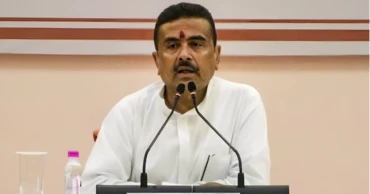
West Bengal transfers land to BSF; Suvendu launches ‘detect, delete, deport’ drive against infiltration
West Bengal Chief Minister Suvendu Adhikari on Wednesday announced a dual initiative aimed at strengthening border security, including the handover of a 27-km land corridor to BSF for pending fencing work and the rollout of a wider “detect, delete and deport” strategy ‘to tackle illegal infiltration’.
Speaking at a press conference at Nabanna in the presence of senior Border Security Force (BSF )officials, Adhikari said the land transfer process would be completed within two weeks, reports PTI.
BSF to gain complete authority over border fencing land in 45 days, says Suvendu at first Cabinet meeting
He described the move as the first step toward developing broader border security infrastructure along the India-Bangladesh border.
During the briefing, he also unveiled a new mechanism under which suspected infiltrators detained by police would be directly transferred to the BSF.
He said individuals belonging to communities outside the ambit of the Citizenship (Amendment) Act (CAA) would be subject to detention and deportation under a system that takes effect immediately.
2 months ago
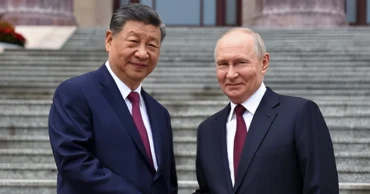
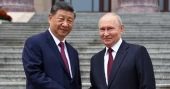
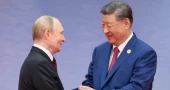
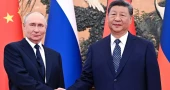
Putin and Xi hail their friendship and growing energy trade
Chinese President Xi Jinping and Russian President Vladimir Putin on Wednesday reaffirmed their close strategic partnership and expanding energy cooperation during talks in Beijing, held days after US President Donald Trump’s visit to China.
The two leaders oversaw the signing of over 40 cooperation agreements covering trade, technology and media exchanges, while also agreeing to extend a friendship treaty originally signed in 2001. Xi described bilateral ties as reaching “the highest level in history.”
Xi wants ‘closer, stronger strategic coordination’ between China and Russia
Putin highlighted energy cooperation as the main driver of economic relations, noting Russia’s continued role as a reliable energy supplier amid the Middle East crisis and China’s position as a major consumer. Xi called for a “complete cessation of hostilities” in the Middle East, saying an early end to the conflict would help stabilize global energy supplies and trade.
China became Russia’s top trading partner after Moscow’s invasion of Ukraine in 2022. Bilateral trade reached about $228 billion in 2025, according to Xinhua. Russian officials said oil exports to China rose 35 percent in the first quarter of 2026.
The two leaders also projected a united stance on global affairs, criticizing unilateralism and emphasizing closer foreign policy coordination. Both praised their personal friendship, with Xi calling Putin his “longtime friend” and Putin referring to Xi as “my dear friend.”
2 months ago

Shanghai restaurant stabbing injures 3, including 2 Japanese nationals
A knife attack at a restaurant in China’s financial hub Shanghai has left three people injured, including two Japanese nationals, the Chinese foreign ministry said Wednesday, describing the incident as isolated.
Foreign ministry spokesperson Guo Jiakun said Chinese authorities are investigating the Tuesday attack and that the suspect has been detained. He added that the accused is believed to have a mental disorder.
Along with the two Japanese citizens, a Chinese national was also injured in the attack and all three were taken to hospital for treatment.
Guo urged media and the public not to speculate about the incident or draw unverified conclusions.
The attack comes at a time of strained relations between China and Japan.
Tensions between the two countries have increased since Japanese Prime Minister Sanae Takaichi said in November that any Chinese military action against Taiwan could prompt a Japanese response. Beijing later imposed diplomatic and economic measures against Tokyo.
In April, the Chinese Embassy in Japan also said it had received threats and accused Japanese authorities of not taking sufficient action despite repeated complaints to police.
Chinese officials, however, stressed that the Shanghai stabbing should not be linked to broader political tensions between the two countries.
2 months ago
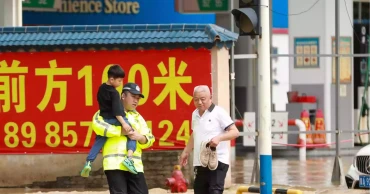
Heavy rain and floods kill at least 12 in China, force thousands to evacuate
Heavy rain and flooding in several parts of China have killed at least 12 people and forced tens of thousands of residents to leave their homes, according to state media.
State broadcaster CCTV reported on Wednesday that five people were killed and 11 others were missing in Shimen County in central China’s Hunan province after intense rainfall triggered severe flooding. Rescue efforts are ongoing.
More than 19,000 people had been moved to safer places by Tuesday evening, according to the state-run Xinhua news agency.
Xinhua said Shimen County received 339 millimetres (13 inches) of rain within 24 hours ending Monday morning. In one town, 240 millimetres (9 inches) of rain fell within just a few hours, setting a new local record.
In neighbouring Hubei province, floodwaters turned streets into rivers. Rescue teams used inflatable boats to reach stranded residents. Some homes were inundated and others collapsed.
Three people were killed and four remained missing there as of Tuesday morning, Xinhua said.
In southwestern Guizhou province, four people died and five others were missing after heavy rain and flooding, CCTV reported.
The flooding damaged houses and roads and disrupted communication services in some areas. More than 3,700 people were evacuated from one affected area, Xinhua said.
Flood-related deaths are common in China during the rainy season. Last July, severe flooding in Beijing killed dozens of people.
In a separate incident, 10 people were killed on Saturday when a pickup truck plunged off a bridge in the southern Guangxi region, Xinhua reported.
2 months ago
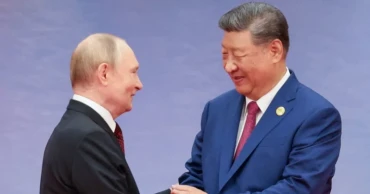
Xi wants ‘closer, stronger strategic coordination’ between China and Russia
Chinese President Xi Jinping has called for “closer and stronger strategic coordination” between China and Russia during a meeting with Russian Foreign Minister Sergey Lavrov last month.
During their meeting on April 15, Xi said the two countries should work together to “firmly defend their legitimate interests and safeguard the unity of Global South countries.”
Although the official Chinese readout of the meeting did not directly mention the ongoing US-Israel war involving Iran, Xi’s remarks appeared to allude to the crisis in the Strait of Hormuz, a key global oil shipping route.
Following the meeting, Lavrov told reporters that Moscow could “compensate” for any energy shortages China may face as shipping through the strait remains disrupted.
#From Al Jazeera
2 months ago
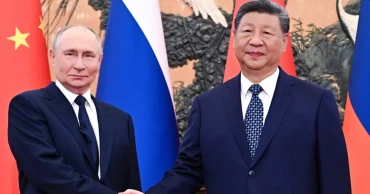
Putin, Xi set for talks in Beijing with focus on trade and global conflicts
Russian President Vladimir Putin and Chinese President Xi Jinping are set to hold talks in Beijing, just days after US President Donald Trump visited China amid the ongoing Iran war.
The meeting comes only a week after Trump’s state visit, making it the first time China has hosted the leaders of both Russia and the United States in the same month outside a multilateral forum.
Putin arrived with a large delegation that is "state-heavy"—comprising energy executives, security officials, and industrial planners—reflecting a logic of "strategic survival under constraint."
Focus on trade and conflictsAccording to officials, the leaders are expected to discuss bilateral relations, trade, energy cooperation, the Israeli-US war on Iran, and the conflict in Ukraine.
Energy ties are likely to be expanded further, while the two countries may reaffirm or slightly raise their trade targets.
Xi will host an official welcoming ceremony for Putin before the two leaders begin formal talks.
After the meeting, they are expected to sign a joint statement and several agreements covering a range of areas.
Putin is also scheduled to meet Chinese Premier Li Qiang to discuss economic cooperation.
The visit coincides with the 25th anniversary of the Treaty of Good-Neighbourliness and Friendly Cooperation between China and Russia.
Trade between the two countries exceeded $240 billion in 2023, with China now purchasing about half of Russia’s crude oil exports. #From TRT World & Agencies
2 months ago

Xi, Putin send messages to mark opening of 10th China-Russia Expo
Chinese President Xi Jinping and Russian President Vladimir Putin on Sunday sent congratulatory messages to mark the opening of the 10th China-Russia Expo in Harbin, the capital of Heilongjiang Province in northeast China.
In his message, Xi said this year marks the 30th anniversary of the China-Russia strategic partnership and the 25th anniversary of the Treaty of Good-Neighborliness and Friendly Cooperation signed by the two countries.
He said cooperation between China and Russia has expanded steadily in many sectors and produced significant results through joint efforts.
Xi expressed hope that the expo would help both countries make better use of their close geographic location and complementary strengths to deepen practical cooperation, boost economic and social development and improve the well-being of their people.
He said the event would also contribute to the long-term development of the China-Russia comprehensive strategic partnership in the new era.
Putin said the expo has become the largest exhibition event between the two countries and serves as an important platform for direct and in-depth dialogue.
He expressed confidence that the event would deliver positive outcomes, open up new opportunities for mutually beneficial cooperation and bring benefits to the people of both countries.
2 months ago
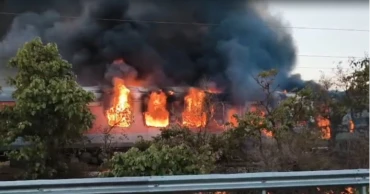
Fire breaks out on Delhi-bound Rajdhani Express in Madhya Pradesh
A massive fire broke out in an air-conditioned coach of a Delhi-bound Rajdhani Express in Ratlam district of Madhya Pradesh this morning, though all passengers were safely rescued and no injuries were reported.
The blaze started around 5:15am in the B-1 coach carrying 68 passengers between Vikramgarh Alot and Luni Richha stations, railway officials said.
Locked terrace door traps residents in deadly Delhi building fire
The affected coach was immediately detached from the train rake, while the overhead electric supply (OHE) was switched off as a precaution. The fire also damaged the second luggage-cum-guard van (SLR) attached behind the coach. The cause of the fire is under investigation.
Visuals showed thick black smoke rising from the detached coach, and flames also spread to nearby trees along the railway track.
All passengers were evacuated safely and shifted to other coaches to continue their journey up to Kota in Rajasthan.
West Central Railway chief public relations officer, Harshit Shrivastava said the train resumed its journey around 9:45am after removing the affected coaches. An additional coach will be attached at Kota to restore full capacity.
Train number 12431 Rajdhani Express had left Thiruvananthapuram on Friday and was scheduled to reach Hazrat Nizamuddin station in Delhi at 12:30pm today. It had covered around 2,500 kilometres and was about 650 kilometres from Delhi when the fire broke out.
The incident disrupted rail traffic, affecting at least 18 trains, several of which were delayed or halted at stations.
With inputs from NDTV
2 months ago