Africa
Paramilitary attack kills at least 14 in central Sudan
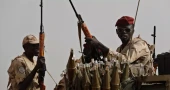
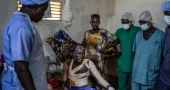
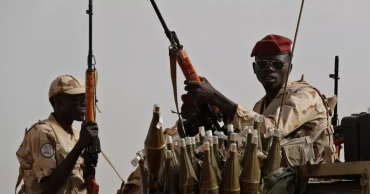
At least 14 people, including five children and two women, were killed in an attack by Sudanese paramilitary forces and allied rebels in the central Kordofan region, a medical group said on Sunday.
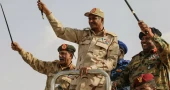
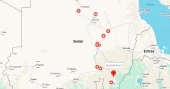
The Rapid Support Forces (RSF), along with fighters from the Sudan People’s Liberation Movement-North, launched a major assault on Saturday on Dilling, the capital of South Kordofan. Sudan’s military said it repelled the attack after recently breaking an RSF siege on the শহর.
According to the Sudan Doctors Network, the attackers shelled residential areas during the offensive, which lasted several hours and left at least 23 others injured, including seven children.
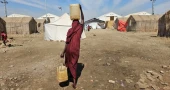
Dilling had endured severe shortages resembling famine conditions during more than two years under RSF siege, when supply routes were cut and the area was frequently bombed. The military lifted the siege earlier this year.
The doctors’ group warned the situation could deteriorate further, drawing parallels with the Darfur city of El-Fasher, where intense violence erupted after an RSF offensive in October. A UN-commissioned report said the attack there bore signs consistent with genocide.
The conflict in Sudan began in April 2023 following a power struggle between the military and the RSF, which escalated into full-scale fighting in the capital Khartoum.
According to UN estimates, more than 40,000 people have been killed, though aid agencies believe the actual toll could be significantly higher.
Recent clashes have been concentrated in Darfur and Kordofan, where frequent drone strikes have caused heavy civilian casualties. The UN Human Rights Office said more than 500 civilians have been killed in drone attacks this year alone, as of mid-March.
The war has been marked by widespread abuses, including mass killings and sexual violence, which are under investigation by the International Criminal Court as possible war crimes and crimes against humanity.
4 months ago
WHO says 64 killed in attack on Sudan hospital
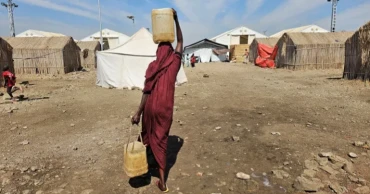
At least 64 people, including 13 children, were killed in an attack on a hospital in Sudan’s Darfur region, the World Health Organization (WHO) said.
WHO chief Tedros Adhanom Ghebreyesus said the strike targeted Al Deain Teaching Hospital in East Darfur state on Friday night, killing patients and medical staff, including two nurses and a doctor.
He added that 89 others, including eight health workers, were injured in the attack.
The assault severely damaged key departments of the hospital, including paediatrics, maternity and emergency units, rendering the facility non-functional and cutting off critical healthcare services.
The WHO said the latest incident has pushed the total number of deaths from attacks on health facilities during Sudan’s ongoing conflict to more than 2,000.
No group has claimed responsibility for the attack.
Sudan has been engulfed in conflict since April 2023 between the army and the paramilitary Rapid Support Forces (RSF), triggering a major humanitarian crisis with tens of thousands killed and millions displaced.
The WHO called for an immediate de-escalation and protection of civilians, health workers and humanitarian personnel.
With inputs from ALJAZEERA
4 months ago
40 students hospitalized in South Africa after suspected food poisoning
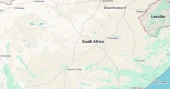
A total of 40 students from Ekwazini Secondary School in South Africa's Mpumalanga province were hospitalized on Tuesday following a suspected food poisoning incident, local authorities said Wednesday.
The Mpumalanga Provincial Department of Education said that three students initially reported severe stomach cramps after consuming snacks.
As more learners presented similar symptoms, the number of those transported to a nearby hospital for assessment rose to 40, the department said, adding that all affected students are in a stable, non-critical condition and have since been discharged.
Health inspectors have been deployed to investigate the cause of the outbreak. Samples of the suspected snacks, other food items and local water sources have been sent for laboratory testing to determine the exact cause of the illness.
This incident followed a series of similar cases across South Africa. Media reports said that dozens of students have died or been hospitalized in recent years due to suspected food poisoning linked to snacks purchased from local informal shops, leading the government to previously declare such outbreaks as "a national security threat."
4 months ago
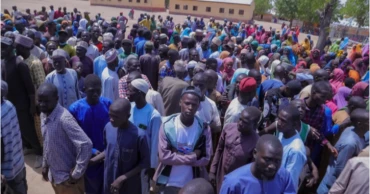
Islamic militants kidnap more than 300 in Nigeria
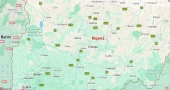
Islamic militants attacked a town in northeastern Nigeria on Friday, abducting more than 300 people, including women and children, local officials said.
The attack occurred in Ngoshe town in Borno state, according to Bulama Sawa, an official from the Gwoza area. He told The Associated Press that the assault was likely carried out in retaliation for a recent military operation that killed three commanders of the militant group Boko Haram.
No group immediately claimed responsibility for the attack. Nigeria is facing a complex security crisis involving multiple armed groups. The United States has also deployed troops to the West African country to advise and support its military in tackling the growing insecurity.
50 killed, many abducted in armed attack in Nigeria
Separate attacks were also reported earlier this week in the communities of Konduga, Marte, Jakana and Mainok between Wednesday and early Friday, a military spokesperson said.
Spokesperson Uba Sani said troops managed to repel the attacks in those communities, but noted that “a number of brave soldiers paid the supreme price in the line of duty,” including a senior officer. He did not provide details on the number of military casualties.
Sani described the incidents as “failed attacks” and said they reflected the “increasing desperation of terrorist elements under sustained operational pressure” from the military.
Ulf Laessing of the Konrad Adenauer Foundation said the attack on Ngoshe highlighted the Nigerian army’s challenges in controlling vast areas where jihadist groups operate. He said militants are also benefiting from stronger cross-border cooperation and the use of drones to identify targets before launching attacks.
“The army is fighting a ghost — fighters descending with motorbikes on villages and disappearing into the bush before the army can respond in time,” Laessing said.
Among the most prominent militant groups operating in Nigeria are Boko Haram and its breakaway faction, the Islamic State West Africa Province, which is affiliated with the Islamic State group. Other groups include the IS-linked Lakurawa as well as criminal “bandit” groups known for kidnapping for ransom and illegal mining.
The security crisis has recently expanded with the involvement of militants from the neighbouring Sahel region, including Jama’at Nusrat al-Islam wal-Muslimin, which claimed its first attack inside Nigeria last year.
According to United Nations data, several thousand people have been killed in the violence in Nigeria. Analysts say the government is still not doing enough to protect civilians.
4 months ago
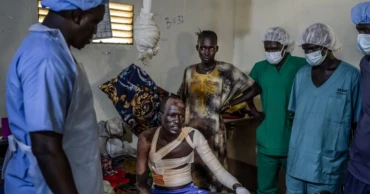
UN warns South Sudan may slide back into full war
The United Nations has warned that South Sudan is at serious risk of returning to full-scale war unless urgent action is taken to end violence, abuses and long-standing impunity.
The warning came in a new report released on Friday by the UN Commission on Human Rights in South Sudan at a session of the Human Rights Council in Geneva.
The report said civilians are facing grave abuses, including killings, sexual violence, arbitrary detention, forced displacement and denial of basic needs, as fighting intensifies across the country. It described the humanitarian situation as worsening in one of the world’s poorest nations.
The commission said rising risks of mass atrocities and the collapse of political safeguards make urgent preventive action necessary. It urged regional and international actors to apply diplomatic pressure, impose sanctions and strictly enforce the UN arms embargo until clear progress is made on human rights and accountability.
According to the report, actions by political and military leaders have weakened the 2018 peace agreement. These include the detention of opposition figures, erosion of power-sharing arrangements and attempts to alter the terms of the peace deal.
The report highlighted the arrest and removal of First Vice President Riek Machar last year, saying it undermined key guarantees of the peace agreement and triggered armed clashes on a scale not seen in nearly a decade.
South Sudan plunged into civil war in 2013, two years after independence, following a power struggle between President Salva Kiir and Machar. The conflict killed an estimated 400,000 people before a fragile peace was reached in 2018.
The UN report also noted a dangerous shift in military tactics, including air strikes on areas populated by civilians. It raised concerns over the deployment of forces from neighbouring Uganda, saying their involvement may have violated the UN arms embargo.
Sexual violence remains widespread and systematic, the report said. Women and girls continue to face constant risk, with rape and other abuses used as tools to terrorise communities, force displacement and break social bonds.
The commission said senior commanders and political leaders are rarely held accountable for serious crimes, allowing a culture of impunity to persist. It also noted shrinking civic space, with journalists, activists and opposition members facing harassment, surveillance and detention.
The UN urged the government to stop violations by its forces, free those held without cause and guarantee basic freedoms. It also called for the immediate establishment of long-delayed transitional justice mechanisms to prosecute war crimes committed since 2013.
Fighting has intensified in recent months, especially in Jonglei state, where opposition forces seized several government positions from December. In response, the army launched a major military operation in late January, ordering civilians and aid groups to leave parts of the area.
The United Nations said earlier this month that about 280,000 people have been displaced since late December. More than 235,000 of them are from Jonglei alone. UNICEF has warned that over 450,000 children are at risk of acute malnutrition due to displacement and disruption of health services.
Nearly 10 million people across South Sudan now need life-saving humanitarian assistance. Aid operations have been badly affected by violence and looting, while access to vulnerable communities remains restricted.
The report said civilians continue to bear the heaviest cost of the conflict, as violence, displacement and abuse deepen an already severe humanitarian crisis.
With inputs from ALJAZEERA
5 months ago
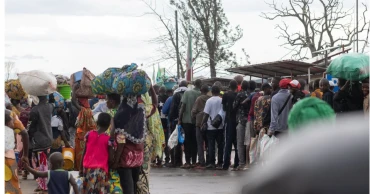
171 bodies found in mass graves in eastern Congo
Congolese authorities and a civil society group said Thursday that mass graves were found in part of eastern Congo that the M23 rebel group has recently withdrawn from, as fighting in the region escalates despite a U.S.-mediated peace deal.
The governor of South-Kivu province, Jean-Jacques Purusi, said authorities found two mass graves with at least 171 dead bodies in the Kiromoni and Kavimvira neighborhoods on the outskirts of the eastern city of Uvira.
“At this stage, we have identified two sites: one mass grave containing approximately 30 bodies in Kiromoni, not far from the Burundian border on the Congolese side, and another in Kavimvira where 141 bodies were found,” Purusi told The Associated Press over the phone.
The Associated Press could not independently verify the claim. M23’s spokesperson did not immediately respond to a request for comment.
The Executive Secretariat of the Local Network for the Protection of Civilians, a civil society group in the region, said Thursday it wanted to visit the mass graves but was prevented from doing so by the Congolese military.
Information gathered so far indicates that the victims were killed by M23 rebels, said Yves Ramadhani, the group's vice president.
The governor and the civil society group alleged that the rebels killed the individuals because they suspected them of belonging to the Congolese army or a pro-government militia.
Both the Congolese military and M23 have been accused of extrajudicial killings and abuses by rights groups.
M23 had taken control of Uvira in December following a rapid offensive. More than 1,500 people were killed and about 300,000 displaced, according to regional authorities.
The rebel group later announced it would withdraw from the city, in what it said was a “unilateral trust-building measure” requested by the U.S. to facilitate the peace process.
Congo, the U.S. and U.N. experts accuse Rwanda of backing M23, which has grown from hundreds of members in 2021 to around 6,500 fighters, according to the U.N.
More than 100 armed groups are vying for a foothold in mineral-rich eastern Congo, near the border with Rwanda, most prominently M23. The conflict has created one of the world’s most significant humanitarian crises, with more than 7 million people displaced, according to the U.N. agency for refugees.
Despite the signing of a deal between the Congolese and Rwandan governments brokered by the U.S. and ongoing negotiations between rebels and Congo, fighting continues on several fronts in eastern Congo, claiming numerous civilian and military casualties.
5 months ago
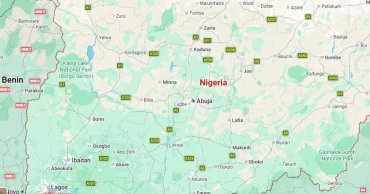
50 killed, many abducted in armed attack in Nigeria
At least 50 people were killed and a significant number of others abducted after a group of armed men launched a brutal attack on a village in Nigeria's northwestern state of Zamfara, a local lawmaker said.
The raid on Tungan Dutse village, located in the Bukkuyum Local Government Area, reportedly began Thursday evening and continued into Friday morning, Hamisu Faru, a lawmaker representing the affected area at the Zamfara State House of Assembly, told local media on Saturday.
The attackers arrived on more than 150 motorcycles, moving through the community, shooting indiscriminately at residents and razing some buildings, Faru said, citing a preliminary assessment of the incident.
"The attackers invaded the village in large numbers, leaving at least 50 people dead," the local official said, noting that the exact number of people abducted during the attack remained unclear, as many fled into nearby bushes for safety.
The victims of the attack included traders and farmers, with many of the abducted reported to be women and children, according to Faru.
No security agency has so far confirmed the incident.
5 months ago
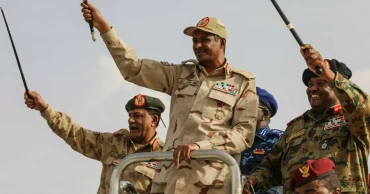
At least 6,000 killed over 3 days during RSF attack on Sudan’s el-Fasher, UN says
More than 6,000 people were killed during a three-day offensive by Sudan’s paramilitary Rapid Support Forces (RSF) on the Darfur city of El-Fasher in late October, the United Nations said in a report released Friday.
The UN Human Rights Office described the assault as a wave of violence “shocking in its scale and brutality,” citing widespread killings, executions, sexual violence, abductions, torture and enforced disappearances that may amount to war crimes and crimes against humanity.
According to the report, RSF fighters and allied Arab militias overran El-Fasher — the Sudanese army’s last major stronghold in Darfur — on Oct. 26 after an 18-month siege. At least 4,400 people were killed inside the city between Oct. 25 and Oct. 27, while more than 1,600 others died as they tried to flee.
The findings were based on interviews with 140 victims and witnesses, supported by satellite imagery and video analysis. The report warned the actual toll was likely “significantly higher.”
It said around 500 people were killed when heavy weapons were fired at civilians sheltering in a university dormitory, while about 600 others — including dozens of children — were executed in university facilities on the same day.
The report also cited separate attacks, including the killing of at least 460 people when RSF fighters stormed a maternity hospital on Oct. 28, and about 300 deaths in shelling and drone strikes on a displaced persons’ camp earlier that week.
Sexual violence was described as widespread, with women and girls from non-Arab communities particularly targeted. Survivors told investigators that rape and gang rape were systematically used as a weapon of war.
Thousands were reportedly abducted or detained in facilities run by the RSF, including a children’s hospital converted into a detention center, with many people still missing.
UN rights chief Volker Türk called for accountability, warning that continued impunity risks fueling further cycles of violence in Sudan’s ongoing conflict, which began in April 2023 and has triggered one of the world’s worst humanitarian crises.
5 months ago
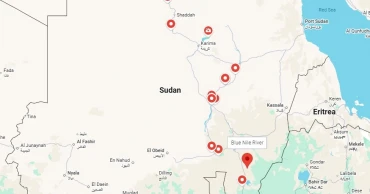
15 dead after passenger ferry capsizes on Nile River in Sudan
A passenger ferry capsized on the Nile River in Sudan on Wednesday, leaving at least 15 people dead, a medical group said.
The ferry, with at least 27 people on board, including women and children, sank in the Shendi district in northern Nile River province, said the Sudan Doctors Network, a medial group that tracks the country’s ongoing war.
The group said at least 15 bodies have been recovered, while residents and rescue teams were still searching for at least six other people. Six people survived the tragedy, it said.
The group urged authorities to deploy specialized rescue teams and equipment to accelerate search efforts.
Such tragedies on overloaded boats are not uncommon on waterways in the African nation, where safety measures are often disregarded.
5 months ago
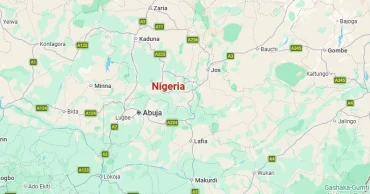
30 killed in Nigeria road accident
At least 30 people have been killed and an unspecified number injured in a road accident in northwest Nigeria, authorities said.
The accident occurred on Sunday in Kwanar Barde in the Gezawa area of Kano State and was caused by “reckless driving” by the driver of a truck-trailer, Gov. Abba Yusuf said in a statement. He did not specify what other vehicles were involved.
Yusuf described the accident as “heartbreaking and a great loss” to the affected families and the state. He did not provide further details about the accident.
Africa’s most populous country recorded 5,421 deaths in 9,570 road accidents in 2024, according to data by the country’s Federal Road Safety Corps.
Experts say a combination of factors including a network of bad roads, lax enforcement of traffic laws and indiscipline by some drivers produce the grim statistics.
In December, boxing heavyweight champion Anthony Joshua was in a deadly car crash that injured him and killed Sina Ghami and Latif “Latz” Ayodele, two of his friends, in southwest Nigeria.
Adeniyi Mobolaji Kayode, Joshua’s driver, was charged with dangerous and reckless driving and his trial is scheduled to begin later this month.
Africa has the highest road fatality rate in the world despite having only about 3% of the world’s vehicles, mainly due to weak enforcement of road laws, poor infrastructure and widespread use of unsafe transport.
5 months ago