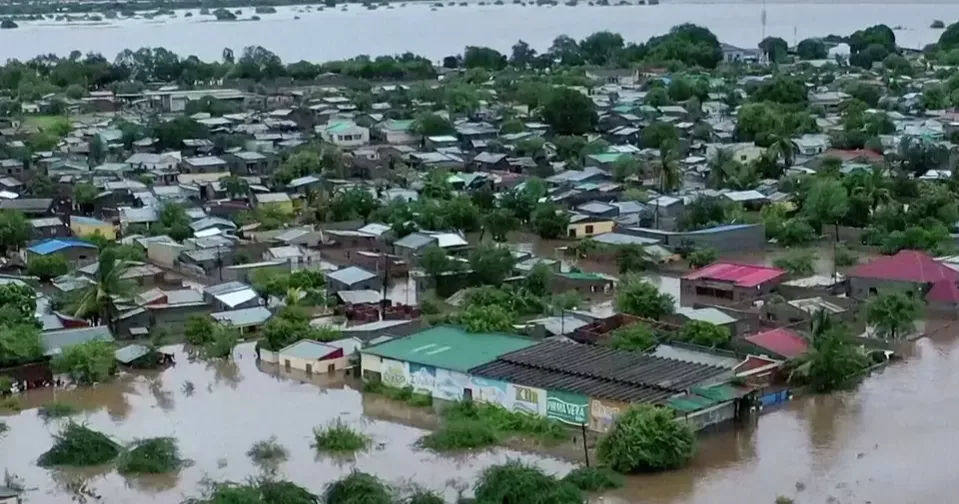
Torrential rains and widespread flooding have claimed more than 100 lives across South Africa, Mozambique, and Zimbabwe, with authorities warning of more severe weather in southern Africa.
In South Africa, at least 19 people have died in the northern Limpopo and Mpumalanga provinces after heavy rains last month triggered severe floods. Helicopters evacuated tourists and staff from flooded camps in Kruger National Park, which remains closed due to submerged roads and bridges, the national parks agency said.
Mozambique’s Institute for Disaster Management and Risk Reduction reported 103 deaths during an unusually intense rainy season since late last year. Causes included lightning strikes, drowning, infrastructure collapse, and cholera. Central and southern regions have been hardest hit, with more than 200,000 people affected and thousands of homes damaged, the World Food Program said.
Zimbabwe has recorded 70 deaths and destruction of over 1,000 homes due to heavy rains since early January, while roads, schools, and bridges have collapsed, the country’s disaster management agency reported.
Floods have also affected Madagascar, Malawi, and Zambia. In Madagascar, 11 people have died in floods since late November. The U.S. Famine Early Warning System noted that flooding is ongoing or expected in at least seven southern African countries, possibly linked to the La Niña phenomenon.
South African President Cyril Ramaphosa visited flood-hit areas in Limpopo on Thursday, reporting that one district had received roughly 400 millimeters of rain in under a week. “There are 36 houses that have just been wiped away … everything is gone — roofs, walls, fences,” he said.
The South African Weather Service issued a red-level 10 alert for parts of the country Friday, warning of life-threatening floods and infrastructure damage. Helicopters have rescued residents trapped on rooftops or in trees, including border and police officers stranded at a flooded South Africa-Zimbabwe checkpoint.
Kruger National Park, covering around 22,000 square kilometers across Limpopo and Mpumalanga, has evacuated roughly 600 tourists and staff to higher ground. No deaths or injuries have been reported there, authorities said.
Southern Africa has faced extreme weather in recent years, including cyclones and severe droughts, intensifying food insecurity. In Mozambique, over 70,000 hectares of crops, including rice and corn, have been submerged, affecting thousands of small-scale farmers, the World Food Program said.