Africa
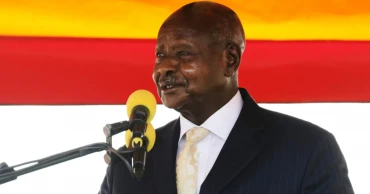
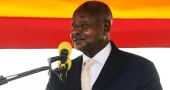
Uganda’s Museveni wins seventh presidential term with 71.65% of vote
Ugandan President Yoweri Museveni has secured a seventh term in office, winning 71.65% of the vote, according to official results released Saturday. Museveni defeated his youthful challenger, musician-turned-politician Bobi Wine, who campaigned for change after four decades of Museveni’s rule.
Bobi Wine, whose real name is Kyagulanyi Ssentamu, received 24.72% of the votes. Wine is expected to reject the official outcome, denouncing the election as unfair and alleging an internet blackout, heavy military presence, and the abduction of his polling agents. On Friday, he dismissed provisional results as “fake.”
The election was also marred by technical issues with biometric voter identification machines, which failed in several urban areas, including opposition strongholds like the capital Kampala. Voting had to proceed using manual voter registers, a move critics say could fuel legal challenges against the official results.
Delays plague voting in Uganda's presidential election
Museveni, 81, has maintained power over the years by amending the constitution to remove term and age limits, and by sidelining or jailing potential rivals. Observers say the opposition was fragmented, giving Museveni a decisive advantage, while he retained strong control over his party and the armed forces.
Security forces were heavily deployed during the campaign. Wine said he faced constant surveillance and harassment, including the use of tear gas against his supporters, and often campaigned wearing a flak jacket and helmet for protection.
Reports emerged on Friday that Wine had been detained by the military, but police clarified on Saturday that he was not under arrest, though access to his residence was “controlled” to prevent potential unrest.
At least 46 killed in multi-vehicle crash in western Uganda
Uganda has not seen a peaceful transfer of presidential power since independence six decades ago. Veteran opposition leader Kizza Besigye, a four-time presidential candidate, remains in prison on treason charges filed in February 2025.
This election highlights the enduring dominance of Museveni, whose long tenure continues to raise concerns about democratic governance and political freedom in Uganda.
6 months ago
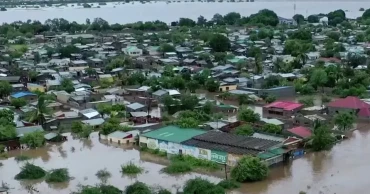
Heavy rains kill over 100 in southern Africa, more flooding expected
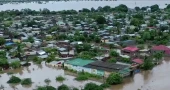
Torrential rains and widespread flooding have claimed more than 100 lives across South Africa, Mozambique, and Zimbabwe, with authorities warning of more severe weather in southern Africa.
In South Africa, at least 19 people have died in the northern Limpopo and Mpumalanga provinces after heavy rains last month triggered severe floods. Helicopters evacuated tourists and staff from flooded camps in Kruger National Park, which remains closed due to submerged roads and bridges, the national parks agency said.
Mozambique’s Institute for Disaster Management and Risk Reduction reported 103 deaths during an unusually intense rainy season since late last year. Causes included lightning strikes, drowning, infrastructure collapse, and cholera. Central and southern regions have been hardest hit, with more than 200,000 people affected and thousands of homes damaged, the World Food Program said.
Zimbabwe has recorded 70 deaths and destruction of over 1,000 homes due to heavy rains since early January, while roads, schools, and bridges have collapsed, the country’s disaster management agency reported.
Floods have also affected Madagascar, Malawi, and Zambia. In Madagascar, 11 people have died in floods since late November. The U.S. Famine Early Warning System noted that flooding is ongoing or expected in at least seven southern African countries, possibly linked to the La Niña phenomenon.
South African President Cyril Ramaphosa visited flood-hit areas in Limpopo on Thursday, reporting that one district had received roughly 400 millimeters of rain in under a week. “There are 36 houses that have just been wiped away … everything is gone — roofs, walls, fences,” he said.
The South African Weather Service issued a red-level 10 alert for parts of the country Friday, warning of life-threatening floods and infrastructure damage. Helicopters have rescued residents trapped on rooftops or in trees, including border and police officers stranded at a flooded South Africa-Zimbabwe checkpoint.
Kruger National Park, covering around 22,000 square kilometers across Limpopo and Mpumalanga, has evacuated roughly 600 tourists and staff to higher ground. No deaths or injuries have been reported there, authorities said.
Southern Africa has faced extreme weather in recent years, including cyclones and severe droughts, intensifying food insecurity. In Mozambique, over 70,000 hectares of crops, including rice and corn, have been submerged, affecting thousands of small-scale farmers, the World Food Program said.
6 months ago
Zambia abandons plan to extend IMF-supported program, seeks new full program
Zambia has decided not to extend its current International Monetary Fund (IMF)-supported Extended Credit Facility (ECF) program for one year, and will instead pursue a new full program, senior officials said Thursday.
Finance Minister Situmbeko Musokotwane told a press briefing that after careful review and consultations, the government chose to conclude the sixth and final review of the current arrangement and negotiate a successor program.
He emphasized that the decision does not signal disengagement from the IMF or a reduction in reform efforts, but reflects the completion of the ongoing program and the transition to a new, comprehensive plan.
The successor program will continue addressing Zambia’s debt restructuring obligations while considering evolving economic priorities, including growth targets and medium-term development needs.
Since entering the IMF-supported ECF in 2022, Zambia has successfully completed all reviews and consistently met quantitative performance criteria and structural benchmarks. A staff-level agreement on the sixth review was reached last month.
Originally scheduled to end in November 2025, the program will now formally conclude by the end of January 2026. The brief extension was purely technical, designed to allow sufficient time for evaluating program performance as of October 2025.
6 months ago
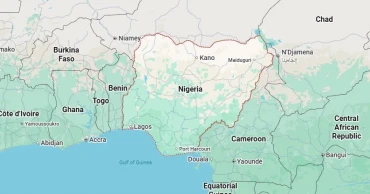
25 killed as boat capsizes in Nigeria
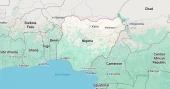
A passenger boat capsized in northern Nigeria’s Yobe state, leaving at least 25 people dead while 14 others remained missing, emergency services said Sunday.
The boat was carrying residents who had gone to the local market as well as some who were involved in fishing or farming when it capsized along the Yobe River in Yobe state’s Garbi town on Saturday night, the Yobe emergency management agency said.
Out of the 52 passengers on board the boat, 13 were rescued and are receiving medical assistance, the agency said in a statement.
“Search and rescue operations are ongoing, with security agencies, emergency responders, and local community volunteers working tirelessly to locate the missing passengers and recover bodies,” the agency added.
The disaster response agency said the boat overturned mid-journey without offering additional details.
Boat accidents kill hundreds annually across Nigeria, especially in remote areas where water transportation is common due to its convenience for business owners and the absence of good roads. At least 30 passengers were killed when their boat capsized in September, while 25 others died in similar circumstances in July.
Past accidents have been often caused by overloaded and poorly maintained vessels, many of them operating without carrying life jackets.
Yobe Gov. Mai Mala Buni offered condolences to families affected in Saturday's accident and directed that all necessary medical and logistical support be provided immediately to victims receiving treatment, according to a government update.
6 months ago
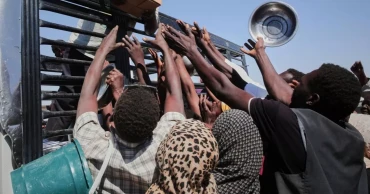
UN makes first visit to Sudan’s el-Fasher since RSF takeover, finds dire humanitarian situation
A United Nations humanitarian team has visited Sudan’s el-Fasher city for the first time since it was seized by the paramilitary Rapid Support Forces (RSF) in October, finding hundreds of civilians living in desperate conditions amid severe shortages of food, medicine and shelter.
The hours-long visit, conducted on Friday, marked the UN’s first direct assessment of the city after months of isolation. UN officials said el-Fasher remains under RSF control and largely cut off from the outside world following a prolonged siege.
“It was a tense mission,” said Denise Brown, the UN’s humanitarian coordinator for Sudan, describing the city as a “massive crime scene.” The exact death toll from the takeover remains unknown, though survivors who fled reported widespread killings, with satellite images suggesting mass graves and burned bodies.
The UN team found civilians sheltering in abandoned buildings or makeshift structures made from plastic sheets and blankets, without access to clean water, toilets or basic services. Food was scarce and expensive, with the price of rice reportedly reaching up to $100 per kilogram.
Medical services were described as nearly non-functional, with hospitals lacking supplies and staff. Aid groups said villages surrounding el-Fasher appeared largely deserted, while many injured people may still need evacuation.
El-Fasher, once the last army stronghold in Darfur, fell amid Sudan’s ongoing war, which has triggered one of the world’s worst humanitarian crises.
7 months ago
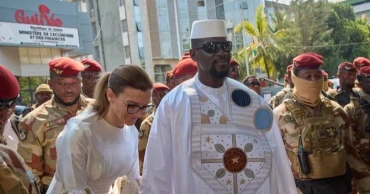
Doumbouya declared winner of Guinea presidential vote
Guinea’s junta leader Gen Mamdi Doumbouya was declared the winner of the country’s presidential election held over the weekend, according to partial results released late Tuesday, marking the first vote since the 2021 military takeover.
The General Directorate of Elections said Doumbouya secured 86.72 percent of the votes counted so far. Analysts had widely expected his victory, citing a weakened opposition ahead of Sunday’s poll.
The election was seen as an effort to legitimize Doumbouya’s continued rule and conclude a transition process launched after he ousted President Alpha Condé four years ago. Critics say the junta leader has suppressed dissent and opposition, leaving him without serious challengers among the eight other candidates.
More than 50 political parties were dissolved, while prominent opposition figures were either barred from contesting on technical grounds or were living in exile following the crackdown.
Yéro Baldé, a former education minister under Condé, finished a distant second with 6.51 percent of the vote. Election officials said turnout stood at 80.95 percent among Guinea’s 6.7 million registered voters.
After taking power, Doumbouya had pledged that he and other military officers would not contest elections. However, a referendum held in September paved the way for officers to run and extended the presidential term from five to seven years.
Despite its rich mineral resources, Guinea remains deeply affected by poverty and food insecurity, with about half of its 15 million people facing hardship, according to the World Food Program.
The junta has placed strong emphasis on the Simandou iron ore project, a major mining venture largely backed by Chinese investment. Production began last month after years of delays, with authorities hoping it will generate jobs and spur wider economic growth.
Guinea is among several West African nations to experience coups or attempted coups since 2020, amid public frustration over insecurity, weak economies and disputed elections.
7 months ago
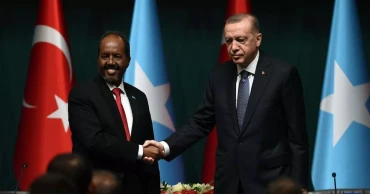
Somalia's president in Turkey for talks after Israel recognizes Somaliland
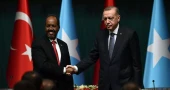
Somali President Hassan Sheikh Mohamud arrived in Turkey on Tuesday for high-level talks with President Recep Tayyip Erdogan, days after Israel announced its recognition of Somaliland, the breakaway region of Somalia.
Turkish officials said the discussions would focus on expanding bilateral cooperation, Somalia’s fight against terrorism, efforts to reinforce national unity and key regional developments. Turkey has emerged as one of Somalia’s strongest partners over the past decade, providing military training, backing major infrastructure projects and operating a military base in Mogadishu. Ankara has also sent a seismic research vessel, protected by naval ships, to explore Somalia’s offshore oil and gas potential.
Israel’s decision last week to recognize Somaliland — the first country to do so — sparked sharp criticism from Turkey, Somalia and several other nations. Ankara described the move as unlawful and warned it could threaten stability in the Horn of Africa. The motivation behind Israel’s announcement remains unclear.
Earlier this year, Turkey mediated talks between Somalia and Ethiopia following tensions over a deal between Ethiopia and Somaliland. In January 2024, Ethiopia signed an agreement with Somaliland to lease coastal land for a naval base in exchange for recognition, a move Somalia says violates its sovereignty.
Somaliland declared independence from Somalia more than 30 years ago but remains largely unrecognized internationally.
7 months ago
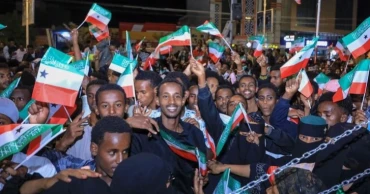
More countries reject Israel’s recognition of Somaliland
A growing number of countries have rejected Israel’s recognition of Somaliland, Somalia’s breakaway region, as an independent nation, a day after Israel became the first country in over three decades to do so.
The reason behind Israel’s move remains unclear, and it is not known whether it expected any concessions in return.
Somaliland declared independence from Somalia in 1991 amid civil conflict. Despite having its own government, currency, and relative stability, it had not received formal recognition from any country until Israel’s announcement on Friday.
On Saturday, more than 20 countries, mainly from the Middle East and Africa, along with the Organization of Islamic Cooperation, issued a joint statement rejecting Israel’s decision, citing “serious repercussions on peace and security in the Horn of Africa, the Red Sea, and international stability as a whole.” Syria also issued a separate rejection.
The statement further emphasized that Israel’s move should not be linked to any attempt to displace Palestinians.
Earlier this year, Israeli and U.S. officials reportedly discussed the possibility of resettling Palestinians from Gaza in Somaliland as part of former U.S. President Donald Trump’s plan, which has since been abandoned.
The U.S. State Department reiterated its recognition of Somalia’s territorial integrity, including Somaliland. Somalia’s federal government strongly condemned Israel’s declaration, reaffirming that Somaliland remains part of Somalia.
African regional organizations also opposed the move. African Union Chair Mahmoud Ali Youssouf warned that undermining Somalia’s sovereignty could destabilize the continent, while East African bloc IGAD said unilateral recognition contradicts international law, the United Nations charter, and agreements underpinning the African Union.
Israeli Prime Minister Benjamin Netanyahu, Foreign Minister Gideon Saar, and Somaliland President Abdirahman Mohamed Abdullahi signed a joint declaration on Friday “in the spirit of the Abraham Accords,” which since 2020 have established diplomatic and commercial ties between Israel and several Arab and Muslim-majority countries.
7 months ago
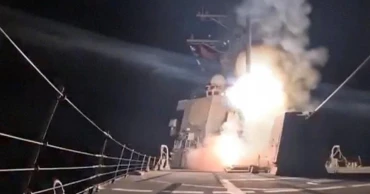
What to know about US airstrikes on Islamic State militants in northwest Nigeria
The United States carried out airstrikes on Thursday targeting Islamic State-affiliated militants in northwestern Nigeria, marking a significant escalation in the region’s ongoing security crisis.
US President Donald Trump described the strikes in Sokoto state as “powerful and deadly,” aimed at militants allegedly attacking primarily Christian communities. Nigerian officials said the strikes were part of coordinated intelligence-sharing between the two countries, though the full impact remains unverified.
Security analysts suggest the likely targets were members of the Islamic State Sahel Province (ISSP), locally known as Lakurawa, which has grown increasingly violent in Sokoto and Kebbi states. The group initially entered the region around 2017 at the invitation of traditional authorities to protect communities from banditry but later imposed a harsh interpretation of Sharia law and committed killings, kidnappings, armed robberies, and sexual assaults, alienating local populations. Some attacks in the area are also linked to militants crossing from Niger, as ISSP has expanded operations along the Niger-Nigeria border and toward Benin.
Experts note that Nigeria’s security challenges are deeply rooted in governance failures rather than purely military issues. Militants exploit weak state presence, poverty, and unemployment to recruit fighters and present themselves as alternative authorities. Nigeria’s Defense Minister Christopher Musa has emphasized that military action alone addresses only a fraction of the problem, with good governance being critical to long-term stability.
The U.S. strikes are viewed as vital support for Nigeria’s overstretched security forces, who face multiple armed groups across northern states. Despite ongoing airstrikes and new security recruitment, Nigerian forces struggle to sustain operations, as militants easily relocate via motorcycles through forests and use hostages, including schoolchildren, to complicate attacks. Analysts say the airstrikes provide much-needed assistance, but lasting security will require stronger governance and consistent military efforts.
These operations underline the complex interplay of local insurgencies, cross-border militant movements, and structural governance challenges in Nigeria’s northwest.
7 months ago
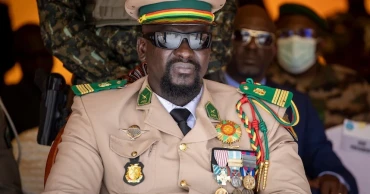
Guinea's junta leader is expected to win first election since 2021 coup
Guineans are set to vote on Sunday in the country’s first presidential election since the military seized power in a 2021 coup, with analysts widely expecting junta leader Gen. Mamadi Doumbouya to secure victory amid a weakened opposition.
Doumbouya, who overthrew longtime president Alpha Condé, is seeking a seven-year term under a new constitution that allows military leaders to run for office and extends the presidential mandate from five to seven years. Critics say the vote is taking place in a tightly controlled political environment that favors the incumbent.
About 6.7 million registered voters are expected to cast ballots at around 24,000 polling stations nationwide. Results are anticipated within 48 hours, with a runoff planned if no candidate wins a majority. The regional bloc ECOWAS has deployed election observers.
Nine candidates are contesting the race, but Doumbouya faces little-known challenger Yero Baldé, a former education minister. Several prominent opposition figures were either barred on technical grounds or forced into exile, further weakening competition.
Rights groups and activists say Guinea has seen growing restrictions since the coup, including the silencing of civil society leaders, censorship of the press and the dissolution of more than 50 political parties last year.
Many voters remain skeptical. Political analyst Alioune Tine said the election appears designed to legitimize military rule rather than restore democracy. Some residents in the capital, Conakry, have vowed not to vote, calling the process unfair.
Despite criticism, Doumbouya retains support among segments of the population who credit him with infrastructure development and reform efforts. His campaign highlights major projects, including the Simandou iron ore mine, which began production last month and is being promoted as a driver of economic transformation and job creation.
With state backing and extensive media coverage, Doumbouya’s campaign has dominated the race, leaving rivals with limited visibility and resources.
7 months ago