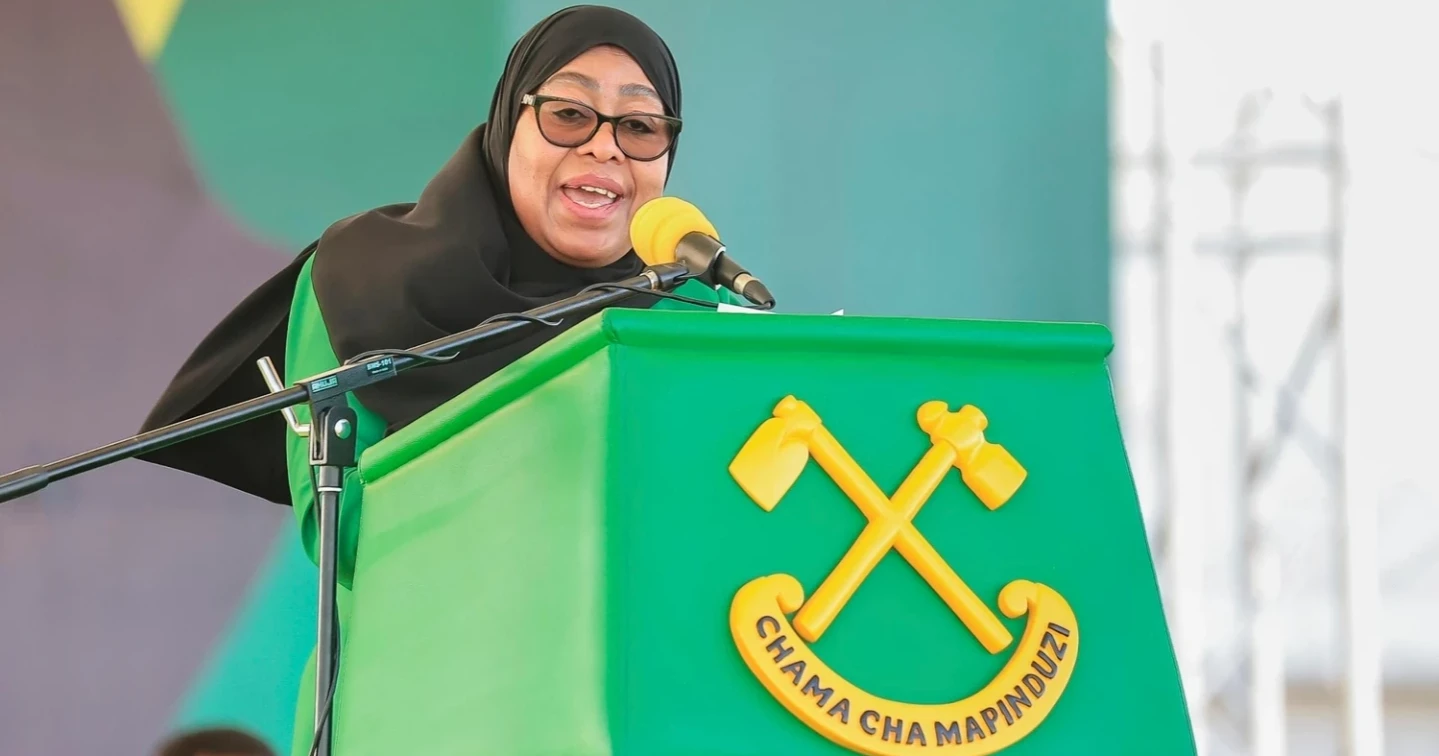
Hopes that Tanzania’s first woman president Samia Suluhu Hassan would ease political repression have faded as she seeks a fresh mandate in elections on Oct. 29, with critics warning of intensified crackdowns on opposition leaders and activists.
Hassan, who assumed office in 2021 after the death of former President John Pombe Magufuli, initially moved to create political space and engage opponents. However, opponents now accuse her of showing an authoritarian streak similar to her predecessor’s rule.
Amnesty International said this week that repression has “intensified” under Hassan, citing arbitrary arrests, enforced disappearances and extrajudicial killings.
Hassan’s ruling Chama cha Mapinduzi (CCM) party has been in power since independence in 1961 and has never handed over leadership through elections. The main opposition party Chadema has long tried to challenge the dominance but faces growing restrictions.
Chadema leader Tundu Lissu, who survived an assassination attempt in 2017, remains jailed on treason charges. The party has refused to participate in the polls without key reforms, leading election authorities to bar it from the race. Another popular politician, Luhaga Mpina of the ACT-Wazalendo party, has also been disqualified from contesting.
With only minor rivals on the ballot, Hassan is expected to easily win, according to the Armed Conflict Location and Event Data project, which tracks political violence.
The group said CCM aims to avoid the electoral pressure faced by ruling parties elsewhere in Africa and has “neutered Tanzania’s opposition through administrative, legal, and extra-legal means” since it received its lowest vote share in 2015.
Rights concerns have deepened in recent months. A UN panel of experts reported more than 200 enforced disappearances since 2019 and voiced alarm over “a pattern of repression” ahead of the election. Two East African activists who traveled to Tanzania to attend Lissu’s trial said they were sexually assaulted before being deported.
The disappearance of Humphrey Polepole, a former ambassador to Cuba who resigned after criticizing the government, has also raised concern. He was reportedly taken from his home in Dar es Salaam earlier this month and has not been seen since.
It was not possible to obtain a comment from Hassan, and the presidential office did not respond to questions emailed by the AP.
Analysts say Hassan briefly lifted hopes by reversing harsh Magufuli-era restrictions, including the ban on opposition rallies. Yet she has since shown a willingness to tighten control. Amnesty’s Roland Ebole said her role as head of state and commander-in-chief “places her directly in charge” of the security agencies and the ongoing abuses.
Hassan has sought to consolidate her power inside CCM by reshuffling her security chiefs, including appointing three different directors to the intelligence service in about three years.
She is campaigning under the slogan “Work and Dignity,” promising expanded opportunities in farming and livestock. Her policy platform, known as the “Four Rs,” calls for reconciliation, reforms, rebuilding and resilience.
Foreign investment has picked up after years of strained relations with international businesses under Magufuli’s policies. Yet critics argue Hassan has not used that momentum to become a unifying leader.
Many Tanzanians still express hope for genuine change.
“We expected more freedom, especially for political rallies and the press,” said a resident of Dar es Salaam who asked not to be identified for fear of retaliation. “However, it feels like things are going back to the old ways.”