Europe
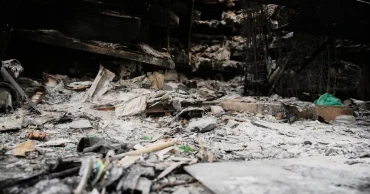
French authorities ban some protests after weekend clashes, looting
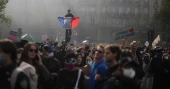
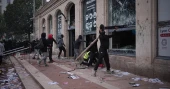
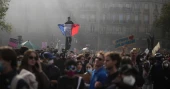
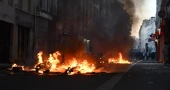
French authorities have imposed restrictions on demonstrations in several cities following a weekend of violent clashes and widespread looting, but dozens of protesters took to the streets of Paris on Thursday despite the restrictions.
Organisers of the Paris protest said an administrative court overturned a police ban, though the ruling was not immediately made public.
Police had justified the restriction by citing the risk of further violence after masked youths clashed with security forces, looted shops and set cars on fire over the weekend.
French President Emmanuel Macron said the measures were intended to protect city centres, businesses and public buildings. He said demonstrations requested by groups without legitimate authority should be banned, while trade unions seeking permission to protest would be offered alternative routes.
The restrictions on planned demonstrations in Paris, Lyon, Lille and Grenoble have raised concerns among some about the constitutional right to protest. Student organisations said they would continue their mobilisation despite the start of the autumn school break.
Macron blamed the weekend violence on radical far-left groups seeking to undermine the Republic, as well as criminals who took advantage of the unrest to loot shops.
The government has stepped up security measures, including night-time curfews in some areas of Paris and other cities where order has since been restored. The Paris restrictions covered areas around the presidential palace, parliament buildings, major railway stations and parts of the city centre badly affected by looting.
Thursday’s demonstrations were seen as a prelude to a larger protest planned for Saturday, when activists from the Yellow Vest movement and the CGT labour union are expected to join. Authorities said some demonstrations, including marches in Lyon, would also be prohibited.
Prime Minister Sébastien Lecornu, who met union representatives on Wednesday, said a large-scale security operation was planned for Saturday to prevent a recurrence of the violence.
Union representatives said the meeting produced no concrete proposals. They are now preparing for another day of action on November 5 and have urged public- and private-sector employees to participate.
The protests began last month at a high school in Créteil, southeast of Paris, over staff shortages before spreading to other suburbs and cities across France.
Students have raised concerns over underfunded schools, deteriorating facilities and a lack of staff, particularly in poorer neighbourhoods. Some have also called for reforms to the university admissions system, which they consider complex and unfair.
With the government struggling to address the students’ demands, the demonstrations have expanded into a broader movement over rising living costs, months before next year’s presidential election to choose Macron’s successor.
5 days ago
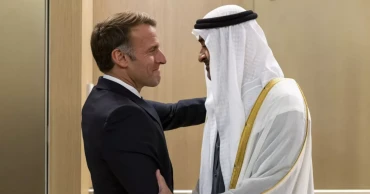
Macron condemns Trump’s claims linking Muslim migrants to French unrest
French President Emmanuel Macron on Wednesday slammed "stupid" and "unacceptable" claims by foreign leaders, including US President Donald Trump, who blamed Muslim migrants and fake AI-generated images for French riots caused by soaring living costs.
Speaking in Qatar after a Gulf tour to secure oil, gas, diesel, and jet fuel amid an energy crisis, Macron accused electioneering leaders of foreign manipulation and using France for political campaigns.
Trump had urged Macron to "close your borders," claiming an invasion of migrants and Islamists-narratives Macron called completely false. Macron said leaders naively repeat AI content, though he did not specify which images.
Despite earlier good relations, Trump regularly mocks Macron, who remarked that critics "don't love our country."
During his tour, Macron secured nearly 295,000 additional monthly tonnes of diesel-over 10% of France's consumption-including 100,000 tonnes from the UAE, 100,000 tonnes pending in Bahrain, and supplies from Saudi Arabia.
6 days ago
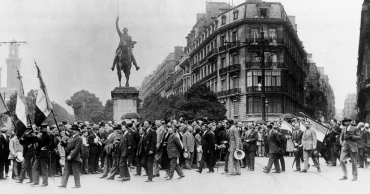
France's long tradition of protest sometimes descends into violence
France has a long and proud tradition of mass protests, with demonstrations often becoming a powerful means for people to demand change.
When the French protest high fuel taxes, they don yellow vests and take to the streets. Farmers demanding better pay have driven hundreds of tractors down the Champs-Élysées, while museum workers have gone on strike and closed the Louvre over concerns about managing tourists.
Public protest is deeply rooted in French national identity, much like “La Marseillaise,” the 1792 national anthem that reflects the collective duty to resist tyranny.
However, this month's violent demonstrations, among the most serious in years, coupled with a tough police response, have raised concerns that unrest is overshadowing the hundreds of thousands of peaceful protesters demonstrating against rising living costs and deteriorating conditions in schools.
On Saturday alone, at least 2,400 people were arrested after rioters in cities across France clashed with police, torched cars, stormed public buildings, looted shops and set a historic city hall ablaze. Further demonstrations could follow.
“How can French people do this to France?” outgoing President Emmanuel Macron asked on Sunday, condemning the destruction.
Nothing could justify the damage, he said, adding, “We all feel anger and shame.”
Yet France's history shows that its vocal and colourful protest culture has sometimes descended into violence, dating back to the executions of King Louis XVI and Marie-Antoinette during the revolution that overthrew the monarchy in 1789.
A protest culture takes shape
Historians say the French Revolution helped establish the modern tradition of civic engagement as a public duty. Under this principle, voting is not the only way to bring about change; demonstrations are regarded as a fundamental means of making political elites listen to the public and defending freedoms.
Becoming an activist is seen as a rite of passage passed down through generations, while the right to protest is constitutionally protected.
“It's a way to build collective identity and political community,” said Magali Della Sudda, research director in political science at the French National Center for Scientific Research in Bordeaux.
France's post-revolutionary history has not followed a straightforward path of protests leading to reforms. Instead, it has been marked by recurring cycles of popular uprisings, repression, mobilisation and political concessions.
At times, the tradition has ended tragically. In 1871, government troops crushed the newly established Paris Commune, or municipal government, reportedly killing thousands.
Collective action has also brought tangible gains. In 1968, student demonstrations and a general strike forced the government to make concessions, including an increase in the minimum wage.
More recently, the “yellow vest” movement, known in French as “gilets jaunes,” began in opposition to a proposed fuel tax increase before expanding to encompass broader concerns over living costs and inequality.
Some demonstrations in 2018 and 2019 involved burning cars, looting and clashes with police. Violence by a minority of participants has frequently marred otherwise peaceful marches in France.
Similarly, student protests over the weekend expanded beyond education to include other grievances, with scenes of looting and confrontations with police.
It remains unclear how many people involved in ransacking shops had joined the demonstrations, which drew tens of thousands of participants, and how many were opportunists taking advantage of the unrest.
Authorities have imposed nightly curfews, while calls have emerged for further protests later in the week.
Police violence fuels public mistrust
Some of the factors driving the latest protests are rooted in more recent developments in France's protest culture, according to political scientist Fabien Jobard, who has studied the history of demonstrations and policing.
Since the 1990s, France has experienced recurring waves of what the French call “violences urbaines,” or urban violence, which Americans would describe as riots, Jobard said.
Such unrest is often triggered by police violence. Nationwide disturbances erupted in 2005 after two teenagers died while fleeing police, and again in 2023 after an officer fatally shot a 17-year-old during a traffic stop outside Paris.
“For young people from the suburbs, the riot is one of the traditional forms of collective expression,” Jobard said.
Government critics and human rights campaigners have accused police of using unnecessarily violent tactics during the past month.
Much of the criticism has focused on rubber-bullet launchers, known in France as LBDs, and stun grenades, which critics blame for causing serious injuries to protesters.
Della Sudda also pointed out that nearly 8,000 arrests in the weeks leading up to Oct 17 far exceeded the few dozen detentions recorded during a 1998 protest involving 500,000 students who demonstrated against teacher shortages and deteriorating school facilities.
A growing sense among protesters that their concerns are not being heard is another contributing factor, she said.
For example, instead of listening to demonstrators and negotiating with them, the government attempted to address the grievances of the yellow vest movement through a digital platform known as “the great national debate.”
Anti-government protesters dismissed Macron's initiative.
“As a result,” Della Sudda wrote, “mistrust is growing.”
7 days ago
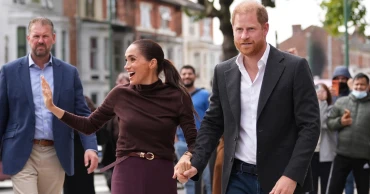
Prince Harry wants to reconcile with father, brother amid family rift
Prince Harry has expressed his desire to mend his strained relationships with his father, King Charles III, and elder brother, Prince William, saying reconciliation is important amid the challenges facing the world.
In an interview with GQ magazine on grief and family, recorded in New York in late September and published on Tuesday, Harry was asked whether he grieved over his “complicated” relationships with his father and brother.
“Yes, of course,” he replied, noting that many people could relate to such family difficulties.
“Some people don’t want it to work out – I want it to work out,” he said. “Of course I do ... with everything else that’s going on in the world, the most important thing is to reconcile — that’s the key point.”
Harry, his wife Meghan and their two children returned to the UK in late August, six years after the couple stepped down as working royals and moved to California, a decision that deepened divisions within the royal family.
The couple had subsequently criticised the royal household in interviews, including allegations of racism by an unnamed royal and claims that palace staff had been insensitive to Meghan’s mental health struggles.
However, Harry, who is fifth in line to the British throne, said last year that he wanted to reconcile with his family and spend more time with his father, who is receiving treatment for an undisclosed form of cancer.
Asked whether he believed the family rift could be repaired, Harry said the effects of past conflicts could remain for a long time but encouraged people to move forward.
“Look, scars stick around forever,” he said, adding that letting go of the past was “something that I would encourage everybody to do.”
“For me, there’s enough drama in the world and enough drama in people’s lives than to continue with issues with family,” he added.
A spokesperson for Harry later clarified that his remark about “some people” not wanting reconciliation was not intended as criticism of William or any other member of the royal family.
7 days ago
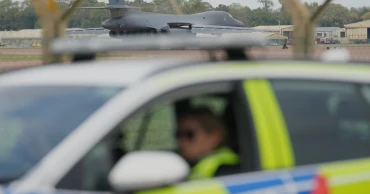
UK rearrests 2 men over suspected Iran-linked plot at US air base
British police on Tuesday rearrested two men on suspicion of assisting Iran’s intelligence service in connection with an alleged plot targeting a US-operated air base in England last month.
Counter Terrorism Policing said the suspects, a 24-year-old British national and a 25-year-old dual British-Iranian national, were arrested under the National Security Act.
One of the men was initially arrested on September 27, the day the suspected plot targeting RAF Fairford took place, while the other was first arrested on October 1. Both had been released on bail pending further investigation before being rearrested on Tuesday.
RAF Fairford, located in western England, has been used by US forces to launch bombing operations against Iran during this year's war.
The suspected incident prompted the evacuation of dozens of residents from homes near the base as armed police officers and military bomb-disposal experts searched the surrounding rural area.
Police later said they had discovered a quantity of gasoline, an accelerant, in three vans at the site, but no explosives were found.
British authorities have linked the incident to Tehran, which has denied involvement. The suspected plot also prompted the United States to withdraw its bombers from RAF Fairford.
UK Prime Minister Andy Burnham said the alleged plot was “almost certainly” directed by Iran’s Islamic Revolutionary Guard Corps (IRGC).
Iran has previously said that any military base used to launch attacks against its territory would be considered a legitimate target.
Five other men in their 20s were arrested earlier in connection with the investigation and subsequently released on bail pending further inquiries. No one has been charged so far.
Laurence Taylor, head of the UK’s Counter Terrorism Policing, said detectives were pursuing multiple lines of inquiry in what he described as a highly complex investigation.
“This is very much a live investigation, and our evidence gathering continues, but at this time our position remains the same; we consider it highly likely that there is Iranian state involvement,” he said in a statement.
Investigators are continuing to examine the extent of any Iranian involvement and the objectives behind the suspected plot, he added.
Last week, MI5 chief Ken McCallum warned that Iran and Russia were stepping up their hostile activities against the UK, saying the incident at RAF Fairford was not an isolated case.
McCallum said Tehran was seeking to expand its activities in Britain beyond its traditional targets, including Iranians opposed to the country's Islamic authorities.
More than 50 people have been arrested over Iran-linked plots in the UK over the past year, he said.
7 days ago
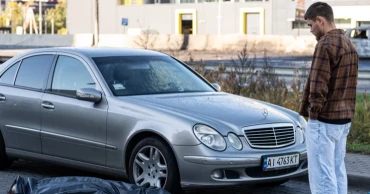
Russian attacks kill 9 in Ukraine as Zelenskyy seeks support in Norway
Russian missile and drone attacks across Ukraine have killed at least nine people and caused power outages in 12 regions, officials said Tuesday, as Ukrainian President Volodymyr Zelenskyy met US and European officials in Norway to seek additional military support.
Zelenskyy was joined in Oslo by US envoy Steve Witkoff, while another US envoy, Jared Kushner, was expected to participate in a meeting virtually. Norwegian Prime Minister Jonas Gahr Støre and Finnish President Alexander Stubb were also scheduled to meet with the Ukrainian leader.
Zelenskyy said the discussions would focus on strengthening Ukraine’s air defences and joint weapons production. Kremlin spokesperson Dmitry Peskov said Moscow hoped to arrange a meeting between the US envoys and Russian President Vladimir Putin soon, possibly on Wednesday, praising Washington’s mediation efforts.
Amid uncertainty over continued US military assistance, Zelenskyy said he had a “substantive conversation” with US Secretary of State Marco Rubio and sought help in securing further air defence supplies and continued intelligence sharing.
Zelenskyy has warned that Ukraine is running short of US-made Patriot interceptors needed to counter Russian ballistic missiles. He also said delays in missile deliveries purchased by other countries and restrictions on Ukraine’s use of the military-grade Starshield satellite service were affecting its defence capabilities.
Rubio, however, denied that Washington was deliberately withholding assistance, saying there had been no change in US policy. He said Patriot ammunition was in short supply and needed in other parts of the world.
European countries are increasing their support as concerns grow over a possible decline in US assistance. According to Germany’s Kiel Institute, European countries and EU institutions have allocated 237 billion euros ($266 billion) to support Ukraine, compared with 115 billion euros ($129 billion) from the United States.
EU foreign policy chief Kaja Kallas questioned whether US negotiators had acted as impartial mediators, saying European support had helped Ukraine resist pressure to surrender territory to Russia.
Meanwhile, Russian attacks continued across Ukraine. Regional police said four people were killed and 27 wounded, including children, in attacks on the Kyiv region over the past day.
Three people were killed and four injured in an attack on the Kyiv-Odesa highway on Tuesday morning, while two others died in a strike on warehouses near Dnipro, authorities said. The attacks also damaged hundreds of buildings and triggered power outages in 12 regions, grid operator Ukrenergo reported.
Russia’s Defence Ministry said its forces targeted logistics centres, port infrastructure and cargo ships in the Odesa region. It also reported that Russian air defences had intercepted 136 Ukrainian drones overnight across several Russian regions.
7 days ago
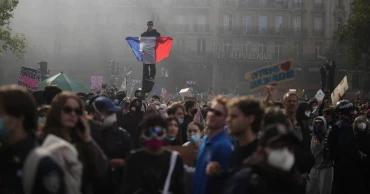
Europe faces wave of protests over rising costs, housing crisis, public services
Rising fuel prices, dissatisfaction with education, deteriorating public services and a worsening housing crisis are fueling a wave of protests across Europe this autumn.
Demonstrations have continued for weeks in major cities, with some turning violent and resulting in arrests, looting and injuries in France, Italy and Albania. In Spain and Portugal, protesters have set up tent camps to draw attention to increasingly unaffordable housing.
Young Europeans are experiencing “a strong sense of uncertainty and a lack of control,” said María Silvestre, a sociology professor at Spain’s University of Deusto. “And when specific situations come together, a spark suddenly ignites that is capable of channeling that discontent and driving people into the streets.”
The unrest comes as major European Union economies, including France, Italy and Spain, approach crucial elections, while far-right parties have made electoral gains in Germany and could advance elsewhere. It also coincides with a critical period for Europe’s support for Ukraine, as US President Donald Trump makes overtures to Russian President Vladimir Putin and Russia faces accusations of increasingly frequent arson attacks, cyberattacks and other acts of sabotage in NATO countries.
Right-wing politicians have sought to capitalize on the unrest. Although protests in France have appeared broad-based, Trump blamed immigrants for the destruction, writing on his Truth Social platform on Monday: “The migrants have taken over France. They must CLOSE THE BORDERS, FAST!”
Many demonstrations have been driven by frustrated young people. Other groups, including masked agitators dressed in black, have contributed to the violence, but French authorities and police have not blamed immigrants.
Here is a look at the factors driving the unrest:
Students demand more resources for schools
France, which has a long tradition of popular protest, has seen high school students stage blockades and demonstrations for more than three weeks, demanding greater resources for schools they describe as understaffed and run-down, particularly in lower-income neighborhoods.
The movement expanded when France’s CGT labor union and other activists joined the protests as students took a break for the autumn holidays. Demonstrators have since broadened their demands to include action on the rising cost of living and declining public services.
Although hundreds of thousands of people took part in peaceful marches, weekend unrest resulted in 2,400 arrests and serious disturbances in several parts of France, including looting in Paris, Marseille, Lyon and Bordeaux.
In Limoges, flames engulfed the 19th-century City Hall, nearly destroying the building. Some schools were also set on fire. Hundreds of people have been injured as students and rioters threw firebombs and police responded with tear gas.
French President Emmanuel Macron condemned the violence on Saturday, accusing far-left activists of seeking to create chaos by attacking buildings and police.
“Those who looted will have to pay for the damage, and those who sought to bring down the Republic will be held accountable,” Macron said in a rare televised address on Sunday.
In Spain, elementary and secondary schoolteachers began an indefinite strike in Madrid last week, demanding better pay and working conditions. Teachers in other parts of the country have staged similar walkouts this year.
Housing costs put pressure on young people
In central Madrid’s Puerta del Sol, tents covered with tarpaulins have occupied the square for weeks as protesters demonstrate against soaring housing costs. The protests were sparked by the eviction of María del Carmen Abascal, an 87-year-old woman who later died while in hospital. Smaller protest camps have since emerged in other Spanish cities.
Public pressure prompted the ruling Socialist government to approve affordable housing measures, but the proposals failed to secure parliamentary support, leading Prime Minister Pedro Sánchez to call an early election in November. A general strike has also been called for November, the first in 14 years.
Similar housing protests have emerged in Portugal’s largest cities, Lisbon and Porto, as well as in Barcelona, which faces significant challenges related to overtourism and housing affordability.
Spain’s minimum wage stands at 1,221 euros ($1,370), while the average monthly rent for an 80-square-meter apartment is around 1,130 euros (about $1,270), according to an analysis by business newspaper Expansión.
“Most of my paycheck goes to the rent. My roommate struggles to make ends meet just like I do,” said Diana Manzanares, a 20-year-old waitress at the Madrid encampment. “This is my reality and the reality of most of us living in this city.”
Rising inflation adds to pressure in Italy
The “Italia in Piazza” (Italy in the Streets) movement has mobilized thousands of demonstrators demanding better employment opportunities, healthcare, education and access to housing, along with higher wages.
Inflation in Italy climbed to 4.2% in September, exceeding the eurozone rate of 3.8%, according to government data.
Peaceful marches were followed by violent riots in Turin and Bologna, as well as Milan, the country’s financial and fashion capital. There, masked rioters clashed with police, looted shops and set property on fire.
Milan police said 271 people were arrested, most of them minors, while 14 security officers were injured during two days of unrest.
A newly formed group calling itself the “Oct. 17 Movement” has since announced what it describes as a “permanent mobilization,” with demonstrations planned every Saturday at 3pm in cities across Italy.
Albanian students join anti-corruption demonstrations
Anti-government protests have continued for more than a week in Albania’s capital, Tirana, with clashes intensifying after high school and university students joined the broader anti-government “Flamingo” movement, which is demanding the resignation of Socialist Prime Minister Edi Rama.
Rama has denounced the protesters as “ideologized and radicalized” by antifa, a term used to describe loosely organized far-left militants. Trump has designated the movement a terrorist organization in the United States.
The movement, named after the flamingos’ natural habitat in an area where Rama’s government agreed to allow a major luxury tourism development linked to Jared Kushner, Trump’s son-in-law, has made ending corruption a key demand. It is also calling for protections for healthcare, education and public pensions, according to its website.
In Serbia, university students who have led mass anti-corruption protests for nearly two years are challenging an attempted return to power by former populist leader Aleksandar Vucic in parliamentary elections.
Vucic, the Balkan country’s former authoritarian president, is seeking to become prime minister after the October 25 vote. The youth-backed Students’ List party is believed to be running close to Vucic’s party, leaving the outcome uncertain and raising concerns about possible violence.
8 days ago
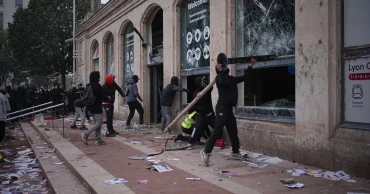
Paris imposes overnight curfew in two areas after widespread rioting
Paris police imposed an overnight curfew in two areas of the French capital on Monday following a weekend of widespread rioting, among the country's worst in years, that targeted city halls, other public buildings and thousands of businesses nationwide.
The measure aims to protect "people and property from the violence and looting," according to a statement issued by the Paris police.
Under the order, people are prohibited from entering or remaining at Place de la République, where rioting occurred on Saturday, and in the Les Halles shopping district, which has been hit by looting.
The curfew will remain in force from 11pm Monday until 6am Tuesday. Gatherings and demonstrations have also been banned from 8pm, police said.
Earlier on Monday, Prime Minister Sébastien Lecornu called for curfews that would be "very limited" and "localized".
In northern France, local authorities imposed curfews on children and teenagers under 18 in several cities, including Lille, from 8pm to 6am starting Monday and continuing for the next two days. Nice, on the French Riviera, also introduced an overnight curfew for minors from 9pm.
Lecornu defended the police response to the unrest, saying that "despite scenes of severe violence and extensive property damage, no one was killed, and that is a miracle."
He said details of the curfews would be announced later Monday following consultations with mayors.
Mass protests in France have frequently been accompanied by violence on the fringes of otherwise peaceful demonstrations, resulting in clashes with police. Saturday's unrest brought back memories of the riots following the fatal police shooting of a teenager in 2023, when local curfews were imposed, as well as violence during the Yellow Vest movement that began in 2018 over fuel prices and broader economic grievances.
Macron rejects interior minister's resignation
The prime minister's instructions came after Interior Minister Laurent Nuñez offered to resign on Sunday. President Emmanuel Macron rejected the offer, citing "the need for continued command of law enforcement in the current context," according to a statement from Macron's office on Monday.
Macron instructed Nuñez "to take all necessary steps to ensure full transparency about the failures in planning and intelligence-gathering that led to the violence," the statement said.
He also called for "new policing tactics on the ground as quickly as possible" to bring the violence to an end.
On Sunday evening, groups set fire to rubbish bins, bicycles and other objects in the streets and looted businesses in Paris, Lyon, Marseille and other cities. The incidents followed nationwide protests on Saturday against rising living costs and poor conditions in schools.
At least 2,400 people were arrested across the country, while authorities estimated on Monday that at least 3,000 businesses had been damaged or looted in several cities.
In Marseille, the prefect banned protests and other gatherings from noon to 8pm on Monday.
"I submitted my resignation because I am responsible for everything that is happening," Nuñez told France Inter radio.
"Now the real issue is ensuring that this doesn't happen again. … We obviously need to be better at anticipating the kind of mobilization that is unfolding," he said.
Nuñez blamed the violence on "hordes of troublemakers and looters" and "far-left activists", adding that police tactics needed to be adjusted to deal with "extremely mobile groups".
Authorities said groups of hundreds of people had sought confrontations with police and attacked public buildings, including city halls and other government offices.
Shopkeepers assess damage
Nuñez acknowledged that authorities had "lost control" in some major cities during Saturday's unrest.
"You can't look shopkeepers in the eye when hundreds of businesses have been looted and say we haven't lost control in some of these major cities," he said.
In Limoges, central France, flames engulfed the city's 19th-century City Hall, causing its roof to collapse and nearly destroying the building.
On Monday, cleanup crews and firefighters removed shattered glass and other debris from the streets of Paris.
Ouri Zagoury, who owns a video game shop near Place de la République, said he closed his store on Saturday afternoon but later watched through surveillance cameras as looters forced their way inside.
"There were so many people coming in and out. And even though I called the police, they said not to intervene, that they would come, but they never did, which is another problem," Zagoury said.
Jordan Bardella, president of the far-right National Rally party, blamed the government for failing to prevent the violence.
"The government has failed, the head of state has failed in his essential duty of protecting the French people," he told reporters at the party's headquarters.
"I call on the people of France now, beyond their right to protest, to use their voting power," Bardella said.
He is campaigning alongside far-right leader Marine Le Pen, whose polling figures have suggested for months that she is the front-runner in next spring's presidential election.
8 days ago
French PM urges targeted curfews after violent weekend protests
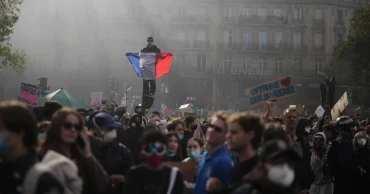
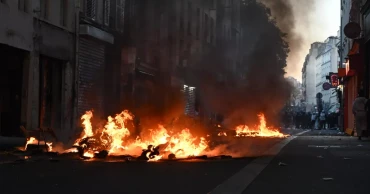
French Prime Minister Sebastien Lecornu said Monday that partial curfews would be introduced in some areas starting Monday evening following incidents of looting during weekend protests.
At a news conference, Lecornu said he had asked French prefects to implement "a number of partial curfews as early as this evening," describing the disorder as "very localized in urban centers."
Lecornu said a state of emergency would be declared "if necessary," but added that curfews "appear to be more appropriate."
"There is no question of allowing the looting to become established," he said, adding that the Interior Ministry would release a detailed map of the areas concerned during Monday afternoon.
Partial unemployment measures would be activated from Tuesday for shopkeepers affected by damage and looting, Lecornu said. The government would also provide public funding to support affected businesses, he said, while stressing that such assistance "makes no sense if we are not capable of restoring order as quickly as possible."
French Trade Minister Serge Papin estimated that at least 3,000 businesses had been affected during weekend protests.
Around 550,000 people took part in protests across France on Saturday. A total of 2,397 people were arrested during the protests, which were marred by violence, according to figures released by the French Interior Ministry on Sunday. A total of 997 police officers and gendarmes were injured, seven of them seriously.
8 days ago