France will expand its nuclear arsenal and extend its deterrence framework to several European partners, marking what officials describe as the most significant shift in French nuclear doctrine in decades.
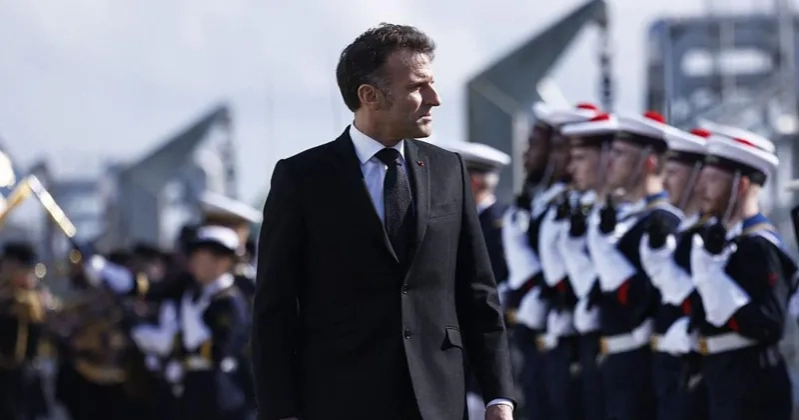
President Emmanuel Macron announced the changes during a speech to naval officers at the Ile Longue base near Brest in Brittany, warning that the coming decades would be shaped by nuclear risks amid a deteriorating global security environment.
Macron said France would increase its current stockpile of roughly 300 nuclear warheads and confirmed plans to launch a new nuclear-armed submarine, to be named “The Invincible,” in 2036.
Under a new “advanced deterrence” strategy, eight European countries – the UK, Germany, Poland, the Netherlands, Belgium, Greece, Sweden and Denmark – have agreed to participate in expanded cooperation. These nations may join exercises involving France’s air-based nuclear forces and potentially host air bases for French nuclear-capable aircraft.
Macron said dispersing France’s Strategic Air Forces across Europe would complicate any adversary’s military calculations. He also outlined plans for joint development of supporting capabilities, including space-based early warning systems, air defence against drones and missiles, and long-range conventional strike systems.
Despite the broader framework, Macron stressed that France’s president would retain sole authority over the decision to use nuclear weapons. There will be no formal nuclear guarantee extended to partner nations, maintaining continuity with the principles established under former president Charles de Gaulle.
France and the UK remain the only nuclear-armed states in Europe. Paris already cooperates closely with London on deterrence matters, and British officials recently joined French nuclear air force exercises for the first time.
Following Macron’s speech, France and Germany issued a joint statement pledging closer collaboration in nuclear deterrence. The agreement, signed with German Chancellor Friedrich Merz, said Berlin would take part in French nuclear exercises this year and work with European partners on strengthening conventional military capacities.
Both governments emphasized that the initiative would complement, not replace, NATO’s nuclear deterrence framework.
Macron also signalled a shift toward greater strategic ambiguity, saying France would no longer publicly disclose the size of its nuclear arsenal. He reiterated that any attack threatening France’s vital interests would come at an “unsustainable price,” while leaving the exact scope of those interests undefined.
Polish Prime Minister Donald Tusk welcomed the move, saying European countries were strengthening defences together to deter potential aggression.
The announcement reflects growing concerns in Europe over global instability and shifting geopolitical alignments, with France positioning itself at the centre of a more coordinated continental defence posture.
With inputs from BBC