latin-america
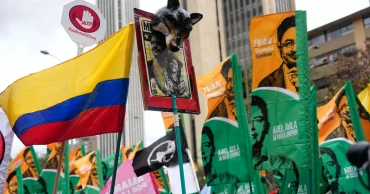
Colombians vote in presidential runoff between conservative outsider and Petro ally
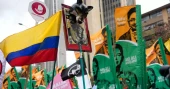
Colombians headed to the polls on Sunday to elect their next president in a closely contested runoff between conservative outsider Abelardo de la Espriella and leftist candidate Iván Cepeda, with both contenders pledging to tackle rising violence and political polarization.
The election pits businessman and lawyer de la Espriella against Cepeda, a senator and political ally of outgoing President Gustavo Petro, Colombia's first leftist president. The two candidates advanced to the runoff after defeating nine rivals in the first round held on May 31.
Security has dominated the campaign, with both candidates warning of a resurgence of the violence that plagued Colombia for decades, including bombings, kidnappings, disappearances and forced displacement.
De la Espriella, a political newcomer nicknamed "The Tiger," has proposed a hardline security strategy inspired by the policies of El Salvador's President Nayib Bukele and has received the endorsement of U.S. President Donald Trump. He has pledged to crack down on crime and build 10 mega-prisons.
Cepeda, meanwhile, has vowed to continue Petro's efforts to achieve "total peace" through negotiations with guerrilla groups and criminal organizations, despite limited success so far.
The candidates also differ sharply on how to address Colombia's economic challenges, including a struggling healthcare system, rising public debt and entrenched corruption.
More than 41 million Colombians are eligible to vote in the runoff.
Official results from the first round showed de la Espriella winning 44 percent of the vote, while Cepeda secured 41 percent.
The election comes a decade after Colombia signed a landmark peace agreement with the Revolutionary Armed Forces of Colombia (FARC), but violence has since resurged as armed groups increasingly turned to drug trafficking and other criminal activities.
Authorities recorded 14,780 homicides last year, the highest number since at least 2015, while extortion cases have more than doubled compared with a decade ago.
The campaign has also been marked by growing tensions, with both candidates trading accusations of fraud, intimidation and vote-buying.
Cepeda recently filed a complaint with Colombia's Attorney General's Office and the International Criminal Court, accusing de la Espriella of having links to paramilitary groups. The conservative candidate has denied the allegations.
Analysts say Sunday's vote will determine whether Colombia continues Petro's leftist agenda or shifts toward a more conservative and security-focused approach amid growing concerns over violence and political divisions.
1 month ago
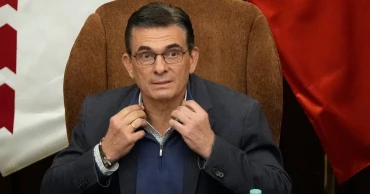
Bolivia declares state of emergency as road blockades trigger shortages and unrest
Bolivian President Rodrigo Paz on Saturday declared a 90-day state of emergency, granting the military broad powers to remove road blockades that have severely disrupted fuel and food supplies in the country's administrative capital, La Paz, and other major cities.
The move comes after five weeks of protests demanding Paz's resignation over austerity measures, including the elimination of fuel subsidies, and other grievances.
The demonstrations have sparked violent clashes between protesters and riot police, resulting in at least 365 arrests and 37 injuries, according to authorities.
At least 17 people have died during the unrest, most of them due to a lack of medical care caused by transport disruptions, according to Bolivia's ombudsman's office and human rights groups.
Road blockades on key highways have effectively isolated La Paz, leading to shortages of fuel and food, disrupting transportation and preventing patients from accessing medical treatment. The government said at least seven people had died because they were unable to receive timely medical attention.
In a televised address, Paz said the emergency measures were intended to restore normal life and guarantee access to essential supplies.
"This is not a state of emergency to restrict people's lives. It is a state of emergency to give people back their freedom," he said.
As the protests continued, businesses shut down, supermarket shelves emptied and hospitals reportedly ran short of oxygen supplies, prompting growing calls for the government to restore order.
On Friday, the government reached an agreement with one labour union, whose leaders urged protesters to lift the blockades. However, other groups have continued to demand Paz's resignation and refused to negotiate.
The emergency decree bans the blocking of roads, streets and highways that disrupt transportation and supply chains and authorises the armed forces to assist police in restoring order, reopening roads and protecting civilians.
The government said the emergency measures do not suspend constitutional rights or due process guarantees and allow citizens to continue their normal activities. The state of emergency could be lifted earlier if the violence and threats against the population cease.
Paz assumed office in November, ending nearly two decades of uninterrupted rule by the leftist Movement Toward Socialism (MAS) party, which left the country facing its worst economic crisis in a generation.
The centrist president pledged to tackle chronic fuel shortages and rebuild state finances while preserving social welfare programmes. However, his austerity policies, particularly the removal of long-standing fuel subsidies, have fuelled inflation and triggered widespread discontent.
The government's attempts to address fuel shortages with lower-quality gasoline also sparked criticism after reports that it damaged thousands of vehicles. Economic reforms aimed at attracting foreign investment and stimulating growth have meanwhile stalled in Congress.
Many of the protests have been led by Indigenous and rural groups that had traditionally supported MAS but helped bring Paz to power last year. They accuse his administration of ignoring their concerns.
Paz is also facing pressure from both the hard-right opposition, which dominates Congress, and the country's long-ruling left.
Former president Evo Morales has backed the protests and called for fresh elections while remaining in hiding in Bolivia's coca-growing region to avoid arrest on charges related to statutory rape.
The administration of US President Donald Trump has expressed support for Paz's government.
US Secretary of State Marco Rubio spoke with the Bolivian leader last week and said Washington was increasing emergency assistance and logistical support to help ease shortages caused by the blockades.
US Defence Secretary Pete Hegseth condemned the protests as attempts to overthrow Bolivia's legitimate government and warned those responsible for what he described as "death and destruction" in the region that the United States was closely monitoring the situation.
1 month ago
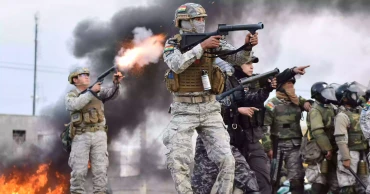
Bolivia protests intensify as president signs law enabling tougher crackdown
Clashes between protesters and police intensified in Bolivia on Monday as demonstrations demanding the resignation of President Rodrigo Paz entered their fifth week, prompting authorities to make dozens of arrests and raising concerns over a possible government crackdown.
The unrest escalated in the central city of Cochabamba after Paz signed legislation that could facilitate the declaration of a state of emergency, potentially granting broader powers to security forces to restore order and remove road blockades that have disrupted the country.
Protesters hurled stones, sticks and firecrackers at police, who responded with tear gas. Authorities said at least 23 people were detained in Cochabamba, while another 28 arrests were reported in El Alto following unrest linked to fuel shortages.
The demonstrations, led by labor unions, peasant organizations and Indigenous groups, have resulted in around 90 road blockades across the country, severely affecting transportation and causing shortages of food, fuel and medical supplies.
The protesters have accused Paz of failing to address Bolivia’s economic difficulties and criticized his decision to eliminate fuel subsidies. Many demonstrators say the government has not delivered on promises made during last year’s election campaign.
According to Bolivia’s independent public ombudsman, the unrest between May 1 and June 2 left 10 people dead, 37 injured and 365 arrested. The government said seven of the deaths were linked to a lack of medical care due to the blockades, while investigations into all fatalities remain ongoing.
Although Paz has repeatedly called for dialogue and urged restraint by security forces, protest leaders have largely rejected negotiations and continue to demand his resignation, just seven months after he took office.
Speaking after signing the legislation, Paz said the measure was intended to protect the country from what he described as “narco-terrorism” linked to the protests. He also reiterated his willingness to engage with groups presenting legitimate demands.
The new law eases procedures for imposing a state of emergency, though a separate presidential decree would still be required before such measures could take effect.
Analysts say the government faces growing pressure to take stronger action as the prolonged protests continue to paralyze large parts of the country, particularly La Paz and the neighboring city of El Alto.
1 month ago
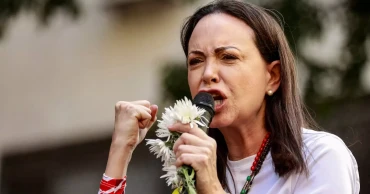
Venezuela’s Machado vows fresh presidential bid, plans return from exile by end of 2026
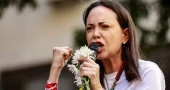
Venezuelan opposition leader and Nobel Peace Prize laureate María Corina Machado has announced plans to run for president again and said she hopes to return to Venezuela before the end of 2026.
Speaking at a meeting with fellow opposition leaders in Panama City on Saturday, Machado reaffirmed her commitment to a democratic transition in Venezuela through “free and fair presidential elections” involving voters both inside and outside the country.
Her remarks came more than four months after the White House shifted its support away from Machado and instead backed acting President Delcy Rodríguez following the US military’s capture of former Venezuelan President Nicolás Maduro.
Machado has been living in exile since December after emerging from nearly 11 months in hiding in Venezuela and travelling to Norway, where she was honoured with the Nobel Peace Prize.
She said any credible presidential election would require significant reforms, including the appointment of neutral electoral authorities, updated voter registration and guarantees allowing opposition candidates to participate without interference.
Machado, widely seen as Maduro’s strongest political rival in recent years, was barred by the government from contesting the 2024 presidential election. She later endorsed retired diplomat Edmundo González Urrutia as the opposition candidate.
Despite officials declaring Maduro the winner, Machado’s campaign claimed it had collected evidence showing González won the election by a margin of more than two-to-one.
“I will be a candidate, but there may be others, of course,” Machado told reporters. “I would love to compete with everyone, with anyone who wants to be a candidate.”
2 months ago
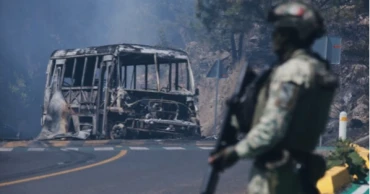
Mexico's military captures top cartel leader
Mexico’s military has captured a senior leader of the powerful Jalisco New Generation Cartel (CJNG), marking another significant setback for the criminal group just two months after its top boss was killed.
Authorities said Audias Flores Silva, also known as “El Jardinero,” was arrested while hiding in a roadside ditch near El Mirador in the northwestern state of Nayarit. No casualties were reported during the operation.
Flores Silva was considered a potential successor to cartel leader Nemesio Oseguera Cervantes, alias “El Mencho,” who was killed in a major military operation in February. His death triggered a surge in cartel violence, including attacks on businesses, vehicle burnings and road blockades that left more than 70 people dead.
Mexican officials said Flores Silva previously served as head of security for Oseguera Cervantes and played a key role in overseeing drug production and trafficking across several states, including Nayarit, Jalisco, Mexico State and Zacatecas.
The United States had offered a $5 million reward for information leading to his arrest and has sought his extradition since 2021 on drug conspiracy and firearms charges.
US Ambassador to Mexico Ronald Johnson welcomed the arrest, calling it an “important step” in tackling criminal networks involved in fentanyl trafficking.
Security analyst David Saucedo described the capture as a “significant blow” to the cartel’s leadership, though he cautioned that such groups often adapt quickly and continue operations despite leadership losses.
The CJNG remains one of the most powerful criminal organisations in the region, with operations spanning much of Mexico and extending to around 100 countries, including the United States.
3 months ago
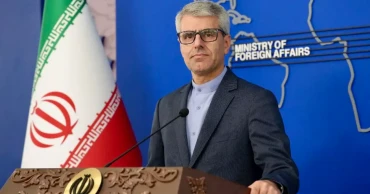
Iran says message exchanges with US ongoing after failed talks
Iran said it is continuing to exchange messages with the United States through an intermediary after recent talks failed to produce a breakthrough.
Foreign Ministry spokesperson Esmail Baghaei said the communication between Tehran and Washington is ongoing via Pakistan following the collapse of discussions on Sunday.
He said Iran’s position has been clearly outlined and reiterated in subsequent contacts.
Baghaei added that Iran is “most likely” to host a Pakistani delegation later on Wednesday as part of continued diplomatic efforts. The visit is expected to include detailed discussions on the respective positions of Iran and the US, building on earlier talks held in Islamabad.
Rejecting US allegations, Baghaei said Iran is not pursuing nuclear weapons and maintained that its nuclear programme remains “peaceful”.
He also stressed that Iran must be allowed to continue uranium enrichment in line with its needs, while indicating that there is room for dialogue regarding the type and level of enrichment.
The third round of nuclear negotiations between Iran and the United States took place on February 26, just two days before the outbreak of the US–Israel war on Iran.
#From BBC
3 months ago
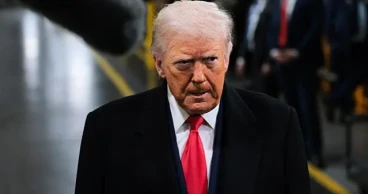
Trump open to ending war with Iran even if Hormuz remains closed
According to The Wall Street Journal, citing US officials, former President Donald Trump has indicated to his aides that he is prepared to conclude the war with Iran even if the Strait of Hormuz stays largely closed.
The WSJ reported that Trump and his team recently assessed that attempting to reopen the strategically vital waterway could prolong the conflict beyond his planned four-to-six-week timeline.
Instead, Trump has decided that the US should focus on its primary objectives: weakening Iran’s naval capabilities and missile stockpiles, then gradually winding down military operations. Following this, the US would apply diplomatic pressure on Iran to resume trade and encourage European and Gulf allies to take the lead in restoring normal shipping, the report added.
#From Al Jazeera
4 months ago
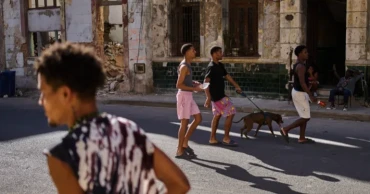
Missing Cuba-bound aid boats found safe, journey resumes
Two sailboats carrying humanitarian aid to Cuba have been located and their crews confirmed safe, a day after Mexican authorities launched a search operation for the missing vessels.
A spokesperson for the Nuestra America Convoy said the boats were found by the Mexican navy and are continuing their journey to Havana with urgently needed supplies.
The two vessels, carrying nine people, departed from Isla Mujeres in Mexico on March 20 and were expected to reach Cuba earlier this week.
The convoy, organised by the Nuestra America initiative, aims to deliver humanitarian assistance to Cuba amid worsening shortages of fuel and essential supplies. The group has criticised US policies, accusing Washington of restricting Cuba’s access to vital resources.
Cuban President Miguel Díaz-Canel had earlier expressed concern over the missing boats. Authorities, including the US Coast Guard, later confirmed that the vessels had been located.
The aid mission comes as Cuba faces a deepening energy crisis, worsened by reduced oil supplies since January. The country has recently experienced multiple nationwide blackouts, raising concerns over healthcare and essential services.
Mexico and other countries have stepped up humanitarian assistance, with shipments of food, medicine and energy supplies being sent to the island.
With inputs from ALJAZEERA
4 months ago
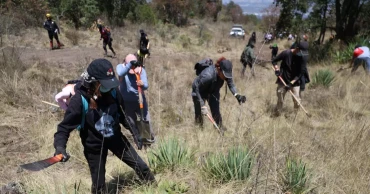
Mexico says a third of 130,000 missing may be alive, drawing criticism from families
The Mexican government reported Friday that around a third of the country’s 130,000 registered missing people may still be alive, citing government records showing signs of life.
The announcement drew swift criticism from families and search groups, who accused authorities of downplaying the scale of Mexico’s disappearance crisis.
Officials said cross-checking vaccination records, birth and marriage registries, and tax filings revealed 40,367 missing people — about 31% of the total — had activity in official records. Authorities confirmed 5,269 of them had been located and marked as “found.” Marcela Figueroa, a top security official, described some cases as voluntary absences, including men leaving partners or women fleeing abusive situations.
However, search groups like those led by Héctor Flores in Jalisco criticized the methodology as “misleading” and lacking transparency. Families argue such reports risk erasing real cases from official counts, undermining ongoing searches.
Officials acknowledged that 46,000 cases lacked sufficient data for tracking, while 43,128 showed no activity in records, with less than 10% under criminal investigation. Figueroa said the government is strengthening oversight of local prosecutor offices and improving case documentation.
Human rights advocates, including the Miguel Agustín Pro Juárez Center, welcomed efforts to improve data reliability but said the report minimized state responsibility and offered little practical help for families, who often continue searches at great personal risk.
Since the drug war began in 2006, disappearances have surged, fueled by cartel violence and, in some cases, state complicity, leaving families demanding transparent, effective measures to locate missing loved ones.
4 months ago
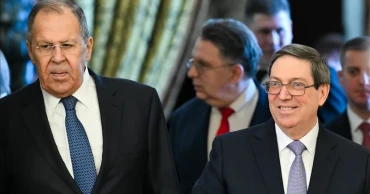
Russia expresses concern over U.S. pressure on Cuba, pledges support
The Russian Foreign Ministry on Tuesday expressed serious concern over escalating U.S. pressure on Cuba, pledging to provide necessary support for the Caribbean nation.
In a statement, the ministry condemned what it called deliberate attempts to interfere in Cuba’s domestic affairs, intimidate the country, and impose illegal unilateral restrictions. Russia reaffirmed its solidarity with the Cuban government and people, and said it would continue offering material and other assistance amid the challenges caused by longstanding U.S. trade, economic, and financial embargoes.
Cuba recently experienced a nationwide power outage, compounded by fuel shortages caused by a tightening U.S. oil blockade. U.S. President Donald Trump has warned that Cuba could “fall pretty soon” while focusing on the ongoing conflict with Iran.
4 months ago