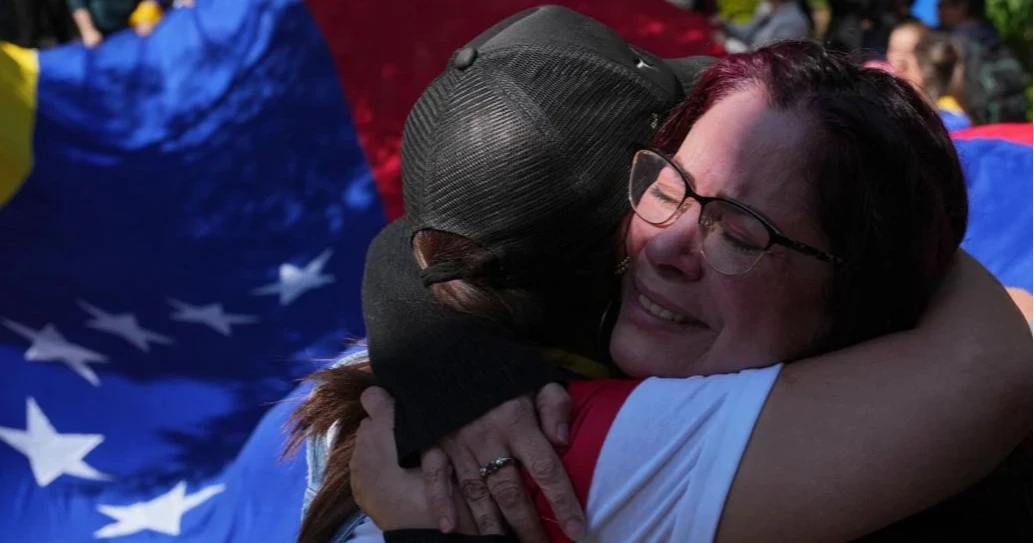
Venezuelans across Latin America expressed mixed emotions after the ouster of former President Nicolás Maduro, with many celebrating the news yet remaining cautious about returning to their homeland, officials and migrants said.
In Peru, 22-year-old graphic designer Yanelis Torres printed T-shirts featuring Maduro with slogans like “Game Over,” which quickly sold out in Lima’s largest textile market. Settled or undocumented, most of the estimated 7 million Venezuelans living in Latin America—including 1.5 million in Peru and 2.8 million in Colombia—welcomed the news but remained wary, particularly after U.S. President Donald Trump said he would work with Maduro’s vice president, now interim President Delcy Rodríguez, rather than opposition leaders.
For many, economic hardship and political uncertainty remain major barriers to returning. Eduardo Constante, 36, who left Venezuela in 2017 amid a hunger crisis, recounted years spent moving across Latin America before attempting to reach the U.S., only to face closed borders. He said he might return if conditions improve, but worries about food shortages and government repression remain.
Experts warn that Venezuelans without legal status face heightened vulnerability to crime and deportation. Yohanisleska de Nazareth Márquez, deported to Mexico with her 3-year-old son, said she plans to apply for asylum in Mexico but fears for her safety. Maureen Meyer of Washington-based WOLA said the diaspora is far from ready to return safely.
The political environment in host countries adds further uncertainty. Chile’s incoming President José Antonio Kast has promised to deport undocumented immigrants, while Peru and Colombia are preparing for elections that could affect migration policies.
Despite the uncertainty, some Venezuelans abroad remain hopeful. Alexander Leal, in Santiago, dreams of returning one day, and Torres continues her business in Lima while maintaining ties to her family in Venezuela.