Middle-East
Trump calls new Iran talks ‘last chance’ to avoid escalation
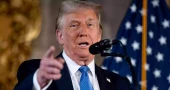
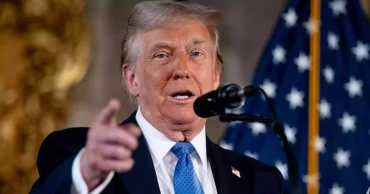
President Donald Trump said Monday that new talks between Washington and Tehran are Iran’s “last chance” to reach a deal and avoid an escalation of US strikes.
Speaking at the Oval Office, Trump said the talks are expected to focus on reopening the Strait of Hormuz and creating a path for Iran to address US concerns over its nuclear programme. He said the status of the negotiations could become clearer “today or tomorrow.”
“The first phase is the opening of the straits. The second phase will be the denuclearization,” Trump said, adding that the second phase would take some time.
Trump said he decided to delay plans for major new strikes on Iran after being urged to do so by Gulf allies Qatar, Saudi Arabia and the United Arab Emirates.
He said US forces had been prepared to carry out “the biggest attack since World War II” on Sunday, but he abandoned the plan to give diplomacy more time after speaking with key Gulf leaders, including Saudi Crown Prince Mohammed bin Salman, and receiving requests from unnamed Iranian officials.
However, Trump again warned that his patience with Iran is running out.
“This is the last chance for them to sign a good document,” he said.
Earlier Monday, Trump criticised Iran on social media, calling it “unbelievably duplicitous” after Tehran said its talks with Oman were focused only on establishing a temporary safe navigation route through the Strait of Hormuz, a key waterway for global oil trade.
Trump said that, whether Iran acknowledges it or not, discussions are taking place on preventing Tehran from developing nuclear weapons.
Since the start of US and Israeli strikes on Iran on Feb 28, Trump has repeatedly threatened to intensify attacks before stepping back from those threats.
Asked why he has repeatedly issued strong warnings against Tehran and then backed away, Trump said he was showing patience because he wanted to avoid further loss of Iranian lives.
“I want to give them every last chance before decapitation,” Trump said. “Hopefully, they’ll come to their senses.”
Critics question Trump’s repeated shifts
Trump could still decide that a major escalation is necessary, but critics say his repeated hesitation may reflect an understanding within his administration that military force alone may not be enough to force Iran to back down and end the months-long war.
“I think what we’re seeing here is a president who has an approach that’s just rather erratic,” Sen. Mark Kelly, an Arizona Democrat on the Senate Armed Services Committee, said on CBS News’ “Face the Nation.”
Kelly said Trump appeared to be trying to return to the situation before the conflict began.
Trump has made similar threats and then backed away several times during the conflict.
In early April, the US and Iran agreed to a two-week ceasefire less than two hours before a deadline Trump had set for Tehran to capitulate or face attacks on bridges and power plants.
On May 18, after days of threats, Trump announced that he was postponing a major planned strike because “serious negotiations” were underway, while crediting Gulf allies for encouraging restraint.
In June, Trump threatened to hit Iran “VERY HARD” and seize its energy base on Kharg Island, but later called off the planned strikes after saying peace talks with senior Iranian officials had made progress.
Saudi crown prince influenced Trump’s decision
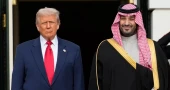
Trump indicated that Saudi Crown Prince Mohammed bin Salman played an important role in his decision to hold back from further escalation.
The US president spoke by phone with the Saudi leader on Saturday, shortly before announcing that he was halting the planned strikes.
According to a person briefed on the call, the crown prince warned that further escalation could have a serious impact on the global economy if Iran responded by attacking US allies in the Gulf.
The person, who was not authorised to speak publicly and requested anonymity, said Saudi officials had told the Trump administration that Saudi Arabia, Qatar and the UAE were capable of defending themselves against potential Iranian attacks.
However, Kuwait could be more vulnerable to attacks by Iran-backed militias in Iraq, the person said.
Republicans concerned over public opinion
Trump has denied that November’s midterm elections are influencing his approach to the Iran conflict, which has already caused concern across the global economy.
However, the issue is drawing attention among Republicans.
About two-thirds of US adults say the war with Iran has not been worthwhile, according to an AP-NORC Center for Public Affairs Research poll published last week. The view is shared by most Democrats and independents, as well as about 37% of Republicans.
Sen. John Kennedy, one of Trump’s strongest allies in Congress, said Sunday that the administration should moderate its approach to Iran.
Speaking on NBC’s “Meet the Press,” the Louisiana Republican pointed to the destruction caused by the US military in Iran and warned that further escalation could push energy prices even higher and fuel inflation.
Kennedy said maintaining sanctions and targeting Iran’s nuclear programme, rather than widening the conflict, could be the better approach for now.
“They’re all hellish choices,” Kennedy said. “But for the moment I’d maintain the status quo.”
4 hours ago
Trump says Iran talks to begin Monday as diplomatic uncertainty persists
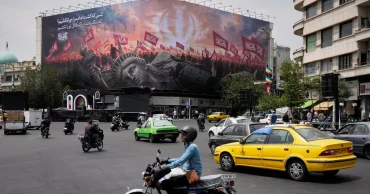
US President Donald Trump said fresh talks aimed at ending the conflict with Iran would begin on Monday after he called off a new round of military strikes, although Iranian officials insisted their current diplomatic efforts are focused on neighbouring Oman rather than direct negotiations with Washington.
Talks between the United States and Iran are seen as key to ending the months-long conflict and restoring normal shipping through the Strait of Hormuz, a vital waterway that handled about one-fifth of the world's traded oil and natural gas before the war.
However, Iran's Foreign Ministry said its current negotiations are with Oman and are limited to ensuring temporary safe navigation through the strategic strait.
Trump, who has repeatedly alternated between threatening military action and offering diplomatic solutions, said Monday that "whether Iran wants to admit it or not, we are, in fact, talking."
Meanwhile, Israel carried out fresh strikes across the Gaza Strip over the weekend, days after the US and Hamas announced they had reached an agreement for the militant group to disarm, a move seen as a possible step toward ending the war in Gaza.
Hospitals in Gaza said at least 17 people, including children, were killed in the latest Israeli strikes. One attack on a residential building in southern Gaza killed three members of the same family, including a four-year-old child, according to Nasser Hospital. The Israeli military said the strikes targeted militants.
Trump announces renewed diplomatic push
Trump said on Sunday that he had decided against launching major strikes on Iran after appeals from Gulf allies, including Qatar, Saudi Arabia and the United Arab Emirates.
According to Trump, the US military had prepared what he described as "the biggest attack since World War II," but he chose to give diplomacy another opportunity after discussions with Gulf leaders and requests from unnamed Iranian officials. He did not disclose further details about the proposed talks or who would participate.
Iran, however, denied holding negotiations with the United States.
Foreign Ministry spokesperson Esmail Baghaei said ongoing discussions are only with Oman, across the Strait of Hormuz, and are focused on establishing a temporary maritime route for safe navigation.
Trade data platform Kpler reported that nine vessels passed through the Strait of Hormuz on Sunday, with most using an Iranian-controlled route.
Responding on his Truth Social platform, Trump criticised Iran's leadership, saying it was "unbelievably duplicitous" for publicly denying talks while allegedly requesting meetings.
Iranian officials visit Iraq and Pakistan
Iranian Foreign Minister Abbas Araghchi arrived Monday in the Iraqi holy city of Najaf to attend Arbaeen commemorations, one of the largest annual gatherings of Shiite Muslims.
His visit comes as Iraq continues balancing relations between Iran and the United States, a task made more difficult following the US-Israel conflict with Iran earlier this year.
At the same time, Iran's Minister of Industry, Mines and Trade Mohammad Atabak travelled to Pakistan for talks expected to focus on easing transit bottlenecks and increasing the movement of Iranian cargo through Pakistani ports during the ongoing US naval blockade.
During the two-day visit, Atabak is scheduled to attend a meeting of the Iran-Pakistan Joint Trade Committee and meet Pakistani Prime Minister Shehbaz Sharif.
Syria, Iraq discuss regional security
Syrian interim President Ahmad al-Sharaa met Iraqi Kurdish regional President Nechirvan Barzani on Monday to discuss strengthening cooperation and improving regional security.
The meeting took place amid rising tensions following a series of drone attacks by Iran-backed Iraqi militia groups targeting US interests in Iraq, including the Kurdish region.
Last month, Syrian authorities said they had intercepted an attempt to smuggle weapons across the Iraqi border that were allegedly destined for the Iran-backed Hezbollah group in Lebanon. Hezbollah rejected the allegation.
Iran executes two convicted of spying for Israel
Iran's judiciary announced Monday that it had executed two men convicted of spying for Israel during both last year's 12-day conflict and the current war.
State-run Mizan news agency identified them as Omid Behzad and Pouria Safvat, saying they had supplied military coordinates, photographs and intelligence used in attacks on Iranian targets. The agency did not disclose where the executions took place.
Last week, Iran also publicly executed two men convicted of killing four police officers during anti-government protests in January.
Gaza heat worsens humanitarian crisis
Extreme summer temperatures are making life even more difficult for hundreds of thousands of displaced Palestinians living in makeshift tents across Gaza.
The plastic-sheet shelters trap heat during the day and offer little ventilation, forcing many families to remain outdoors for long periods.
Aid organisations, including the Norwegian Refugee Council, warned that limited access to clean water, electricity and sanitation, combined with overcrowded camps, has increased the risk of dehydration, heat-related illnesses, skin infections and diarrhoeal diseases.
"It's very hot. We can't stay inside the tents. Our tent is made of nylon," said Aida Abu Hadeesha, who was displaced from Rafah in southern Gaza.
"There is no breeze, nothing, and our kids are suffering," she said, adding that the intense heat continues throughout the night while flies and cockroaches infest the camps.
13 hours ago
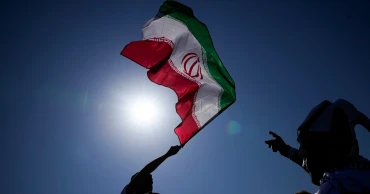
Iran says it perceives every 'enemy' threat as 'noteworthy'
Iran's Acting Defense Minister Seyed Majid Ebn Al-Reza said Sunday that Tehran perceives every "enemy" threat as "real and noteworthy," rejecting any characterization of them as mere psychological warfare.
"We will neither be surprised nor remain passive. We use threats as a basis to increase our preparedness, strengthen our deterrence, and develop our power," Al-Reza wrote on social media platform X after U.S. President Donald Trump said earlier that he had agreed to hold off fresh attacks against Iran.
In his post on Truth Social, Trump said the United States was "locked and loaded and ready to go against the Islamic Republic of Iran, at levels of Military Terror, Strength, and Power not seen since World War II," but held off after being "asked by Iran, and other Middle Eastern Countries," citing a forthcoming deal that would include the "Immediate, Complete, and Total OPENING OF THE HORMUZ STRAIT, and an end to Iran's nuclear threat."
Earlier U.S. media reports had suggested U.S. and Israeli strikes on Iranian energy infrastructure could begin over the weekend.
Israel's Channel 12 news reported Sunday that Iranian Foreign Minister Seyed Abbas Araghchi has agreed to a Qatari-U.S.-brokered compromise deal allowing ships to enter the Gulf through the Iranian-controlled side and exit via Omani waters.
However, Iran's semi-official Fars news agency, citing a source close to the Iranian negotiating team, quickly rejected the claim.
Fars also quoted a military source as saying that as long as the U.S. "hostile and malicious acts" continue, the Strait of Hormuz will remain closed, with vessels permitted to transit only via Iran-designated routes and with the coordination and permission of the Navy of the Islamic Revolution Guard Corps.
The source warned that other routes are unsafe, adding that Iran's policies on the strategic waterway remain unchanged.
Iran tightened its grip on the strait on Feb. 28, barring safe passage of vessels belonging to or affiliated with Israel and the United States following their joint strikes on Iranian territory.
During the past days, the U.S. military launched multiple waves of strikes against Iranian targets, saying they were in response to Iranian attacks on vessels in the strait and aimed at "degrading Iran's ability to threaten commercial shipping."
Iran responded with missile and drone attacks targeting U.S. military bases and facilities in the region.
1 day ago
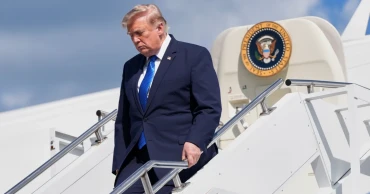
Trump to pause Iran strikes after framework for ending war is reached
US President Donald Trump said Saturday he would order American forces to suspend further strikes on Iran, claiming that key Middle East allies had agreed on the basic framework of a deal aimed at ending the five-month-long war.
In a social media post, Trump said the proposed agreement would ensure the “immediate, complete and total” reopening of the Strait of Hormuz and eliminate what he described as Iran’s nuclear threat.
He said he had decided to cancel a planned attack “for the future benefit of the world” and for “a successful and prosperous Iran,” while making clear the decision depends on the parties being able to quickly reach a final agreement. Trump also said Israel had agreed to work with the United States to complete the deal. Iran did not immediately respond publicly.
The announcement came a day after Trump suggested the US was close to launching renewed large-scale strikes to pressure Tehran into negotiations.
The US and Israel launched attacks on Iran on Feb. 28, saying the campaign was intended to weaken Tehran’s missile capabilities, stop it from developing nuclear weapons and end its support for allied armed groups. However, the goals and timeline of the conflict have shifted repeatedly, and an earlier ceasefire agreement reached in mid-June collapsed within weeks.
Meanwhile, Saudi Crown Prince Mohammed bin Salman expressed concern during a phone call with Trump that any escalation could trigger Iranian attacks on Saudi and other Gulf states’ energy infrastructure, according to a person familiar with the discussion.
Separately, the US State Department issued fresh security alerts for Americans across several Middle Eastern countries, warning of possible flight cancellations, temporary airspace closures and other travel disruptions. Iran has also repeatedly targeted vessels passing through the Strait of Hormuz without its authorization during the conflict.
2 days ago
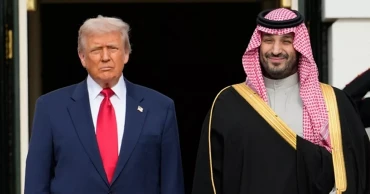
Saudi crown prince urges Trump to avoid escalating Iran conflict
Saudi Crown Prince Mohammed bin Salman urged US President Donald Trump not to escalate the conflict with Iran during a phone conversation on Saturday, as Trump considers launching new military strikes against Tehran, according to a person familiar with the discussion.
The call, first reported by media, came amid growing concerns in Riyadh that US attacks on Iran’s energy facilities or other critical infrastructure could trigger retaliatory strikes against Saudi Arabia and other Gulf states’ energy assets. The source, who was not authorized to speak publicly, said the crown prince sought clarification from Trump about the military options under consideration.
Trump warns of continued military action against Iran
A White House official confirmed the leaders spoke but declined to disclose details of the conversation.
Earlier this week, Saudi Arabia joined the United States in strikes targeting logistics and weapons facilities used by Iranian-backed militias in Iraq, while continuing to advocate renewed US-Iran negotiations to end the five-month conflict. The crown prince also sent Saudi Defense Minister Khalid bin Salman to Washington for separate meetings with Trump and Vice President JD Vance on Iran strategy.
Trump has vowed retaliation after Iran’s failed attack on a US base in Jordan. The State Department on Saturday issued security alerts for Americans in 10 Middle Eastern countries, warning of possible flight disruptions and heightened regional risks as tensions continue to rise.
2 days ago
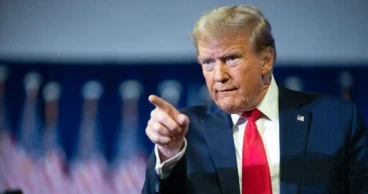
Trump warns of continued military action against Iran
US President Donald Trump has threatened further military strikes against Iran as Washington presses for the reopening of the Strait of Hormuz, amid escalating tensions across the Middle East.
Speaking at Camp David on Friday, Trump said the US would continue striking Iran "very hard" until it could no longer sustain the conflict. White House Press Secretary Karoline Leavitt accused Tehran of violating a truce memorandum, attacking commercial ships and killing US troops, warning that Iran would continue to face consequences.
Trump announces Hamas disarmament agreement, but challenges remain
The US State Department also issued heightened security alerts for Americans in 10 regional countries, citing risks of flight disruptions and airspace closures.
On Saturday, Kuwait said its forces responded to fresh Iranian drone attacks targeting key facilities, though no casualties were reported. Separately, two tanker-related incidents occurred in the Strait of Hormuz off Oman, with one vessel sustaining engine room damage after being hit by a projectile.
In Gaza, Israeli strikes killed at least four people after Hamas announced it was willing to disarm under a US-brokered ceasefire framework. Israel said it targeted Hamas positions and weapons storage sites. Egypt welcomed Hamas's response, while Israeli far-right minister Itamar Ben-Gvir rejected the proposal.
Elsewhere, Yemen's Houthi rebels diverted Saudi shipping, Israel destroyed an alleged Hezbollah tunnel network in southern Lebanon, and Lebanese President Joseph Aoun criticised the operation ahead of planned talks in Rome. An Israeli army officer was also wounded during operations in southern Lebanon.
2 days ago
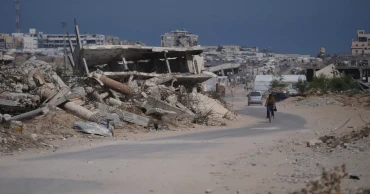
Hamas agrees to disarm under Gaza ceasefire roadmap
Hamas said Friday it has agreed to a phased roadmap to disarm, a significant step that could help end the war in Gaza if Israel also fulfills key conditions, including ending hostilities and withdrawing its forces from the Palestinian territory.
Senior Hamas official Bassem Naim confirmed the agreement on X, while a Hamas official and a regional official told media the group's commitment is contingent on Israeli concessions. Israel has not commented on the deal announced earlier by U.S. President Donald Trump, nine months after a U.S.-brokered 20-point ceasefire plan was signed.
The agreement calls for Hamas to surrender weapons, dismantle tunnels, facilitate an Israeli troop withdrawal, establish a new Palestinian technocratic government, deploy an International Stabilization Force (ISF) and begin Gaza's reconstruction. Police weapons would be transferred to the U.S.-backed National Committee for the Administration of Gaza, while heavy weapons and tunnels would be decommissioned in phases linked to Israel's withdrawal.
Israel, however, has insisted it will not withdraw from areas under its control until Hamas is fully disarmed. U.S., Turkish, Egyptian and Qatari mediators are guaranteeing the deal, though Israel is not a signatory. Officials said the disarmament process could take 200-350 days. The war began after Hamas' Oct. 7, 2023 attack that killed about 1,200 people, while Gaza's Health Ministry says Israel's offensive has killed more than 73,000 Palestinians.
3 days ago
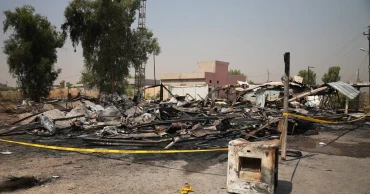
US launches strikes on Iranian targets after foiling missile attack on American forces
The US military said early Thursday that it had completed what it called “a heavy wave of strikes against Iran” in response to an earlier Iranian missile attack on a US base in Jordan.
US Central Command said in a social media post that over a two-hour period, US forces struck “dozens” of targets linked to Iran’s Revolutionary Guard Corps, including military command centers, missile and drone facilities, and coastal surveillance and defence sites.
The US military launched the retaliatory strikes on Iranian targets Wednesday following Tehran’s attack on American forces in Jordan. The strikes came after the US, together with Saudi Arabia, attacked Iran-backed militias in neighbouring Iraq, killing at least 20 fighters and six Iranian advisers.
The latest strikes came hours after US President Donald Trump vowed to hit Iran “very hard” after Tehran targeted a base in Jordan that hosts US troops.
Iranian state media reported that two people were injured in attacks on Qeshm Island in the Strait of Hormuz. Explosions were also reported in Khuzestan province in southwestern Iran.
Meanwhile, drone strikes set fire to two natural gas vessels at Egypt’s Damietta port, according to British maritime security firm Ambrey.
It was not immediately clear who was behind the attacks on a US-owned floating storage facility and a Greek-owned tanker. No injuries were reported.
5 days ago
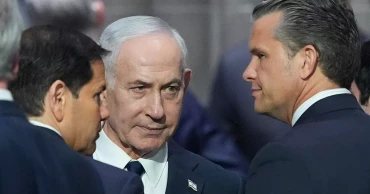
US-Iran conflict enters new phase as Saudi Arabia joins strikes, diplomacy stalls
The stop-start conflict between the United States and Iran appears to have entered a new phase, with Saudi Arabia publicly joining military action against Tehran-backed proxies as diplomatic efforts to end the war once again falter amid deepening mistrust between the two longtime adversaries.
Despite several days of relative calm, both sides carried out military strikes over the past 24 hours, raising fears of a return to full-scale fighting and further regional escalation. At the same time, it remains unclear whether either Washington or Tehran has a clear strategy for ending the conflict.
While President Donald Trump and his allies have recently claimed that Iran is eager to return to negotiations, Iran's Deputy Foreign Minister said Tuesday that Tehran had made no request to resume diplomatic talks for more than two weeks.
After an attempted attack on a US base in Jordan was thwarted, Trump returned to threatening Iran on Wednesday while keeping open the possibility of further negotiations.
"They've already apologized, but, you know, we got to smack them a little bit," Trump told reporters in the Oval Office. "It's our turn, and we'll see if we get there with an agreement at some point. But we're going to hit them very hard."
Hours later, the US military said it had launched "a powerful response to yesterday's attempted Iranian attacks on U.S. forces based in the Middle East" in a social media post. It did not immediately provide details about the targets.
The latest developments reflect a pattern seen repeatedly over the past several months, with Trump alternating between saying a deal to end the war and address Iran's nuclear programme was close and issuing threats aimed at forcing Tehran to accept US demands.
The stakes are particularly high for Trump and his Republican Party as the unpopular conflict has disrupted the global economy only months before the crucial November midterm elections. Renewed fighting has also resulted in more US military casualties and raised concerns that Washington is depleting stocks of key air defence systems needed to protect its troops and allies.
Saudi Arabia enters conflict as Israel steps back
Iran said it fired ballistic missiles at Jordan's Muwaffaq Salti Air Base, a key US military facility in the region, over the past day. Trump said the missiles were intercepted.
Saudi Arabia, meanwhile, joined the United States in striking several logistics and weapons facilities used by Iranian-backed militias in Iraq.
The first publicly announced joint US-Saudi strikes came after drone attacks targeted Saudi Arabia, further complicating a conflict that now involves nearly every country in the region. A US official, speaking on condition of anonymity to discuss sensitive military operations, said the two attacks were not linked.
Saudi Defense Minister Khalid bin Salman was at the White House on Wednesday, where he separately met Trump and Vice President JD Vance, according to a person familiar with the matter who was not authorised to speak publicly.
Drone attacks also caused fires on two natural gas vessels at a port in Egypt, a close US ally and regional mediator. Egypt has so far been among the few Middle Eastern countries spared direct military action during the war.
If the attack is confirmed to have been carried out by Iran or its allies, it would represent a significant expansion of the conflict.
The US-Saudi strikes came hours after Israeli Prime Minister Benjamin Netanyahu left his first meeting with Trump since the two countries launched their war against Iran on Feb. 28.
An Israeli official briefed on Tuesday's White House meeting said Netanyahu assured Trump that the United States, rather than Israel, was leading the policy toward Iran. The comment appeared aimed at countering suggestions that Netanyahu was increasingly out of step with Washington over the way forward.
However, Israeli officials have privately expressed concern that Trump is seeking to keep the conflict at a low level as the midterm elections approach, according to a person familiar with internal discussions within Netanyahu's government. Both the person and the Israeli official spoke on condition of anonymity because they were not authorised to discuss the matter publicly.
The person said Israeli officials are also increasingly concerned about Trump's sensitivity to rising oil prices as the Strait of Hormuz remains effectively closed to global energy shipments. They are also worried about growing concerns within the US administration over the rapid use of critical missile interceptors.
The recent fighting with Iran has further reduced US stocks of Patriot and THAAD interceptors, which were already limited, potentially increasing risks to American troops if hostilities resume, according to an analysis released this week by the Center for Strategic and International Studies, a Washington-based think tank.
Gen Dan Caine, chairman of the Joint Chiefs of Staff, has also warned Trump that the condition of US munitions stocks could affect military operations against Iran, another US official said.
The official, who spoke on condition of anonymity to discuss sensitive conversations, said Caine delivered the message as part of his regular responsibility to provide Trump with military advice and options.
Failed diplomacy clouds prospects for US-Iran talks
The Trump administration currently appears to have no clear strategy for restarting negotiations with Iran over ending the conflict.
Although some mediators have been working to revive talks or establish conditions for their resumption, the administration is not actively pursuing negotiations at present, a senior US official said.
The official, who spoke on condition of anonymity to discuss internal deliberations, said recent developments in the region indicate that a return to direct diplomacy is not imminent.
Analysts say the uncertainty and lack of a clear strategy are rooted in deepening mistrust between Washington and Tehran, particularly after an interim ceasefire proposal agreed in mid-June collapsed in recent weeks.
Ali Vaez, Iran project director at the International Crisis Group, said senior Iranian officials had been nearly unanimous in approving the memorandum of understanding with the United States.
"But now none of them believe that Trump is a reliable negotiating partner," he said. "The problem, I think, is that Trump also has now the same impression about the Iranians."
The repeated cycle of negotiations, breakdowns and military strikes is not entirely unexpected.
US-Iran relations since the 1979 Islamic Revolution have been marked by failed negotiations, false starts and military actions that stopped short of full-scale war, although the two countries are now engaged in a much more serious conflict.
Despite its shortcomings, the 2015 nuclear agreement reached with Iran under the Obama administration was the first major agreement between the two countries since the Algiers Accords in 1981, which ended the US hostage crisis and established a framework for resolving other disputes, including the unfreezing of Iranian assets held by the United States since the Islamic Revolution.
However, both sides accused each other of violating the terms of the agreements from the outset.
Disputes over alleged violations of the Algiers Accords contributed to a period of intense hostility, including US support for Saddam Hussein's Iraq during the 1980-88 Iran-Iraq war.
Relations improved somewhat after the 2015 nuclear deal, but Trump's decision to withdraw from the agreement in 2018 during his first term, his "maximum pressure" sanctions campaign against Tehran and the US killing of Iran's top military commander Qassem Soleimani in early 2020 pushed relations to new lows.
5 days ago
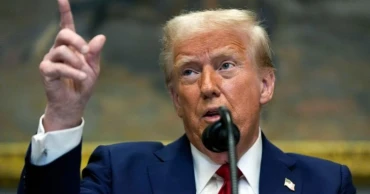
Trump threatens strikes on Iran after attacks on US forces
US President Donald Trump on Wednesday vowed a strong military response against Iran following ballistic missile attacks targeting American forces in the Middle East a day earlier.
"We'll be hitting them hard," Trump said in an interview with media. "They're going to get a beating."
Despite the warning, Trump said his administration would continue to allow Iranian officials to participate in ongoing negotiations.
Iraqi president condemns Saudi-US strikes on PMF as sovereignty violation
The US president also said he was considering issuing additional warnings to Iran-backed groups operating across the region.
Earlier, the US Central Command (CENTCOM) said US and Saudi fighter jets carried out strikes on several logistics and weapons facilities in eastern Iraq on Tuesday night. The operation came in response to more than 30 drone attacks allegedly directed by Iran's Islamic Revolutionary Guard Corps (IRGC) over the previous 72 hours.
Meanwhile, the Iraqi presidency strongly condemned the US-Saudi airstrikes targeting the country's paramilitary Popular Mobilisation Forces (PMF), describing them as "unacceptable aggression" and a "flagrant violation of Iraq's sovereignty."
5 days ago