
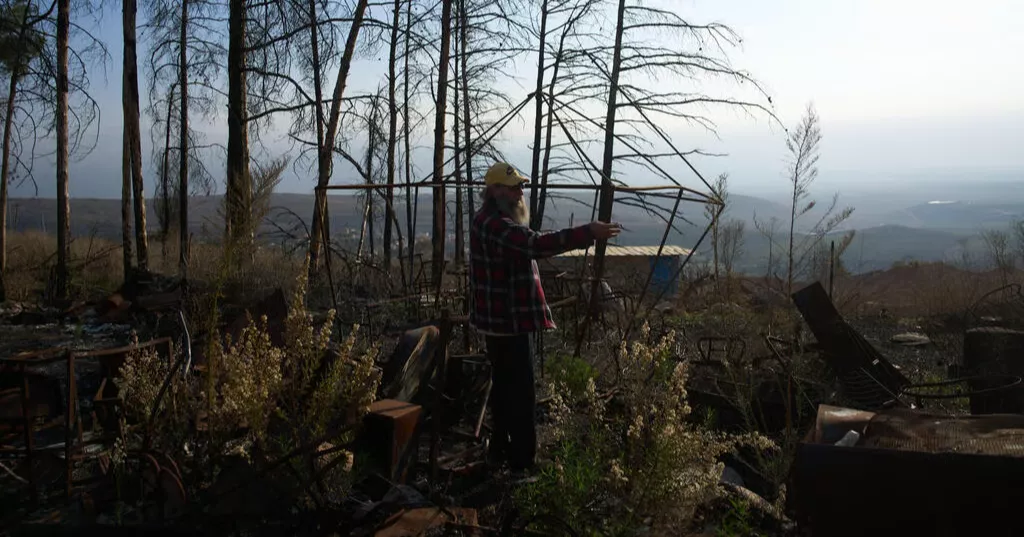
More than a year after a fragile ceasefire took hold along the Israel-Lebanon border, residents of war-battered towns like Metula say they are still struggling to rebuild their lives as renewed tensions unsettle the region.
In Metula, Israel’s northernmost town, Ilan Rosenfeld walks through the burnt-out remains of the café and farm he built over four decades. Clay plates lie shattered on the ground and twisted metal from Hezbollah rockets is scattered in the rubble.
“Everything I had, everything I built is gone,” Rosenfeld said, adding that he now wakes up each day “with only tears left.”
He was among tens of thousands forced to flee when fighting erupted between Israel and Hezbollah in October 2023, after Hamas’ attack in southern Israel triggered a wider regional conflict.
Although the Israeli government says most displaced residents have returned, large parts of the border communities remain half-empty. Metula has seen just over half of its 1,700 residents come back. Many returned to damaged homes, ruined orchards and businesses unable to recover.
Local authorities say around 60% of homes in the town were hit by rocket fire. Others, left untended for months, were destroyed by rats. Tourism and agriculture — the backbone of the local economy — have been devastated, prompting some business owners to bring in workers from Thailand to fill labour gaps.
Jacob Katz, who runs a produce business, said many workers never came back after the war. “We’ve lost a lot, and we can’t read the future,” he said.
Rosenfeld now sleeps in a small shelter next to the ruins of his café, steps away from a military watchtower and armoured vehicles. He says repeated appeals for government aid have gone unanswered.
Metula’s deputy mayor, Avi Nadiv, said residents feel abandoned. “The government needs to do much more for us. People living on Israel’s northern border are the country’s human shield,” he said.
A spokesman for the Cabinet minister overseeing reconstruction claimed local officials had failed to use funds already allocated, blaming “political considerations.”
Meanwhile, Israeli strikes in southern Lebanon have continued, with several reported weekly. Hezbollah has refused to disarm fully unless Israel withdraws from disputed areas, keeping the border tense despite the ceasefire reached in late 2024.
A November U.N. report said at least 127 civilians had been killed in Lebanon since the ceasefire, calling some of the Israeli strikes “war crimes.” Israel insists its operations target Hezbollah positions and that the group uses civilians as shields.
Last week, Israel killed Hezbollah’s top military commander in Beirut, raising fears of further escalation. The group has yet to respond.
On the ground in Metula, signs of tension are everywhere. Public shelter maps have been updated and explosions from military drills echo through the hills.
Farmer and reservist Levav Weinberg said his children are too frightened to ride their bikes. His family returned in July to keep their business alive but now they are reconsidering.
“The army cannot protect me and my family,” he said. “Living in Metula means sacrificing your family these days. It’s not an easy life, and at some point the kids pay the price.”