Middle-East
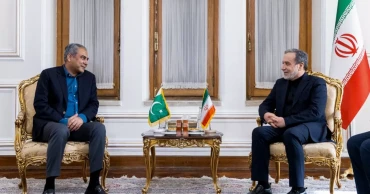
US-Iran talks set for today in Switzerland as Tehran claims Hormuz closure amid Lebanon conflict
US and Iranian negotiators are set to meet in Switzerland on Sunday discuss key details of an interim agreement aimed at ending the ongoing conflict, as tensions remain high over fighting in Lebanon and Iran's claim that it has again closed the Strait of Hormuz.
Iran said the strategic waterway was shut in response to continued Israeli military operations in Lebanon, warning that progress in negotiations would be difficult without a halt to the violence. However, the United States rejected the claim, insisting that maritime traffic through the strait remains uninterrupted.
US President Donald Trump warned that Washington could impose tolls on vessels using the Strait of Hormuz if a final agreement with Iran is not reached within 60 days. Under the interim deal, ships are allowed toll-free passage during the negotiation period.
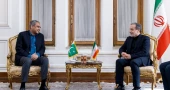
The talks, mediated by Pakistan and Qatar, are expected to focus on Iran’s nuclear programme, regional security issues and steps toward a broader ceasefire. US Vice President JD Vance arrived in Switzerland alongside senior American negotiators, while Iran’s delegation is led by Parliament Speaker Mohammad Bagher Qalibaf and includes Foreign Minister Abbas Araghchi.
Iranian Foreign Ministry spokesperson Esmail Baghaei said negotiations on a permanent agreement would depend on all parties fulfilling their commitments under the interim accord, warning that failure to do so could jeopardise the entire understanding.
Meanwhile, the Strait of Hormuz remains a key point of contention. Iran’s military command claimed the waterway had been closed because of what it described as a US failure to uphold commitments related to ending the conflict. The US military disputed the assertion, saying commercial shipping continues normally and that dozens of vessels carrying more than 17 million barrels of oil passed through the strait on Saturday.
The interim agreement, signed earlier this week by Trump and Iranian President Masoud Pezeshkian, provides a 60-day window for negotiators to reach a comprehensive nuclear deal and includes provisions for lifting restrictions on Iran’s oil exports and unfreezing billions of dollars in Iranian assets.
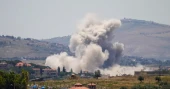
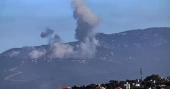
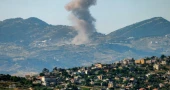
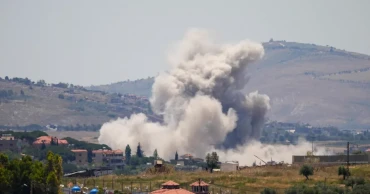
In Lebanon, Israeli airstrikes on Saturday reportedly killed at least 16 people, including two children, according to Lebanese media and officials. Hezbollah said it would observe a ceasefire if Israel does the same, while an Israeli military official indicated that forces had received updated instructions to cease offensive operations and remain in a defensive posture.
The latest escalation has pushed the death toll in the Israel-Hezbollah conflict beyond 4,000, according to Lebanon’s health ministry. Diplomatic efforts to secure a broader ceasefire are expected to continue in Washington next week through US-backed talks involving Lebanon and Israel.
1 month ago
Iran-US talks to begin in Switzerland on Sunday, Pakistan says
Technical-level talks between Iran and the United States on implementing their interim agreement will begin on Sunday in Bürgenstock, Switzerland, with Qatari mediators also taking part, Pakistan said on Saturday.
In Washington, US Vice President JD Vance confirmed that senior American negotiators Jared Kushner and Steve Witkoff were already in Switzerland and were working on the technical aspects of discussions related to Iran's nuclear programme.
Speaking to Fox News, Vance said he expected to travel to Switzerland "sometime in the next couple of days," while noting that coordinating the negotiations remained delicate.
The announcement came as Iran sent mixed signals over the future of the interim agreement following continued Israeli attacks in Lebanon.
Earlier on Saturday, Iran's joint military command announced that it had again closed the Strait of Hormuz, accusing the United States of acting in bad faith and failing to stop Israel's military operations in Lebanon.
In a statement carried by Iranian state television, the military command warned that additional measures had been planned if what it described as "aggression" continued.
Shortly afterward, Iranian state media reported that the country's negotiating team was heading to Switzerland, a trip that had originally been scheduled for Friday.
However, Iranian Foreign Ministry spokesperson Esmail Baghaei indicated that substantial progress in the negotiations was unlikely unless Washington fulfilled its commitments under the interim deal.
"This trip is therefore about demanding that the other side fulfill its obligations," Baghaei said, adding that talks on a final agreement would begin only after key commitments were honoured.
He warned that failure to implement those commitments could jeopardise the entire memorandum of understanding reached between the two sides.
The interim agreement, signed earlier this week, had led to the reopening of the Strait of Hormuz and revived hopes for broader negotiations over Iran's nuclear programme and regional stability. However, several key issues remain unresolved, and tensions over the fighting in Lebanon continue to threaten the fragile accord.
1 month ago

Iran closes Strait of Hormuz over Israeli attacks in Lebanon as death toll rises
The Iranian central military command announced on Saturday that it was closing the strategic Strait of Hormuz in response to Israel's deadly attacks in Lebanon, while the death toll from Israeli strikes across the country climbed to at least 32 amid renewed hostilities.
In a statement carried by Iranian state television, the Khatam-al Anbiya Central Headquarters said the closure of the Strait of Hormuz was a response to what it described as Israel's violation of commitments under Iran's agreement with the United States.
"It is hereby announced that the Strait of Hormuz will be closed to vessel traffic," the statement said, warning that further measures could follow if the attacks continued.
The latest development came as Israel continued airstrikes across Lebanon despite international efforts to secure a ceasefire.
According to Lebanon's National News Agency, an Israeli strike hit a house in Sohmor in the western Bekaa Valley, killing four members of a family and injuring another person. Rescue teams were continuing efforts to rescue a child trapped beneath the rubble.
Lebanon's Health Emergency Operations Centre said another Israeli strike on Qanarit, in the Sidon district, killed at least seven people and wounded 13 others in a preliminary toll.
The overall death toll from Israeli attacks across Lebanon since dawn has risen to at least 32, according to Lebanese authorities.
Meanwhile, the Israeli military said Hezbollah had fired more than 50 projectiles overnight toward Israeli forces operating in southern Lebanon.
The military also said its forces had struck dozens of Hezbollah targets, including rocket-launch positions, weapons storage sites and command centres in southern Lebanon.
The renewed violence has heightened fears of a broader regional escalation and raised fresh concerns over the implementation of the recently signed US-Iran agreement aimed at ending hostilities across the region.
Source: Al Jazeera
1 month ago
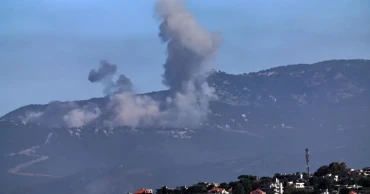
Iran sends negotiating team to Switzerland for talks with US amid renewed regional tensions
Iran's negotiating team is travelling to Switzerland for talks with the United States on implementing their interim agreement aimed at ending the recent conflict, Iranian state television reported on Saturday.
The broadcaster, citing Foreign Ministry spokesperson Esmail Baghaei, said the trip had been rescheduled after an earlier plan to hold the talks on Friday was cancelled.
The announcement came shortly after Iran's joint military command said the Strait of Hormuz had been closed again, blaming continued Israeli attacks in Lebanon.
Speaking to state television, Baghaei said that any agreement ultimately faces its real test during the implementation phase.
Iranian officials had earlier refused to travel to Switzerland, insisting that the fighting between Israel and Hezbollah in Lebanon must stop before the negotiations could proceed. US Vice President JD Vance also postponed his planned trip.
Baghaei told the semi-official ISNA news agency that Pakistan's interior minister would visit Iran as part of ongoing diplomatic efforts related to the negotiations. He added that consultations through mediators were continuing regarding the next phase of talks to draft a final agreement between Tehran and Washington.
According to Baghaei, the Switzerland meeting was not considered urgent because the initial agreement had already been signed digitally earlier this week, and plans were being made to hold the discussions in the coming days.
The Swiss Foreign Ministry confirmed that diplomats were meeting on Saturday in the town of Bürgenstock to discuss implementation of the US-Iran agreement, although it did not provide further details.
1 month ago
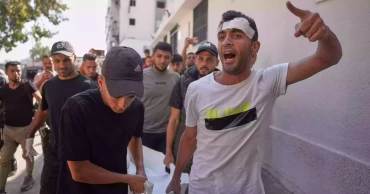
Israeli strike in Gaza City kills two children despite ongoing ceasefire
An Israeli airstrike on an apartment in Gaza City early Saturday killed at least two children, Palestinian health officials said, as deadly violence continued in the Gaza Strip despite a ceasefire between Israel and Hamas.
According to Gaza's Health Ministry, the strike occurred around 2 a.m. local time and hit a residential apartment in Gaza City. Rescue teams were still searching through the rubble, with authorities expecting the death toll to rise. No immediate information was available on the number of injured.
The victims were identified as two sisters, four-year-old Zina and 14-year-old Lana. Their bodies were taken to the morgue at Shifa Hospital, where grieving family members gathered.
An Associated Press journalist at the scene reported seeing scattered debris and bloodstained chunks of concrete following the attack.
Mohammad Safadi, a cousin of the two girls, said he and his wife were also injured in the strike.
“I was sitting at home. The rocket fell on us without a warning,” he said, questioning the effectiveness of the ceasefire and insisting that the family were civilians.
The Israeli military did not immediately comment on the incident but said it was looking into the matter. Israel has repeatedly said its operations target Hamas and other militants it considers security threats.
Despite a ceasefire that took effect in October, Israeli attacks have continued almost daily in Gaza. The Gaza Health Ministry said more than 1,007 Palestinians have been killed in the enclave since the truce began.
The ministry also reported that the overall Palestinian death toll from the war has risen to 73,018, including those killed after the ceasefire.
The conflict began on October 7, 2023, when Hamas-led militants launched an attack on southern Israel, killing about 1,200 people and taking 251 others hostage, according to Israeli figures.
Israel says five of its soldiers have been killed since the ceasefire took effect.
The Gaza Health Ministry, which operates under the Hamas-run government, does not differentiate between civilian and militant deaths but says women and children account for around half of those killed. The ministry's casualty figures are generally regarded as credible by United Nations agencies and independent experts.
1 month ago
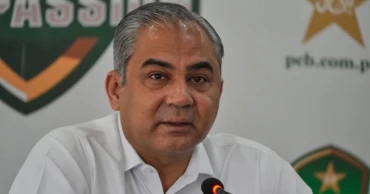
Pakistan steps up diplomatic role in Iran-US nuclear talks
Pakistan Interior Minister Syed Mohsen Naqvi has travelled to Tehran for meetings with senior Iranian officials as Islamabad continues efforts to mediate between Iran and the United States over nuclear negotiations, media says.
The visit is intended to review and follow up on the progress of talks between Tehran and Washington, the source said. Naqvi left for Tehran on Saturday and is expected to hold discussions with senior Iranian authorities during the visit.
Truce reached between Israel and Hezbollah amid delays in US-Iran negotiations
The trip marks Naqvi’s latest engagement as part of Pakistan’s diplomatic efforts to facilitate communication between Iran and the US.
During his previous visit to Iran on June 7, Naqvi met with Iranian Foreign Minister Abbas Araghchi and Interior Minister Eskandar Momeni.
Pakistan has been seeking to play a mediating role amid ongoing discussions between the two countries over Iran’s nuclear programme.
1 month ago
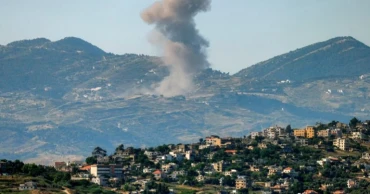
Israel continues Lebanon strikes despite ceasefire agreement
Israel continued military operations in southern Lebanon on Friday despite a reported ceasefire agreement with Hezbollah, raising concerns that the fragile truce could collapse and undermine broader regional peace efforts.
US and Gulf officials said Israel and Hezbollah had agreed to halt hostilities under a ceasefire brokered by Qatar, the United States and Iran. The truce was scheduled to take effect at 4pm local time.
Israeli strikes in Lebanon threaten Iran-US deal as Switzerland talks postponed
However, reports from southern Lebanon indicated that at least 12 Israeli air raids and continued artillery shelling occurred after the ceasefire deadline.
According to Lebanon’s Health Ministry, Israeli attacks launched from midnight through Friday killed at least 47 people and injured 97 others.
A senior US official told media that the ceasefire had been reached through US and Qatari mediation with Iranian assistance. Hezbollah and Israeli officials also confirmed the agreement, with Hezbollah saying it would hold if Israel respected it.
The next round of Lebanese-Israeli talks is scheduled in Washington from June 23-25, the US State Department said.
UN spokesperson Stephane Dujarric welcomed reports of the ceasefire and urged all parties to respect existing arrangements and pursue dialogue for lasting stability.
1 month ago
Israel, Hezbollah agree to ceasefire under broader US-Iran peace framework
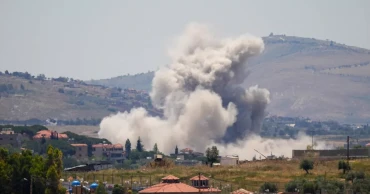
Israel and Lebanon’s Hezbollah have agreed to a ceasefire, a senior US official confirmed on Friday, marking a significant step toward easing tensions on one of the most volatile fronts linked to the recent Iran conflict.
The ceasefire took effect at 4:00 pm local time (1400 GMT), following a surge in violence that left at least 18 people dead in southern Lebanon after overnight Israeli airstrikes, according to Lebanon’s Health Ministry. Israel also reported the deaths of four soldiers in the fighting.
The Israeli military confirmed the truce, with IDF spokesperson Brig. Gen. Effie Defrin stating that a ceasefire was now in effect while emphasizing that Israeli forces remained ready to resume military operations if necessary.
The agreement comes days after the United States and Iran signed a deal aimed at ending the war involving Iran and reducing tensions across the region. The accord includes provisions calling for an immediate halt to military operations on all fronts, including Lebanon.
According to the memorandum of understanding between Washington and Tehran, the first provision calls for the “immediate and permanent” cessation of military activities across the region. The agreement also commits all parties to respecting Lebanon’s territorial integrity and sovereignty.
The 14-point framework outlines several broader measures, including the reopening of the Strait of Hormuz to international shipping, guarantees that Iran will not develop nuclear weapons, a proposed $300 billion reconstruction programme for Iran, and the eventual removal of all US sanctions on Tehran.
US officials have previously clarified that while Lebanon is covered by the ceasefire arrangement, a withdrawal of Israeli forces from Lebanese territory is not a requirement under the agreement. They also stressed that Israel retains the right to act in self-defence if necessary.
The ceasefire is expected to reduce immediate tensions along the Israel-Lebanon border, although questions remain over the long-term implementation of the broader regional agreement and the future status of Israeli military positions in southern Lebanon.
Source: BBC
1 month ago
US-Iran talks postponed as Israel-Hezbollah fighting intensifies in Lebanon
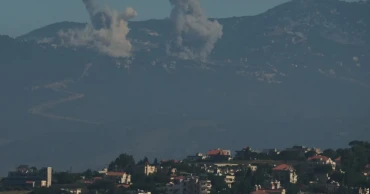
Planned talks between the United States and Iran were postponed on Friday after renewed fighting between Israeli forces and Hezbollah in southern Lebanon, raising fresh concerns about the durability of a preliminary agreement aimed at ending the recent Iran conflict.
Iranian officials cancelled a scheduled trip to Switzerland for negotiations with US representatives, insisting that hostilities in Lebanon must cease before discussions can proceed, according to regional officials and a source familiar with the matter. US Vice President JD Vance also delayed his planned visit.
The postponement came as Israeli airstrikes targeted multiple locations in southern and eastern Lebanon overnight, while Hezbollah reported fierce clashes on the ground. Lebanon’s Health Ministry said at least 21 people were killed, while Israel reported the deaths of four soldiers.
The confrontation between Israel and the Iran-backed Hezbollah movement remains one of the most sensitive aspects of the broader Iran-US agreement. Although neither Israel nor Hezbollah is a party to the deal, the accord is intended to halt regional hostilities, including fighting between the two sides.
The interim agreement has already helped restore stability in Iran and the Gulf region and facilitated the reopening of the Strait of Hormuz, a key global energy route that had been severely disrupted by Iranian attacks and threats.
Future negotiations are expected to focus on securing a permanent settlement to the conflict and addressing concerns over Iran’s nuclear programme, which was at the centre of the war involving Israel, the United States and Iran that began on February 28.
According to the Israeli military, four soldiers, including a lieutenant colonel, were killed in an attack on a tank near the southern Lebanese city of Nabatiyeh. Five other soldiers were wounded in a separate drone attack.
In response, Israel launched airstrikes against what it described as Hezbollah infrastructure in Nabatiyeh and other areas, accusing the group of violating the ceasefire. Additional strikes were reported in Lebanon’s eastern Bekaa Valley, including the village of Douris.
Israeli Prime Minister Benjamin Netanyahu vowed a strong response, saying Hezbollah would pay a heavy price for attacks on Israeli soldiers and territory.
Hezbollah confirmed targeting Israeli tanks, saying its actions were retaliation for Israeli ceasefire violations. The group said Israeli troops had attempted to advance toward the strategically important Ali al-Taher hill overlooking Nabatiyeh.
The renewed violence has displaced residents in parts of southern Lebanon, with many fleeing their villages amid fears of further escalation.
Disagreements over Israel’s continued military presence in southern Lebanon also remain unresolved. Iran has repeatedly demanded a full Israeli withdrawal, while Netanyahu has maintained that Israeli troops will remain in a security zone for as long as security conditions require.
The latest developments have added strain to relations between Washington and Jerusalem, with reports indicating growing criticism from US President Donald Trump toward Netanyahu’s handling of the situation.
Sources familiar with the negotiations said Iran refused to begin the Switzerland talks while Israeli military operations in Lebanon continued. The White House had earlier attributed Vance’s postponed trip to logistical reasons.
Regional officials said mediators are working to reschedule the talks, although uncertainty remains over when discussions can resume.
Meanwhile, shipping activity through the Strait of Hormuz has improved significantly, with the United States reporting that more than 12.5 million barrels of oil passed through the waterway on Wednesday. However, analysts say it could take weeks or months before energy exports fully return to normal levels.
Iran’s newly established authority overseeing the strait announced Friday that vessels would be required to register with it, although security, safety and environmental service fees would be waived during the 60-day period outlined in the interim agreement.
Negotiators still face major challenges in reaching a comprehensive nuclear accord. Iran insists its nuclear programme is for peaceful purposes, although the International Atomic Energy Agency says Tehran possesses highly enriched uranium that could potentially be used to produce nuclear weapons.
Under the interim agreement, negotiators have 60 days—subject to extension—to reach a final nuclear deal. The framework includes incentives for Iran, such as the eventual lifting of international sanctions and a proposed $300 billion fund for post-war reconstruction.
The United States has already eased some restrictions by allowing Iran to resume oil exports and by lifting its blockade on Iranian ports. The agreement also envisages the release of frozen Iranian assets, although the timing remains uncertain.
1 month ago
Israeli strikes kill 18 in Lebanon as Hezbollah attacks leave four Israeli soldiers dead
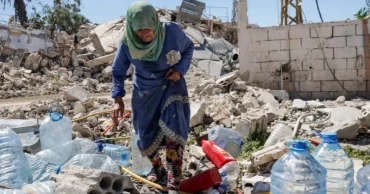
At least 18 people were killed in southern Lebanon following a series of Israeli air strikes overnight, Lebanon's health ministry said, while the Israeli military reported that four of its soldiers were killed in attacks by Hezbollah.
The Israel Defense Forces (IDF) said it struck around 80 Hezbollah-linked targets and killed dozens of fighters from the Iran-backed armed group.
The latest violence came just a day after the United States and Iran signed an agreement aimed at ending the conflict across the Middle East, including a permanent ceasefire in Lebanon.
Despite the deal, both Israel and Hezbollah have continued exchanging attacks, raising doubts about the future of the fragile truce. The agreement calls for an end to hostilities on all fronts and respect for Lebanon's territorial integrity and sovereignty.
However, Israel has made clear that it does not plan to withdraw its forces from Lebanon, arguing that its campaign against Hezbollah is separate from the broader conflict involving Iran.
Lebanon's state news agency described Thursday night's bombardment across the Nabatieh district in southern Lebanon as among the heaviest since the war began. It reported at least 18 deaths, 33 injuries and damage to several buildings.
Hezbollah said its fighters ambushed an Israeli military unit in southern Lebanon, destroying three tanks with guided missiles and targeting troops with rocket and artillery fire.
Israeli Prime Minister Benjamin Netanyahu expressed condolences over the deaths of the four soldiers and said he had ordered the military to intensify operations against Hezbollah.
"My directive is clear: Israel will not tolerate attacks on our soldiers or our territory, and it will exact a very heavy price from Hezbollah for these attacks," Netanyahu wrote on X.
Lebanon became involved in the wider conflict shortly after it began when Hezbollah launched rockets into Israel following a strike that killed Iran's supreme leader.
Israel responded with an extensive military campaign across Lebanon and occupied parts of southern Lebanon, saying its goal was to push Hezbollah fighters away from its northern border.
According to Lebanon's health ministry, at least 3,912 people, including women and children, have been killed and another 11,699 wounded since the latest conflict began.
Around one million people remain displaced, while dozens of communities in southern Lebanon have been completely destroyed.
Hezbollah has vowed to continue its attacks as long as Israeli forces remain in Lebanese territory.
Netanyahu is also facing pressure at home to maintain military operations against Hezbollah, a position that could further strain relations with US President Donald Trump, who has publicly criticised Israel's actions in Lebanon.
Israeli National Security Minister Itamar Ben-Gvir reacted to the deaths of the four soldiers by saying that "all of Lebanon must burn."
"With all due respect to the Americans, Israel must make it clear to the entire world that the blood of our sons and the security of our citizens are not up for bargaining," he said.
French Foreign Minister Jean-Noël Barrot urged Israel to respect the agreement and called on the United States to pressure the Israeli government to comply with its commitments.
The US-Iran agreement signed on Thursday includes provisions related to Iran's nuclear programme, sanctions relief and a commitment by both sides to seek a final settlement within 60 days, with the possibility of extending the deadline by mutual consent.
A new round of direct talks scheduled in Switzerland on Friday was postponed after US Vice President JD Vance cancelled his planned visit.
Vance has previously criticised some members of Netanyahu's cabinet for opposing the agreement.
"If I was in the cabinet of the Israeli government, I might not be attacking the only powerful ally that I have anywhere left in the entire world," he told reporters.
In an interview with the New York Times, Vance singled out Ben-Gvir and Finance Minister Bezalel Smotrich as critics of the deal.
"I guess my response to them would be, what is your exact proposal? You're a country of nine million people. You can't just kill your way out of solving every single national security problem that you have," he said.
Netanyahu, meanwhile, stressed the importance of maintaining close ties with Washington, saying the United States had stood "shoulder to shoulder" with Israel during the war with Iran.
Recent reports, however, suggest tensions have emerged between the two allies, with leaks indicating that Trump has expressed frustration with Netanyahu during private phone conversations.
US officials have maintained that while Lebanon is covered by the ceasefire framework, the withdrawal of Israeli troops from Lebanese territory is not a condition of the agreement and that Israel retains the right to self-defence. #Reports BBC
1 month ago