Middle-East

EU’s Kallas praises Pakistan for averting ‘full-blown war’
During a visit to Pakistan’s capital, EU foreign policy chief Kaja Kallas praised Islamabad for helping prevent a “return to full-blown war on several occasions”.
“There is now a 10-year diplomatic opening to extend the ceasefire and reopen the Strait of Hormuz,” Kallas said at a joint press conference with Pakistan’s foreign minister.
She also reiterated earlier remarks that any agreement must be followed by deeper talks on Iran’s nuclear programme.
“I see a concrete role for the EU in helping to make any eventual agreement durable.” #From Al Jazeera
2 months ago
Trump says he doesn’t care if Iran talks end
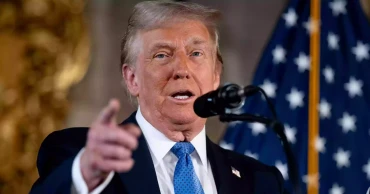
Trump said he does not care if negotiations with Iran come to an end.
“I don’t care if they’re over, honestly. I really don’t care. I couldn’t care less,” he told CNBC.
Trump also said he is not concerned about rising oil prices.
“I think the oil will be dropping like a rock in the very near distance.”
#From Al Jazeera
2 months ago
US military says 121 vessels redirected during Iran blockade
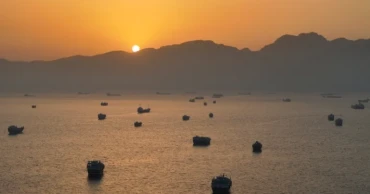
The US military’s Central Command (CENTCOM) said it has redirected 121 commercial vessels and “disabled” five others as part of its ongoing blockade of Iranian ports.
Recent updates from CENTCOM showed that US forces redirected three vessels in the past day and 13 over the past week.
#From Al Jazeera
2 months ago
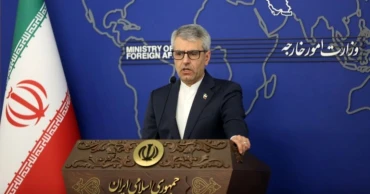
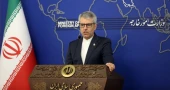
Iran says no nuclear talks under way with US
Iran's Foreign Ministry spokesman Esmaeil Baghaei on Monday morning has said there are currently no discussions with the United States regarding the details of Tehran's nuclear programme, stressing that ending the ongoing conflict remains the country's immediate priority .
Speaking at a weekly news conference, Foreign Ministry spokesman Esmaeil Baghaei said Iran would decide independently when it is necessary to address issues related to its nuclear activities.
US military targets Iranian sites in Goruk city and Qeshm Island
“We know when it is necessary to act on nuclear matters,” Baghaei said, adding that “no negotiations have taken place on the details of the nuclear file.” He noted that Iran’s primary focus at present is bringing the war to an end.
Baghaei also accused the United States of violating the ceasefire and warned that Tehran would take any measures it considers necessary to safeguard the country's national security.
His remarks came after the US military said it had carried out attacks on Iranian radar and drone facilities in the city of Goruk and on Qeshm Island over the weekend. The United States described the operation as “self-defence strikes.”
With inputs from Al Jazeera
2 months ago
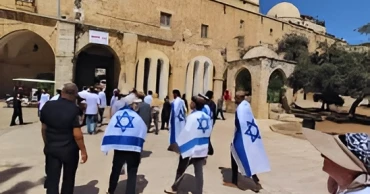
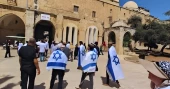
UAE criticizes Israeli settlers for raising flag at Al-Aqsa compound
The United Arab Emirates (UAE) has strongly condemned the entry of Israeli settlers into the Al-Aqsa Mosque compound under the protection of Israeli police, describing the incident as a “provocation.”
In a statement, the UAE Ministry of Foreign Affairs said the settlers’ actions, including raising the Israeli flag at the compound on Sunday, constituted a violation of the site's historical and legal status quo. The compound is regarded as one of the holiest places in Islam.
US military targets Iranian sites in Goruk city and Qeshm Island
The ministry also reaffirmed support for Jordan’s role as the custodian of the mosque and backed measures taken by Amman to safeguard religious sites.
The UAE called on Israeli authorities to take responsibility for stopping what it described as escalatory actions and urged efforts to prevent further tensions in the region.
It also appealed to the international community to intensify efforts toward achieving a two-state solution, saying such a framework would help fulfill Palestinian aspirations for an independent state.
The Al-Aqsa Mosque compound, known to Jews as the Temple Mount, is governed by a longstanding status quo arrangement under which Muslims are permitted to pray at the site, while non-Muslims may visit but are not allowed to worship there.
With inputs from Al Jazeera.
2 months ago
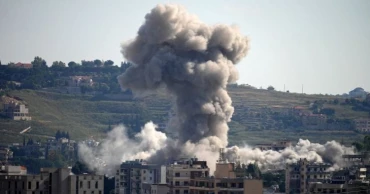
US military targets Iranian sites in Goruk city and Qeshm Island
The US Central Command (CENTCOM) said it carried out what it described as “self-defense strikes” against Iranian radar and drone facilities in the city of Goruk and on Qeshm Island over the weekend.
In a statement posted on X, CENTCOM said the operation was launched in response to what it called “aggressive Iranian actions,” including the reported shutdown of a US MQ-1 drone operating in international waters.
No agreement with US without tangible results, Iran’s Ghalibaf says
According to CENTCOM, US forces targeted and destroyed Iranian air defense systems, a ground control station, and two one-way attack drones that it said posed a clear threat to vessels transiting regional waters.
The US military said the strikes were aimed at neutralizing threats to maritime security and protecting ships operating in the region.
With inputs from Al Jazeera
2 months ago
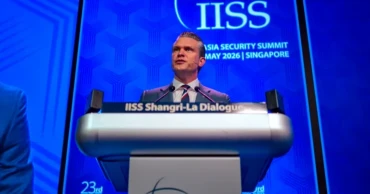
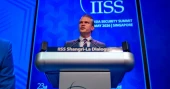
Hegseth hails ‘true friendship’ with Pakistan
US Defense Secretary Pete Hegseth has said that a “true friendship” is emerging between Washington and Islamabad, crediting Pakistan’s leadership for assisting efforts to negotiate an end to the war in Iran.
Speaking at a question-and-answer session after his address at the Shangri-La Dialogue security summit in Singapore, his remarks were later released on YouTube by the summit organiser, the International Institute for Strategic Studies (IISS).
Hegseth praised Pakistan’s Chief of Army Staff Field Marshal Asim Munir and Prime Minister Shehbaz Sharif, saying they played a constructive role in peace negotiations related to the Iran conflict.
He described the development as an “unexpected development and a true friendship” between the United States and Pakistan.
The US defence chief also said the strengthening ties were reflected in President Donald Trump’s ability to help broker peace between India and Pakistan during their military confrontation last year.
Source: Al Jazeera
2 months ago

Four more villagers rescued from flooded Laos Cave after 10 days; two still missing
Rescue workers in Laos on Saturday safely evacuated four more villagers who had been trapped inside a flooded cave for 10 days, a day after another survivor was successfully brought out. Two villagers remain missing, and search operations are continuing.
Lao and Thai rescue teams shared updates on social media, posting photos showing the rescued men lying on stretchers, wearing oxygen masks and wrapped in foil blankets.
According to rescuers, the villagers entered the cave last week in search of valuable minerals but became trapped when flash floods blocked the exit. Another villager managed to escape and alerted authorities about the seven people left inside.
The Lao organization Rescue Volunteer for People said water levels inside the cave had fallen enough to allow four survivors to leave with divers who had been delivering food and water. Video footage shared by Thai rescuer Chakkit Taengtang showed the mud-covered men being helped out one by one before being embraced by emotional rescuers.
The first survivor was rescued on Friday in an operation that took about 30 minutes.
Five villagers — identified as Khamla, Mued, Ee, Ing and Laen — were found alive on Wednesday. Rescue teams from Laos, Thailand, Japan and Malaysia, along with specialists from Indonesia, France and Australia, joined the operation in Xaisomboun province, about 120 kilometers north of Vientiane. Several had participated in Thailand’s 2018 cave rescue.
Rescuers are now preparing to search deeper into the heavily flooded cave for the two missing villagers.
2 months ago
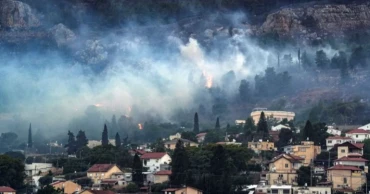
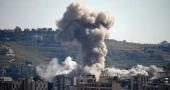
Hezbollah claims attacks on Israeli soldiers, rocket fire
Hezbollah on Saturday claimed responsibility for an ambush targeting Israeli troops in southern Lebanon and a series of rocket attacks on northern Israel.
In a statement, the group said its fighters launched a dawn operation against a unit of Israeli soldiers that was attempting to advance toward Ghandouriyeh in the Nabatieh district. According to Hezbollah, explosive devices were detonated against the troops before they were targeted with rocket fire.
The group claimed the attack caused casualties among Israeli soldiers, who were subsequently evacuated under heavy smoke cover. Hezbollah said the area was later subjected to Israeli air and artillery strikes.
In response to what it described as continued Israeli attacks, Hezbollah said it also fired several rockets toward northern Israel, targeting the settlement of Kiryat Shmona, the country’s northernmost city.
Israeli media reported that warning sirens sounded throughout the night in the area and that several incoming rockets were intercepted, according to local news outlet Ynet.
Hezbollah further claimed that it had shot down an Israeli Hermes 450 drone over the town of Zotar al-Sharqiya using a surface-to-air missile.
The Israeli military had not commented on any of the claims at the time of reporting.
Source: Al Jazeera
2 months ago
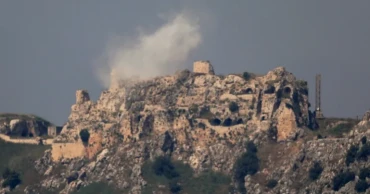
Lebanon raises alarm over damage risk to cultural heritage amid Israeli attacks
Lebanon’s Culture Minister Ghassan Salame has warned that continued Israeli attacks in southern Lebanon are placing several important heritage sites at “serious danger,” including landmarks in the ancient city of Tyre.
Salame said bombardments had fallen very close to the archaeological ruins of Tyre, a site recognized as a UNESCO World Heritage Site.
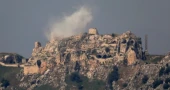
He also reported that the medieval Beaufort Castle, which overlooks the southern city of Nabatieh, was directly struck in an Israeli attack. According to Salame, the historic fortress dates back to the 12th century.
The minister expressed concern that the ongoing strikes could cause significant damage to Lebanon’s cultural and historical heritage.
Source: Al Jazeera
2 months ago