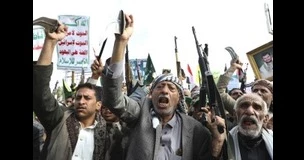
Yemen’s Houthi rebels said Saturday that an Israeli airstrike in Sanaa killed the prime minister of their rebel-run government, marking the highest-ranking Houthi figure slain in the Israeli-U.S. campaign against the Iran-backed group.
According to a statement from the Houthis, Prime Minister Ahmed al-Rahawi was killed in Thursday’s strike in the capital along with several ministers. Others, including senior officials, were wounded, though no details were provided.
The Houthis said the strike targeted al-Rahawi and members of his government during a “routine workshop” to review its activities over the past year.
The attack took place as the rebels’ Al-Masirah television channel was airing a recorded speech by Abdul Malik al-Houthi, the reclusive leader of the group, who vowed retaliation against Israel while updating supporters on the Gaza conflict. Senior Houthi leaders often gathered to watch his addresses.
On Thursday, the Israeli military said it had “precisely struck a Houthi terrorist regime military target” in Sanaa but offered no immediate comment on the reported death of the prime minister.
Al-Rahawi, originally from the southern province of Abyan, was once an ally of former Yemeni President Ali Abdullah Saleh. He joined the Houthis after they seized Sanaa and much of northern Yemen in 2014, triggering the country’s protracted civil war. He was appointed prime minister in August 2024.
His killing makes him the most senior Houthi official eliminated since the U.S. and Israel launched joint air and naval operations in response to the group’s missile and drone attacks on Israel and on commercial vessels in the Red Sea.
The Houthis have repeatedly claimed their attacks on shipping are meant to pressure Israel and show solidarity with Palestinians amid the war in Gaza. Their operations have disrupted global trade along the Red Sea, a vital route for nearly $1 trillion in goods annually.
In May, the Trump administration announced an agreement with the Houthis to halt airstrikes in exchange for an end to attacks on commercial shipping. The rebels, however, later clarified that the deal did not prevent them from striking targets they view as aligned with Israel.