Middle-East
Trump warns Iran after anti-US chants at Khamenei funeral fuel regional tensions
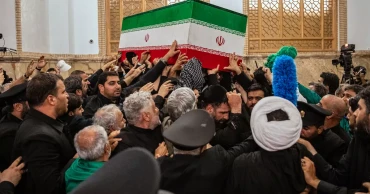
US President Donald Trump on Saturday issued a fresh warning to Iran following funeral ceremonies for Supreme Leader Ayatollah Ali Khamenei, where mourners openly called for Trump's killing, heightening tensions in the Middle East despite an interim agreement aimed at preventing renewed conflict.
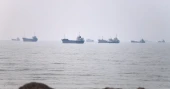
Trump made the remarks on his Truth Social platform after senior US officials urged Tehran to publicly guarantee safe passage for international shipping through the Strait of Hormuz, a critical global energy route.
Iran has so far refused to make such a commitment, maintaining that the strategic waterway should remain under its control and insisting that vessels transiting the strait should pay fees to Tehran, challenging the long-standing international position that the passage is an international waterway.
The latest exchange comes after days of military escalation that included US airstrikes on Iranian targets and retaliatory Iranian attacks across the region. The violence was triggered after Iran allegedly attacked three commercial vessels in the Strait of Hormuz earlier this week.
In his social media post, Trump warned that the United States was prepared to respond forcefully if Iran acted on what he described as threats against him.
He said hundreds of missiles were ready to strike Iran should the Iranian government attempt to carry out any threat to assassinate him.
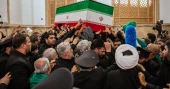
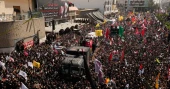
During Khamenei's funeral, mourners carried banners and posters calling for the deaths of both Trump and Israeli Prime Minister Benjamin Netanyahu.
Khamenei, 86, was killed in an airstrike at the start of the Iran war on Feb. 28. His funeral took place this week after several days of ceremonies held in cities across Iran and Iraq.
Trump also declared that the US military would completely destroy targets across Iran if necessary, again invoking religious language in his statement.
Throughout the conflict and the subsequent ceasefire, Trump has repeatedly combined warnings against Iran with references to God in Arabic, drawing criticism from advocacy groups, including the Council on American-Islamic Relations (CAIR), over his rhetoric.
23 days ago
Israel prepared to participate in future US strikes on Iran
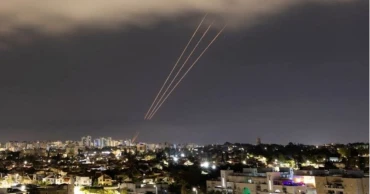
Israel is ready to participate in potential future US military actions against Iran if requested by Washington, but is currently awaiting approval from US President Donald Trump, media says on Friday.
The report, without citing any sources, noted that Israeli officials expect the military exchanges between the United States and Iran to persist over the coming days.
Unclaimed airstrikes hit Iran after US ends operations, fueling speculation over new attacker
In a separate report by USA media, quoting an unnamed source in Jerusalem, stated that Israel remains interested in taking part in any renewed military campaign against Iran should the ongoing conflict escalate.
The developments follow recent US strikes on multiple targets inside Iran, which caused casualties and infrastructure damage. Washington launched the operations in response to alleged Iranian attacks on commercial vessels moving through the strategic Strait of Hormuz.
In retaliation to the American operations, Iran launched missile and drone strikes targeting US military bases and facilities located across Kuwait, Bahrain, Qatar, and Jordan.
24 days ago
Unclaimed airstrikes hit Iran after US ends operations, fueling speculation over new attacker
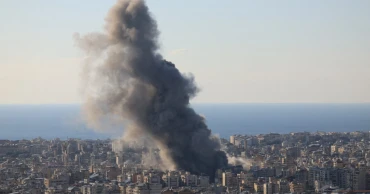
A fresh wave of unclaimed airstrikes struck multiple locations across Iran after the United States announced the completion of its latest military operations, raising new questions over who may be targeting the Islamic Republic.
The strikes took place on Thursday as Iran prepared for the funeral of late Supreme Leader Ayatollah Ali Khamenei, hitting areas in southern Iran, including Bushehr and Sistan and Baluchestan provinces, as well as the cities of Ahvaz and Chabahar.
While Iranian authorities have not officially blamed any country for the attacks, a member of parliament accused the United Arab Emirates of supporting the United States during its military campaign and warned that Abu Dhabi would "pay the price."
The US Central Command said earlier Thursday that it had completed a round of operations targeting about 90 sites across Iran. However, Iranian media reported additional explosions and airstrikes shortly afterward. CENTCOM has not commented on those subsequent attacks.
The latest strikes come amid heightened tensions in the Gulf following weeks of conflict that disrupted shipping through the Strait of Hormuz, a critical global energy route carrying roughly one-fifth of the world's oil and natural gas supplies. Iran has insisted the strategic waterway should remain under its sole control, while the United States and Gulf states maintain it must remain open to international navigation.
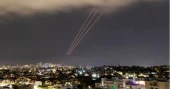
Iran responded to Thursday's developments by launching missile attacks toward Bahrain, Jordan, Kuwait and Qatar. Air raid sirens sounded across the four countries, and Kuwait reported at least one injury as air defense systems intercepted incoming missiles.
Following the attacks, UAE President Sheikh Mohammed bin Zayed Al Nahyan traveled to Kuwait for talks with the country's leadership, while Gulf states also held consultations with Qatar's foreign minister, who has been involved in mediation efforts between Tehran and Washington.
During the recent conflict, officials later acknowledged that Saudi Arabia and the UAE had carried out strikes against Iran after Tehran targeted energy facilities in their territories. However, neither country has commented on the latest attacks.
Israel, which participated in earlier military operations against Iran, has also not claimed responsibility for the latest strikes. Israeli Defense Minister Israel Katz nevertheless warned that Israel remained prepared to resume military action if necessary, saying the country's armed forces were ready to restore air superiority and launch further operations against Iran if new threats emerged.
Meanwhile, Iranian officials continued to issue warnings against Gulf states. Lawmaker Esmail Kousari accused the UAE of playing a behind-the-scenes role in recent US operations, an allegation the Gulf states have consistently denied.
The Joint Maritime Information Center, overseen by the US Navy, has again advised commercial vessels to use the southern shipping lane through Oman's territorial waters when transiting the Strait of Hormuz. The advisory follows recent attacks on merchant vessels and aims to reduce the risk of further incidents in the strategically vital waterway.
24 days ago
US seeking to curb Iran's ability to control Strait of Hormuz
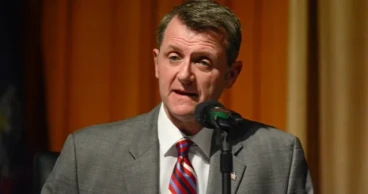
Scott Uehlinger, a former senior CIA officer and national security expert, says it will be "very difficult" to find a way out of the escalating confrontation between the United States and Iran.
Speaking to Al Jazeera, Uehlinger said the US strikes on Iran were partly intended to persuade Tehran to reconsider its approach to the Strait of Hormuz.
"The United States tried to make clear through Trump that it was retaliating for Iran's refusal to cooperate in the Strait of Hormuz. I think Trump was hoping to some degree that perhaps the regime would learn its lesson and go back to the memorandum," Uehlinger said.
He said Washington is seeking to weaken Iran's leverage over the strategically important waterway.
"That's why we've seen so many attacks directed at Iran's ability to attempt to control the straits. Maritime traffic control centres have been destroyed. Missile sites have been destroyed and fast boats have been destroyed, all in an attempt to further limit Iran's ability to affect the straits," he said.
"I think President Trump hopes that by reducing that ability, or showing the Iranians they do not have that ability, perhaps then they will return to the memorandum of understanding," Uehlinger added. #Reports Al Jazeera
26 days ago
US launches fresh airstrikes on Iran as Tehran retaliates with attacks on Gulf states
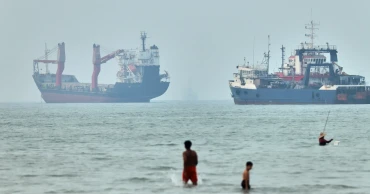
The United States launched a fresh wave of airstrikes on Iran early Thursday, prompting Tehran to retaliate by targeting Bahrain, Kuwait and Qatar, further straining an interim agreement aimed at ending the war in the Persian Gulf.
The latest attacks came hours after US President Donald Trump declared that recent Iranian strikes on ships in the Strait of Hormuz had effectively ended the fragile ceasefire.
The US had already carried out strikes on a range of Iranian military sites and port facilities early Wednesday after Iran targeted several commercial vessels off the coast of Oman, triggering an earlier round of Iranian retaliation.
Thursday's exchanges appeared to be more intense. Air raid sirens sounded at least twice in Bahrain, where the US Navy's 5th Fleet is based. There were no immediate reports of damage in Bahrain, Kuwait or Qatar. Kuwait's military said it was intercepting incoming drones and missiles.
In a social media post, US military officials said the latest operation was intended to "further degrade" Iran's ability "to threaten freedom of navigation" in the Strait of Hormuz, through which about one-fifth of the world's traded oil and natural gas passed before the conflict began with US and Israeli strikes on February 28.
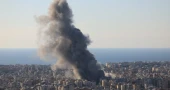
Iranian state media reported explosions in several areas, including Bushehr, home to the country's nuclear power plant, as well as the southern port cities of Chabahar, Konarak, Bandar Abbas and Sirik.
Trump warns of stronger response
After leaving a NATO summit in Turkey, Trump shared videos on social media that he said showed explosions in Iran and warned Tehran against further attacks.
"This is in retribution for yesterday's bombing of ships by Iran. If it happens again, it will get much worse!" Trump wrote.
Earlier in the day, Trump had said the latest exchanges would not lead to prolonged military action.
"Anything that happens is going to happen very fast," he said, while also suggesting the US military could "just finish the job."
Trump also repeated earlier threats to target Iran's civilian infrastructure, including power stations and desalination plants, and to seize the country's key oil export hub on Kharg Island.
Following attacks on three tankers on Tuesday, the US launched strikes against Iran, and Iranian forces responded by targeting American military sites across the Persian Gulf.
Iran has maintained that the interim ceasefire allows it to regulate traffic through the Strait of Hormuz. Parliament Speaker Mohammad Bagher Qalibaf, who is involved in negotiations for a permanent peace agreement, struck a defiant tone in a post on X.
"America still hasn't learned that bullying and breaking promises are no longer cost-free. Let me put it plainly: if you strike, you'll get hit," he wrote.
Fears grow over collapse of ceasefire
Trump's remarks that the temporary ceasefire was "over" raised fresh concerns that the conflict could escalate again, although he said diplomatic talks would continue.
Repeated attacks have already put the fragile agreement under pressure, and Trump's comments added to uncertainty. Oil prices rose sharply after his remarks amid fears of renewed fighting that could disrupt energy supplies through the Strait of Hormuz.
"For me, I think it's over," Trump said when asked about the ceasefire. While he said US officials could continue negotiations, he expressed little confidence in their success.
"They can talk, but I think they're wasting their time," he said.
Iranian Deputy Foreign Minister Kazem Gharibabadi, who is also involved in the negotiations, responded on X by saying Trump's comments "are not a sign of power but an admission of the failure" of US policy toward Iran.
Trump has repeatedly threatened to seize Kharg Island, through which around 90% of Iran's oil exports pass, including last month when he questioned whether the US "has the stomach for it."
The latest attacks on shipping, despite ongoing diplomatic efforts, may reflect divisions within Iran's leadership. Hard-liners favour maintaining long-term control over the strategic waterway, while more pragmatic officials seek a permanent agreement that would reopen the strait, ease sanctions and revive the country's economy.
Formal negotiations on a lasting peace were scheduled to begin after the funeral of Iran's Supreme Leader Ayatollah Ali Khamenei, who was killed on February 28 during the opening phase of the war. The funeral, which concludes Thursday, had been expected to provide a brief period of reduced tensions.
The planned talks are expected to focus on the most contentious issues, including the full reopening of the Strait of Hormuz and restrictions on Iran's disputed nuclear programme.
26 days ago
Funeral prayers begin in Iraq for Iran's late Supreme Leader Ali Khamenei
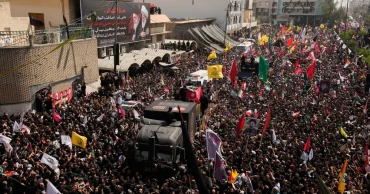
Funeral prayers for Iran's late Supreme Leader Ayatollah Ali Khamenei began on Wednesday in the Iraqi holy city of Najaf, where thousands of mourners gathered to pay their final respects.
Iran's dayslong funeral ceremonies for Khamenei began on Saturday, with authorities shutting down streets, airspace and much of daily life in Tehran as mourners honoured the leader who ruled the Islamic Republic for decades while maintaining a confrontational stance toward the West.
After the ceremonies in Najaf, Khamenei's body will be taken to the holy city of Karbala before being returned to Iran for burial.
Meanwhile, negotiations between the United States and Iran remain on hold until after the burial. However, renewed military exchanges in the Persian Gulf have raised concerns that the interim agreement aimed at ending the months-long conflict could unravel.
The United States launched strikes on Iran early Wednesday after accusing Tehran of attacking three commercial ships in the Strait of Hormuz. Iran later retaliated by launching strikes targeting Kuwait and Bahrain.
Khamenei's body arrived in Najaf on Tuesday accompanied by Iranian President Masoud Pezeshkian, Foreign Minister Abbas Araghchi and other senior officials.
They were welcomed by large crowds carrying portraits of the late supreme leader, while some mourners performed traditional self-flagellation rituals in the streets.
The body was placed in a glass-covered coffin draped with the Iranian national flag. Mourners waved Iranian flags as well as red and black flags symbolising mourning and revenge.
"We the people of Iraq will remain a thorn in the eyes of the enemies," said mourner Jaafar Jawad. "His arrival to us is the greatest possible honor, and God willing we will be loyal, and repay a little of his due in the holy city of Najaf."
The funeral prayers in Najaf are being held at the Shrine of Imam Ali, cousin and son-in-law of the Prophet Muhammad, and are being led by senior Najaf seminary scholar Muhammad Taqi al-Hakim.
Later, prayers will also be held in Karbala at the Imam Hussein Shrine, where Abdul Mahdi al-Karbalaei, a representative of Iraq's top Shiite religious authority, will lead the ceremony.
Khamenei, 86, was killed in late February during large-scale US and Israeli strikes on Iran. He was among several senior Iranian officials killed during the conflict.
Iran's new Supreme Leader, Ayatollah Mojtaba Khamenei, has not yet appeared publicly during the funeral ceremonies, which are continuing over several days. He is believed to be in hiding after reportedly being wounded in the airstrike that killed his father.
26 days ago
Iran condemns US air strikes, warns neighbours against assisting Washington
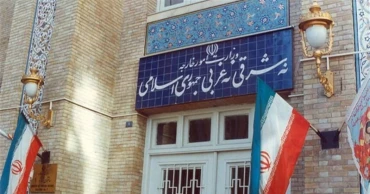
Iran's Foreign Ministry has condemned the latest US military strikes in southern Iran, describing them as a "gross violation" of the Memorandum of Understanding (MoU) and warning neighbouring countries against allowing their territory to be used for attacks on the Islamic Republic.
In a statement issued on Wednesday, the ministry said the United States carried out "aggressive attacks and gross violation of the Memorandum of Understanding" following the overnight strikes.
According to the ministry, "the terrorist US military, in clear violation of Article 2, Paragraph 4 of the United Nations Charter, committed military aggression against several monitoring and surveillance centres on the southern coasts of Iran."
It said the strikes "constitute a flagrant violation of Paragraph 1 of the Memorandum of Understanding on the Termination of War, which mandates the cessation of military operations."
The ministry also stressed "the international legal obligation of all governments, particularly neighbouring countries located on the southern coast of the Persian Gulf, to prevent aggressor parties from utilising their territory and facilities to conduct aggressive acts against the Islamic Republic of Iran."
It further warned that "any cooperation in committing the crime of aggression against Iran constitutes complicity and participation in the crime."
Calling on the UN Security Council and the UN Secretary-General to fulfil their responsibilities, the ministry said Iran's armed forces "will not hesitate in defending Iran's territorial integrity, national sovereignty, and national security against US military aggression in accordance with Article 51 of the UN Charter, and will target the source and origin of the aggression," according to the statement.
26 days ago
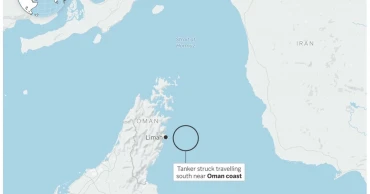
Tehran targets Bahrain and Kuwait after US strikes, Washington curbs Iran's oil sales over ship attacks
The United States launched military strikes on Iran early Wednesday after accusing Tehran of attacking three commercial vessels in the Strait of Hormuz. Washington also revoked Iran's ability to openly sell crude oil on the international market, while Iran responded by targeting US military facilities in Bahrain and Kuwait.
The latest exchange has heightened concerns that the interim agreement aimed at halting the conflict could collapse, increasing the risk of a broader war across the Middle East.
The attacks on commercial shipping and the subsequent military strikes came during the dayslong funeral of Iran's Supreme Leader Ayatollah Ali Khamenei, who was killed on Feb. 28 in the opening hours of the war at the age of 86. The funeral, which concludes Thursday, had been expected to ease tensions, although mourners have repeatedly chanted calls for the deaths of US President Donald Trump and Israeli Prime Minister Benjamin Netanyahu.
Negotiations on a permanent agreement had been scheduled to begin after Khamenei's burial, with discussions expected to focus on fully reopening the Strait of Hormuz and rolling back Iran's disputed nuclear programme. The latest escalation has cast doubt over those talks.
"The era of bullying and extortion is over," Iran's Parliament Speaker Mohammad Bagher Qalibaf wrote on X. "It leads nowhere. We don't fold."
US strikes hit Iranian military targets
The US military's Central Command said the overnight operation was intended "to impose heavy costs for targeting and attacking commercial shipping crewed by innocent civilians in an international waterway."
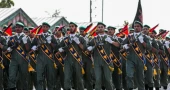
According to the military, the strikes targeted Iranian air defence systems, radar installations and more than 60 small boats operated by Iran's paramilitary Revolutionary Guard, which have frequently been used to harass vessels transiting the strait.
The US military said it remains "postured and prepared to hold Iran accountable when the agreement is not adhered to or obeyed," adding that the latest round of attacks had concluded.
Iran acknowledged the strikes but gave no details about casualties or damage. Iranian state media reported explosions in Bandar Abbas, Qeshm and Sirik.
On Wednesday morning, Bahrain, which hosts the US Navy's Fifth Fleet, and Kuwait, home to US Army forces, issued missile alerts. Iran's Revolutionary Guard later confirmed that it had targeted US military installations in both countries.
In a statement, the Guard said, "The child-killing and terrorist U.S. army ... openly violated the ceasefire and violated the Islamabad understanding by launching an airstrike on a number of coastal bases and civilian stations on the coasts of Hormozgan and Mahshahr provinces," without addressing the attacks on commercial ships in the Strait of Hormuz.
The latest confrontation followed a similar series of Iranian attacks on shipping, US retaliatory strikes and Iranian attacks on Bahrain and Kuwait late last month. Wednesday's operation also coincided with Trump's visit to Turkey for a NATO summit.
US revokes licence for Iranian oil sales
The United States also revoked the licence that had allowed Iran to openly sell crude oil under the interim agreement. The arrangement had enabled Tehran to conduct oil sales on the international market in US dollars for the first time in years. Iran has long been accused of selling sanctioned crude oil to China at discounted prices.
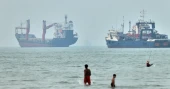
The move followed attacks on commercial shipping in the Strait of Hormuz. The United Kingdom Maritime Trade Operations centre said one tanker caught fire after being struck off the coast of Oman. Iranian state television reported that the liquefied natural gas tanker was attacked after ignoring warnings but stopped short of claiming responsibility.
The UK maritime agency said the other two vessels suffered minor damage but continued their voyages, with no injuries reported.
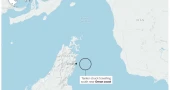
Since the war began, Iran has maintained tight control over the Strait of Hormuz, disrupting global energy markets. In peacetime, about one-fifth of the world's traded oil and natural gas passes through the strategic waterway. The vessels targeted on Tuesday were reportedly using a route close to Oman's coastline instead of the route designated by Tehran.
Iran has repeatedly insisted that only its approved route through the strait is safe and has been suspected of attacking vessels that used the Oman route.
Majed al-Ansari, spokesperson for Qatar's Foreign Ministry, said the Qatari tanker Al Rekayyat had been targeted in what he described as "an unacceptable attack" on international navigation and global energy security. He said Qatar holds Iran "fully legally responsible."
Under the interim agreement, Iran and the United States had agreed to allow ships to pass through the Strait of Hormuz without paying transit charges for 60 days. However, Tehran later insisted that it should determine shipping routes and eventually impose passage fees, a proposal rejected by Washington and several Gulf Arab states.
27 days ago
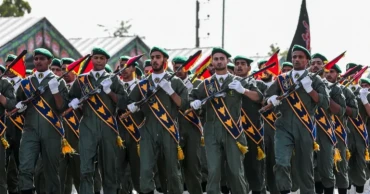
Iran vows response after US strikes on Sirik leave casualties
Iran's military has accused the United States of failing to honour the memorandum of understanding (MoU) following US strikes on southern Iran and vowed a strong response.
In a statement, the military said the attacks reflected "a sign of lack of commitment by the US to the MoU."
It further declared that "the Armed Forces of the Islamic Republic of Iran will give a crushing response to the aggression and terrorist act of the US and will not allow them to interfere in the affairs of the Strait of Hormuz."
The statement also reiterated that "the only safe passage for commercial ships and oil tankers in the Strait of Hormuz is the route determined by the Islamic Republic of Iran."
The remarks came after reports of multiple US strikes in at least three locations in southern Iran, including six explosions on Qeshm Island, the largest island near the Strait of Hormuz.
Reports also said between seven and nine strikes hit the port city of Sirik, which overlooks the strategic waterway, leaving several people injured. The wounded were taken to a hospital in Minab for treatment.
In Bandar Abbas, at least 10 explosions were reported, with several wharfs targeted along with a telecommunications tower that was reportedly struck.
#From Al Jazeera
27 days ago
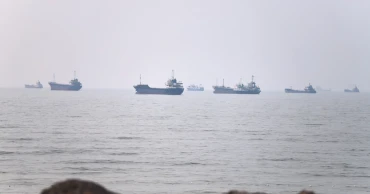
US launches fresh strikes on Iran, revokes oil sales permit after three ships attacked in Strait of Hormuz
The United States launched fresh military strikes on Iran early Wednesday, saying Tehran was responsible for attacks on three ships in the Strait of Hormuz. Washington also revoked Iran's permission to openly sell crude oil on the global market, escalating pressure on the Islamic Republic.
Iran quickly warned that it would "take whatever measures it deems necessary," raising fears that the interim agreement that halted the fighting could collapse and once again push the wider Middle East toward a broader conflict.
The latest maritime attacks and the U.S. response came during the ongoing funeral ceremonies for Iran's Supreme Leader Ayatollah Ali Khamenei, who was killed on Feb. 28 at the start of the war at the age of 86. The funeral, due to conclude Thursday, had been expected to be a period of reduced tensions, although mourners have repeatedly chanted slogans calling for the deaths of U.S. President Donald Trump and Israeli Prime Minister Benjamin Netanyahu.
Talks on a permanent agreement were expected to begin after Khamenei's burial, focusing on key issues including the full reopening of the Strait of Hormuz and scaling back Iran's disputed nuclear programme.
US strikes target Iranian military assetsThe U.S. military's Central Command said the overnight strikes were carried out "to impose heavy costs for targeting and attacking commercial shipping crewed by innocent civilians in an international waterway."
According to the military, the strikes hit Iranian air defence systems, radar installations and more than 60 small boats operated by Iran's paramilitary Revolutionary Guard.
Iran confirmed that the attacks had taken place but did not provide any information about casualties or damage.
The U.S. military also said it remained "postured and prepared to hold Iran accountable when the agreement is not adhered to or obeyed."
Iranian state media reported explosions in Bandar Abbas, Qeshm and Sirik. Deputy Foreign Minister Kazem Gharibabadi wrote on X that the U.S. strikes violated the interim agreement but did not address Iran's alleged attacks on commercial vessels in the strait.
The latest exchange followed a similar series of Iranian attacks on shipping and U.S. retaliatory strikes late last month. Wednesday's operation took place while Trump was attending a NATO summit in Turkey.
US revokes Iranian oil sales licence
The United States also cancelled the licence that had allowed Iran to sell oil openly under the interim agreement. The arrangement had enabled Tehran, for the first time in years, to export crude on international markets using U.S. dollars. Iran has long been suspected of selling sanctioned oil to China at discounted prices.
A U.S. official, speaking on condition of anonymity, said the licence was revoked because Iran's actions in the Strait of Hormuz were unacceptable and required a firm response.
The decision followed attacks on three commercial vessels. The United Kingdom Maritime Trade Operations centre said one tanker caught fire after being struck off the coast of Oman. Iranian state television reported that the liquefied natural gas tanker was attacked after ignoring warnings but stopped short of claiming responsibility.
The other two ships suffered limited damage but continued their voyages, with no injuries reported, according to the British maritime agency.
Since the war began, Iran has maintained tight control over the Strait of Hormuz, disrupting global energy markets. During peacetime, around one-fifth of the world's traded oil and natural gas passes through the strategic waterway. The vessels targeted Tuesday were reportedly sailing along a route close to Oman's coast instead of the route designated by Tehran.
Iran has repeatedly insisted that only its approved shipping route is safe and has been suspected of targeting vessels using the Oman route.
Qatari Foreign Ministry spokesperson Majed al-Ansari said the Qatari tanker Al Rekayyat had been targeted in what he described as an "unacceptable attack" on international shipping and global energy security. He said Qatar holds Iran "fully legally responsible."
Under the interim agreement, Iran and the United States had agreed that ships could pass through the strait without paying transit charges for 60 days. However, Tehran later insisted that it should determine vessels' routes and eventually impose passage fees, a proposal opposed by Washington and several Gulf Arab states.
Funeral ceremonies continue for Khamenei
Authorities transported Khamenei's body to the holy Shiite city of Qom, where large crowds gathered on Tuesday to pay their respects.
Iranian state television broadcast live footage showing hundreds of thousands of mourners walking toward Jamkaran Mosque, south of Qom, for the funeral ceremony. Shiite Muslims believe the mosque was once visited by Muhammad al-Mahdi, the 12th and final Shiite imam, who disappeared in the ninth century and is believed to one day return to establish justice.
Khamenei's son and Iran's new Supreme Leader, Ayatollah Mojtaba Khamenei, has not appeared publicly since the funeral ceremonies began in Tehran on Saturday. He is believed to be in hiding after reportedly being wounded in the airstrike that killed his father.
Late Tuesday, Khamenei's body was flown to Iraq, where officials from both countries received it. Funeral processions are scheduled for Wednesday in the holy Shiite cities of Najaf and Karbala before the body is returned to Iran for burial on Thursday at the Imam Reza shrine in Mashhad, his birthplace.
27 days ago