
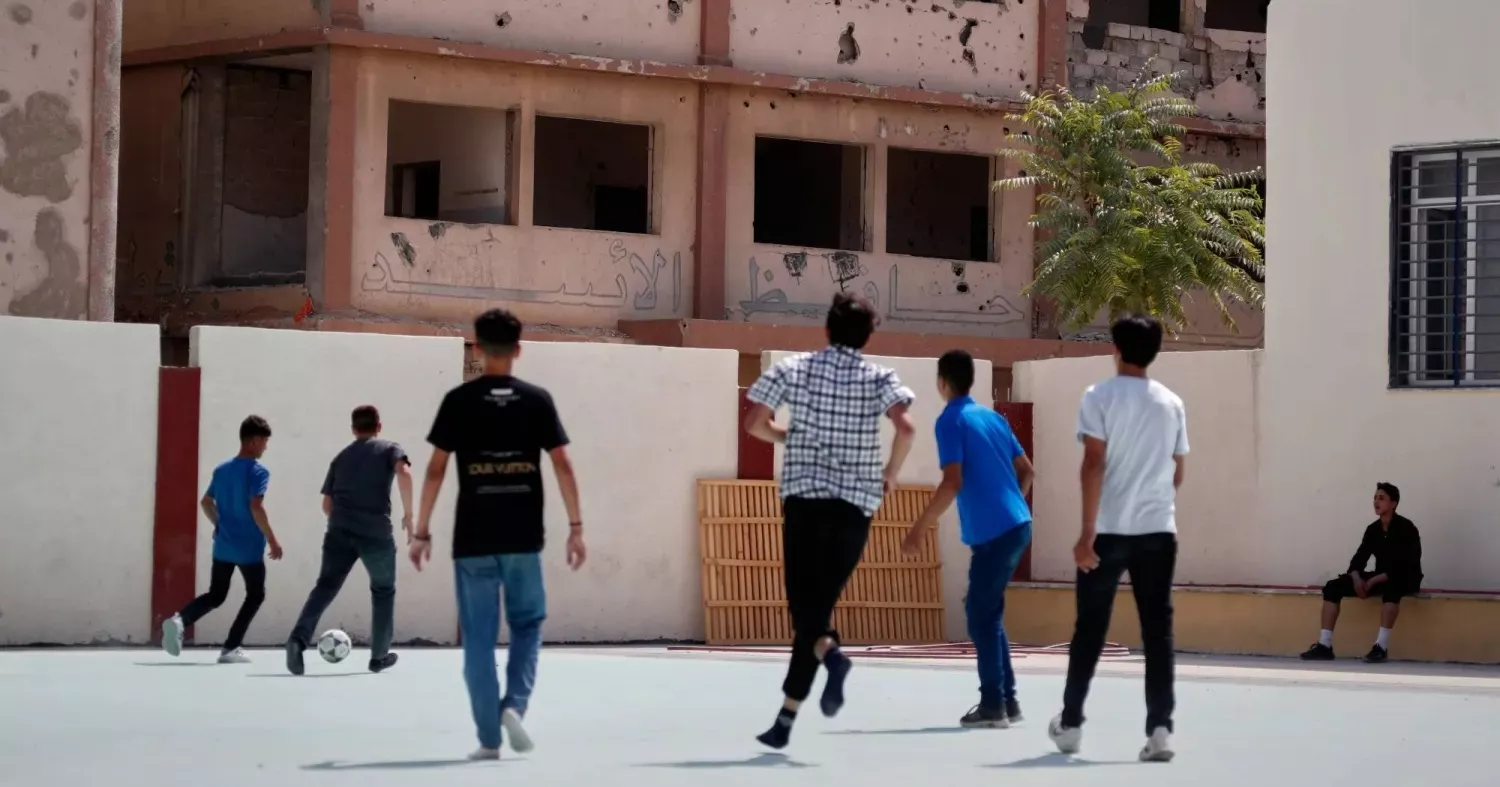
In the battered countryside of southern Idlib, families displaced for years by Syria’s civil war are returning home and sending their children back to schools stripped bare by conflict and looting.
Nearly a year after former President Bashar Assad was ousted in a rebel offensive, hundreds of schools remain in ruins. Those that reopened, like the elementary school in Maar Shamarin, operate without windows, desks, or even running water.
Safiya al-Jurok, who fled the town five years ago, now lives with her family in a tent beside their destroyed house. Her three children sit cross-legged on thin blankets in classrooms where sunlight pours through broken windows and bullet-scarred walls. “If it rains, it’ll rain on my children,” she said.
Principal Abdullah Hallak said the building was looted of nearly everything — doors, desks, even steel supports — after residents fled. “Our kids are sitting on the floor, and winter is coming,” he said.
Across Syria, 40% of schools remain destroyed, according to Deputy Education Minister Youssef Annan. In Idlib alone, only about 10% of damaged schools have been rehabilitated. Annan said rebuilding will take years and major funding, as much of the infrastructure was stripped for scrap.
The new school year began in September with an emergency education plan, though millions of children remain out of school. UNICEF’s Syria representative Meritxell Relaño Arana said many lack books or teachers, while others must work to support their families.
UNICEF and local authorities are rebuilding schools, offering temporary classrooms and teacher training. Relaño said education is vital not only for learning but for healing war trauma. “Children need safe schools where psychosocial support is available,” she said.
At Maar Shamarin Elementary, around 450 students now attend classes — a fragile sign of recovery in a country still rebuilding from 14 years of war.