middle-east
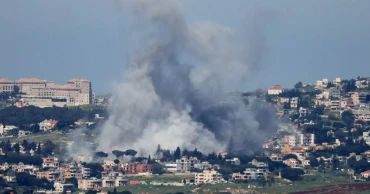
Israeli airstrikes kill 7 in southern Lebanon despite ceasefire
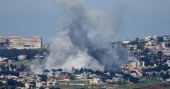
Israeli airstrikes in southern Lebanon killed at least seven people and injured others on Saturday, as clashes between Israel and Hezbollah continued despite an ongoing ceasefire.
The strikes came as Israel’s military issued fresh warnings, urging residents of nine villages in the south to evacuate.
Fighting between Israeli forces and Hezbollah has persisted even though a ceasefire has been in place since April 17.
Lebanon’s state-run National News Agency reported that a strike on a car in the village of Kfar Dajal killed two people, while another airstrike on a house in Lwaizeh left three dead. A separate attack in Shoukin also killed two people, according to the agency.
Israel’s military Arabic-language spokeswoman, Ella Waweya, said in a post on X that the Israeli air force carried out about 50 airstrikes over the past 24 hours, targeting Hezbollah fighters and infrastructure.
Hezbollah, in turn, said it launched a drone attack on Israeli troops gathered inside a house in the coastal village of Bayed.
The latest round of fighting began on March 2, when Hezbollah fired rockets into northern Israel, two days after the United States and Israel launched a war against its main ally, Iran. Since then, Israel has conducted hundreds of airstrikes and sent ground troops into southern Lebanon, capturing dozens of border towns and villages.
Amid the conflict, Lebanon and Israel have held their first direct talks in more than 30 years. The two sides have officially remained at war since Israel’s founding in 1948.
A 10-day ceasefire announced in Washington took effect on April 17 and was later extended by three weeks.
3 months ago
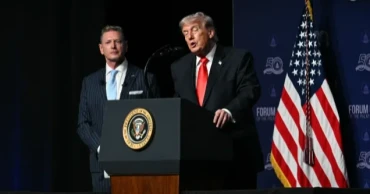
Trump says US Navy acting ‘like pirates’ amid Iran blockade
Donald Trump has said the US Navy is behaving “like pirates” while describing a military operation in which a vessel was seized during the ongoing tit-for-tat blockade involving Iranian ports.
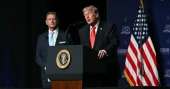
Speaking at a rally in Florida on Friday, Trump outlined how US forces took control of a ship and its cargo.
“We … land on top of it and we took over the ship. We took over the cargo, took over the oil. It’s a very profitable business,” Trump said.
“We’re like pirates,” he added to cheers from supporters. “We’re sort of like pirates, but we’re not playing games.”
His remarks come as legal experts express concern over Iran’s blockade of the strategically important Strait of Hormuz and its reported plan to impose fees on vessels passing through the route.
Tehran effectively shut down the key shipping corridor, widely used for global oil and gas transport, following the outbreak of the US-Israel war on Iran on February 28.
#From Al Jazeera
3 months ago
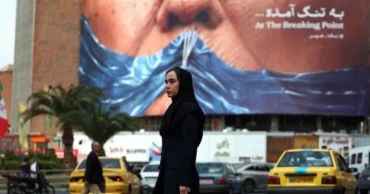
Iranian official says Tehran will resist ‘world-devouring America’
A senior Iranian Foreign Ministry official has said the “comfort, welfare, and progress of regional nations” depend on the United States leaving the Gulf.
Hossein Noushabadi, director general for parliamentary affairs and law at the Iranian Foreign Ministry, told the state-linked ISNA news agency that “foreigners have always cast greedy eyes” upon the strategic maritime “asset”, which he described as “part of Iran’s identity and civilisation”.
Alluding to the country’s history of “bravery and sacrifice” in expelling “Portugal, the Netherlands, and England” from the Gulf, Noushabadi pledged that Iran will now resist “the military expeditions of the world-devouring America”. #From Al Jazeera
3 months ago
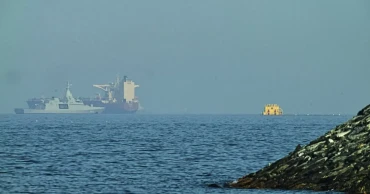
US warns shipping firms of sanctions over Iran toll payments in Hormuz
The United States has warned global shipping companies they could face sanctions if they pay Iran for safe passage through the Strait of Hormuz.
The warning, issued Friday by the U.S. Office of Foreign Assets Control, adds fresh pressure to the ongoing standoff between Washington and Tehran over control of the vital waterway.
Nearly one-fifth of the world’s oil and natural gas trade normally passes through the Strait of Hormuz during peacetime, making it one of the most important shipping routes globally.
Tensions escalated after Iran effectively disrupted regular traffic in the strait by attacking and threatening vessels following the start of the U.S.-Israel war on February 28. Iran later began allowing some ships to pass through alternative routes closer to its coast, sometimes charging fees for safe transit.
US authorities say these payments, described as a “toll” system, could expose companies to sanctions. According to OFAC, such payments may take different forms, including cash, digital assets, informal exchanges or even in-kind contributions like charitable donations or payments made through Iranian embassies.
“Both U.S. and non-U.S. entities risk sanctions if they make such payments or seek guarantees from Iran for safe passage, regardless of how the payment is made,” the agency said.
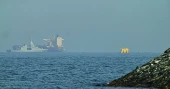
In response to Iran’s actions, the United States imposed its own naval blockade on April 13, preventing Iranian oil tankers from leaving the region and cutting off a key source of revenue for Tehran. US Central Command said at least 45 commercial vessels have been forced to turn back since the blockade began.
Meanwhile, US President Donald Trump has rejected Iran’s latest proposal aimed at ending the conflict.
“They want to make a deal, but I’m not satisfied,” Trump told reporters at the White House on Friday, criticizing what he called a lack of unity in Iran’s leadership.
Iran’s state-run IRNA news agency said Tehran submitted its proposal to mediators in Pakistan on Thursday night.
A fragile three-week ceasefire between the two sides appears to be holding, although both have accused each other of violations. The ongoing tensions have added strain to the global economy, pushing up prices and causing shortages of fuel and other oil-related products.
Diplomatic contacts are continuing by phone after Trump cancelled a planned visit by US envoys to Pakistan. He has also suggested a new plan to reopen the crucial waterway used by Gulf countries to export oil and gas.
Iranian Foreign Minister Abbas Araghchi has been in contact with regional leaders to discuss ways to end the war and held talks Friday with European Union foreign policy chief Kaja Kallas.
Separately, Iran said Saturday it executed two men convicted of spying for Israel. The judiciary’s Mizanonline news outlet identified them as Yaghoub Karimpour and Nasser Bekrzadeh, saying the Supreme Court had upheld their death sentences.
Authorities accused Karimpour of passing sensitive information to Israel’s Mossad intelligence agency, while Bekrzadeh allegedly shared details about Iranian officials and the Natanz nuclear facility, which was targeted in strikes last year.
Iran has executed more than a dozen people in recent weeks over alleged espionage and terrorism charges.
At the United Nations, China’s ambassador Fu Cong urged both sides to maintain the ceasefire and resume talks, calling it the most urgent priority.
He said China supports mediation efforts by Pakistan and blamed the crisis on what he described as an “illegitimate war” by the United States and Israel, warning of its impact on Iran, the wider region and the global economy.
3 months ago
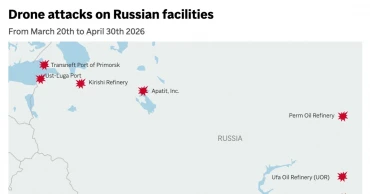
Ukraine strikes Russian oil sites with drones, but rising fuel prices may limit impact
Ukrainian drones are targeting oil facilities deep inside Russia, causing large fires, smoke visible from space and pollution affecting areas along the Black Sea coast.
The attacks are aimed at cutting Russia’s oil exports, a major source of funding for its ongoing war in Ukraine. However, the overall economic impact remains uncertain, as higher global oil prices linked to the Iran conflict and relaxed US sanctions have helped boost Moscow’s revenues.
Even so, the strikes are bringing the effects of the war closer to ordinary Russians living far from the battlefield.
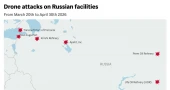
In the Black Sea town of Tuapse, Ukrainian drones struck an oil refinery and export terminal four times within just over two weeks. The attacks triggered fires, forced evacuations and sent thick smoke into the sky. Tuapse lies about 450 kilometers from the front lines.
After one of the strikes on April 18, local officials reported that burning oil spilled onto nearby streets, damaging vehicles.
Ukraine also said it hit an oil pumping station in Russia’s Perm region, more than 1,500 kilometers from Ukraine, on consecutive days. Russian authorities confirmed drone strikes on industrial sites but gave limited details.
Another major facility at Ust-Luga on the Baltic Sea, one of Russia’s largest oil and gas export hubs, was targeted three times within a week in late March. The site is over 800 kilometers from Ukraine.
Following the attacks, officials near St. Petersburg described the region as a “front-line area” due to increasing aerial threats.
Ukrainian President Volodymyr Zelenskyy said the strikes have caused Russia at least $7 billion in losses since the start of the year. He also cited intelligence reports indicating a drop in exports from key ports such as Ust-Luga and Primorsk.
Experts say the attacks have disrupted refining operations, while sanctions continue to limit Russia’s ability to replace damaged equipment.
However, Russia has also benefited from the global energy crisis. The International Energy Agency said Russian oil exports rose to 7.1 million barrels per day in March, while revenues nearly doubled to $19 billion due to higher prices.
Analysts say the dramatic explosions seen in attacks may not reflect the full level of damage. Strikes on storage tanks often create large fires but cause only temporary disruption, while critical infrastructure such as pumping systems appears to be better protected.
Ukraine’s ability to hit targets deep inside Russia highlights its expanding drone capabilities. Since the start of the full-scale war in 2022, Kyiv says it has significantly increased the range of its strike systems, allowing attacks from multiple directions and putting pressure on Russia’s air defenses.
These operations are also exposing more Russians to the realities of the war, which the Kremlin has often portrayed as distant.
The attacks have raised environmental concerns as well. Russian officials reported high levels of benzene in the air following fires and advised residents to stay indoors.
Locals have reported “black rain,” with oily droplets falling from the sky. Images shared in Russian media showed animals stained with oil and marine life affected along the coastline, including birds, fish and dolphins.
Environmental experts warn the damage could have lasting effects on public health and ecosystems, with oil pollution likely to return to shorelines during storms in the coming years.
So far, there has been little public protest inside Russia, partly due to strict controls on dissent. But analysts say public concern could grow if the environmental and economic impact worsens.
3 months ago

US Senator raises constitutional concerns over Trump administration’s war powers timeline
US Senator Tim Kaine has expressed “serious constitutional concerns” that the White House may exceed the 60-day limit for military action in Iran without Congressional authorisation.
Speaking at a Senate Armed Services Committee hearing, Defence Secretary Pete Hegseth was questioned on whether the Trump administration intends to seek formal approval from Congress for continued military operations, reports Al Jazeera.
Under the US War Powers Resolution of 1973, a president can deploy military forces without Congressional approval for up to 60 days — a deadline in the ongoing Iran conflict that is set to expire on Friday.
Hegseth, however, argued that the timeline may be affected by the current ceasefire.
“We are in a ceasefire right now, which our understanding means the 60-day clock pauses or stops in a ceasefire,” he told the committee.
Senator Kaine rejected that interpretation, saying, “I do not believe the statute would support that,” and reiterated his constitutional concerns over the administration’s legal basis for continued military action.
3 months ago
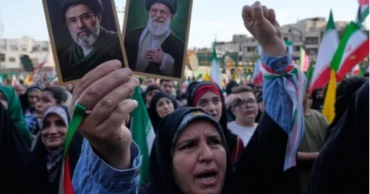
Iran’s supreme leader vows to defend nuclear, missile capabilities
Mojtaba Khamenei on Thursday said Iran will protect its nuclear and missile capabilities as “national assets,” signalling a hardening stance amid tensions with the United States over the ongoing conflict and fragile ceasefire.
In a written statement aired on state television, Khamenei struck a defiant tone, warning that foreign powers—particularly the US—have no place in the Persian Gulf, and declaring that a “new chapter” is unfolding in the region.
His remarks come as Donald Trump pushes for a broader agreement with Tehran, while a US naval blockade continues to restrict Iran’s oil exports, intensifying economic pressure.
Global energy markets have reacted sharply, with Brent crude prices surging as Iran maintains control over the Strait of Hormuz—a vital route through which a significant portion of the world’s oil and gas supplies pass.
Khamenei indicated that Iran’s nuclear programme and ballistic missile capabilities are non-negotiable, describing them as integral to national sovereignty and security.
He also suggested that Tehran would continue asserting control over the strategic waterway, arguing that its management would enhance regional security—claims strongly rejected by Gulf nations, who view such actions as a threat to international shipping.
The developments add to mounting global concerns over energy security and the risk of further escalation in the region, even as ceasefire efforts remain in place.
3 months ago
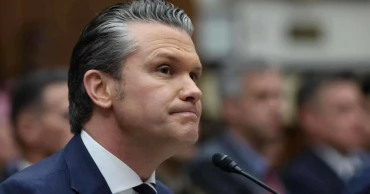
US Lawmakers press Hegseth again on Iran war costs, strategy
US Defense Secretary Pete Hegseth is set to face a second day of intense questioning from Democrats on Capitol Hill, as senators prepare to examine his handling of the Iran war.
The hearing before the Senate Armed Services Committee on Thursday will give lawmakers their first chance to directly confront or support Hegseth following a nearly six-hour session a day earlier with the House panel.
During Wednesday’s hearing, Hegseth faced sharp criticism from Democrats—and some Republicans—over the financial cost of the war, casualties and the depletion of key US weapons stockpiles.
At Thursday’s session, Hegseth and Joint Chiefs Chairman Dan Caine are expected to present the Trump administration’s proposed 2027 military budget, which would raise defense spending to a record $1.5 trillion. They are likely to emphasise the need for increased investment in drones, missile defence systems and naval capabilities.
Lawmakers are also expected to press Hegseth on US troop deployments in Europe after Donald Trump signalled a possible reduction of American forces in Germany amid tensions with Chancellor Friedrich Merz over the Iran conflict.
The developments add further political pressure as the administration navigates both the war and broader alliance dynamics.
3 months ago
OPEC faces mounting pressure as officials meet in Vienna
The Organization of the Petroleum Exporting Countries is grappling with one of the most serious crises in its 65-year history as officials gather at its headquarters in Vienna.
The oil-producing bloc is dealing with several urgent challenges, including the ongoing global energy crisis and a surprise announcement by the United Arab Emirates that it plans to leave the organisation after many years of membership.
However, discussions at Wednesday’s meeting focused largely on a different issue. Officials presented OPEC’s annual flagship report, now in its 61st edition. The report compiles detailed data on global oil imports and exports, reserves, and demand trends.
According to the report, global oil demand increased in 2025 compared to 2024. It also showed higher oil reserves and a rise in exports, with much of the supply going to Asia, Latin America and the Middle East.
The findings, however, reflect a period before the UAE’s decision to exit the group, a move that is expected to significantly affect future projections and the outlook for the next report.
Reporters who visited the OPEC headquarters earlier in the day sought official comments on the UAE’s departure. A senior official from the secretary-general’s office declined to elaborate, saying they had nothing to say on the matter at this time.
The lack of response has added to speculation that the organisation is operating in a state of heightened concern as it navigates the unfolding situation. #From Al Jazeera
3 months ago
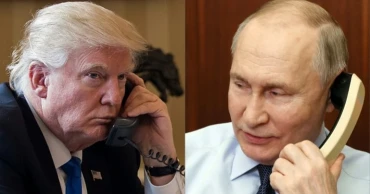
Trump, Putin hold phone conversation on Iran and Ukraine, says Kremlin
Russian President Vladimir Putin and US President Donald Trump have held a phone conversation discussing issues related to Iran and Ukraine, the Kremlin has said.
According to a Kremlin aide, during the call Putin put forward proposals aimed at resolving the conflict over Iran’s nuclear programme. He also suggested a temporary ceasefire in Ukraine to coincide with the upcoming anniversary of the end of World War II next month.
Meanwhile, US media outlet Axios reported that Trump has rejected Iran’s peace proposal and said the US military blockade of Iranian ports will continue until Tehran agrees to a nuclear deal.
Trump Declares “NO MORE MR. NICE GUY” in Sharp Warning to Iran
“The blockade is somewhat more effective than the bombing. They are choking like a stuffed pig, and it is going to be worse for them. They can’t have a nuclear weapon,” Trump was quoted as saying by Axios.
Iran had earlier this week reportedly proposed ending the ongoing conflict and reopening the Strait of Hormuz, while suggesting that nuclear negotiations be postponed to an unspecified future date.
Source: Al Jazeera
3 months ago