middle-east
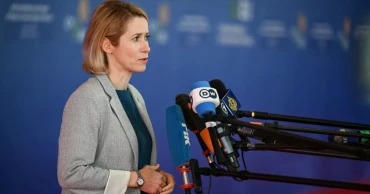
EU warns Iran deal without nuclear experts could be weaker than 2015 pact
The European Union has warned that any new agreement with Iran could be weaker than the 2015 nuclear deal if ongoing US-Iran talks proceed without the involvement of nuclear experts.
EU foreign policy chief Kaja Kallas said on Friday that excluding technical experts from negotiations would undermine the strength of any potential deal.
“If the talks are only about the nuclear and there are no nuclear experts around the table, then we will end up with an agreement that is weaker than the JCPOA was,” she said.
Kallas made the remarks as EU leaders gathered in Nicosia, Cyprus to discuss the economic and security implications of the ongoing Middle East conflict.
The 2015 Joint Comprehensive Plan of Action (JCPOA) was a landmark agreement between Iran and world powers including the United States, United Kingdom, France, Russia, China, Germany and the EU.
Under the deal, Tehran agreed to limit its nuclear programme in exchange for sanctions relief. However, the United States withdrew from the agreement during the first term of former President Donald Trump.
Kallas also said EU leaders emphasised that freedom of navigation in the Strait of Hormuz is “non-negotiable” and called for increased EU military presence in the region.
The warning comes amid renewed diplomatic efforts and rising tensions in the Middle East, with uncertainty surrounding the future of US-Iran negotiations.
3 months ago
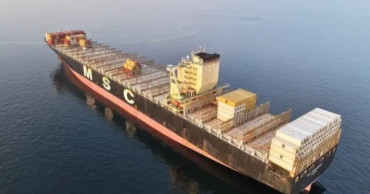
Over 40 container ships remain stranded in Gulf amid Iran conflict
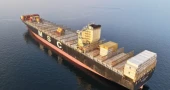
More than 40 container ships are still stranded in the Middle East Gulf as major shipping companies continue to suspend operations due to the ongoing conflict involving Iran, according to a shipping industry report.
Shipping journal Lloyd’s List said at least 43 vessels from the world’s 10 largest container carriers remain stuck in the region reported AL Jazeera
Top global operators, including CMA CGM, COSCO, Hapag-Lloyd and MSC, have halted services in the area since the conflict began in late February.
The disruption has caused major delays and increased costs for global trade, the report said.
Some vessels from these companies managed to leave the region safely, but two ships belonging to MSC were seized by Iranian authorities, according to Lloyd’s List.
3 months ago
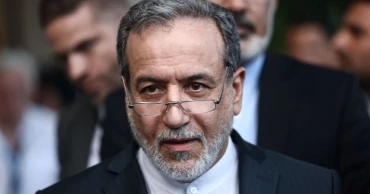
Iran's Araghchi heads to Islamabad in step towards US talks resumption
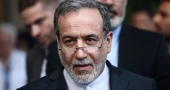
Iranian Foreign Minister Abbas Araghchi is expected to arrive in Islamabad on Friday night with a small delegation in a move seen as a step towards the possible resumption of direct US-Iran talks aimed at easing escalating tensions.
Senior officials in Islamabad confirmed the development to international media following a series of phone calls between Araghchi and Pakistani leaders on Friday, reports Al Jazeera.
However, Iran’s state news agency IRNA said the visit is primarily bilateral and focused on talks with Pakistani officials, not direct negotiations with the United States. After his Islamabad visit, Araghchi is expected to travel to Moscow and Muscat.
A Pakistani official said there was a “high likelihood of a breakthrough” in efforts to restart stalled US-Iran dialogue, despite rising tensions in the Strait of Hormuz and recent naval confrontations.
The development comes after earlier expectations that a US delegation led by Vice President JD Vance would travel to Islamabad for talks. However, Iran reportedly refused to return to negotiations, citing a naval blockade imposed by US President Donald Trump on April 13.
Since then, both sides have exchanged maritime actions in the Strait of Hormuz, further complicating diplomatic efforts, while talks have remained uncertain.
Araghchi held separate phone conversations on Friday with Pakistan’s Deputy Prime Minister and Foreign Minister Ishaq Dar, as well as Pakistan’s military leadership, according to media reports.
Pakistan has been playing a mediating role in facilitating dialogue between Washington and Tehran, with officials saying the US remains prepared for renewed talks despite delays.
The proposed discussions involve key issues including Iran’s nuclear programme, US sanctions, and the strategic Strait of Hormuz.
Meanwhile, heightened security measures and repeated road closures in Islamabad have disrupted daily life, as the capital hosts diplomatic activity linked to the stalled negotiations.
Residents have reported repeated interruptions to court services, education, transport and business activities due to security restrictions linked to the high-level diplomatic engagements.
Pakistan’s role as a mediator comes amid its own economic challenges, including IMF-backed reforms, rising fuel prices and power shortages.
Despite uncertainty, officials and observers say diplomatic efforts continue behind the scenes, though a firm date for renewed US-Iran talks has not yet been confirmed.
3 months ago
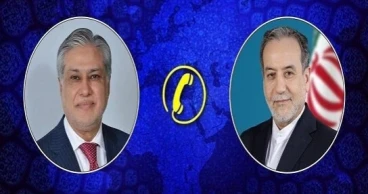
Pakistan, Iran FMs discuss regional situation, diplomatic efforts
Pakistan’s Deputy Prime Minister and Foreign Minister Mohammad Ishaq Dar on Friday held a telephone conversation with Iranian Foreign Minister Seyed Abbas Araghchi, emphasising the need for continued dialogue and engagement to promote regional peace and stability.
According to a statement from Pakistan’s Foreign Ministry, the two leaders exchanged views on the prevailing regional situation, including the ceasefire and Islamabad’s ongoing diplomatic efforts in the context of US-Iran engagement.
Araghchi appreciated Pakistan’s consistent and constructive role in facilitating diplomatic initiatives, the statement said.
Both sides agreed to remain in close contact over the evolving situation.
3 months ago
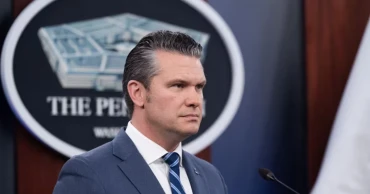
Pentagon dismisses reports on six-month Hormuz closure, slams media over leaks
The United States Department of Defense has rejected media reports suggesting that reopening the Strait of Hormuz could take up to six months, accusing news outlets of misrepresenting classified information.
Pentagon spokesperson Sean Parnell, speaking to the BBC, said claims that clearing mines from the vital waterway would take months were not accurate.
“One assessment does not mean the assessment is plausible, and a six-month closure of the Strait of Hormuz is an impossibility and completely unacceptable to the Secretary,” he said.
Parnell also criticised reports based on leaked classified briefings, calling them misleading.
“The media cherry-picking leaked information, much of which is false, from a classified, closed briefing is dishonest journalism,” he added.
The Strait of Hormuz remains a key global energy route amid heightened tensions in the region, with ongoing disputes involving the United States and Iran over maritime security and oil transport.
3 months ago
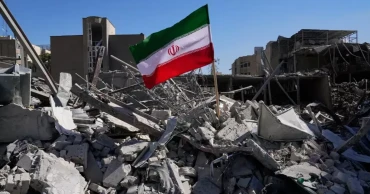
Iran activates air defences in Tehran as Israel signals readiness to resume war
Air defence systems were activated in parts of Tehran, according to reports by Iranian media outlets Nour News and Mehr News Agency, though no details were provided about the cause and no incidents were immediately reported.
Meanwhile, Israel Katz said Israel is “prepared to resume the war” against Iran, adding that it is awaiting a “green light” from the United States, reports Al Jazeera.
In a video statement, Katz said the Israeli military is ready for both defensive and offensive operations, warning that future attacks would be “different and lethal”.
He also claimed that Israel aims to strike key energy and infrastructure targets in Iran, escalating rhetoric amid already heightened regional tensions.
Efforts to revive negotiations over the ongoing conflict remain uncertain despite mediation attempts by Pakistan. The conflict has already left thousands dead, particularly in Iran and Lebanon, while also contributing to global economic instability.
3 months ago
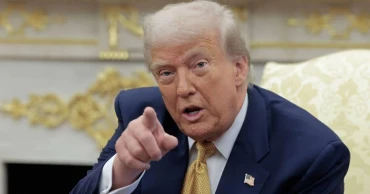
Trump orders US Navy to ‘shoot and kill’ Iranian boats laying mines in Hormuz
Donald Trump has said he ordered the United States Navy to “shoot and kill” any Iranian boats laying mines in the Strait of Hormuz, raising concerns over the fragile ceasefire between the two countries.
In a social media post on Thursday, Trump said there should be “no hesitation” in targeting any vessel involved in mining the vital shipping route, reports Al Jazeera.
He also announced intensified efforts to clear explosives from the waterway, saying US mine-sweeping operations would continue at a “tripled-up level”.
The Strait of Hormuz, a crucial corridor linking the Gulf to the Indian Ocean, has become a focal point of tensions during the ongoing conflict. Before the war, about 20 percent of the world’s oil and gas shipments passed through the narrow passage.
The escalation comes as both sides continue competing maritime measures. While Washington has maintained a naval blockade targeting Iran-linked vessels, Tehran has also seized foreign ships in the region, accusing them of violating maritime rules.
The US military said it recently intercepted another tanker carrying Iranian oil in the Indian Ocean, adding to a series of similar actions in recent days. Earlier, US forces also seized an Iranian vessel and directed multiple ships to turn back.
Iran, meanwhile, has insisted it will defend itself against any aggression and has made lifting the blockade a key condition for resuming talks with Washington.
Despite a recently extended ceasefire, tensions remain high as the duelling blockades threaten to reignite broader conflict, with no clear timeline set for a lasting agreement.
3 months ago

Iran says ships have begun paying tolls in Strait of Hormuz
Iran’s parliament deputy speaker Hamidreza Haji Babaei has said the first revenues collected from tolls imposed on ships transiting the Strait of Hormuz have been deposited into the country’s Central Bank account.
According to Tasnim News Agency, Haji Babaei did not provide details on how the revenue was collected or which vessels paid the fees. The claim could not be independently verified, reports BBC.
Before the current ceasefire, Tehran had indicated that passage through the strait would be limited to what it described as “friendly” countries, with discussions underway about imposing tolls on vessels using the key maritime route.
However, authorities had not clarified whether such charges were being enforced or how much ships would be required to pay. In late March, Iran’s embassy in India denied reports that vessels were being charged $2 million to pass through the strait.
Separately, Iranian lawmaker Alireza Salimi told Tasnim that fees had been collected from ships, though the amounts varied depending on cargo type and associated risks.
“The amount and fees collected from each of these ships vary depending on the type and amount of cargo and the level of risk they carry, and Iran determines how and to what extent these fees are collected,” he said.
The development comes amid heightened tensions in the region, with US President Donald Trump previously warning ships against paying tolls to Iran for passage through the strategic waterway.
3 months ago
Pentagon assesses clearing Hormuz mines could take 6 months: report
A US intelligence assessment suggests it could take up to six months to fully clear the Strait of Hormuz of mines allegedly deployed by Iran, according to a report by The Washington Post.
US defense officials briefed lawmakers this week, saying such an operation is unlikely to begin until the ongoing US-Israeli war with Iran ends. Members of the House Armed Services Committee were told on Tuesday that the prolonged timeline could keep global gasoline and oil prices elevated, potentially through upcoming US midterm elections.
The assessment indicated that Iran may have deployed 20 or more mines in and around the strait. Some of the mines were reportedly floated remotely using GPS technology, making them difficult to detect, while others were believed to have been placed by small boats operated by Iranian forces.
The disclosure was made during a classified briefing to lawmakers. However, Pentagon spokesman Sean Parnell pushed back on the reports, describing them as “inaccurate.”
“As we said in March, one assessment does not mean the assessment is plausible, and a six-month closure of the Strait of Hormuz is an impossibility and completely unacceptable to the (Defense) Secretary,” he said, without providing an alternative timeline.
Meanwhile, US President Donald Trump said there is “no time frame” for ending the conflict with Iran.
3 months ago
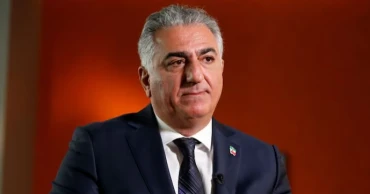
Iran’s exiled prince denounces ceasefire
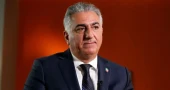
Iran’s exiled crown prince Reza Pahlavi criticized the ceasefire between the Unites States and Iran.
He argued Thursday that the agreement assumes the Iranian government’s behavior will change and “you’re going to deal with people who all of a sudden have become pragmatists.”
“I don’t see that happening,” he said during a news conference in Berlin. “I’m not saying that diplomacy should not be given a chance, but I think diplomacy has been given enough chance.”
Pahlavi has tried to position himself for a return to power should the Shiite theocracy fall and has supported the U.S.-Israeli military intervention in the Middle East.
Pahlavi called on Europeans to do more to support Iranian people fighting for democracy.
He claimed 19 political prisoners were executed by Iranian authorities in the past two weeks and another 20 people have been sentenced to death.
“Will the free world do something or watch the slaughter in silence,” Pahlavi wondered.
3 months ago