middle-east
Iran enters ‘new phase of deterrence,’ warns senior adviser
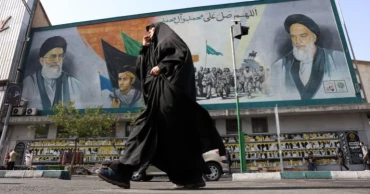
A senior adviser to Iran's Supreme Leader has said the country has entered "a new phase of deterrence," warning that any US attempt to strike Iran at a low cost would have consequences beyond the battlefield.
In a post on X, Ali Akbar Velayati said the belief that Iran could be attacked without significant repercussions was a miscalculation.
Fifty-three Iranian civilians killed since late June: Ministry
"The Islamic Republic of Iran is in a new phase of deterrence," he wrote, adding that any military action against Iran could affect global energy markets and the wider world economy.
Velayati also warned that the United States would not achieve greater security by threatening Iran, rallying regional allies or seeking European support.
"The White House should know that by threatening Iran and mobilising regional allies and activating the European lobby, it will not achieve greater security and stability; rather, it will globalise the consequences of its mistakes," he said.
Iranian leaders have repeatedly warned that they could broaden the conflict if the US steps up its military attacks. In recent days, power and water desalination facilities in Kuwait have come under repeated attacks, drawing condemnation from the Gulf Cooperation Council (GCC) countries.
With inputs from Al Jazeera
12 days ago
Fifty-three Iranian civilians killed since late June: Ministry
At least 53 Iranian civilians, including three children, have been killed in US strikes since June 27 after fighting intensified and the Islamabad memorandum of understanding collapsed, according to Iran's Health Ministry.
The ministry said more than 590 people have also been injured in the attacks during the same period.
Meanwhile, the US military has also suffered casualties in the conflict. According to US Central Command, at least 18 American soldiers have been killed and hundreds more wounded since the war began in late February.
With inputs from Al Jazeera
12 days ago
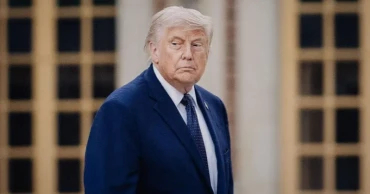
Trump warns US will hit Iranian infrastructure after any Strait of Hormuz attack
US President Donald Trump on Wednesday warned that the United States would strike an Iranian bridge or power plant every time Tehran attacks a vessel in the strategically vital Strait of Hormuz.
The warning marks another escalation in the ongoing conflict, which has shown little sign of easing and continues to raise concerns over global energy supplies and economic stability. The prolonged hostilities have already pushed fuel prices higher ahead of the US midterm elections later this year.
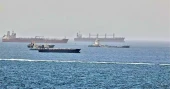
The Strait of Hormuz, a key route for global oil shipments, remains largely disrupted due to repeated Iranian attacks on commercial shipping, intensifying tensions in the region.
Overnight, US forces launched another round of airstrikes on Iran, while Iranian air defense systems were activated over Tehran. Iran also fired missiles toward a city in Jordan near the Israeli border, prompting security alerts in Bahrain and Saudi Arabia.
Diplomatic efforts to end the conflict remain stalled, with both Washington and Tehran increasingly targeting infrastructure to gain strategic advantage. Iran has responded to US strikes by attacking energy facilities and desalination plants that supply drinking water in several Gulf countries.
International humanitarian law generally prohibits attacks on civilian infrastructure unless it is being used for military purposes. UN Secretary-General António Guterres on Tuesday condemned such strikes, describing them as "unacceptable."
12 days ago
US identifies third service member believed killed in Iranian attack on Jordan base
The US military has identified a third service member believed to have been killed in last week's Iranian attack on a military base in Jordan as Sgt. Angel S. Rampersad, 28, of New York.
The confirmation raises the number of US service members killed since the war began to 18.
Earlier, the Pentagon identified 1st Lt. Tyler James Feehan, 25, of Ewa Beach, Hawaii, and Pvt. Isabella Gonzales, 19, of Carrollton, Texas, as the two other soldiers killed in Friday's missile and drone attack on the base in Jordan.
The soldiers died in Iranian ballistic missile and drone strikes, marking the first US troop deaths from direct Iranian fire since the early days of the conflict. They had been deployed as part of a US mission against the Islamic State group, according to a US Central Command statement.
Following the attack, US Central Command said two service members had been killed and another was missing. A day later, it announced that unidentified human remains had been recovered and that efforts were underway to confirm their identity.
The Pentagon now believes those remains are Rampersad's. Her official status has been changed to "Duty Status–Whereabouts Unknown," and she is considered "believed to be deceased."
Rampersad served in the same unit as Gonzales — the 10th Army Air & Missile Defense Command based in Ansbach, Germany.
Separately, the military identified another US soldier killed in Iraq as Sgt. Michael Emmanuel Swinton, a 30-year-old father from North Carolina, who died during the controlled detonation of an Iranian drone, according to a military statement released Tuesday and his family.
Swinton will be awarded the Bronze Star, Purple Heart and Combat Action Badge and will be promoted posthumously to staff sergeant. The Army said it is investigating the circumstances surrounding his death on Sunday at an air base in Irbil.
He is survived by his wife and two children — a 6-year-old son and a 4-year-old daughter.
"I will never recover from this," his wife, Mia Gonzalez-Swinton, wrote on Facebook on Monday. "We had so many plans for when you got back. I'm sick to my stomach." She said she was informed of his death on Sunday.
Swinton's mother, Christel Swinton Andujar, told The Associated Press that his wife and children were the centre of his life.
"His legacy will live on through the countless lives he touched, the laughter he shared, the strength he gave others, and the unconditional love he poured into his family," she said. "He will forever be missed, forever honored, and forever our hero."
Swinton enlisted in the US Army in 2017 and was assigned to the 55th Air Defense Artillery Regiment, 108th Air Defense Artillery Brigade, based at Fort Bragg, North Carolina.
He lived in Spring Lake, a community near Fort Bragg popular with military families, according to public records. The Army listed his hometown as nearby Fayetteville.
"Sgt. Swinton was an experienced noncommissioned officer who took great pride in his work and the people around him," said Brig. Gen. John L. Dawber, commanding general of the Army Air and Missile Defense Command. "He answered the call to duty with courage, honor and selfless dedication."
The renewed fighting between the United States and Iran has now entered its 10th day, with both sides continuing to exchange strikes. Iran has also targeted US allies in the region, where thousands of American troops remain deployed.
Iranian authorities say US strikes over the past three weeks have killed at least 50 people and wounded more than 500 others.
Both sides have also targeted civilian infrastructure used by millions of people. The conflict has claimed the lives of ship workers, foreign workers and civilians in Gulf countries, Israel and Lebanon.
The US State Department has issued a fresh warning to American citizens, saying that "Iran and groups supportive of Iran may target other US interests overseas or at locations associated with the United States and Americans throughout the world."
President Donald Trump has defended the military campaign, saying it is necessary to prevent Iran from developing nuclear weapons. However, he is facing growing political pressure to end the conflict and avoid a prolonged Middle East war, a scenario he had pledged to avoid during his election campaign. The escalation has also driven global oil prices higher in recent weeks.
12 days ago
US completes 11th straight night of strikes on Iran as diplomacy falters
The US military carried out its 11th consecutive night of airstrikes on Iran early Wednesday, as fighting across the Middle East continued to overshadow diplomatic efforts in Pakistan to revive a collapsed interim ceasefire agreement.
The US Central Command (CENTCOM) said the latest strikes targeted aircraft hangars and drone storage facilities. The attacks followed President Donald Trump's indication that the US campaign against Iran would intensify.
Ahead of the latest strikes, Iranian Interior Minister Eskandar Momeni visited Pakistan, which has been acting as a key mediator in the conflict, in an effort to revive diplomatic talks. However, it remained unclear whether a new agreement could be reached to end the war, which has increasingly focused on control of the Strait of Hormuz, a crucial route for global energy supplies.
Speaking from the Oval Office on Tuesday, Trump expressed little optimism about negotiations, saying the US had "no interest in meeting." He also suggested that US forces could soon strike an area near one of Iran's main uranium enrichment sites.
With diplomatic efforts stalled and shipping through the Strait of Hormuz largely disrupted, both sides have increasingly targeted civilian infrastructure across the region that supports millions of people.
Despite repeated US airstrikes, Iran has maintained control over the Strait of Hormuz, through which about one-fifth of the world's crude oil and natural gas passed before the conflict began.
The US continued its attacks into Wednesday as Iranian air defence systems were activated near Tehran. Iran's state-run IRNA news agency reported explosions in Bushehr, East Azerbaijan, Hamadan, Hormozgan, Khuzestan, and Sistan and Baluchistan provinces.
The latest strikes came a day after Iran attacked a tanker in the Strait of Hormuz, forcing its crew to abandon the vessel. Iran also continued attacks on US allies in the region, launching strikes against Bahrain, Jordan and Kuwait.
The escalating conflict pushed global energy prices higher, with benchmark crude oil trading above $92 a barrel on Wednesday and the average price of regular gasoline in the United States reaching $4 per gallon.
As the US prepares for midterm elections later this year, opinion polls have shown growing public dissatisfaction with the war, driven by rising fuel prices and increasing American casualties in a conflict that had appeared to be easing only weeks ago.
A US official told The Associated Press that the number of wounded American troops in the Iran conflict has exceeded 500. The figure is higher than the Pentagon's official count of 482 injured personnel listed in its Defense Casualty Analysis System.
The official, who spoke on condition of anonymity because they were not authorised to discuss the matter publicly, said the reporting system has a significant delay in recording injuries due to its design rather than any deliberate effort to underreport casualties.
Houthis open new front in the Red Sea
Meanwhile, Iran-backed Houthi rebels in Yemen have expanded the conflict by announcing a naval blockade of Saudi Arabia in the Red Sea, threatening global oil supplies and international trade. With the Strait of Hormuz blocked, Saudi Arabia has relied on a pipeline to the Red Sea to export millions of barrels of oil.
The Houthi-run SABA news agency reported Tuesday that six ships in the Red Sea changed course after receiving warnings from the group. The Associated Press could not immediately verify the claim.
Three Houthi officials, speaking anonymously because they were not authorised to brief the media, said the group had warned international shipping companies on Monday against using the Bab el-Mandeb Strait, the southern gateway to the Red Sea.
Pakistan renews diplomatic efforts
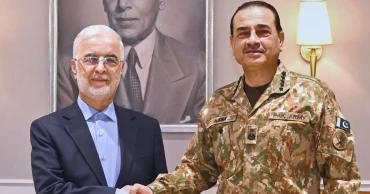
During his visit to Islamabad, Momeni met Pakistan's army chief, Field Marshal Asim Munir, according to two officials familiar with the closed-door talks. He later held talks with Prime Minister Shehbaz Sharif.
In a statement, Sharif expressed deep concern over the recent escalation between the US and Iran and urged all parties to show restraint and avoid further actions that could destabilise the region.
Pakistan's civilian and military leadership had helped broker last month's interim agreement between Washington and Tehran and has since been trying to bring both sides back to the negotiating table.
Trump, however, said Iranian officials "want to desperately meet," but added that the US had "no interest in meeting" until they were prepared for meaningful negotiations. He also said the US could soon target the area around Pickaxe Mountain, a heavily fortified underground site near one of Iran's key nuclear enrichment facilities.
Iranian military leaders warned that any attack on nuclear or other sensitive facilities would be viewed as a major escalation, according to Iranian state media.
Relations between the two sides remain deeply strained. Iran was hit by surprise attacks in June 2025 and again in February while nuclear negotiations with the US were underway. The interim ceasefire later collapsed after Iran resumed attacks on vessels in the Strait of Hormuz, which was supposed to reopen under the agreement.
Tanker attacked in Strait of Hormuz
The British military's United Kingdom Maritime Trade Operations (UKMTO) said a tanker was attacked early Tuesday in the Strait of Hormuz off the coast of Oman, forcing the crew to abandon the ship.
Iran's paramilitary Revolutionary Guard claimed responsibility for that attack as well as two other strikes on ships in the strategic waterway on Monday.
The shipping route close to Oman's coast has been the corridor recommended by the US military to help commercial vessels avoid Iranian-controlled waters.
CENTCOM said on X that, as of Tuesday, US forces had redirected eight commercial ships and disabled one vessel as part of efforts to enforce the blockade in the Strait of Hormuz.
12 days ago
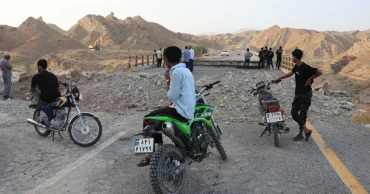
Iranian official visits Pakistan as Iran-US conflict enters 10th day
Iran's Interior Minister Eskandar Momeni held talks in Pakistan on Tuesday as Islamabad intensified efforts to revive the collapsed interim agreement between Iran and the United States, while both sides continued exchanging attacks for a 10th consecutive day.
Momeni met Pakistan's army chief, Field Marshal Asim Munir, and was expected to hold talks with Prime Minister Shehbaz Sharif. Pakistan has been urging Washington and Tehran to resume negotiations under the June memorandum of understanding, though no details of the closed-door meeting were released.
Iran attacks another tanker in Hormuz as US strikes continue for 10th night
Meanwhile, Iran attacked a tanker in the Strait of Hormuz, forcing its crew to abandon the vessel, while the US launched fresh airstrikes targeting Iranian military command centres, missile and drone sites, maritime capabilities and air defence systems.
Despite 10 days of US strikes, Tehran has maintained its grip on the strategic waterway, where shipping has nearly halted after the collapse of last month's interim deal. Iran's Revolutionary Guard claimed responsibility for attacks on three ships over two days.
The US warned Americans worldwide of possible Iranian-linked attacks, while President Donald Trump vowed retaliation for any American casualties. Iran also launched drones and missiles toward Jordan and Bahrain, though Jordan said all incoming threats were intercepted. Rising tensions have pushed Brent crude close to $90 a barrel and US gasoline prices to about $4 per gallon.
13 days ago
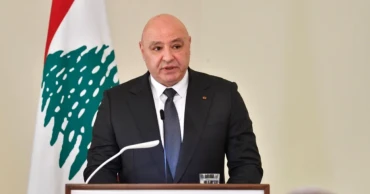
Lebanese president to meet Trump seeking Israeli withdrawal from southern Lebanon
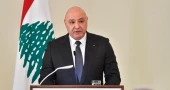
Lebanese President Joseph Aoun is set to meet US President Donald Trump in Washington on Tuesday as part of efforts to secure the withdrawal of Israeli troops from southern Lebanon and advance a long-term security arrangement following months of conflict between Israel and the Iran-backed Hezbollah group.
The meeting will conclude Aoun’s four-day visit to the United States and comes as Lebanon and Israel continue rare direct negotiations under US mediation.
Beirut hopes the talks will lead to the withdrawal of Israeli forces from areas of southern Lebanon they continue to occupy, while also securing international support to strengthen the Lebanese Armed Forces and enable them to assume full control over territories previously influenced by Hezbollah.
On June 26, Lebanon and Israel announced a US-backed framework agreement outlining the gradual withdrawal of Israeli troops from southern Lebanon and the disarmament of Hezbollah. The agreement also sets out steps toward a future peace accord between the two neighbours, which have never established formal diplomatic relations and have technically remained at war since Israel's creation in 1948.
The US State Department announced on Monday that operations had begun in three villages—Froun, Srifa and Zawtar al-Gharbieh—designated as part of a pilot zone under the agreement, although no further details were disclosed. The three villages are currently outside Israeli military control, and neither Lebanese nor Israeli authorities immediately commented on the announcement.
Ahead of his meeting with Trump, Aoun held talks with US Secretary of State Marco Rubio on Sunday.
Rubio reaffirmed Washington’s commitment to supporting the framework agreement and its full implementation, describing the discussions as positive.
He said lasting peace in Lebanon would not be possible without resolving the issue of Hezbollah’s armed presence.
Rubio said Lebanon’s government must become the country's only legitimate armed authority while also stressing the importance of rebuilding the country's economy and attracting international investment.
He noted that security alone would not ensure long-term stability, highlighting the need for economic recovery and stronger state institutions.
The Lebanese army has recently increased deployments in several areas expected to fall within the pilot zone, establishing checkpoints and conducting patrols in preparation for the agreement’s implementation.
Despite signs of progress in negotiations, Israeli troops remain stationed in parts of southern Lebanon. Israeli officials have indicated that they intend to maintain forces in what they describe as a long-term security zone along the border.
Hezbollah has rejected the direct Lebanon-Israel talks mediated by Washington and instead has expressed support for US-Iran negotiations aimed at ending the broader regional conflict, including hostilities in Lebanon.
Lebanon’s government, which took office earlier this year on a reform agenda, has pledged to disarm all non-state armed groups, including Hezbollah.
The government has accused Hezbollah of drawing Lebanon into renewed conflict with Israel after the group launched rockets toward northern Israel in March following US and Israeli strikes on Iran.
At the same time, Beirut has criticised Israel’s subsequent military offensive, which Lebanese authorities say killed more than 4,000 people and displaced around 1.2 million others.
Lebanese officials maintain that a complete Israeli withdrawal and increased international support for the country's financially strained military are essential to achieving lasting peace and stability in southern Lebanon.
13 days ago
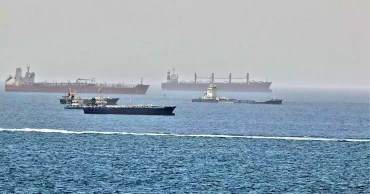
Iran attacks another tanker in Hormuz as US strikes continue for 10th night
Iran attacked another commercial tanker in the Strait of Hormuz early Tuesday, forcing its crew to abandon the vessel, as the United States carried out a 10th consecutive night of airstrikes targeting the Islamic Republic in an escalating conflict over the strategic waterway.
The continued US military campaign has so far failed to persuade Tehran to ease its control over the Strait of Hormuz, a vital maritime route through which about one-fifth of the world's seaborne crude oil and natural gas trade traditionally passed during peacetime.
Despite growing fears of a broader regional conflict, diplomatic efforts continued as Iran's interior minister travelled to Pakistan, which has been acting as a mediator between the two sides. However, there was no indication that fresh negotiations were close to ending the hostilities.
The temporary agreement reached last month to halt the fighting has effectively collapsed, while commercial shipping through the Strait of Hormuz has been severely disrupted. As military operations intensify, both Washington and Tehran have accused each other of targeting infrastructure relied upon by civilians.
The US State Department issued a fresh global security alert, warning that Iran and groups aligned with it could target American interests, personnel and facilities around the world.
The conflict has also affected global energy markets, with oil prices rising sharply in recent weeks. Brent crude traded above 88 dollars a barrel on Tuesday, while the average price of regular gasoline in the United States climbed to about four dollars per gallon, adding pressure on consumers ahead of this year's midterm elections.
The US military also identified two service members killed in an Iranian attack on a military base in Jordan, while a third soldier remains unaccounted for.
Separately, the Pentagon confirmed the death of another American service member in Iraq on Saturday during what it described as the controlled detonation of a downed Iranian drone.
President Donald Trump vowed a strong response to attacks on US troops, saying on social media that Iran would "pay many times over" whenever an American soldier was killed.
Trump was also scheduled to attend a ceremony later Tuesday at Dover Air Force Base, where the remains of at least one of the fallen service members were expected to arrive.
13 days ago
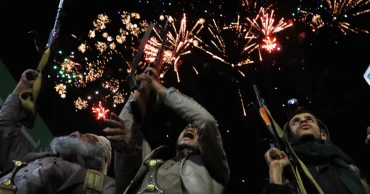
Houthis announce maritime embargo on Saudi shipping through Bab al-Mandeb
Yemen's Iran-backed Houthi rebels have announced a maritime embargo against Saudi Arabia, threatening to block Saudi shipping through the strategic Bab al-Mandeb Strait in retaliation for what they described as Riyadh's blockade of Yemen and a recent attack on Sanaa International Airport.
Houthi military spokesperson Yahya Saree said in a televised statement on Monday that the embargo would take effect immediately, calling the move an “eye for an eye” response.
The group did not provide details on how the restrictions would be enforced. However, Nasruddin Amer, deputy head of the Houthi media office, said on social media platform X that the Bab al-Mandeb Strait would be closed to Saudi shipping in response to what he described as Saudi Arabia’s decade-long blockade of Yemen.
The Bab al-Mandeb Strait, located at the southern entrance to the Red Sea, is one of the world's most important maritime chokepoints. Around 12 percent of global trade passes through the waterway, while roughly one-quarter of the world's container traffic transits the narrow passage en route to and from the Suez Canal.
The announcement has raised concerns over renewed disruption to international shipping in the region.
The Houthis previously demonstrated their ability to disrupt maritime traffic by launching attacks on commercial vessels during the Israel-Hamas war in Gaza. More than 100 ships were targeted in a campaign that significantly affected trade through the Red Sea.
It remains unclear whether the group intends to launch a similar campaign against Saudi-linked vessels.
Saudi Arabia's military said it would continue to ensure freedom of navigation through the waterway.
Saudi military spokesperson Maj. Gen. Turki al-Malki said any threats against vessels transiting the Bab al-Mandeb would be dealt with "swiftly and firmly," describing such actions as a clear violation of international law and an act of maritime piracy.
13 days ago
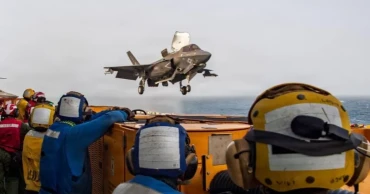
US launches fresh strikes on Iran as Trump vows retaliation over troops' deaths
The United States has carried out another wave of military strikes against Iran, with President Donald Trump pledging retaliation following the deaths of three American service members in recent attacks blamed on Tehran.
The latest operation marked the 10th consecutive night of US strikes targeting what the military described as Iranian capabilities that could threaten shipping in the strategically important Strait of Hormuz.
US Central Command (CENTCOM) said the strikes targeted military command centres, missile and drone launch sites, maritime assets and air defence systems in an effort to further weaken Iran’s offensive capabilities.
Trump said Iran had been hit “very hard” during the previous night’s attacks, describing the operation as a response carried out in honour of three US soldiers killed in recent incidents in Jordan and Iraq.
Iran, meanwhile, claimed it had retaliated by attacking two oil tankers transiting the Strait of Hormuz and striking US military assets in Bahrain and Kuwait, according to the state-run Islamic Republic News Agency (IRNA).
Iranian President Masoud Pezeshkian said the country was now engaged in a “full-scale war” with the United States.
Despite the escalating conflict, Iranian officials said indirect diplomatic contacts between Tehran and Washington were continuing through intermediaries, even after the collapse of a ceasefire.
CENTCOM said commercial shipping was continuing through the Strait of Hormuz despite the latest military exchanges.
Iranian authorities said rescue teams were evacuating the crews of the two damaged oil tankers after the attacks.
Separately, the United Kingdom Maritime Trade Operations (UKMTO) said a tanker in the Strait of Hormuz had reported being struck by an unidentified projectile, forcing its crew to abandon the vessel and take to lifeboats. It was not immediately clear whether the ship was one of the two vessels cited by Iran.
The US Department of Defense identified two of the three American service members killed in an Iranian strike on Muwaffaq Salti Air Base in Jordan as Private Isabella Gonzales, 19, of Texas, and Lieutenant Tyler James Feehan, 25, of Hawaii.
CENTCOM said another service member had initially been reported missing after the attack, with unidentified remains later recovered from the area.
Regional tensions also spread beyond the Gulf.
Jordan’s military said it intercepted three Iranian missiles after air raid sirens warned of incoming attacks, while Kuwait’s armed forces reported shooting down Iranian drones.
Bahrain said Iranian drones targeted its air navigation systems, although authorities said air traffic operations were not disrupted.
Iranian media reported that several cities, including Tabriz, Chabahar, Konarak, Bandar Mahshahr and Bandar Imam Khomeini, were hit during overnight US strikes.
State media also reported explosions involving two oil tankers attempting to cross the Strait of Hormuz.
Iran’s Islamic Revolutionary Guard Corps (IRGC) claimed the vessels had been using what it described as an “unsafe and hazardous” southern route through the waterway and said they exploded before coming to a halt.
The US military disputed that account, maintaining that its operations were directed at military targets rather than commercial shipping. Source: BBC
13 days ago