USA-&-Canada
'Stop trying to be tough': Carney hits back at Trump as US-Canada trade dispute escalates
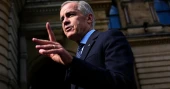
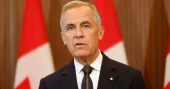
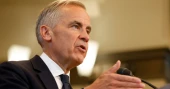
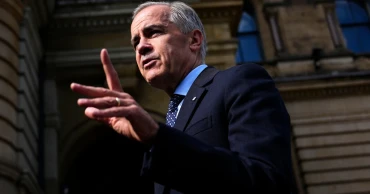
Canadian Prime Minister Mark Carney on Tuesday urged the Trump administration to "stop doing memes, stop throwing shade and stop trying to be tough" as he responded to a fresh round of attacks from Washington amid an escalating trade dispute.
Carney said trade negotiations between the United States and Canada could resume if Washington became serious about reaching an agreement. At the same time, he accused the US of seeking terms that could result in Canadian industries being "gradually wound down in Canada and wiped out."
"When the Americans stop doing memes, stop throwing shade and stop trying to be tough, and start being serious about having those discussions, we can have those discussions," Carney said. "It's not constructive, but that's their democracy."
His remarks came amid renewed criticism from Washington after trade talks between the two countries broke down on Aug. 21.
US President Donald Trump has proposed renaming Lake Ontario "Lake America" and mocked Canada on social media. US Treasury Secretary Scott Bessent also said Canada could not engage in a "tit for tat" trade dispute with an economy 13 times larger.
US Defense Secretary Pete Hegseth meanwhile mocked the Canadian military in an online post Monday, sharing an image of two female cadets at a British Columbia training center with the words "this is real" and a Canadian flag.
Carney described the post as "beneath their office." The Pentagon stood by the post on Tuesday, saying, "The X post speaks for itself."
Bessent, speaking to Fox News, responded to Carney's criticism by saying the Canadian prime minister had received a "verbal beatdown" from him and Hegseth.
Asked about Carney's call for the Trump administration to stop "throwing shade" and return to negotiations, Bessent said, "Well, he was the one who said we were at war."
Carney said the US negotiating position would have effectively turned Canadian industries into subsidiaries of American companies or imposed conditions under which they would be "gradually wound down in Canada and wiped out."
"We're not going to — of course, we're not going to accept those terms," Carney said.
The prime minister said Washington was seeking an "uncompetitive" agreement for key sectors, including the automobile industry, while also demanding changes involving French-language and cultural protections.
He said any one of those issues would have been sufficient to prevent an agreement.
Carney also said Washington wanted restrictions on Canada's ability to negotiate future trade agreements with other countries.
"Canada is a sovereign state. We will strike free trade deals with the countries we wish to strike free trade deals," he said.
However, Carney acknowledged that the negotiations had included some "mutually beneficial" elements before they collapsed.
The prime minister also received a political boost Monday when the Liberal Party won all three special elections, including a decisive victory in Chicoutimi-Le Fjord in Quebec, where the Conservatives finished third.
The victories increased the Liberals' strength to 173 seats in the 343-member House of Commons and strengthened Carney's position as he faces Trump over trade and Canadian sovereignty.
Nelson Wiseman, professor emeritus of political science at the University of Toronto, said Trump's repeated annexation threats have particular significance in Quebec.
"Quebecers have the most to lose in an apocalyptic scenario where the U.S. absorbs Canada, and the status of the French language disappears," he said.
The latest trade talks collapsed after the two countries failed to reach an agreement, prompting Trump to impose 50% tariffs on about $20 billion worth of Canadian goods.
Canada's retaliatory tariffs on nearly $20 billion of US goods are scheduled to take effect Sept. 8, with duties ranging from 15% to 50%.
Trump has repeatedly suggested that Canada should become the 51st US state.
1 day ago
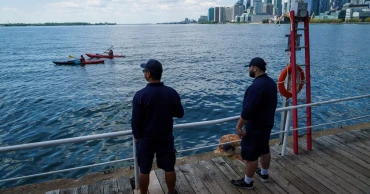
Trump orders to rename Lake Ontario as ‘Lake America’
US President Donald Trump on Thursday ordered Lake Ontario to be referred to as “Lake America” in the United States, escalating his ongoing trade dispute with Canada.
Trump signed an executive order in the Oval Office directing the US geographic naming authority to update the lake’s name.
The order applies to the US naming system, but Trump has no authority to require Canada to adopt the new name, as Lake Ontario is shared by the two countries.
The move echoes Trump’s decision last year to rename the Gulf of Mexico as the “Gulf of America” for US government use.
Lake Ontario is one of the five Great Lakes of North America and lies along the US-Canada border.
7 days ago
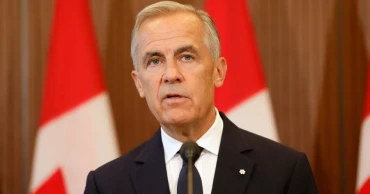
Canada to announce retaliatory tariffs as Trump tells leaders to 'fall in line'
Canada is set to announce retaliatory tariffs against the United States on Tuesday after relations between the two countries deteriorated sharply, with President Donald Trump telling Canadian leaders to “fall in line” or face consequences “far WORSE” than the tariffs already in place.
Trump also threatened to impose new 50% tariffs on Canadian vehicles, auto parts and steel, while Canadian Prime Minister Mark Carney accused Washington of seeking to subordinate Canada.
Finance Minister François-Philippe Champagne and three other Cabinet ministers are expected to announce details Tuesday morning of support measures for workers affected by the tariffs.
Carney said Monday that Canada may need to move away from matching U.S. tariffs dollar-for-dollar and instead adopt more targeted retaliatory measures aimed at protecting Canadian workers and businesses.
“An attitude at the negotiation table that Canada is a subsidiary of the United States” is “not something we're going to accept,” Carney said.
Speaking in French, Carney was even more direct, saying Canada had learned during the negotiations that the United States wanted to “destroy our major industries, including autos, steel and aluminum.”
“That was one of the main reasons we said no. It was a bad deal,” he said.
The strong remarks from both sides reflect the sharp deterioration in U.S.-Canada relations since Carney ended trade negotiations with the Trump administration late Friday, prompting Trump to threaten 50% tariffs the following day on about $20 billion worth of Canadian goods.
Canada and the United States have one of the world's largest trading relationships, with highly integrated supply chains spanning automobiles, energy, agriculture and manufacturing. A prolonged trade dispute could therefore impose significant costs on businesses and workers in both countries.
Carney questioned Washington's reliability, saying Canada was finding dependable partners “everywhere in the world, except in the United States. Except in the United States. And Russia.”
Trump attacks Canadian leaders
Trump on Monday announced further tariff threats, saying he would impose new measures on Canada's auto industry beginning next year.
“Canada has been ripping off the United States of America for years,” Trump wrote on social media, criticizing what he described as Canada's “ridiculously high tariffs” on American farmers.
Carney said Washington's proposed measures against the auto sector would gradually dismantle Canadian vehicle production.
“This is the most successful automotive partnership in history,” Carney said, referring to the closely integrated Canada-U.S. auto industry.
Ontario Premier Doug Ford also criticized Trump, saying in an interview with The Associated Press that the U.S. president had underestimated Canadians' willingness to withstand economic pressure rather than give in to Washington.
“We're all in,” Ford said. “Up here, we're at a fever pitch; everyone's in for an economic war. They know they're going to have to sacrifice.”
Trump responded by personally attacking Ford, calling him “the less charismatic, intelligent, and overall unimpressive brother of the late, great, Rob Ford,” while again referring to Carney as “Governor Carney.”
Ford dismissed the remarks, saying: “If you think an insult from him hurts me? Well, bring it on, buddy, I'm ready.”
Ford is a Progressive Conservative while Carney is a Liberal, but both have emphasized broad political unity in Canada over the trade dispute.
Ford threatens critical minerals and electricity
Ford said “everything is on the table” if the dispute escalates, including potentially cutting off electricity and critical minerals supplied by Ontario to the United States.
Critical minerals have become increasingly important to U.S. national security and manufacturing. The Pentagon has sought more secure supplies of minerals used in military aircraft, missiles, munitions and electronics as Washington works to reduce its dependence on China, which dominates the mining or processing of several strategically important minerals.
Ford said Canada should consider tougher retaliation if Trump continues targeting Canadian industries, including oil and potash. Ontario, he said, could increase electricity prices or halt power exports to the United States.
“We power 1.5 million homes and businesses,” Ford said. “Everything's on the table. I'll do whatever it takes.”
Ford previously used electricity as leverage during an earlier stage of the dispute, when Ontario imposed a 25% surcharge on electricity exported to Michigan, Minnesota and New York. Trump responded by threatening to double tariffs on Canadian steel and aluminum before both sides stepped back.
Auto industry at center of dispute
Ford accused Trump of seeking not merely a better trade agreement but of weakening Canadian industries and shifting production to the United States.
“He wants to bleed out every single sector and bring them down to the U.S.,” Ford said.
The auto sector is particularly important to Ontario, Canada's main vehicle manufacturing hub. Plants and suppliers in the province are closely connected to factories in Michigan and other U.S. states, with auto parts frequently crossing the border several times during production.
Automakers including Ford, General Motors and Stellantis operate major assembly plants in Ontario, while the broader supply chain supports tens of thousands of jobs. Trump's proposed 50% tariffs on Canadian vehicles and parts therefore place the industry at the center of the escalating dispute.
U.S. Trade Representative Jamieson Greer said Monday that “the only reason Canada has auto production in the first place” was the 1960s Auto Pact, under which Canada used access to its market to encourage vehicle production in the country.
Ford opposed preliminary deal
Ford also said he had opposed a preliminary agreement that Carney was considering before Canada ended the negotiations. He said he was unwilling to restore American liquor products to Ontario store shelves as part of a deal.
“I wasn't going to put the booze back on the shelves,” Ford said. “I was ready to go out there and call a press conference … and say I'm not buckling over.”
Ford said Washington had sought language late in the negotiations that would have limited Canada's ability to negotiate trade agreements with other countries without U.S. approval. Carney has rejected the demand as unacceptable and a matter of Canadian sovereignty.
Carney said the dispute had also highlighted deeper differences over language and culture, with protections for French and Canadian culture that Washington considers trade irritants regarded as fundamental rights in Canada.
“Who does he think he is?” Ford said of Trump. “You gotta be kidding.”
9 days ago
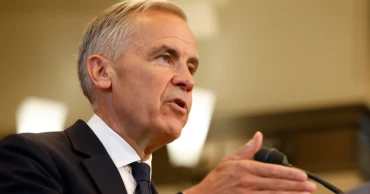
Canada vows retaliation as US trade talks collapse
Canada has vowed to retaliate against new US tariffs as trade negotiations between the two longtime allies have broken down, escalating tensions between the neighboring countries.
US President Donald Trump’s 50% tariffs on a range of Canadian imports took effect Saturday, covering about 5% of Canada’s annual exports to the United States, or roughly $20 billion in goods.
Canadian Prime Minister Mark Carney said Ottawa would respond with dollar-for-dollar tariffs starting Sept 8.
Trump on Monday threatened further tariffs of 50% on Canadian automobiles, auto parts and steel from next year, accusing Canada of unfairly targeting American products.
“Canada has been ripping off the United States of America for years,” Trump said in a social media post, criticizing what he described as excessively high Canadian tariffs on US farmers.
The latest escalation followed the collapse of trade talks last week. Carney ended the negotiations after concluding that Washington was demanding too much in exchange for tariff relief.
Ontario Premier Doug Ford warned that Canada could take further retaliatory steps if the dispute worsens, including restricting exports of electricity and critical minerals to the United States.
“I’ll cut them off,” Ford said, adding that “everything is on the table.”
Ford also criticized Trump’s trade policies, saying former US President Ronald Reagan would have been deeply opposed to the approach.
US Trade Representative Jamieson Greer blamed Canada for the breakdown in negotiations, saying Ottawa continued to maintain restrictions on US wine, spirits, dairy products and automobiles.
Greer said Washington had offered to reduce steel and aluminum tariffs by half and substantially lower auto tariffs but that Canada sought concessions beyond what the US was prepared to provide.
He also downplayed concerns about a wider trade war, saying the tariffs affect only a small portion of bilateral trade.
Greer said he was preparing possible responses for Trump to Canada’s planned retaliatory tariffs but did not disclose details.
The dispute is an important test for Carney, who has argued that middle powers must resist economic pressure from larger countries even when doing so carries economic costs.
Carney has vowed to defend Canada’s interests rather than yield to US tariff demands, saying Ottawa is prepared to withstand the economic pressure and respond to Washington’s measures.
10 days ago
Inside about Trump’s 50% tariffs on Canadian goods that just went into effect
After trade negotiations crumbled at the eleventh hour, U.S. President Donald Trump’s 50% tariffs on scores of Canadian imports kicked in Saturday.
The new levies are expected to affect about 5% of Canada’s annual exports to the U.S., roughly $20 billion in goods ranging from hockey sticks to agricultural products. Canada’s Prime Minister Mark Carney quickly promised Saturday that his government would roll out “dollar for dollar” retaliatory measures starting Sept. 8.
No further talks are scheduled. The latest escalation between the two countries — which once held one of the world’s most durable trade alliances — plunges them deeper into a trade war that has kept both sides of the border on edge throughout Trump’s second term in office. Experts warn steeper tariffs raise costs for businesses and almost always trickle down to households in the form of higher prices.
“Nearly all industries and professions are likely to see downstream effects from this spiraling trade dispute,” said Augustine Lo, of law firm Dorsey & Whitney, whose work includes advising clients on international trade.
Here’s what we know.
Which goods are affected?Again, the 50% tariffs from the U.S. are set to affect $20 billion of Canadian goods.
Canada sends the vast majority of its goods exports to the U.S. (72% last year), and Trump administration says the new taxes will be levied on products ranging from hockey sticks to wine and cement. The list is long. According to documents published by the White House, other goods subject to the tax include honey, seeds and agricultural products — as well as select makeup, perfumes, clothing, jewelry, furniture, cameras, fabric and more.
The 50% levy also applies to some products that were previously protected under the US-Mexico-Canada Agreement, a trade pact from Trump’s first term. That marks a shift from past levies — and further underlines questions around the future of the USMCA overall.
How is Trump imposing these tariffs?To impose these 50% tariffs, Trump reached back to a long-dormant Great Depression-era law: Section 338 of the Tariff Act of 1930.
When the U.S. and world economies were in collapse nearly a century ago, Congress passed the 1930 law as part of broader “Smoot-Hawley” legislation (named after its congressional sponsors). The act raised tariffs more generally across the board, and became notorious among economists for limiting world commerce and making the Great Depression worse. But Section 338 — which authorizes the president to slap import taxes of up to 50% on imports from countries that have discriminated against U.S. businesses — has never been used specifically to raise tariffs until now.
No investigation is required to justify the levies. Nor is there any limit on how long they can stay in place. Since there’s no precedent, however, the latest tariffs may also see more legal challenges.
When announcing his planned tariffs last month, Trump claimed that Canada was unfairly discriminating against U.S. exports of automobiles, alcohol and dairy products. The president expressed anger over Canada’s retaliation against his own tariffs last year — noting Canadian imports of American alcohol and cars started to fall last spring.
10 days ago
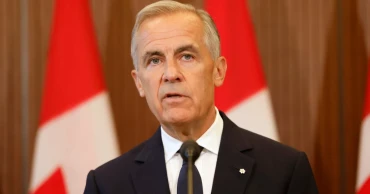
US and Canada fall deeper into trade war as talks collapse
The United States and Canada, longtime allies separated by an undefended border, sank deeper into a trade war Saturday as negotiations collapsed amid angry exchanges and new tariffs expected to increase prices for consumers and businesses in both countries.
The two sides blamed each other for the breakdown of talks in Washington late Friday. The United States imposed 50% tariffs on about $20 billion worth of Canadian goods, while Canada announced that retaliatory tariffs would take effect Sept. 8.
The new U.S. tariffs will affect about 5% of Canada's annual exports to the United States, including products ranging from hockey sticks to tongue depressors.
Canadian Prime Minister Mark Carney said Ottawa would respond with targeted tariff measures to protect industries affected by the new U.S. duties, including certain steel products. He also cited the dairy, appliance, agricultural equipment, pulp and paper and electronics sectors.
No further negotiations were scheduled, and the dispute appeared to have inflicted significant damage on trust between the two countries.
Carney accused Washington of turning economic integration into a weapon and said Canada's longstanding relationship with the United States would not return to its previous form. Describing the tariffs as an attack, he said Canada had the reserves, resilience and a plan to respond.
U.S. Trade Representative Jamieson Greer, however, said Washington was forced to act after a year of Canadian retaliation.
"We've said enough, and so we've taken countermeasures. Our interest is in protecting American workers and protecting American supply chains," Greer told Fox News' "Fox & Friends Weekend."
Canada cites unacceptable demands
Carney said Canada had offered to remove its remaining retaliatory tariffs on steel, aluminum and automobiles if the United States significantly reduced its own tariffs. Ottawa was also prepared to encourage provinces to restore access for U.S. alcohol products.
But Carney said Washington's final demands went too far, arguing that Canada was being asked to give too much in exchange for too little.
Greer said the Trump administration had offered to reduce tariffs on steel, automobiles and lumber, areas that are particularly important to Canada.
Carney said the United States introduced additional conditions at the last minute that would have limited tariff relief for Canadian-made vehicles, restricted Canada's ability to negotiate trade agreements with other countries and weakened protections for language, culture and sovereignty.
He called the demands unacceptable.
The collapse of the talks was a sharp reversal from just two days earlier, when officials from both countries had indicated that a compromise was within reach.
Ontario Premier Doug Ford supported Carney's decision to reject the proposed deal, saying it could have harmed the province's auto, steel and manufacturing industries. He called for Canada to use every available measure to counter the U.S. tariffs.
The dispute also raises questions about the future of the North American trade agreement involving the United States, Canada and Mexico. Carney said the breakdown was "certainly not good news" for the agreement's upcoming review and had given Canada a new understanding of Washington's broader economic demands.
Longtime alliance strained
The political consequences of the dispute could prove greater than its immediate economic impact. The United States and Canada exchanged about $880 billion in goods and services last year.
The latest tariffs were initially scheduled to take effect early Wednesday, but Trump extended the deadline by three days to give negotiators more time. The talks ultimately failed to produce an agreement.
The two countries have disagreed over trade for decades, including disputes involving Canadian softwood lumber and U.S. access to Canada's protected dairy market. Despite those disagreements, they have remained close allies and trading partners.
Canadian and U.S. troops fought alongside each other in Afghanistan following the Sept. 11, 2001, attacks. Their 5,525-mile border remains undefended, with nearly 330,000 people and about $2 billion worth of goods crossing it every day. Around 800,000 Canadians also live in the United States.
Trump's trade policy toward Canada represents a major break from the traditionally cooperative relationship. He has imposed tariffs in an effort to encourage manufacturing in the United States and has repeatedly suggested that Canada could become America's 51st state.
Carney said Canada had accepted that "America has changed" and that the two countries would not return to their previous relationship.
Pressure grows for compromise
Public frustration is also rising in Canada. A petition calling for the expulsion of U.S. Ambassador Pete Hoekstra, a Trump ally, had gathered nearly 248,000 signatures since July 21. The petition criticizes Hoekstra for what it describes as normalizing Trump's comments about annexing Canada.
Both countries have strong economic incentives to reach a compromise.
Nearly 72% of Canada's goods exports went to the United States last year. The Trump administration may also face pressure to avoid imposing additional tariffs ahead of the November midterm elections, as American consumers are already concerned about the high cost of living.
"Both sides will be under immense pressure in the coming days to still find an off-ramp," said Ryan Majerus, a partner at King & Spalding and a former U.S. trade official.
Joshua Bolten, CEO of the Business Roundtable, warned that the tariffs and Canadian retaliation could increase costs for U.S. businesses and families while disrupting important supply chains. He urged both governments to return to negotiations.
Trump turns to Depression-era tariff law
Tariffs have been a central part of Trump's second-term economic strategy. Last year, he imposed double-digit tariffs on imports from nearly every country, arguing that the long-running U.S. trade deficit represented a national emergency.
The Supreme Court ruled in February that Trump had exceeded his authority in imposing much of that tariff program, paving the way for the federal government to issue refunds to importers.
The administration subsequently sought other legal grounds for imposing tariffs. In Canada's case, Trump invoked Section 338 of the Tariff Act of 1930, a rarely used provision that allows tariffs of up to 50% against countries considered to discriminate against U.S. businesses.
The provision is part of the Smoot-Hawley tariff law, which economists and historians have widely blamed for worsening the Great Depression by restricting international trade. Section 338 had never previously been used to impose tariffs.
The latest dispute comes as the United States, Canada and Mexico prepare to review their North American trade framework. Washington has already begun formal discussions with Mexico on revising the United States-Mexico-Canada Agreement, or USMCA, which Trump negotiated during his first term.
Formal talks with Canada have yet to begin, and the escalating trade conflict has cast further uncertainty over the future of the agreement.
11 days ago
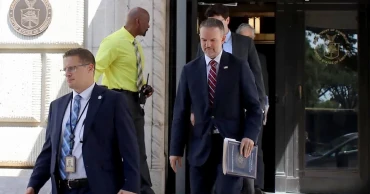
Trump says US, Canada reach last-minute deal to delay 50% tariffs
President Donald Trump said Tuesday that he was delaying the planned 50% U.S. tariffs on $20 billion worth of Canadian imports after the two countries reached a last-minute agreement just hours before the measures were set to take effect.
Trump made the announcement on his social media platform, giving the two countries additional time for negotiations and, for now, avoiding another escalation in already strained relations between the longtime allies.
“I have paused the 50% Tariffs against Canada, that were scheduled to kick in tomorrow morning for a three day period, based on the fact that Canada and the U.S.A., subject to the finalization of documents, have a DEAL!” Trump wrote on Truth Social less than two hours before the 12:01 a.m. Wednesday deadline.
The tariffs would have affected about 5% of Canada’s annual exports to the United States, covering a wide range of products from hockey sticks to tongue depressors.
However, the political consequences could have been more significant than the economic impact. Canada had threatened to impose retaliatory tariffs in response to any new U.S. duties, potentially worsening a trade dispute between the two countries.
The United States and Canada exchanged about $880 billion worth of goods and services last year, underscoring the importance of their longstanding economic relationship.
15 days ago

U.S. fighter jets intercept civilian planes near Trump's golf club
U.S. military jets intercepted two civilian airplanes flying in restricted airspace near President Donald Trump's golf club in Bedminster, New Jersey, on Sunday.
"NORAD F-16s intercepted multiple general aviation aircraft today that violated temporary flight restrictions over Bedminster, NJ. All aircraft were safely escorted out of the area by NORAD aircraft," said the North American Aerospace Defense Command (NORAD), which patrols this area, in a post on social media platform X.
Trump was at his Trump National Golf Club this weekend.
Local media outlets reported that two civilian airplanes were intercepted by military jets.
One video that captured the moment when an F-16 fighter jet was chasing a slow-moving aircraft was posted on X by Joe Afflerbach of Joey's North Jersey Severe Weather.
NJ.com, a digital news content provider in New Jersey, which got permission to post the video on its website, said the video was taken from Afflerbach's house in Jefferson Township, outside Bedminster.
Fox News said a third aircraft triggered an alert as Trump was preparing to depart the area.
The third incident appeared to delay Trump's departure by about 13 minutes. During that time, emergency SUVs, law enforcement officers and U.S. Secret Service agents were seen moving into position near the runway where Trump was scheduled to depart around 5 p.m. (2100 GMT), said Fox News.
The third aircraft re-established communications and became compliant before NORAD intervention was required, said Fox News.
24 days ago
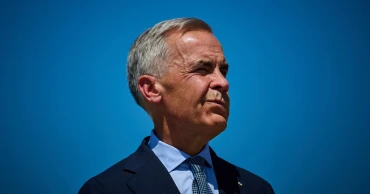
Canadian PM calls US trade talks 'nasty' after Trump's criticism
Canadian Prime Minister Mark Carney said Thursday that trade negotiations with the United States had turned “nasty” after President Donald Trump derided America’s neighbor and its leadership while threatening to expand tariffs.
Carney said Canada remained engaged in the negotiations despite Trump’s comments, describing the talks as a fight to protect Canadian workers and businesses.
“This is a tough negotiation,” Carney said in French. “You can say ‘nasty.’ But this is a question of Canadian jobs. It’s a question of the future of Canadian businesses.”
Trump criticized Canada during a speech Wednesday in Las Vegas.
“Canada’s nasty. They are. They’re nasty,” Trump said. “I love the people, but they’re nasty. Nasty leadership.”
Carney said “we are in the middle of a tariff war with the Americans” but laughed when asked about Trump’s description. He said Canadian negotiators were in Washington this week and that he expected further conversations with Trump after speaking with him last week.
The United States already has tariffs on Canadian steel, aluminum and automobiles. Trump has threatened to impose 50% tariffs on more Canadian goods beginning Aug. 19.
Tariffs are taxes on imports, which companies can then pass along to consumers in the form of higher prices. The president maintains that the costs created by tariffs will cause manufacturing to relocate to the U.S., though there is little evidence of that in the economic data.
Trump’s tariff threats and repeated suggestions that Canada should become the 51st U.S. state have angered many Canadians, prompting many Canadians to cancel trips to the United States.
U.S. Trade Representative Jamieson Greer has argued that Canada and China are the only two countries to retaliate against Trump’s tariffs, citing restrictions on U.S. alcohol sales in some Canadian provinces among his concerns. Canadian officials say their countermeasures were a response to existing U.S. tariffs.
The latest comments followed months of escalating tensions. At the World Economic Forum in Davos, Switzerland, in January, Carney criticized major powers for using economic coercion against smaller countries, prompting Trump to respond: “Canada lives because of the United States. Remember that, Mark, the next time you make your statements.”
Canada is one of the United States’ largest trading partners, and the move threatens to push prices higher at a time when Americans are already frustrated with the high cost of living ahead of the Nov. 3 midterm elections.
Carney said existing U.S. tariffs on aluminum have contributed to a 58% increase in aluminum prices in the United States.
“That’s not a good situation for American companies,” Carney said.
27 days ago
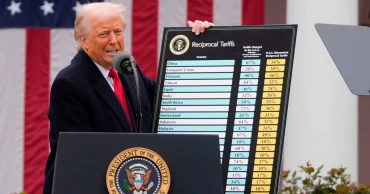
Trump announces 50% tariffs on most Canadian imports amid trade tensions
US President Donald Trump on Monday announced a 50 percent tariff on most imports from Canada, accusing the neighbouring country of unfair trade practices involving automobiles, alcoholic beverages and dairy products.
The move is expected to heighten trade tensions between the two long-standing allies and could add pressure on prices while further straining bilateral economic relations.
A senior US administration official said Canada, along with China, was among the few countries to retaliate against previous US tariffs, prompting the latest action. The official spoke on condition of anonymity while briefing reporters ahead of the announcement.
According to the White House, Trump signed three proclamations under Section 338 of the US Trade Act of 1930, authorising the new tariffs.
The administration said the 50 percent duties will apply to most Canadian goods, including products that had previously enjoyed tariff-free access under the United States-Mexico-Canada Agreement (USMCA).
However, the tariffs will not apply to energy products, potash, fish and critical minerals.
The USMCA, which came into effect in 2020, was not renewed by the United States, leading to a fresh round of trade negotiations that could continue until 2036.
The White House said the new tariffs will take effect in 30 days, leaving room for possible negotiations before the measures are implemented.
Responding to the announcement, Canadian Prime Minister Mark Carney reaffirmed his country's commitment to free and fair trade and said Canada remains ready to negotiate with Washington.
In a statement, Carney noted that Canada had signed more than 20 new economic and security partnerships and expressed hope that outstanding trade issues with the United States could be resolved through dialogue.
He also warned that the trade dispute has increased costs for families, particularly in the United States, and said both countries would benefit from a negotiated solution.
1 month ago