Tech-News

North Korea shows progress in nuclear-powered submarine
North Korea on Thursday showcased apparent advances in building a nuclear-powered submarine, with state media images revealing a nearly finished hull, as leader Kim Jong Un criticized South Korea’s efforts to acquire similar technology.
The Korean Central News Agency (KCNA) reported that Kim visited a shipyard to inspect what the North describes as an 8,700-ton nuclear-powered submarine, which he has called a key step in modernizing and arming the country’s navy with nuclear capabilities. The North has suggested plans to equip the vessel with nuclear weapons, describing it as a “strategic guided missile submarine” or “strategic nuclear attack submarine.”
During the inspection, Kim denounced South Korea’s nuclear submarine ambitions, supported by former U.S. President Donald Trump, as an “offensive act” violating North Korea’s security and maritime sovereignty. He said the South’s plans emphasize the need for North Korea to continue developing and arming its own naval forces, claiming the submarine’s completion would mark an “epoch-making” advance in strengthening the country’s nuclear deterrent.
KCNA released photos of Kim inspecting a large, burgundy-painted submarine inside an assembly hall, marking the first state media images of the vessel since March. Experts say the largely completed hull suggests that most internal systems, including the engine and possibly the reactor, are already installed, indicating the submarine could be ready for sea trials in the coming months.
The nuclear-powered submarine is part of Kim’s broader military modernization plans, which include hypersonic weapons, intercontinental ballistic missiles, multi-warhead systems, and spy satellites. Analysts warn that a stealth-capable, missile-launching submarine would pose a significant challenge for regional security. North Korea’s recent military cooperation with Russia may have aided its technological development, though some experts believe the reactor is likely domestically produced with possible Russian assistance.
Meanwhile, South Korea has pursued its own nuclear submarine program, with U.S. support under discussion, though details of construction and nuclear fuel acquisition remain unclear.
KCNA also reported that Kim oversaw tests of new anti-air missiles launched into the sea, prompting South Korea and U.S. intelligence agencies to assess the weapons. Tensions on the Korean Peninsula have intensified in recent years as Kim accelerates his nuclear program and strengthens ties with Moscow.
Source: AP
7 months ago
Bolivia lifts restrictions on satellite internet firms to boost connectivity
Bolivia’s new government has lifted restrictions on international satellite internet companies, paving the way for services such as Starlink and Kuiper to operate in the country as authorities seek to improve one of South America’s slowest internet networks.
President Rodrigo Paz on Tuesday signed a decree removing limits imposed by the previous administration, allowing global satellite providers to offer nationwide coverage. The restrictions had been introduced under former president Luis Arce, whose government last year denied SpaceX-owned Starlink a license, citing concerns over data protection and national sovereignty.
Bolivia has long struggled to expand reliable internet access, particularly in remote areas. In 2013, the government of then-president Evo Morales purchased a Chinese-built satellite, Tupac Katari, promising it would transform connectivity. However, the satellite, which operates from a geostationary orbit about 35,000 kilometers above Earth, failed to deliver significant improvements in speed.
By contrast, modern satellite networks such as Starlink operate much closer to Earth, enabling faster data transmission. A November report by connectivity firm Ookla ranked Bolivia last in South America for both mobile and fixed broadband speeds.
President Paz said opening the market to international satellite companies would help “reduce the digital divide” and provide high-quality internet access nationwide. “We became spectators while the rest of the world advanced,” he said. “That is over.”
The president also announced plans for foreign firms, including Tesla, Amazon, Tether and Oracle, to invest in data centers near El Alto and Cochabamba as part of efforts to attract investment and ease an economic crisis marked by dollar shortages.
Source: AP
7 months ago

Cyberattack cripples France’s postal and banking services amid holiday surge
Just days before Christmas, a cyberattack forced France’s national postal service offline on Monday, causing delays in parcel deliveries and disrupting online payment systems at one of the busiest times of the year.
The outage frustrated customers and added pressure on postal employees already stretched by the holiday rush. By Monday evening, more than eight hours after the problem began, the disruption had still not been fully resolved.
No group immediately took responsibility for the attack, though speculation circulated among workers and the public. Authorities declined to comment on who might be behind it, while Paris prosecutors opened an investigation.
La Poste described the incident as a “major network failure,” later explaining it was caused by a distributed denial-of-service (DDoS) attack that made its online platforms unavailable. The company said customer data was not compromised, but services requiring tracking or access to internal systems were brought to a halt. Standard letter mail, including holiday cards, continued to operate.
The cyberattack also affected La Poste’s banking subsidiary, La Banque Postale. Customers were temporarily unable to use the mobile app to authorize payments or carry out other transactions, prompting the bank to switch to text-message approvals. The bank said teams were working urgently to restore normal operations.
The disruption followed a series of recent cyber incidents in France. Just a week earlier, the Interior Ministry was targeted in a separate attack that resulted in unauthorized access to sensitive files linked to police data. Authorities said human error contributed to that breach, and a suspect was detained.
Prosecutors are also investigating another suspected cyber plot involving software intended to remotely control systems on an international passenger ferry. A Latvian crew member has been arrested on suspicion of acting on behalf of an unidentified foreign power.
France and other European nations supportive of Ukraine have accused Russia of conducting “hybrid warfare,” alleging tactics such as cyberattacks, sabotage, disinformation, and covert operations that are difficult to trace directly back to Moscow.
7 months ago
France plans new aircraft carrier amid boost in defense spending
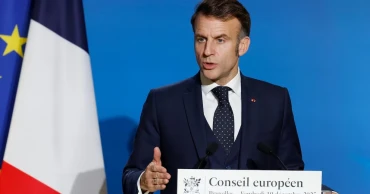
France will construct a new nuclear-powered aircraft carrier capable of carrying 30 fighter jets and accommodating about 2,000 sailors, President Emmanuel Macron announced on Sunday, citing the need to strengthen the country’s maritime power in an increasingly unstable global environment.
Speaking to French troops in Abu Dhabi, Macron said the decision to proceed with the large-scale project was taken this week following detailed assessments and in line with France’s recent military planning laws. He stressed that strong naval capabilities are essential “in an age of predators.”
The new carrier, expected to enter service in 2038, will replace the Charles de Gaulle, which has been operational since 2001. The vessel will have a displacement of around 78,000 tons and measure 310 meters in length, significantly larger than the current carrier but still smaller than the U.S. Navy’s USS Gerald Ford, the world’s largest warship.
Like its predecessor, the new carrier will be powered by nuclear energy and equipped with Rafale M fighter aircraft. According to the French defense ministry, it will be designed for rapid, long-range and heavily armed deployments over extended periods.
Macron said the project would support hundreds of suppliers, mainly small and medium-sized enterprises, and pledged personal oversight, including a planned visit to the shipyard early next year.
The cost of the carrier was estimated at around 10 billion euros ($11.7 billion) in 2023. Macron has also announced an additional 6.5 billion euros in defense spending over the next two years, with total military expenditure projected to reach 64 billion euros by 2027—double the level when he took office in 2017.
France currently has about 200,000 active military personnel and more than 40,000 reservists, making it the European Union’s second-largest armed force. The government aims to increase the number of reservists to 80,000 by 2030.
Source: AP
7 months ago
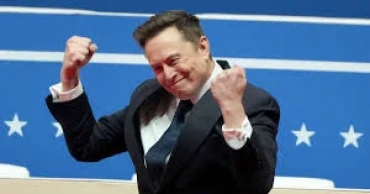
Elon Musk tops $700bn net worth milestone after Tesla pay package reinstated
Tesla Chief Executive Officer Elon Musk has become the first person ever to surpass a net worth of $700 billion, following a Delaware Supreme Court decision that restored a huge stock options award previously scrapped by a lower court.
According to Forbes’ billionaires index, Musk’s fortune stood at an estimated $749 billion on Friday after the court reinstated Tesla stock options now valued at $139 billion. The latest surge came just four days after Musk broke through the $600 billion threshold.
The stock options originate from Musk’s 2018 compensation plan, which at one point was valued at $56 billion. In 2024, the Delaware Court of Chancery invalidated the package, describing the approval process as “unfathomable” and pointing to Musk’s dominance over Tesla’s board.
On Friday, the Delaware Supreme Court reversed that ruling, stating that cancelling the pay package had been improper and unfair. In response, Forbes lifted the 50 percent haircut it had imposed on the options since January 2024, boosting Musk’s estimated wealth by almost $70 billion.
With the options restored, Tesla has once again become the cornerstone of Musk’s wealth. He holds roughly 12 percent of the electric vehicle maker’s common shares, worth about $199 billion. Together with the reinstated options, Musk’s total Tesla-related holdings are estimated at $338 billion.
This calculation excludes a separate performance-based compensation plan approved by Tesla shareholders in November, which has been described as the largest corporate pay package ever. If long-term growth and valuation targets are achieved, that plan could eventually award Musk Tesla stock valued at up to $1 trillion.
Musk’s second-largest holding is his estimated 42 percent stake in SpaceX, valued at around $336 billion following a recent private tender offer that pegged the company’s worth at about $800 billion. Media reports have indicated that SpaceX may consider an initial public offering as early as 2026.
Forbes data show Musk’s wealth now exceeds that of Google co-founder Larry Page, currently the world’s second-richest individual, by nearly $500 billion, highlighting the unprecedented scale of Musk’s lead atop the global rich list.
Source: With inputs from Indian media
7 months ago

Questions arise after finance YouTuber’s livestream shows up on White House website
A live video stream from a YouTube creator discussing investments briefly appeared on an official White House webpage, sparking uncertainty over whether the site had been compromised.
For at least eight minutes late Thursday, the livestream was displayed on whitehouse.gov/live, a page typically reserved for live broadcasts of presidential remarks.
It remains unclear whether the incident was the result of a cyber intrusion or a simple error linking the wrong video. In a statement, the White House said it was aware of the situation and was investigating the cause.
The video shown on the site was part of a longer livestream by Matt Farley, known online as @RealMattMoney, during which he answered viewers’ questions about personal finance and investing.
Farley told The Associated Press on Friday that he was surprised by the incident and only learned about it afterward. He said no one from the government had contacted him and that he had no explanation for how his content appeared on the White House website.
Joking about the situation, Farley said he hoped President Donald Trump and his youngest son, Barron Trump, might have been tuning in and taking notes.
“If I’d known it would be shown on the White House website, I probably would have chosen different topics than personal finance,” he said.
Laughing when asked what else he might have discussed, Farley remarked that he is simply “a guy making YouTube videos about stocks” and questioned what anyone would talk about if given a few minutes of global attention.
The incident comes amid a series of recent digital security issues affecting Trump’s administration and campaign.
Earlier this year, officials launched an investigation after lawmakers, business leaders and other prominent individuals received calls and messages from someone posing as Susie Wiles, the president’s chief of staff.
In a separate breach last year, hackers linked to Iran infiltrated Trump’s campaign, stealing and distributing internal documents, including background materials on Vice President JD Vance compiled before he was chosen as Trump’s running mate.
7 months ago
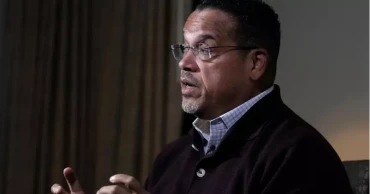
Hyundai, Kia to fix millions of vehicles in anti-theft settlement
Hyundai and Kia have agreed to provide free repairs for millions of vehicles under a nationwide settlement aimed at addressing weaknesses in anti-theft technology that left the cars vulnerable to theft.
The agreement, announced Tuesday by Minnesota Attorney General Keith Ellison, requires the automakers to repair all eligible vehicles at no cost to owners, a program that could exceed $500 million. The companies must also ensure that all future vehicles sold in the United States are equipped with engine immobilizers — a key anti-theft device — and pay up to $4.5 million in restitution to consumers whose vehicles were damaged by thieves.
The settlement involves 35 states, including California, New York, New Jersey and Pennsylvania. Vehicles eligible for the fix were sold between 2011 and 2022, with an estimated 9 million affected nationwide.
The case followed a sharp rise in Hyundai and Kia thefts after videos circulating on TikTok and other social media platforms beginning in 2021 showed how certain models could be stolen using simple tools such as a screwdriver and a USB cable. In Minneapolis alone, thefts of the two brands jumped by more than 800% from 2021 to 2022, prompting Ellison to launch an investigation in early 2023.
Humanoid robots draw attention at Silicon Valley summit amid lingering doubts
Ellison said the automakers had installed engine immobilizers on vehicles sold in Canada and Mexico but failed to do so broadly in the U.S., contributing to theft-related crimes, crashes and fatalities.
Under the settlement, Hyundai and Kia will install a zinc sleeve to prevent tampering with the ignition cylinder. Owners will have one year after receiving notice to obtain the repair at authorized dealerships, with fixes expected to be available from early 2026 through early 2027.
Both automakers said the agreement is part of broader efforts to improve vehicle security and support customers.
Source: AP
7 months ago
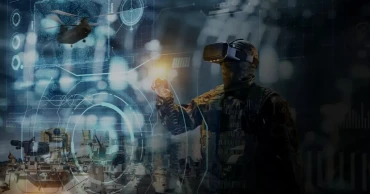
Militant groups experimenting with AI as risks rise
While the world races to leverage artificial intelligence, militant groups are also exploring the technology, even if their exact objectives remain unclear.
US national security experts and intelligence agencies warn that extremist organizations could use AI to recruit members, produce realistic deepfake content, and enhance cyberattacks.
A user on a pro-Islamic State website last month encouraged supporters to incorporate AI into their operations. “One of the best things about AI is how easy it is to use,” the user wrote in English.
“Some intelligence agencies worry that AI will contribute (to) recruiting,” the user continued. “So make their nightmares into reality.”
Though IS no longer controls territory in Iraq and Syria, the group operates as a decentralized network sharing a violent ideology. Experts say its early recognition of social media’s power for recruitment and disinformation makes its interest in AI unsurprising.
For loosely organized, under-resourced extremist groups—or even a single individual with internet access—AI can mass-produce propaganda or deepfakes, amplifying influence.
“For any adversary, AI really makes it much easier to do things,” said John Laliberte, former NSA vulnerability researcher and CEO of cybersecurity firm ClearVector. “With AI, even a small group that doesn't have a lot of money is still able to make an impact.”
How extremists are using AI
Since programs like ChatGPT became widely available, militant groups have experimented with AI to generate realistic photos and videos. Combined with social media algorithms, such content can attract new recruits, intimidate opponents, and spread propaganda on an unprecedented scale.
Two years ago, extremist groups circulated fabricated images of the Israel-Hamas war showing bloodied, abandoned children in destroyed buildings. The images fueled outrage and polarization while obscuring the actual horrors of the conflict. Similar tactics were used by violent groups in the Middle East and antisemitic organizations abroad.
Following a concert attack in Russia last year that killed nearly 140 people, AI-generated propaganda videos were widely shared online to recruit supporters.
IS has also created deepfake audio of its leaders reciting scripture and used AI to rapidly translate messages into multiple languages, according to SITE Intelligence Group, which monitors extremist activity.
‘Aspirational’ for now
Experts say these groups still lag behind state actors like China, Russia, or Iran and consider advanced uses of AI “aspirational.”
But Marcus Fowler, former CIA agent and CEO of Darktrace Federal, warned that the risks are growing as accessible AI tools expand. Hackers already use synthetic audio and video for phishing, impersonating officials to access sensitive networks. AI can also automate cyberattacks and generate malicious code.
A greater concern is that extremists could attempt to employ AI in developing biological or chemical weapons, compensating for technical gaps, a risk highlighted in the Department of Homeland Security’s recent Homeland Threat Assessment.
“ISIS got on Twitter early and found ways to use social media to their advantage,” Fowler said. “They are always looking for the next thing to add to their arsenal.”
Efforts to counter the threat
Lawmakers are pushing measures to address these dangers.
Sen. Mark Warner of Virginia, top Democrat on the Senate Intelligence Committee, said AI developers should be able to share information about malicious uses by extremists, hackers, or foreign spies.
“It has been obvious since late 2022, with the public release of ChatGPT, that the same fascination and experimentation with generative AI the public has had would also apply to a range of malign actors,” Warner said.
House lawmakers recently learned that IS and al-Qaida have held AI training workshops for their supporters.
Legislation passed by the U.S. House last month requires homeland security officials to assess AI threats from extremist groups annually.
Guarding against AI misuse, Rep. August Pfluger, R-Texas, said, is similar to preparing for conventional attacks.
“Our policies and capabilities must keep pace with the threats of tomorrow,” he said.
7 months ago

Militant groups experimenting with AI, raising security concerns
As artificial intelligence (AI) spreads globally, militant groups are experimenting with the technology, raising concerns among national security experts. Extremist organizations could use AI to recruit followers, produce realistic deepfakes, and refine cyberattacks.
A recent post on a pro-Islamic State (IS) forum encouraged supporters to integrate AI into operations, highlighting its ease of use. IS, once a territorial force in Iraq and Syria and now a decentralized network, has long exploited social media for recruitment and propaganda. Experts warn AI allows even small, poorly resourced groups to amplify their influence.
Pakistani forces kill 7 insurgents in raid on militant hideout in Balochistan
Researchers say extremist groups have created AI-generated photos and videos depicting conflict scenarios to recruit members and spread disinformation. AI is also used to produce deepfake audio of leaders and translate messages rapidly into multiple languages.
While sophisticated AI use remains “aspirational,” officials caution the risks are growing. Hackers are already using synthetic media for phishing and cyberattacks, and militant groups could potentially pursue AI-assisted chemical or biological weapons.
U.S. lawmakers are calling for urgent measures, including better information sharing among AI developers and annual assessments of AI threats by extremist organizations.
Source: AP
7 months ago
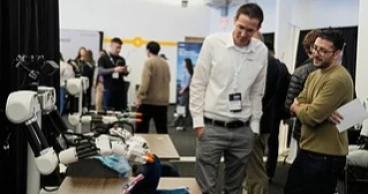
Humanoid robots draw attention at Silicon Valley summit amid lingering doubts
Once viewed as an unattractive investment due to high costs and complexity, humanoid robots are again in the spotlight as advances in artificial intelligence revive ambitions to create machines that move and work like humans.
That renewed interest was on display at the Humanoids Summit in Mountain View, where more than 2,000 attendees, including engineers from Disney, Google and numerous startups, gathered to demonstrate emerging technologies and discuss how to speed up development. Summit founder and venture capitalist Modar Alaoui said many researchers now believe humanoid robots, or other physical forms of AI, could eventually become commonplace, though the timeline remains uncertain.
Microsoft to invest $17.5 billion in India for AI and Cloud infrastructure
Despite the enthusiasm, skepticism was widespread. Experts cautioned that major technical challenges remain before robots can serve as reliable workers in homes or offices. Cosima du Pasquier, founder of Haptica Robotics, said significant research gaps still need to be addressed, particularly in areas such as touch and dexterity.
China currently leads the sector, backed by government incentives and a national push to build a humanoid robotics ecosystem by 2025, according to McKinsey & Company. Chinese-made robots dominated displays at the summit, while U.S. firms are benefiting from advances in generative AI that help robots better understand and navigate their environments.
Even so, veteran roboticists warn that fully capable humanoid robots are still a distant goal, with questions remaining over whether current investments will deliver the promised breakthroughs.
Source: AP
7 months ago