Tech-News

Neon acquires OpenAI drama 'Artificial' after Amazon drops film
Independent film distributor Neon has acquired "Artificial," director Luca Guadagnino's upcoming drama about OpenAI CEO Sam Altman, after Amazon MGM Studios decided not to release the project.
Neon announced Tuesday that it secured the worldwide rights to the film following a competitive bidding process. The company plans to release the movie later this year and position it as an awards contender during the upcoming Oscar season.
The film, with an estimated budget of $40 million, stars Andrew Garfield as Sam Altman and follows the events surrounding Altman's brief dismissal and reinstatement as OpenAI's chief executive in 2023. The cast also includes Monica Barbaro, Yura Borisov and Academy Award winner Mark Rylance, while Ike Barinholtz portrays Elon Musk.
Amazon MGM unexpectedly dropped the nearly completed film earlier this month, only a few months after Amazon announced a $50 billion investment in OpenAI through a broad, multiyear partnership signed in late February.
At the time, Amazon MGM said the project would be "better served" by another studio and subsequently put the film up for sale.
Neon has built a strong reputation for releasing critically acclaimed films, including Oscar winners Parasite and Anora. The distributor has also backed each of the last seven Palme d'Or winners at the Cannes Film Festival.
The company did not disclose how much it paid to acquire the worldwide distribution rights.
In a statement, Neon said the deal reflects its commitment to working with visionary filmmakers and bringing ambitious films to audiences around the world.
1 month ago

Chinese vice premier calls for stronger link between innovation and industry
Chinese Vice Premier Zhang Guoqing has called for closer integration between scientific and technological innovation and industrial development, saying stronger quality management is essential to boost the supply of high-quality products and services.
Zhang, who is also a member of the Political Bureau of the Communist Party of China Central Committee, made the remarks during a visit to east China's Zhejiang Province from Thursday to Saturday.
He said China should continue creating new drivers of economic growth and strengthen its competitive advantages to support the country's steady economic recovery.
During his tour of the cities of Hangzhou and Yiwu, Zhang visited companies working in sectors such as brain-computer interface technology, robotics and textiles.
He described enterprises as the main force behind innovation and said their role should be further strengthened. He urged companies to invest more in basic research, pursue cutting-edge innovation and speed up breakthroughs in key technologies.
Zhang also called for expanding the country's AI Plus Initiative by promoting practical applications of artificial intelligence. He said faster development of industry-specific AI models and intelligent agents would help modernize manufacturing, improve productivity and support the transformation of traditional industries into smarter, greener and more integrated operations.
During a visit to the Yiwu International Trade City, Zhang reviewed quality control, brand development and regulation of e-commerce platforms.
He urged businesses to put quality first, build stronger brands through innovation and develop long-term brand strategies. He also called for stricter action against trademark infringement and counterfeit products in line with the law.
The vice premier said platform companies should play a greater role in promoting innovation, supporting economic growth, creating jobs and improving China's competitiveness in global markets while increasing the supply of high-quality products and services.
1 month ago
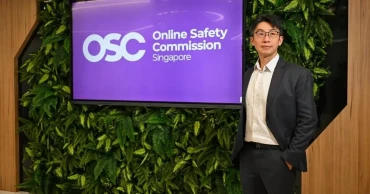
Singapore launches online safety commission to combat digital abuse
Singapore on Monday launched its new Online Safety Commission, providing victims of online abuse with a dedicated channel to seek the removal of harmful content, access support services and pursue civil remedies.
According to a joint statement issued on Sunday by the Ministry of Digital Development and Information, the Ministry of Law and the commission, the new body will initially deal with five types of harmful online behaviour. These include sexual harassment, doxxing, cyberstalking, the non-consensual sharing of intimate images, and image-based child sexual abuse.
Authorities said more categories of online harm will be added in later stages.
Victims of online harassment and cyberstalking are expected to first report the harmful content to the online platform. If the platform does not respond quickly or fails to take appropriate action, they can then file a complaint with the commission.
However, cases involving doxxing, intimate image abuse and image-based child abuse can be reported directly to the commission without first contacting the platform.
The commission has the authority to order people who posted harmful content, administrators of online groups or pages, and digital platforms hosting such content to take corrective action if there is evidence that online harm has occurred. This may include removing content, blocking access to it or restricting user accounts. Failure to comply with these orders is considered a criminal offence.
If online platforms or administrators ignore the commission's directives, internet service providers may be instructed to block access to the offending websites or online services in Singapore. App stores may also be ordered to stop offering apps operated by non-compliant platforms.
The commission will also help victims identify anonymous individuals responsible for online abuse when their identities are unknown.
In addition, it will work with community organisations to provide counselling and other support services for victims of digital abuse.
1 month ago

Trump administration restricts access to advanced AI models
OpenAI and Anthropic have limited access to their latest artificial intelligence models following cybersecurity reviews by the administration of US President Donald Trump, reflecting increased government scrutiny of advanced AI systems.
OpenAI said Friday its new model, GPT-5.6 Sol, will initially be available only to a small group of customers approved by the Trump administration. The company described the move as temporary, saying it expects broader public access in the coming weeks.
Australia plans tougher enforcement of social media ban for under-16s
Hours later, Anthropic announced that the administration had approved a limited release of its Mythos 5 cybersecurity model, two weeks after the Commerce Department restricted its deployment. The company said the model would initially be available only to selected cyber defenders and infrastructure providers.
The White House said it is working with leading AI developers to address national security risks posed by increasingly powerful AI technologies. Earlier this month, Trump signed an executive order creating a framework for reviewing advanced AI systems for up to 30 days before public release.
The policy has drawn criticism from lawmakers and cybersecurity experts, who warned that government control over AI releases could hurt US innovation and competitiveness. Both OpenAI and Anthropic are also exploring public stock market listings as regulatory oversight of the sector continues to expand.
1 month ago

Apple increases prices for Macs and iPads
Apple on Thursday raised prices for several Mac and iPad models, attributing the increases to a global shortage of memory chips driven by surging demand from the artificial intelligence (AI) industry.
The Cupertino, California-based technology giant described the supply crunch as an “unprecedented challenge” for the consumer electronics sector, saying the rapid expansion of AI data centres has sharply increased demand for memory and storage components.
“We have never seen a component price increase this much, this quickly,” Apple said in a statement, adding that it had absorbed rising component costs for as long as possible before deciding to increase prices.
Under the revised pricing, the entry-level MacBook Neo now costs $699, up from $599, while the 512GB MacBook Air has risen to $1,299 from $1,099. The 1TB MacBook Pro is now priced at $1,999, compared with its previous $1,699.
Among iPads, the 128GB iPad Air now costs $749, up from $599, while the 256GB iPad Pro WiFi has increased to $1,199 from $999.
Industry analysts expect Apple to raise iPhone prices later this year. IDC analyst Nabila Popal said the latest increases exceeded expectations and suggested iPhone Pro and Pro Max models could see price hikes of up to $200.
Apple shares fell $13.29, or 4.5%, to $279.88 in Thursday afternoon trading.
1 month ago
Ohio social media law returns after appeals court rejects tech industry challenge
An appeals court has restored Ohio’s law requiring children under 16 to obtain parental approval before using social media platforms, handing a setback to major technology companies challenging the measure.
A divided three-judge panel of the US Sixth Circuit Court of Appeals ruled Thursday that the law does not violate constitutional protections and sent the case back to a lower court to remove a previous block on enforcement.
Kansas City plan to use facial recognition on buses sparks privacy debate
The ruling came after NetChoice, a trade group representing platforms including TikTok, Snapchat and Meta, challenged the law in 2024, arguing that it was too broad, unclear and restricted free speech rights. The group said the decision contradicted rulings in other states and vowed to continue its legal fight.
Judge Eric Clay, writing the majority opinion, said the parental consent requirement placed only a limited burden while addressing concerns over children’s unsupervised access to online platforms. Judge Alice Batchelder also supported the decision, saying a law is not unclear simply because it allows broad interpretation.
Known as the Social Media Parental Notification Act, the law was signed by Republican Governor Mike DeWine in 2023 as part of an $86.1 billion state budget package. Officials said the measure aimed to protect children’s mental health.
The law requires social media and gaming companies to obtain parental permission and disclose privacy policies. Ohio Attorney General Andy Wilson welcomed the ruling, saying parents, rather than technology companies, should oversee what children access online.
1 month ago
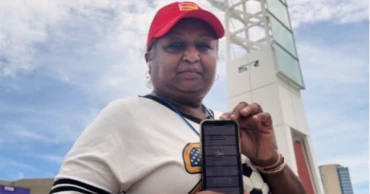
Fans frustrated as World Cup tickets bought from resale sites fail to arrive
While the World Cup has delivered excitement on the field, many fans have been left disappointed after tickets purchased through online resale platforms failed to arrive or were canceled at the last minute.
Among them was Bina Ramroop, who broke down in tears after learning she would not be able to attend a World Cup match in Atlanta with her grandson Elijah Gomes on his 13th birthday.
Ramroop had bought two tickets through resale platform StubHub months earlier for $485 each. But despite spending hours speaking with both StubHub and FIFA representatives outside Atlanta's Mercedes-Benz Stadium before Spain's match against Cape Verde, the tickets could not be transferred to FIFA's official ticketing app.
Although StubHub offered her a refund, Ramroop said she was devastated.
"I didn't want a refund. I wanted to go to the game," she said.
Her case is one of many reported by fans on social media and at stadiums during the tournament. Complaints include tickets never arriving, orders being canceled shortly before matches and difficulties resolving issues between FIFA's ticketing system and third-party resale platforms.
Most complaints have involved StubHub, although some fans who bought tickets through other resale websites, including SeatGeek and Vivid Seats, have also reported problems.
FIFA has advised supporters to buy resale tickets through its official marketplace, where transactions are guaranteed. However, many fans continue to use other platforms because they are familiar with them, offer lower prices or are easier to use.
An Associated Press reporter saw more than a dozen frustrated fans outside the Spain-Cape Verde match who faced similar issues.
StubHub blamed FIFA's ticket transfer system, saying technical problems, last-minute restrictions and the late launch of FIFA's ticketing app contributed to the difficulties.
FIFA, however, reiterated that tickets purchased through its official resale platform are guaranteed to be delivered.
Industry experts say the problems may have several causes. Some could be linked to technical glitches, while others may involve speculative sellers who list tickets before actually securing them.
According to ticket industry consultant Scott Friedman, some sellers gamble on buying tickets later at lower prices. But rising World Cup ticket prices have left some unable to fulfill orders, forcing cancellations.
"This is not new," Friedman said, noting that similar issues have occurred at other major events, including Taylor Swift's Eras Tour.
StubHub says sellers must prove they possess tickets before listing them on the platform.
Another disappointed fan, Pape Ndaw of Texas, said tickets he bought for himself and his son to watch the Netherlands play Japan never arrived.
Ndaw purchased the tickets for about $550 each as a high school graduation gift for his son. Just two days before the match, StubHub informed him that the seller could not provide the tickets.
He accepted store credit, hoping to buy replacements, only to find that last-minute ticket prices had surged to more than $1,500 each.
Breaking the news to his 17-year-old son was difficult.
"He literally cried," Ndaw said.
Not all affected fans had the same outcome.
Patrick O'Neil and his family traveled from North Carolina to Atlanta after purchasing five tickets through StubHub. While two tickets were successfully transferred, the other three never arrived.
As a result, O'Neil's son and another relative attended the match, while O'Neil, his wife and a family member watched from a nearby bar.
After local media highlighted their situation, StubHub contacted the family and offered tickets for another match. The family instead requested that the tickets be donated to a local nonprofit organization so others could enjoy the tournament.
"StubHub is not evil, but it's part of a system that makes it difficult for ordinary people to attend these matches," O'Neil said.
StubHub later confirmed it would honor the family's request and provide tickets to the nonprofit group.
1 month ago

Kansas City plan to use facial recognition on buses sparks privacy debate
Officials in Kansas City, Missouri are planning to install facial recognition cameras on some public buses to identify passengers who may match lists of banned riders or missing persons, triggering a heated debate over security and privacy.
Supporters say the system could improve public safety by helping detect wanted individuals or missing people in real time. But critics warn it could open the door to expanded surveillance in everyday public spaces.
“The idea of running face recognition on a camera pointed at live public spaces is something that has not really been crossed in the last 25 years,” said Jay Stanley of the American Civil Liberties Union, calling it a major shift in public surveillance practices.
The project, led by Kansas City transportation authorities, is moving forward with local and federal funding after the state of Missouri declined to support it due to concerns over the technology.
Officials argue that buses already use surveillance cameras and that the new system is simply an upgraded version using artificial intelligence. “We’ve always had cameras on our buses. It’s just new technology,” said Tyler Means, chief mobility and strategy officer at the Kansas City Transportation Authority, adding that people may eventually feel little difference in daily use.
The technology, developed by SafeSpace Global, will scan faces captured on bus cameras and immediately compare them with active alerts, including missing persons or individuals on law enforcement watch lists set by transit authorities. If no match is found, the facial data will not be stored. Regular video footage will be kept for up to five years after buses return to depots.
Company CEO Scott Boruff said the system is designed to be limited in scope and not continuously store biometric data. However, privacy advocates argue that such systems tend to expand over time and become harder to control.
“It may be used for a very narrow watch list today, but there are very good reasons to think it will expand over time,” Stanley warned.
Opponents, including civil liberties groups, say public transport should not become a testing ground for new surveillance technologies, raising concerns about bias and misuse.
Similar technologies have been used in other US cities in the past, often facing backlash or legal challenges over privacy violations and misidentification issues, particularly involving minority communities.
The Kansas City project has also faced delays. Initially expected to launch this spring, it was postponed due to technical upgrades needed for transit systems and a lack of state funding support.
City officials now say the rollout could still happen this year and may expand from nine buses in the pilot phase to as many as 30 buses.
While the technology is not ready in time for current World Cup-related transit security needs, officials say additional police patrols have been deployed at bus stops and transit centers as a temporary measure.
“I think they need to take their time and do it right,” said city council member Ryana Parks-Shaw, adding that any use of such technology must include strong safeguards and transparency.
1 month ago

Justice Department moves to dismiss pollution lawsuit against Musk’s xAI data center
The Trump administration has stepped in to support one of Elon Musk’s companies in a legal battle over alleged air pollution from a large artificial intelligence data center in the US state of Mississippi.
The Justice Department has asked a court to dismiss a lawsuit filed by the NAACP and other groups, which accuse Musk’s xAI unit of operating dozens of natural gas turbines without proper permits. The plaintiffs say the facility, which powers a $20 billion AI data center, is located near homes, schools and churches and is posing serious health risks to nearby communities in northern Mississippi and Memphis.
In its filing late Monday, the department argued that the power plant is essential for running an AI facility that is “critical to the economy” and important for US military needs. It also said the state of Mississippi, not the federal government, had determined that no permit was required for the plant.
A senior Justice Department official said enforcing federal law ultimately rests with the executive branch, not private groups, adding that the move aims to protect national security and support American innovation and energy development.
The case highlights the Trump administration’s push to prioritise artificial intelligence development as part of its broader economic and national security strategy, while easing environmental regulations on businesses.
President Donald Trump has maintained close ties with Musk, who previously led a federal cost-cutting initiative and remains one of his major political and financial supporters.
The legal intervention comes shortly after Musk’s space company SpaceX saw a major stock market debut, further increasing its valuation, partly driven by large federal contracts.
The lawsuit, filed in April, claims that xAI has been running multiple portable gas turbines without required air pollution controls, in violation of the US Clean Air Act, which mandates permits for industrial emissions.
The US Environmental Protection Agency has said it is not directly involved in the case and referred questions to the Justice Department.
Environmental groups strongly criticised the government’s move, calling it an attempt to protect powerful tech companies from accountability. They argue that communities near such facilities are being turned into “sacrifice zones” due to pollution risks.
The NAACP said the Clean Air Act was designed to protect communities from exactly this kind of harm, and warned it would continue legal action to defend environmental justice.
Legal experts have also raised concerns, saying the Justice Department’s intervention could set a precedent for the government to step in and shut down private lawsuits that enforce environmental law.
Mississippi Governor Tate Reeves, a Republican, defended the project, saying the data center includes a self-sustaining power system designed to avoid raising electricity prices for residents. He said the project complies with federal commitments aimed at protecting ratepayers and boosting investment.
He also said the lawsuit could delay or block what he described as the largest private investment in Mississippi’s history, which has already created thousands of construction jobs and is expected to generate hundreds of permanent positions.
The Justice Department, however, said excessive regulation and private lawsuits could slow down technological progress and harm US energy independence and national security.
The case comes amid growing debate in the US over the environmental impact of rapidly expanding AI data centers, which require massive amounts of electricity and water resources.
1 month ago

Cybersecurity experts urge trump administration to lift curbs on anthropic AI models
More than 100 cybersecurity experts and industry leaders have urged the Trump administration to withdraw restrictions on Anthropic’s latest artificial intelligence models, warning that the move could ultimately benefit US adversaries rather than strengthen national security.
In a letter sent Sunday, executives and experts, including representatives from Adobe and Nvidia, called on the government to lift export-control directives affecting Anthropic’s advanced AI systems, Fable 5 and Mythos 5, and adopt a more transparent, science-based approach to assessing AI-related risks.
OpenAI faces multistate probe over user safety concerns ahead of IPO
Anthropic said Friday it had taken the models offline to comply with the directive, despite arguing that the government’s concerns over potential security risks did not justify the restrictions. The company previously limited access to Mythos 5 because of its ability to identify and exploit software vulnerabilities at a level exceeding human cybersecurity experts.
The signatories acknowledged the models’ strong cybersecurity capabilities but noted that similar functions are available through other leading and open-source AI systems. They warned that restricting access to advanced defensive tools without clear justification could weaken US cyber defenses while rivals, particularly China, continue to narrow the technological gap.
The dispute comes amid growing tensions between Anthropic and the Trump administration. The company has challenged Pentagon efforts to label it a supply-chain risk following disagreements over military applications of its AI technology and concerns about autonomous weapons and domestic surveillance.
1 month ago