Tech-News

Tech-savvy youth will build prosperous Bangladesh: ICT Minister
Post and Telecommunication and ICT Minister Faqir Mahbub Anam on Saturday said that tech-skilled youth will build a prosperous Bangladesh of the future, emphasizing that there is no alternative to developing skilled human resources in Artificial Intelligence (AI), programming and innovative technologies.
He described the National High School Programming Contest as an effective platform for achieving this goal.
The Minister made the remarks while addressing the prize-giving and closing ceremony of the National High School Programming Contest 2026 as the Chief Guest at the National Science and Technology Complex in Agargaon, Dhaka.
He said that in the era of the Fourth Industrial Revolution, programming, Artificial Intelligence and innovative technologies have become key drivers of national development.
The talent, creativity and problem-solving abilities demonstrated by young students through the competition reflect the immense potential of Bangladesh's technology-driven future.
Faqir Mahbub Anam further said that the world has entered the age of Artificial Intelligence, opening unprecedented opportunities for talented individuals across the globe. To remain competitive in this rapidly evolving world, young people must equip themselves with modern technological knowledge, scientific skills and innovative capabilities. There is no substitute for technological proficiency to succeed in future global competition, he added.
Referring to the government's election manifesto commitments, the Minister said that the government is working to create employment opportunities for youth, enhance technical and language skills, support startups and entrepreneurship, facilitate access to global e-commerce platforms and ensure merit-based recruitment.
Addressing the students, he said, “Every innovation begins with a simple question. Therefore, learn to ask questions, observe, experiment and develop the courage to innovate without fearing failure.”
The Minister expressed optimism that participants emerging from such competitions would contribute to technological innovation, research and world-class software development, further enhancing Bangladesh's reputation on the global stage.
Speaking as Special Guest, Secretary (In-Charge) of the Information and Communication Technology Division, Md. Mamunur Rashid Bhuiyan, said that the youth of Bangladesh would lead the country's technology-driven future. To nurture their talent and innovative capabilities, the government has undertaken various initiatives.
Organized by the Information and Communication Technology Division and implemented by the Bangladesh Computer Council (BCC), the National High School Programming Contest 2026 recorded a total of 17,839 registrations across five categories comprising quiz and programming events.
Following regional competitions, 832 contestants qualified for the national final round in the programming and quiz categories.
The closing ceremony was presided over by A T M Ziaul Islam, Executive Director of the Bangladesh Computer Council.
1 month ago

Anthropic pulls latest AI models after US export control directive
Artificial intelligence company Anthropic said Friday it has temporarily taken its newest AI models, Fable 5 and Mythos 5, offline after receiving a directive from the Trump administration aimed at preventing access by foreign nationals.
The move marks the most significant effort so far by the US government to limit access to cutting-edge AI technology. Anthropic had only recently launched Fable 5, a scaled-down version of its more advanced Mythos 5 model. Access to Mythos 5 had already been tightly restricted because of cybersecurity concerns.
In a statement, Anthropic said it disagreed with how the government handled the matter, noting that it received the directive on Friday afternoon without any explanation of the specific national security risks involved.
The company said the government should be able to block potentially unsafe AI deployments through a process that is transparent, fair and based on technical evidence. It added that the current action did not meet those standards.
Anthropic described the situation as a "misunderstanding" and expressed hope that access to the models would be restored soon.
The US Commerce Department did not immediately comment on the matter.
The development comes 10 days after President Donald Trump signed an executive order creating a framework for the federal government to review the national security risks of the most advanced AI systems before they are publicly released. Under the order, AI developers can voluntarily submit their systems for review for up to one month before launch.
1 month ago

SpaceX set for Wall Street debut in record-breaking IPO
Elon Musk's rocket company SpaceX is set to make its stock market debut on Friday in what could become the largest initial public offering (IPO) in history, drawing strong interest from both large investors and individual buyers.
The company plans to sell about 555.6 million shares at $135 each, raising roughly $75 billion. The listing is expected to further boost the wealth of Musk, already the world's richest person, while providing fresh funding for SpaceX's ambitious future projects.
SpaceX aims to become the first company to send humans to Mars. Musk has even tied part of his future compensation to the company's long-term goal of establishing a self-sustaining colony of one million people on the Red Planet.
Speaking during a recent video discussion on his social media platform X with JPMorgan CEO Jamie Dimon, Musk said he had resisted taking SpaceX public for years. However, he said the company now needs significant investment to expand its satellite network and pursue new projects, including space-based artificial intelligence data centers.
Going public will give SpaceX access to large amounts of capital, but it will also bring greater scrutiny from investors and regulators. As a publicly traded company, it will be required to disclose regular financial reports and meet stricter regulatory requirements.
Despite the public listing, Musk is expected to maintain tight control over the company through a special class of shares that gives him enhanced voting rights. These shares will allow him to retain authority over major business decisions, including company strategy and leadership.
In its IPO filing, SpaceX described Musk as the key force behind its success and innovation. The company also acknowledged that losing Musk could significantly affect its operations, reputation and business relationships, while finding a replacement with similar experience would be extremely difficult.
Some major institutional investors have expressed concerns about the company's governance structure. Pension fund officials representing public-sector workers in California and New York recently criticized provisions that give Musk extensive control and limit shareholders' ability to pursue legal action.
A major factor in SpaceX's future growth is the development of Starship, its giant reusable rocket currently undergoing testing. The company believes Starship is essential for expanding satellite launches, transporting cargo and eventually supporting missions to Mars.
SpaceX has already gained a strong position in the commercial space industry through its reusable rocket technology, putting it ahead of many rivals, including Jeff Bezos-backed Blue Origin.
The company's latest filing also highlighted artificial intelligence as a major business opportunity. SpaceX estimates the market for AI-related products and services could be worth trillions of dollars, although it has yet to show a clear path to profitability for its AI business, xAI, which merged with SpaceX earlier this year.
Wall Street is closely watching the IPO because of its potential impact on major stock indexes. If the shares perform strongly, SpaceX could quickly qualify for inclusion in the Nasdaq 100 index, prompting large investment funds that track the index to buy the stock automatically.
However, entry into the broader S&P 500 index is likely to take longer, as companies must meet stricter eligibility requirements, including a longer public trading history.
The highly anticipated listing is expected to be one of the most closely watched market events of the year and could reshape both the space industry and the technology investment landscape.
1 month ago

Canada proposes social media ban for under-16s with compliance flexibility for tech firms
Canada has proposed banning social media use for children and teenagers under the age of 16, in a move similar to legislation recently introduced in Australia, while allowing tech companies to avoid penalties if they can prove strong safeguards to reduce harm to minors.
Under the proposed “Safe Social Media Act,” platforms could bypass the restriction if they demonstrate adequate policies and systems to protect young users. The legislation also introduces broader measures to regulate AI chatbots and restrict online content deemed harmful to children, alongside the creation of a new digital safety regulator.
The proposed law would establish the Digital Safety Commission of Canada, an independent body tasked with overseeing compliance by tech companies. Its members would be appointed by the federal cabinet, according to official briefing documents.
The government has argued that stronger action is needed to address online risks facing children, with Culture Minister Marc Miller saying earlier that tackling online harms is a priority and stressing the urgency by stating “kids are dying.”
The bill defines several categories of “harmful content,” including material that bullies children, promotes hatred or incites violence. It also proposes significant financial penalties for violations, set at the greater of $10 million or 3 per cent of a company’s global revenue.
The proposal comes ahead of the G7 summit in France next week, where leaders are expected to discuss artificial intelligence governance and child protection online.
Several countries have already moved to tighten online safety laws. Australia has implemented a ban on social media access for users under 16, while the United Kingdom, France and New Zealand have also introduced or considered similar measures.
In the UK, authorities are reportedly considering comparable restrictions for under-16 users, while Greece is preparing to enforce a ban for children under 15 starting next year.
Australia’s law, introduced late last year, bars children under 16 from creating accounts on major platforms such as Instagram, Facebook and TikTok, and requires companies to take “reasonable steps” to prevent underage access. However, reports indicate enforcement challenges, with many minors still active on social media despite the ban.
The Australian government has opened multiple investigations into possible non-compliance involving major platforms including Facebook, Instagram, Snapchat and TikTok.
Canada’s approach differs slightly by allowing exemptions for companies that can demonstrate effective harm-reduction measures, a provision some experts say could encourage stronger safety practices across platforms.
Children’s advocacy groups have welcomed parts of the proposal, saying it could improve online safety, though critics warn that broad definitions of harmful content may raise concerns over free expression and potential overreach.
The legislation is expected to be debated in parliament in the coming weeks as Canada moves closer to formalizing its online safety framework.
#From BBC
1 month ago

EU orders Meta to allow rival AI chatbots access to WhatsApp
The European Union has directed Meta to allow artificial intelligence chatbots operated by rival companies to access WhatsApp without charge, amid an ongoing antitrust investigation into the tech giant’s business practices.
The European Commission said Meta must maintain access for third-party AI providers while regulators examine allegations that the company restricted competitors by blocking them from its WhatsApp Business API, except for Meta’s own AI assistant.
Officials said the interim measure was necessary to prevent what they described as potential “serious and irreparable harm to competition” in the fast-growing AI market, adding that Meta’s actions may violate EU competition rules.
The Commission launched its investigation in December 2025 after Meta barred general-purpose third-party AI assistants from using WhatsApp’s business tools, a move it said could amount to abuse of a dominant market position in Europe.
As part of the decision, Meta has been given five working days to restore access for rival AI providers under the same conditions that existed before the restriction. The interim measures will remain in place while the investigation continues.
EU competition chief Teresa Ribera said rapid changes in the AI sector meant competition could be harmed before a final ruling is reached.
She said the move was intended to preserve consumer choice and ensure users in Europe can decide which AI assistants they want to use on WhatsApp.
The Commission warned that failure to comply could result in fines of up to 10% of Meta’s global annual turnover.
Meta, however, strongly rejected the decision, accusing the EU of regulatory overreach and arguing that it effectively allows major AI companies to use WhatsApp’s paid business services for free.
The company said it would appeal the ruling, claiming it unfairly benefits large technology firms at the expense of European businesses that pay for access.
The dispute adds to ongoing tensions between European regulators and major US tech companies. Meta has previously warned that strict EU rules could lead to a poorer user experience in Europe.
The company has also faced multiple fines from the European Union, which maintains that its regulations are designed to protect consumers and ensure fair competition in digital markets.
The issue has also gained political attention, with the Trump administration previously accusing the EU of unfairly targeting American technology firms.
#From BBC
1 month ago

OpenAI files confidential paperwork for potential IPO, eyes future Wall Street debut
OpenAI, the company behind ChatGPT, has filed confidential preliminary paperwork with the U.S. Securities and Exchange Commission (SEC), taking a significant step toward a potential initial public offering (IPO).
The San Francisco-based artificial intelligence firm announced Monday that it had submitted confidential registration documents to the SEC, though it has not yet determined a timeline for going public.
“We have not decided on timing yet,” the company said in a statement, adding that remaining private still offers advantages for some of its planned initiatives. However, the filing provides flexibility to pursue a public listing sooner if deemed beneficial.
The move follows a similar announcement by rival AI company Anthropic earlier this month and comes as Elon Musk’s SpaceX also advances plans for a stock market debut, highlighting growing investor interest in the rapidly expanding AI sector.
OpenAI Chief Executive Officer Sam Altman first suggested the possibility of an IPO last year, describing it as the most likely path forward given the company's scale and substantial capital requirements.
Founded in 2015 as a nonprofit organization focused on developing artificial intelligence for public benefit, OpenAI has evolved into one of the world's most valuable technology companies, with an estimated valuation of $852 billion.
Industry analysts say the filing comes at a critical time as OpenAI faces increasing competition from rivals including Anthropic’s Claude chatbot and Google’s Gemini AI assistant.
“OpenAI doesn’t have many alternatives for raising the enormous capital required to support its operations,” said Emarketer analyst Nate Elliott.
The company paved the way for a potential public offering by restructuring its operations last year and converting into a public benefit corporation while remaining under nonprofit oversight.
OpenAI also overcame a major legal challenge last month when it secured a courtroom victory against co-founder Elon Musk, who had sought to block the company's transition to a for-profit structure.
The company has yet to publicly disclose its revenue figures or a timeline for profitability. Like many AI firms, it continues to spend heavily on infrastructure, research and development.
In an interview earlier this year, OpenAI Chief Financial Officer Sarah Friar said the company was already operating with the financial discipline expected of a publicly traded firm.
She noted that OpenAI’s current valuation would place it among the 15 largest companies in the S&P 500 index if it were publicly listed.
Separately, Altman outlined OpenAI’s long-term goals, including developing an automated AI researcher, accelerating global economic growth and eventually providing every person with access to advanced artificial intelligence capabilities.
He said the company is entering a new phase focused on broad distribution of AI benefits and ensuring that the economic gains generated by the technology are shared widely.
The announcement comes amid growing debate over the future ownership and regulation of AI companies, with some policymakers advocating broader public participation in the sector’s growth.
1 month ago

Apple set to showcase new AI innovations at final developer conference under Tim Cook
Apple is widely expected to introduce a range of new artificial intelligence capabilities at its annual Worldwide Developers Conference (WWDC), which opens on Monday and marks the last such event under the leadership of CEO Tim Cook before he hands over the role to John Ternus in September.
The conference, held at Apple’s headquarters in Silicon Valley, draws thousands of developers from around 60 countries each year and traditionally highlights software advancements rather than new hardware products, which are typically unveiled during the company’s autumn iPhone launch events.
Industry observers anticipate announcements related to enhanced AI tools and significant upgrades to Siri, Apple’s virtual assistant.
According to Emarketer senior analyst Gadjo Sevilla, while major hardware launches are unlikely, Apple may provide insight into future product categories such as foldable devices, wearable technology, and smart home solutions through ecosystem and developer-focused updates. He described this year’s conference as a “transition year” for the tech giant.
Apple has faced increasing pressure to strengthen its position in the rapidly evolving AI sector, where competitors have moved ahead more aggressively. The company currently relies in part on Google’s Gemini model to support some of its AI-powered features.
Sevilla expects Apple to transform Siri into a more advanced AI assistant capable of holding natural conversations, remembering previous interactions, and carrying out multiple tasks through a single command.
He noted that a more sophisticated, AI-driven Siri could become a core feature across Apple devices, similar to ecosystem tools such as AirDrop and Handoff that seamlessly connect iPhones, Macs and iPads.
Cook announced in April that he would retire after leading Apple for 15 years. During his tenure, the company’s market value increased by more than $4 trillion, largely driven by the success of the iPhone. His successor, John Ternus, has spent 25 years at Apple and has overseen hardware engineering for key products including the iPhone, iPad and Mac over the past five years.
The leadership transition comes as Apple navigates a critical period for the technology industry. The rise of artificial intelligence has sparked the most significant transformation since the introduction of the first iPhone in 2007. Although Apple promised major AI-powered features nearly two years ago, the company has struggled to deliver on some of those ambitions, leaving it under pressure to demonstrate meaningful progress in the field.
1 month ago
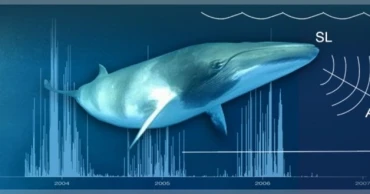
Low-cost AI system listens to whales using earthquake monitoring gear
Scientists in south China’s Guangxi Zhuang Autonomous Region have converted earthquake-monitoring equipment into an artificial intelligence-powered “marine stethoscope” capable of detecting the low-frequency calls of endangered whales.
By integrating an island-based seismometer with deep learning algorithms, researchers captured and analyzed the sounds of Bryde’s whales in the Beibu Gulf of the South China Sea, revealing that the species remains in coastal waters and breeds for longer periods than previously recorded.
Microsoft says new quantum chip is 1,000 times more reliable
The study, published in Geophysical Research Letters, was led by associate professor Xiao Zhuo of Guangxi Minzu University. The AI model, trained on more than 1.7 million labeled seismic samples, identified whale calls with 99 percent accuracy from a year-long dataset collected off Xieyang Island near Beihai city.
Researchers found whale vocalizations as low as 5 Hz- far below human hearing and conventional hydrophone limits-traveling through the seabed and detected as micro-tremors. The signals suggest possible courtship or breeding behavior.
Data showed Bryde’s whales were present from January to July 2021, contradicting earlier surveys that suggested they leave by April. Fishermen also reported sightings in July.
Scientists said land-based seismometers offer a cost-effective, continuous monitoring alternative for studying migration and conserving the region’s protected Bryde’s whale population, which exceeds 70 identified individuals.
1 month ago
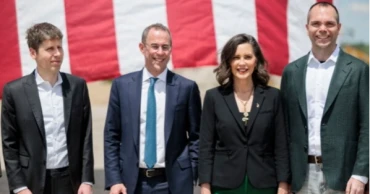
Trump, Sanders and AI leaders discuss giving public a stake in AI growth
As artificial intelligence continues to expand rapidly across the United States, an unusual debate is emerging among political leaders and tech executives over whether ordinary Americans should directly benefit from the industry's growing wealth.
The discussion gained attention after a recent meeting between Senator Bernie Sanders and Sam Altman, the chief executive of [OpenAI](https://openai.com?utm_source=chatgpt.com). The meeting took place after Sanders proposed that the public should own a 50% stake in major AI companies, with profits going into a public wealth fund that would benefit Americans.
According to people familiar with the talks, Altman told Sanders he also supports the idea of giving the public ownership in AI companies, although he does not agree with the senator's proposal for a 50% stake. Altman reportedly expressed interest in working together to promote the broader concept.
The nearly hour-long meeting highlighted growing pressure on policymakers and AI firms as many Americans remain uncertain about how they will benefit from the AI boom, while concerns continue to rise about its impact on jobs, communities and the environment.
The idea has also attracted support from President Donald Trump. Speaking aboard Air Force One on Friday, Trump said his administration is exploring ways for Americans to share in AI's success and revealed that executives from leading AI companies are expected to visit the White House soon to discuss the issue.
Trump described the concept as a potential partnership between AI companies and the American public. He also noted similarities between the economic concerns of his supporters and those of Sanders' voters.
Public concerns about AI continue to grow across the country. Communities have raised objections to the rapid expansion of data centers, citing worries about electricity use, water consumption and environmental effects. Some states that previously welcomed such projects are now reconsidering tax incentives offered to the industry.
In Michigan, a major data center project backed by Governor Gretchen Whitmer has sparked criticism from activists and some Democratic lawmakers despite promises of thousands of union construction jobs.
Altman acknowledged that many Americans, particularly students, are anxious about AI's long-term impact on employment. A recent poll by the Institute of Politics at Harvard Kennedy School found that about 70% of college students view AI as a threat to future job opportunities.
While concerns continue to grow, many political leaders from both major parties appear to agree that AI development is likely to continue. The debate is increasingly focused on how the technology should be regulated and how its benefits should be shared.
Alongside meetings with Sanders, Altman also held discussions with White House officials and congressional leaders from both parties about the future of AI policy.
Sanders' office said the two sides did not reach agreement on key issues, including his proposal for a 50% public ownership stake that would give citizens a stronger role in decision-making. Sanders also raised concerns about the AI industry's growing influence in elections.
Meanwhile, Washington is moving ahead with efforts to establish rules for the technology. Lawmakers recently unveiled a bipartisan framework for federal AI regulation, while the Trump administration has introduced measures to assess national security risks posed by advanced AI systems before they are released to the public.
Sanders said even supporters of rapid AI development are beginning to recognize that the technology presents serious challenges that require government oversight.
1 month ago

Microsoft says new quantum chip is 1,000 times more reliable
Microsoft has unveiled its second-generation quantum chip, Majorana 2, claiming it is 1,000 times more reliable than its predecessor and could pave the way for a commercially useful quantum computer within the next three years.
The company said the qubits on the new chip can remain stable for an average of 20 seconds, a significant improvement over the millisecond-level performance of the earlier Majorana 1 chip.
Qubits are the building blocks of quantum computers and have the potential to solve problems that are beyond the capabilities of today’s most powerful conventional computers. However, they are highly fragile and prone to errors caused by even minor environmental disturbances.
Microsoft compared the reliability improvement to the difference between a smartphone that needs daily charging and one that requires charging only once every few years.
“We will have a quantum machine in 2029 that can solve commercially viable, reasonable problems,” said Zulfi Alam, Corporate Vice President of Microsoft Quantum.
Despite the progress, the company acknowledged that substantial advances are still required. While Majorana 2 currently contains 12 qubits, a practical large-scale quantum computer would need millions.
The announcement comes amid an intense global race among technology companies and research institutions to develop scalable quantum computers capable of tackling complex scientific, industrial and environmental challenges.
Microsoft has spent two decades pursuing a quantum computing approach known as topological quantum computing. The technology is based on exploiting the properties of a theoretical quasiparticle called the Majorana particle, first proposed in the 1930s by Italian physicist Ettore Majorana.
The company’s research required the creation of a novel state of matter beyond the familiar solid, liquid and gas states.
According to Microsoft, the new chip improves on the original design partly by replacing aluminium with lead as a superconducting material.
Experts said the company’s timeline appears plausible if the technology performs as claimed.
Professor Paul Stevenson of the University of Surrey said Microsoft appeared to have made significant progress in developing viable topological qubits.
“If they succeed, they will leap from being a player with no production quantum computer, to being a serious player in the race to make the next generation of fault-tolerant machines,” he said.
Microsoft’s topological approach has previously faced criticism. In 2018, the company retracted a paper published in the journal Nature that claimed evidence for the existence of Majorana particles. The setback fuelled scepticism among some researchers.
The company released its first Majorana chip in 2025, but questions about its technology remained.
Addressing critics, Jason Zander, Executive Vice President of Microsoft Quantum and Discovery, defended the research.
“We stand behind it 100%,” he said, adding that the company welcomes scientific scrutiny and has shared detailed data with experts and the US defence research agency DARPA as part of a quantum technology development programme.
However, some scientists remain cautious because a research paper accompanying the announcement has not yet undergone peer review.
Microsoft believes future quantum computers could help solve major global challenges, including removing microplastics from the environment and developing more efficient fertilisers for agriculture.
Zander said quantum computers, artificial intelligence and human expertise could work together to accelerate scientific discovery.
Quantum computing remains one of the most challenging fields in technology because qubits are extremely sensitive to temperature changes, vibrations and other environmental factors.
Although many companies are pursuing scalable quantum machines, no organisation has yet demonstrated a fully practical large-scale quantum computer.
Some experts also argue that conventional computers may continue improving for years, potentially delaying the need for widespread quantum computing applications.
#From BBC
1 month ago