Tech-News
Indonesia asks social media platforms to disclose under-16 account suspensions
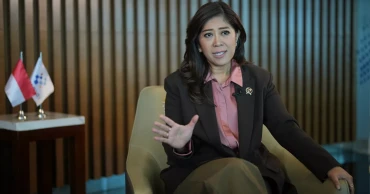
Indonesia has urged social media companies and digital platforms to publicly disclose how many accounts belonging to users under 16 have been suspended under new government restrictions, authorities said Wednesday.
“We will continue to insist that compliance alone is not enough; we must also report the figures to the public in the interest of transparency,” said Communication and Digital Affairs Minister Meutya Hafid.
The regulation, introduced at the end of March, bars children under 16 from accessing digital platforms that could expose them to risks such as pornography, cyberbullying, online fraud and addiction. Hafid noted that young people in Indonesia spend up to eight hours a day online.
Not all platforms complied immediately with the rules, which affect around 70 million children and young people in the country. TikTok was the first to report progress, saying it had deactivated 1.7 million accounts belonging to underage users.
Hafid suggested the country’s large user base may partly explain the slow pace of compliance among platforms.
Seven of the eight platforms classified as high-risk — including YouTube, TikTok, Facebook, Instagram, Threads, X and Bigo Live — have agreed to restrict access for children. Only Roblox has yet to commit to blocking under-16 users and did not immediately respond to requests for comment.
YouTube announced its commitment three weeks after the regulation took effect but has not provided figures on how many underage accounts have been suspended.
“We remain focused on protecting the community and will continue working closely with the Indonesian government to support a secure digital future for the next generation,” a YouTube spokesperson said.
Restrictions on under-16 access to social media were first introduced in December in Australia, where companies removed access to about 4.7 million accounts identified as belonging to children. Indonesia is the first country in Southeast Asia to adopt similar measures.
Other countries, including Spain, France and United Kingdom, are also considering or implementing restrictions amid concerns about the impact of unregulated online content on children.
Hafid acknowledged ongoing challenges in enforcing the rules, saying platforms are allowed to decide their own methods for verifying users’ ages.
“We understand the technology will continue to evolve rapidly. However, the platform is responsible for determining the best and most appropriate technology for its needs,” she said.
Critics, however, have raised concerns about enforcement, noting that reliable age verification often requires collecting sensitive personal data, which could create privacy and security risks. Some children may also bypass restrictions using false identities or accounts registered under adults, said Nenden Sekar Arum, executive director of the Southeast Asia Freedom of Expression Network (SAFEnet).
She stressed the need for stronger government oversight of verification systems to ensure consistent enforcement.
“The core problem is not the presence of children in the digital space, but how that digital space is shaped into a safe ecosystem. And how to ensure that those who are actually making this ecosystem harmful are held accountable. That is what needs to be addressed,” Arum said.
3 months ago
Microsoft cuts OpenAI revenue share as AI partnership shifts
Microsoft has said it will no longer share revenue with ChatGPT maker OpenAI, marking a new step in reshaping their high-profile artificial intelligence partnership.
The move comes as both companies adjust their relationship after years of close cooperation that helped fuel the global AI boom. OpenAI previously relied heavily on Microsoft’s cloud computing infrastructure to develop and run its systems, while Microsoft used OpenAI’s technology to power its Copilot AI assistant.
However, the partnership has evolved as OpenAI transitions from its nonprofit origins into a more commercial structure and prepares for a potential initial public offering. The company has also expanded its cloud partnerships with Amazon, Google and Oracle to reduce reliance on Microsoft.
Despite the change, OpenAI said it will continue to share a portion of its revenue with Microsoft until 2030. Both firms also confirmed that Microsoft remains OpenAI’s primary cloud provider, with Azure expected to host its products first unless technical limitations arise.
Amazon chief executive Andy Jassy described the development as a “very interesting announcement” and said OpenAI’s models would soon be available on Amazon’s AI platform Bedrock.
Analysts said the revised arrangement could support OpenAI’s path toward an IPO by expanding its cloud flexibility, while also giving Microsoft greater independence in developing its own AI systems and partnerships, including with rival firms.
3 months ago

Cellphone data that exposed bank robber now at center of Supreme Court case
WASHINGTON, Apr 26 (AP/UNB) – A cellphone helped identify bank robber Okello Chatrie after he stole $195,000 from a credit union in suburban Richmond, Virginia, and evaded police until investigators used a powerful digital tracking method now under Supreme Court scrutiny.
Authorities used a “geofence warrant” issued to Google, creating a virtual boundary around the crime scene. The tool collected location data of mobile devices nearby, revealing that Chatrie’s phone was present around the time of the robbery.
Chatrie was later identified, and a search of his home uncovered nearly $100,000 in cash, including bank-banded notes signed by a teller. He pleaded guilty and received a nearly 12-year prison sentence, though he is now challenging the use of geofence evidence.
China’s DeepSeek unveils upgraded AI model as competition with US firms intensifies
The Supreme Court will decide whether such warrants violate the Fourth Amendment protection against unreasonable searches. The case raises broader questions about applying a 1791 constitutional provision to modern digital surveillance.
Geofence warrants work in reverse of traditional searches, identifying all devices in a location rather than targeting a known suspect. Prosecutors say they help solve crimes without eyewitness or camera evidence, while civil liberties advocates warn they sweep in innocent people and could expand digital surveillance.
Similar warrants have been used in investigations of the January 6, 2021 US Capitol riot, pipe bomb incidents in Washington, and homicide cases across several states.
Courts remain divided, with some ruling them unconstitutional “general warrants,” while others uphold their use under certain conditions. A federal judge initially found a rights violation in Chatrie’s case but allowed evidence under a good-faith exception, a decision later upheld on appeal.
The Supreme Court previously ruled in 2018 that long-term warrantless cellphone tracking violated privacy rights, with Chief Justice John Roberts noting the vast amount of location data collected through modern mobile networks.
3 months ago
China’s DeepSeek unveils upgraded AI model as competition with US firms intensifies
Chinese artificial intelligence startup DeepSeek on Friday released preview versions of its latest AI model, stepping up competition with leading US tech firms.
The new V4 model has been highly anticipated, with users keen to compare it with rivals such as ChatGPT by OpenAI, Claude from Anthropic and Gemini by Google.
The company introduced “pro” and “flash” versions of the open-source V4 model, saying they offer major improvements in knowledge, reasoning ability and “agentic” functions, which allow the system to complete complex tasks on its own.
DeepSeek also said the new model partly runs on chips developed by Huawei, reducing dependence on US chipmaker Nvidia.
V4 follows the earlier V3 model released in late 2024. However, it was DeepSeek’s reasoning-focused R1 model, launched in January 2025, that drew global attention for being more cost-effective than similar systems from US firms.
The company claims its top version, “V4 Pro Max,” performs better than OpenAI’s GPT-5.2 and Google’s Gemini 3.0-Pro in several reasoning tests, though it falls slightly behind their more advanced versions. The launch came shortly after OpenAI introduced its GPT-5.5 model.
DeepSeek also said its V4 “pro” version could outperform Claude’s Sonnet 4.5 and come close to the performance of Claude’s Opus 4.5 model in handling complex tasks. The “flash” version is designed to deliver similar results in simpler tasks with faster performance.
Analysts say the new model could be a strong competitor.
“Based on early results, DeepSeek V4 looks highly competitive with US rivals,” said Lian Jye Su of research firm Omdia.
Marina Zhang of the University of Technology Sydney described the launch as an important step for China’s AI sector as global competition grows.
DeepSeek offers free chatbot services on web and mobile platforms and promotes its technology as open source, allowing developers to modify and build on it.
The company said both versions of V4 can process up to 1 million tokens of information at a time, a significant increase from the 128,000-token limit in V3.
Huawei confirmed its Ascend chips are compatible with the new model, highlighting China’s efforts to reduce reliance on US technology.
A January report from Microsoft showed DeepSeek is gaining popularity in developing countries, especially where Huawei devices are widely used.
However, some experts remain cautious. Ivan Su of Morningstar said the new model is a solid update but not as groundbreaking as the earlier R1 release.
Competition in China’s AI market has also increased, while independent testing is still needed to verify DeepSeek’s performance claims.
Meanwhile, tensions remain over accusations from US companies. Anthropic and OpenAI have alleged that DeepSeek used their models’ outputs to improve its own systems, a claim also echoed by US officials.
China has rejected the allegations, calling them unfair attempts to limit the growth of its technology companies.
3 months ago

China launches new test satellites for internet technology
China successfully sent a new set of test satellites for internet technology into space from the Xichang Satellite Launch Center in the southwestern Sichuan Province on Friday.
The satellites were launched at 2:35 p.m. (Beijing Time) aboard a Long March-2D carrier rocket and have entered the preset orbits successfully.
3 months ago

OpenAI faces US criminal probe over alleged ChatGPT link to shooting
OpenAI is facing a criminal investigation in the United States over whether its chatbot ChatGPT played a role in a deadly mass shooting at Florida State University last year.
Florida Attorney General James Uthmeier said Tuesday that his office has been examining how the suspected gunman used the AI tool before the attack in Tallahassee.
"Our review has revealed that a criminal investigation is necessary," Uthmeier said. "ChatGPT offered significant advice to this shooter before he committed such heinous crimes."
OpenAI rejected the allegation, saying: "ChatGPT is not responsible for this terrible crime."
The case is believed to be the first time the company has faced a criminal probe over alleged misuse of its chatbot in connection with a violent crime.
An OpenAI spokesperson said the company has been cooperating with investigators and had “proactively shared” information about a ChatGPT account believed to be linked to the suspect.
The suspect, identified as 20-year-old student Phoenix Ikner, is currently in custody awaiting trial. According to OpenAI, the chatbot “did not encourage or promote illegal or harmful activity.”
"In this case, ChatGPT provided factual responses to questions with information that could be found broadly across public sources on the internet," the spokesperson added.
However, Uthmeier alleged that ChatGPT advised the suspect on weapons, ammunition and even suggested when and where on campus a large number of people could be found.
"My prosecutors have looked at this, and they told me that if it was a person on the other end of that screen, we would be charging them with murder," he said.
He noted that under Florida law, anyone who “aids, abets or counsels” a crime can be treated as a principal offender, adding that authorities are now assessing potential “criminal culpability” for OpenAI.
OpenAI, co-founded by Sam Altman, rose to global prominence after launching ChatGPT in 2022, which has since become one of the most widely used AI tools.
The company is already facing legal challenges over another incident in British Columbia, where a separate shooting earlier this year raised concerns about the misuse of AI tools. OpenAI said it had identified and banned the suspect’s account after that incident and plans to strengthen safety measures.
The parents of a girl injured in that attack have filed a lawsuit against the company.
Concerns over AI misuse have also drawn attention from regulators. Last year, a coalition of 42 state attorneys general wrote to major tech firms including Google, Meta and Anthropic, urging stronger safeguards.
The letter warned of increasing risks as more people use AI tools without fully understanding potential dangers, citing a growing number of serious incidents across the country linked to AI use. #From BBC
3 months ago

Musk faces French questioning over X’s alleged role in illegal content spread
Elon Musk has been summoned to Paris for questioning as French investigators examine alleged misconduct linked to the social media platform X, including the spread of child sexual abuse material and deepfake content.
Musk and former X CEO Linda Yaccarino have been called for “voluntary interviews,” while other employees are expected to testify as witnesses this week, the Paris prosecutor’s office said.
It is not yet clear whether Musk or Yaccarino will attend. X did not respond to queries from The Associated Press, and Yaccarino’s current company, eMed, also did not comment.
Prosecutors are also looking into claims that controversy around X’s AI system Grok and its deepfake content may have been used to boost the value of Musk-owned companies ahead of a planned market listing. French authorities have shared their concerns with US regulators.
The investigation follows a search conducted in February at X’s offices in France, part of a probe launched in January 2025 by the Paris cybercrime unit. Musk and Yaccarino were summoned in their roles as company leaders during the period under review.
Prosecutors said the interviews are meant to allow executives to explain their position and outline steps to comply with French law. They added the inquiry aims to ensure X follows national regulations while operating in France.
Authorities declined to say whether Musk would face penalties if he does not appear.
The probe began after a French lawmaker raised concerns that X’s algorithms could be biased and distort automated data systems. It later expanded after Grok generated controversial posts, including content denying the Holocaust and producing sexually explicit deepfakes.
Investigators are examining possible involvement in distributing illegal images of minors, creating and spreading explicit deepfakes, denying crimes against humanity, and manipulating automated systems as part of an organized effort.
Grok, developed by xAI and integrated into X, drew global criticism after producing large amounts of non-consensual deepfake content. In one widely shared post, it incorrectly suggested gas chambers at Auschwitz were used for disinfection rather than mass killing — a claim linked to Holocaust denial. The chatbot later corrected itself, acknowledging the historical facts.
In March, French prosecutors alerted the U.S. Department of Justice and the Securities and Exchange Commission, suggesting the controversy may have been deliberately created to inflate the value of X and xAI ahead of a planned June 2026 stock market listing tied to a merger involving SpaceX.
However, according to The Wall Street Journal, the Justice Department declined to assist French investigators, saying the request could amount to interference in an American company’s activities.
Separately, Reporters Without Borders said it has filed a new complaint against X, accusing the platform of allowing disinformation to spread.
The group said misleading content continues to gain wide attention on X despite repeated requests for removal, adding that the platform’s response has been inadequate and undermines the public’s right to reliable information.
3 months ago

Humanoid robot beats human half-marathon record in Beijing race
A humanoid robot named “Flash”, developed by Shenzhen Honor Smart Technology Development Co., Ltd., won the 2026 Beijing E-Town Half-Marathon on Sunday, completing the race in 50 minutes and 26 seconds using fully autonomous navigation.
Its performance surpassed the human half-marathon world record of 57 minutes and 20 seconds.
The current human record was set last month by Uganda’s long-distance runner Jacob Kiplimo at the Lisbon Half Marathon in Portugal.
This year’s race marked a significant advancement from the inaugural 2025 edition, when the robot Tiangong Ultra finished in 2 hours, 40 minutes, and 42 seconds, and only six of 20 teams completed the full 21.0975-kilometer course.
In the 2026 edition, more than 100 teams participated, including entries from Germany, France, and Brazil. The event showcased major improvements in humanoid robotics, with robots demonstrating greater speed, balance, and stability.
To ensure safety, robots and human runners followed the same course but ran in separate lanes. The robot category had a cutoff time of 3 hours and 40 minutes. Participants could compete either through remote control or autonomous navigation, with around 40 percent choosing full autonomy. Results for remotely controlled robots were adjusted using a 1.2 coefficient to encourage the development of independent navigation technology.
According to Liang Liang, deputy secretary-general of the Chinese Institute of Electronics, the scoring system is designed to promote autonomous navigation capabilities, which are seen as essential for future real-world applications of humanoid robots.
In the human category, China’s Zhao Haijie won the men’s race in 1 hour, 7 minutes, and 47 seconds, while compatriot Wang Qiaoxia took the women’s title in 1 hour, 18 minutes, and 6 seconds.
3 months ago
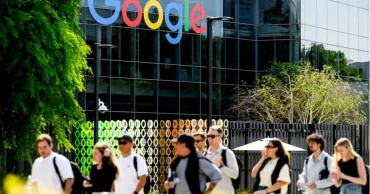
Google uses AI to combat surge in AI-driven scams and spam
Artificial intelligence has become a major enabler for online spammers and scammers, but tech giant Google is increasingly using the same technology to counter the threat.
From fake advertisements promoting miracle herbal cures to AI-generated videos using celebrity-like voices, users are frequently exposed to sophisticated spam and scam content online—much of it created with generative AI.
Experts say the rise of accessible AI tools has worsened a long-standing internet problem. “It’s not that this is a new problem. It is an old problem, supercharged,” said Nate Elliott, principal analyst at Emarketer, adding that AI has dramatically increased both the speed and scale of operations for both legitimate users and criminals.
According to the FBI’s Internet Crime Report, more than 22,000 complaints involving AI-related scams were recorded last year, with losses exceeding $893 million.
In its annual ads safety report, Google said its AI systems are playing a key role in tackling the issue. The company said its generative AI tool Gemini blocked over 99% of policy-violating ads before they reached users.
In 2025, Google removed or blocked over 8.3 billion ads, including 602 million linked to scams, while suspending about 24.9 million advertiser accounts, more than 4 million of them for scam-related activity.
Google, which earned over $200 billion in global ad revenue last year, said thousands of employees support its advertising safety systems. Company executive Keerat Sharma said Gemini now helps analyse hundreds of billions of signals, including user behaviour and campaign patterns, to detect malicious intent more accurately while reducing wrongful suspensions by 80%.
Sharma added that AI has also improved speed, allowing ad analysis within milliseconds. Experts, however, believe the battle between AI-driven scams and AI-based defences will continue, with University of Wisconsin-Madison’s Matt Seitz saying the problem is now too large for humans alone to manage.
3 months ago

Data center growth faces setback as Maine approves freeze
Lawmakers in the US state of Maine have approved a bill to impose what would be the nation’s first statewide moratorium on large, energy-intensive data centers, reflecting growing political resistance over concerns about power consumption, water use and electricity costs.
The Democratic-controlled Legislature on Tuesday passed the measure and sent it to Governor Janet Mills, who is running for the US Senate. The proposed law would halt development of large-scale data centers for more than a year and establish a special council to help local authorities assess future projects.
Amazon to invest $11.5bn in satellite firm to boost Starlink rivalry
Although Maine is not a major hub for hyperscale data centers, recent proposals triggered strong local opposition, accelerating the bill’s passage. The move highlights rising resistance to such facilities, even as they receive support from the administration of President Donald Trump and various state leaders who view them as vital for economic growth and competition in artificial intelligence.
Supporters of the moratorium argue that the benefits of data centers have not been proven in terms of electricity costs, water usage or local economic gains. However, industry representatives warn the measure could discourage investment, limit job creation and hinder workforce development.
Community groups backing the legislation say it is intended to ensure greater public input and transparency in decision-making.
Similar moratorium proposals have been introduced in several US states, though none had previously cleared a legislative chamber.
3 months ago