
A series of mysterious drone flights across the airspace of several European Union nations in recent weeks has sparked widespread concern among citizens and political leaders.
The unprecedented number of airspace intrusions — many suspected to be linked to Russia — has raised alarm about NATO’s readiness to respond to potential threats from Moscow. Some European officials believe the incidents could be deliberate attempts by Russia to test the alliance’s defenses.
On September 10, a swarm of Russian drones reportedly entered Polish airspace, prompting NATO fighter jets to scramble and intercept the unmanned aircraft, shooting some of them down. It marked the first direct confrontation between NATO and Russia since Moscow launched its full-scale invasion of Ukraine on February 24, 2022.
A few days later, NATO jets escorted three Russian warplanes out of Estonian airspace. Since then, drone sightings have been reported near airports, military installations, and critical infrastructure across Europe, prompting EU defense ministers to propose building a “drone wall” to improve detection and interception of unauthorized flights.
While Russia has been accused of involvement, it has denied any deliberate actions. European authorities have released limited details about the incidents, and in several cases, governments delayed acknowledging the overflights. In Denmark, authorities received around 500 reports of drone sightings within a single day — some of which later turned out to be false alarms, such as stars mistaken for drones.
Governments across Europe are still determining how to respond to such intrusions, including whether to authorize shooting down drones in real time.
Airport disruptions across Europe
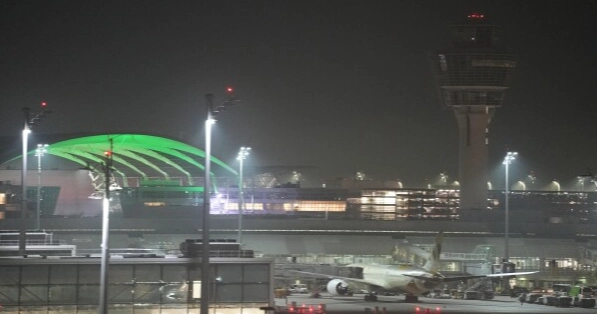
Germany’s Munich Airport reopened on Saturday morning after being closed twice in less than 24 hours due to drone sightings. The shutdown caused delays affecting at least 6,500 passengers.
In Denmark, drone activity over Copenhagen Airport on September 22 disrupted air traffic at Scandinavia’s busiest hub. Danish Prime Minister Mette Frederiksen called it “the most serious attack on Danish critical infrastructure to date,” adding that Russian involvement could not be ruled out.
Confusion over Afghan internet outage after purported Taliban statement found false
That same evening, drone activity was reported at Norway’s Oslo Airport, forcing operations to be restricted to a single runway. Authorities are investigating whether the incidents at the two major airports were connected.
Drones over Danish military bases
Between September 24 and 25, drones were seen over four smaller Danish airports, including two military bases. Danish Defense Minister Troels Lund Poulsen described the flights as “systematic” and likely conducted by a “professional” actor.
Local media also reported drone sightings above or near Karup Air Base, Denmark’s largest military facility. However, the Defense Ministry declined to confirm the reports, citing operational security and ongoing investigations.
Critical sites targeted in Germany
In Germany, authorities are probing reports of unidentified drones flying over critical infrastructure in the northern state of Schleswig-Holstein. According to Der Spiegel, several drones were sighted on September 25 above a power plant in Kiel, as well as near a university hospital, a shipyard, and the premises of TKMS — a defense technology company.
Regional Interior Minister Sabine Sütterlin-Waack confirmed that “flying objects of various types and sizes” had been detected, and prosecutors have launched an investigation.
The report also mentioned drones spotted over government buildings, a refinery in Heide, and a military base in Sanitz, Mecklenburg-Western Pomerania.
Source: AP