tech-news

In Netflix's 'The Eternaut,' an Argentine comic goes global as dystopia hits home
A group of friends gather to play cards in their host’s cozy home when the power cuts. Cellphones die. An eerie snow falls all over the city, killing everyone it touches. The friends struggle to survive, their panic replaced by a growing awareness that humanity itself is at stake.
This is the premise of “The Eternaut,” a chilling dystopian drama out of Argentina that premiered its first season on Netflix on April 30. The six-episode, Spanish-language series with its mix of sci-fi elements and focus on human resilience has struck a universal nerve, rocketing to No. 1 among Netflix’s most streamed non-English-language TV shows within days.
Netflix already renewed the show for a second season, with filming scheduled to start next year.
But “The Eternaut” has touched on something deeper in Argentina, where legendary comic-strip writer Héctor Germán Oesterheld penned the original graphic novel in 1957 — two decades before he was “disappeared” by Argentina’s military dictatorship, along with all four of his daughters.
Abroad, publishers are scrambling to keep pace with renewed interest in the source material. The Seattle-based Fantagraphics Books said it would reissue an out-of-print English translation due to the surge in U.S. demand.
At home, the TV adaptation has reopened historical wounds and found unexpected resonance at a moment of heightened anxiety about the state of Argentine society under far-right President Javier Milei.
“The boom of ‘The Eternaut' has created a cultural and social event beyond the series,” said Martín Oesterheld, the writer’s grandson and a creative consultant and executive producer on the show. “It fills our hearts. It brings us pride.”
An alien invasion hits home
For years, the surviving Oesterhelds resisted offers from Hollywood to adapt the cult classic, wary of the industry's seemingly irresistible urge to destroy New York City and other Western centers in apocalyptic dramas.
Microsoft fires employee who interrupted CEO's speech to protest AI tech for Israeli military
To honor his grandfather's creation, Martín Oesterheld said the show had to be filmed in Spanish, with an Argentine cast and set in Buenos Aires.
“What he did was to do away with the representations of science fiction that we know in Europe and the United States,” Martín Oesterheld said of his grandfather. “He told it on our own terms, through things that we recognize.”
Netflix, pushing to expand beyond its saturated U.S. market into previously untapped regions like Latin America, was a natural fit, he said. The streaming giant wouldn’t disclose its budget, but said the special effect-laden show took four years of pre- and post-production, involved 2,900 people and pumped $34 million into Argentina’s economy.
In the show, aliens wreak predictable mayhem on an unpredictable cityscape — wide boulevards, neoclassical buildings, antique pizza halls and grimy suburbs — lending the show a shiver of curious power for Argentines who had never seen their city eviscerated on screen.
The protagonists don't play poker but truco, a popular Argentine trick card game. They sip from gourds of mate, the signature Argentine drink made from yerba leaves. The snowfall is uncanny, and not just because it kills on contact. Buenos Aires has only seen snow twice in the last century.
“From truco in scene one, which couldn't be more Argentine, we see that ‘The Eternaut’ is playing with these contrasts — life and death, light and darkness, the familiar versus the alien,” said Martín Hadis, an Argentine researcher specializing in science fiction. “It's not just a sci-fi story. It's a modern myth. That’s what makes it so universal.”
In updating the story to present-day Argentina, the show brings the nation’s disastrous 1982 war with Britain over Las Malvinas, or the Falkland Islands, into the backstory of its hero, Juan Salvo, played by renowned actor Ricardo Darín.
Salvo, a protective father and courageous ex-soldier who emerges to lead the group of survivors, is haunted by the rout of his comrades sent by Argentina's dictatorship to retake the South Atlantic islands. The defeat killed 649 Argentine soldiers, many of them untrained conscripts.
“The conflict in Las Malvinas is not closed, it’s still a bloody wound,” Darín told The Associated Press. “It’s bringing the subject back to the table. That has moved a lot of people.”
Argentine underdogs
Faced with catastrophe, the protagonists rely on their own ingenuity, and on each other, to survive.
What comes through, the creators say, is the Argentine saying “atado con alambre” — roughly, “held together with wire” — used to describe the inventive nature of those who do much with little in a nation that has suffered through decades of military rule and economic crises.
“It says a lot about being Argentine — taking whatever you have at your disposal and pushing your limitations,” said Martín Oesterheld. He was referring not only to the plot but also to the production at a time when Milei has waged war on Argentina's bloated state and slashed funding to cultural programs like the National Film Institute.
“As our culture is being defunded, we’re taking this Argentine product to the world,” Martín Oesterheld said.
Netflix's first quarter builds on recent momentum as trade war drags down other tech companies
Against this backdrop, the show's message of solidarity has gained an urgent new meaning, with those outraged over Milei’s libertarian ideology transforming the series' motto, “No one gets through it alone,” into a rallying cry.
The slogan was scrawled on signs at protests by retirees demonstrating against the government’s sharp cuts to their pensions this month. To protect against police tear gas, some traded bandannas for the gas masks used in the show to shield against toxic snowfall.
“There is a general policy these days that the state shouldn't take care of its citizens, which relates to individual freedom,” Darín said. "But there are many cases where, if the state disappears completely, people are left to drift as if they were shipwrecked.”
A search reignited
As the Netflix series exploded out of the gate, missing-persons flyers for Héctor Oesterheld, his daughters and potential grandchildren popped up on billboards for “The Eternaut” all over Buenos Aires, a reminder of the real-life horror story behind the pulp adventure.
By the time the military junta came to power in 1976, Oesterheld, 58, had become known as a committed leftist, his four daughters, ranging in age from 19 to 25, had joined a far-left guerilla group and the whole family had turned into a target of Latin America’s deadliest dictatorship.
Two of Oesterheld's daughters were pregnant at the time of their kidnapping. To this day, no one knows what happened to their unborn children, but they are believed to be among the estimated 500 newborns snatched from their parents and handed over to childless military officers, their true identities erased.
The three surviving members of the Oesterheld family have never stopped searching. Martín Oesterheld's grandmother, Elsa, who raised him after his mother was killed, banded together with other women dedicated to finding their missing grandchildren. They became known as the Grandmothers of the Plaza de Mayo.
Seizing on national interest in the TV series, the Grandmothers this month issued public appeals for help finding the disappeared grandchildren.
The response was overwhelming.
Hollywood director arrested for swindling Netflix out of $11 million
“It was incredible, it went viral,” said Esteban Herrera, who works with the Grandmothers and is still searching for his own missing sibling. “Since it’s a science-fiction series on a platform like Netflix, we’re reaching homes that the Grandmothers perhaps hadn’t before.”
The outpouring of emails and calls raised more questions than answers. Reaching out were hundreds of Argentine viewers newly determined to find their own disappeared relatives or suddenly skeptical about the legality of their own adoptions.
“'The Eternaut’ is a living memory, a classic that has been passed down from generation to generation,” said Martín Oesterheld. “For it to be embraced by so many people in this way ... there is no greater social commentary.”
1 year ago

Trump threatens 50% tariffs on EU and 25% penalties on smart phones as his trade war intensifies
President Donald Trump on Friday threatened a 50% tax on all imports from the European Union as well a 25% tariff on smartphones unless those products are made in America.
The threats, delivered over social media, reflect Trump's ability to disrupt the global economy with a burst of typing, as well as the reality that his tariffs have yet to produce the trade deals he is seeking or the return of domestic manufacturing he has promised voters.
The Republican president said he wants to charge higher import taxes on goods from the EU, a longstanding US ally, than from China, a geopolitical rival that had its tariffs cut to 30% this month so Washington and Beijing could hold negotiations. Trump was upset by the lack of progress in trade talks with the EU, which has proposed mutually cutting tariffs to zero even as the president has publicly insisted on preserving a baseline 10% tax on most imports.
“Our discussions with them are going nowhere!” Trump posted on Truth Social. “Therefore, I am recommending a straight 50% Tariff on the European Union, starting on June 1, 2025. There is no Tariff if the product is built or manufactured in the United States.”
Speaking later in the Oval Office, Trump stressed that he was not seeking a deal with the EU and might delay the tariffs if more companies invested in the United States.
“I’m not looking for a deal,” Trump told the reporters. “We’ve set the deal. It’s at 50%.”
The EU’s top trade official, Maros Sefcovic, posted on the social media site X that he spoke Friday with U.S. Trade Representative Jamieson Greer and Commerce Secretary Howard Lutnick.
“The EU’s fully engaged, committed to securing a deal that works for both,” Sefcovic said. “EU-US trade is unmatched & must be guided by mutual respect, not threats. We stand ready to defend our interests.”
All smartphones could be affected
Trump's tariffs against Europe had been preceded by a threat of import taxes against Apple for its plans to continue making its iPhone in Asia. Apple now joins Amazon, Walmart and other major U.S. companies in the White House's crosshairs as they try to respond to the uncertainty and inflationary pressures unleashed by his tariffs.
“I have long ago informed Tim Cook of Apple that I expect their iPhone’s that will be sold in the United States of America will be manufactured and built in the United States, not India, or anyplace else,” Trump wrote. “If that is not the case, a Tariff of at least 25% must be paid by Apple to the U.S.”
OpenAI Codex: A Pair Programmer to Shape the Future Coding Paradigm
Trump later clarified his post to say that all smartphones made abroad would be taxed and the tariffs could be coming as soon as the end of June.
“It would be also Samsung and anybody that makes that product,” Trump said. “Otherwise, it wouldn’t be fair.”
The statements by Trump are critical in that he suggests the company itself would bear the price of tariffs, contradicting his earlier claims as he rolled out a series of aggressive tariffs over the past several months that foreign countries would shoulder the cost of the import taxes. In general, importers pay the tariffs and the costs are often passed along to consumers in the form of higher prices.
In response to Trump’s tariffs on China, Apple CEO Tim Cook said earlier this month that most iPhones sold in the U.S. during the current fiscal quarter would come from India, with iPads and other devices being imported from Vietnam. After Trump rolled out tariffs in April, bank analysts estimated that a $1,200 iPhone would if made in America jump in price anywhere from $1,500 to $3,500.
Stocks sold off after Trump's postings, with the S&P 500 index down roughly 0.67%. The markets have developed a hair-trigger sensitivity to the U.S. president's statements, often slumping when he announces high tariffs and rallying when he retreats from those threats.
US vs. EU
U.S. Treasury Secretary Scott Bessent tried to provide some clarity on Trump's postings in a Friday interview on the Fox News show “America's Newsroom.”
Bessent said the EU has a “collective action problem” because its 27 member states are being represented by “this one group in Brussels,” such that the “underlying countries don’t even know what the EU is negotiating on their behalf.”
The Treasury secretary said he was not in a White House meeting this week that Cook attended, but he also spoke with the Apple CEO this week. Bessent said the goal was to have Apple bring more of its computer chip supply chain into the U.S.
The core of Trump's argument against the EU is that America runs a “totally unacceptable” trade deficit with the 27 member states. Countries run trade deficits when they import more goods than they export.
From the vantage point of the EU's executive commission, trade with the U.S. is roughly in balance if both goods and services are included. As a global center for finance and technology, the U.S. runs a trade surplus in services with Europe. That offsets some of the trade gap in goods and puts the imbalance at 48 billion euros ($54 billion).
German Foreign Minister Johann Wadephul said the EU's executive commission has his country’s full support in working to “preserve our access to the American market.”
“I think such tariffs help no one, but would just lead to economic development in both markets suffering,” Wadephul said in Berlin. “So we are still counting on negotiations, and support the European Commission in defending Europe and the European market while at the same time working on persuasion in America.”
Trump aides have said the goal of his tariffs was to isolate China and strike new agreements with allies, but the president's tariff threats undermine the logic of those claims. Not only could the EU face higher tariffs than China, but the bloc of member states might have been better off by establishing a broad front with China and other countries against Trump’s trade policy, said German economist Marcel Fratzscher.
Trump signs orders to boost Nuclear Power and speed up project approvals
“The strategy of the EU Commission and Germany in the trade conflict with Trump is a total failure,” Fratzscher, the head of the German Institute for Economic Research, said on X. “This was a failure you could see coming — Trump sees Europe’s wavering, hesitation and concessions as the weaknesses that they are.”
Mary Lovely, a senior fellow at the Peterson Institute for International Economics, said the 50% tariffs on Europe are most likely a “negotiating ploy” by Trump, as he has previously retreated on tariffs after taking a hard line.
She said Trump seems to believe that negotiations operate by going to a “threat point” that could risk self-harm to the U.S. just to demonstrate how serious he is, in hopes that doing so would produce an agreement.
But Lovely said that in the long-run Trump's approach “suggests that the U.S. is an unreliable trading partner, that it operates on whim, not on rule of law.”
A history with Apple
Trump has run hot and cold on his relationship with Apple, a sign that currying favor with him might not necessarily shield a company from his anger. He has essentially told companies such as Walmart to “eat” the costs of his tariffs instead of raising prices, even though doing so could squeeze profits and cause layoffs. He now appears to deploying a similar degree of pressure to force Apple to accept the higher costs of relocating its supply chains.
Trump had previously created an exemption on electronics imported from China to help companies such as Apple, something he could now remove. He also threatened separate 25% import taxes on computer chips and could have the tariffs schedule rewritten in ways that could expose Apple products to the taxes.
Until recently, the U.S. president repeatedly bragged about the $500 billion that Apple in February pledged to invest domestically as part of its development of artificial intelligence technologies. But he publicly turned against the company last week while speaking in Qatar.
“I had a little problem with Tim Cook yesterday,” Trump told the audience. “I said to him: ‘Tim, you're my friend. I treated you very good. You’re coming here with $500 billion, but now I hear you’re building all over India. I don’t want you building in India.'”
Microsoft fires employee who interrupted CEO's speech to protest AI tech for Israeli military
Analysts have been skeptical that Apple could quickly shift device manufacturing to the U.S., mainly because it has spent decades embedding complex supply chains in China to feed the factories. But it also has the challenge of grappling with “the unpredictable nature of the current U.S. administration,” said Ben Wood, chief analyst at U.K.-based research firm CCS Insight.
“At any moment, things can change overnight, making it extremely difficult for companies such as Apple to plan their business,” Wood said. “It seems that despite the best efforts of the Apple leadership team to lobby the U.S. administration to treat the iPhone more favorably, a curveball can come out of nowhere and derail any plans they have in place.”
1 year ago

OpenAI Codex: A Pair Programmer to Shape the Future Coding Paradigm
OpenAI, the company behind the phenomenal automated chatbot ChatGPT, launched its next-generation coding agent, Codex, on May 16, 2025. Designed to streamline several fundamental aspects of software programming, Codex will further dynamise the exponentially growing field of automated coding. Let’s look deeper at what Codex is and what it can do.
What is Codex?
OpenAI Codex is an AI model that translates natural language into computer code. Built on OpenAI 0.3 reasoning model technology and trained on vast codebases, it powers tools like GitHub Copilot, enabling users to write, understand, and automate code tasks across multiple programming languages using plain English instructions. Codex accesses GitHub repositories, collects inspiration from billions of lines of code already stored there, and uses its algorithms to come up with solutions to complex tasks.
Development History of OpenAI Codex
The invention of the Codex dates back to August 2021, right after OpenAI introduced the GPT-3, a neural prototype trained on text. To tune up the process through which GPT-3 generates results, developers added an extra model of 12 billion parameters and named it Codex. This initial version of Codex could write SQL queries, convert conversations into Python code, and build UI components.
Read more: Watch The Skies: World's First AI-dubbed Feature Film to Change The Way of Watching Movies
Later, throughout the period 2022 to 2023, Codex continued evolving in smaller versions and got integrated into GPT-4 and ChatGPT Pro. Recently, OpenAI has given Codex its environment and advanced coding functionalities. In doing so, the company has also shifted the reasoning model of Codex from GPT-3 to Codex-1.
What Can Codex Do?
The new Codex model is apt at executing multiple tasks related to coding. Here is a short glance:
Conversational Coding
Perhaps one of the most groundbreaking features of Codex is the ability to translate plain English into code. This allows users to instruct the AI with phrases and receive accurate, ready-to-run scripts across a range of programming languages.
Developing Software
OpenAI’s new code models are transforming the software landscape by allowing developers to generate functional code in seconds. With simple prompts, users can create entire programs without manually writing each line.
Read more: Basic to Flagship: Top 5 Official Smartphones Released in Bangladesh in 2025
Analysing Data
From spreadsheets to large CSV files, OpenAI’s code tools can now analyse, clean, and visualise data with minimal user input. Journalists, researchers, and business analysts can quickly generate charts or summaries by simply uploading a file and asking questions.
Educational Companion for Coding Learners
The models serve as a real-time tutor, capable of explaining code line by line, debugging errors, and answering conceptual questions. For students and self-learners, this offers an accessible alternative to traditional learning methods.
Accelerating AI-Powered Applications
Startups and enterprises alike are leveraging these tools to make prototypes of AI-driven apps without the need for large development teams, cutting costs and speeding up innovation cycles.
Common Issues and Concerns on the Rise
.
Accuracy and Reliability
While OpenAI's models can generate functional code with impressive speed, experts caution that the outputs are not always correct or optimal. In complex scenarios, the AI may produce code that looks fine but contains subtle bugs, inefficiencies, or security flaws. Relying on such code without proper review could pose risks, particularly in sensitive applications like healthcare, finance, or cybersecurity.
Read more: Best 10 Smartphones Releasing in May 2025
Security and Misuse Risks
OpenAI’s code generation capabilities could be exploited to create malicious software. Although safeguards are in place, the potential for misuse remains a real concern. Cybersecurity experts warn that making code generation more public at this scale could empower bad practitioners.
Programming Fields
As these tools improve, there's a growing debate about the impact on employment. While some argue that AI will complement human developers by automating repetitive tasks, others worry it could eventually reduce demand for entry-level programmers, especially in roles focused on routine coding or bug fixing.
Code Licensing Confusion
The use of AI-generated code raises legal questions around ownership and licensing. Developers and companies are seeking clarity on how such content can be safely used in commercial products.
Skill Dilution
Some educators and software veterans fear that easy access to AI-generated code may hinder learning. If new developers rely too heavily on tools like Codex, they may struggle to build a deep understanding of how software works. Over time, this could lead to a generation of coders with limited problem-solving skills or creative confidence.
Read more: How Does Fashion Waste Contribute to Environmental Issues?
Conclusion
OpenAI Codex brings a transformative shift in how we code, making programming faster and more open. While it offers immense potential to streamline development and learning, thoughtful use, ethical oversight, and continued human expertise are essential to harnessing its power responsibly in the evolving tech landscape.
1 year ago
Trump signs orders to boost Nuclear Power and speed up project approvals
President Donald Trump signed a series of executive orders on Friday aimed at dramatically increasing the U.S. nuclear energy output—by up to four times over the next 25 years—a target energy experts say is highly unlikely.
The orders shift key decision-making powers from the Nuclear Regulatory Commission (NRC), the longstanding independent safety body, to the Department of Energy, allowing the energy secretary to fast-track approvals of advanced reactor designs and projects.
The move comes amid growing energy demand driven by artificial intelligence and the rapid expansion of data centers, which are putting immense pressure on the nation’s electric grid.
Interior Secretary Doug Burgum said, “What we do over the next five years with electricity will shape the next 50,” emphasizing the urgency of energy expansion to maintain a competitive edge with China in AI development.
Still, the goal of quadrupling nuclear output is seen as unrealistic. The U.S. has no operational next-generation reactors, and only two new reactors have been built in the past five decades—both plagued by years of delays and massive cost overruns.
Currently, the U.S. operates 94 nuclear reactors, providing about 19% of the country’s electricity. Fossil fuels account for around 60%, while renewables contribute about 21%, according to the Energy Information Administration.
Trump Promotes Nuclear at Oval Office Ceremony
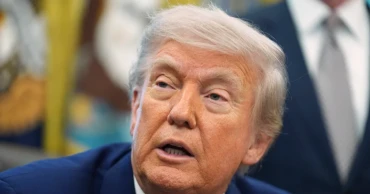
During the signing event in the Oval Office, President Trump, flanked by energy industry leaders, called nuclear power “a hot industry” and pledged large-scale development. Burgum and others argued that excessive regulation has stifled nuclear innovation for decades.
“This marks the end of over 50 years of overregulation,” said Burgum, who heads Trump’s new Energy Dominance Council.
The orders propose restructuring the NRC to ensure faster project reviews, including setting an 18-month deadline for decisions. They also launch a pilot program to build three experimental reactors by July 4, 2026, and use the Defense Production Act to secure uranium and other critical fuels.
Additional directives include evaluating the reopening of closed nuclear plants and locating new reactors on federal and military land.
NRC spokesperson Scott Burnell said the agency is reviewing the orders and will comply with White House instructions.
Industry Reacts with Optimism
Jacob DeWitte, CEO of nuclear company Oklo, demonstrated nuclear efficiency to Trump by holding up a golf ball—symbolizing the amount of uranium needed to power a person’s lifetime energy use. “It doesn’t get any better than that,” he said. “Very exciting indeed,” Trump responded.
Although Trump has previously backed fossil fuel expansion, he praised nuclear energy for being safe and clean—though he didn’t mention its climate advantages. Nuclear energy produces no greenhouse gas emissions, but safety advocates note the risks of accidents, attacks, and unresolved nuclear waste storage.
The proposed NRC overhaul includes workforce reductions but stops short of removing the current NRC commissioners. The future of the agency’s current chair, David Wright, remains uncertain as his term ends in June.
Criticism from Safety Advocates and Former Officials
Critics say Trump’s orders could erode critical safety protections. Edwin Lyman of the Union of Concerned Scientists warned that bypassing or weakening the NRC could threaten public safety. “The U.S. nuclear industry will fail if safety isn’t prioritized,” he said.
Former NRC Chair Gregory Jaczko was even more blunt, likening the orders to “a guillotine to the nation’s nuclear safety system,” and accused Trump of making the industry more dangerous and unreliable.
Push for Innovation Amid Global Competition
Nations like Russia, China, and Canada are advancing rapidly in building next-generation reactors. In Canada, the first of four small modular reactors recently began construction. Meanwhile, the U.S. is working to modernize its own approval processes.
Isaiah Taylor, CEO of Valar Atomics, said excessive bureaucracy has slowed U.S. progress while global rivals move faster. He welcomed the new mandate for the Department of Energy to accelerate innovation.
The NRC is currently evaluating applications for small modular reactors, with plans for some to begin operating in the early 2030s. The agency expects its reviews to be completed in under three years.
Tori Shivanandan, COO of California-based Radiant Nuclear, called Trump’s executive orders a “watershed moment” for the U.S. nuclear industry, expressing confidence they will drive the sector’s success.
1 year ago
Microsoft fires employee who interrupted CEO's speech to protest AI tech for Israeli military
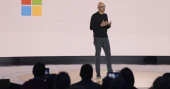
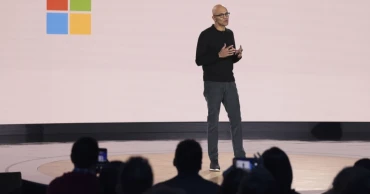
Microsoft has fired an employee who interrupted a speech by CEO Satya Nadella to protest the company's work supplying the Israeli military with technology used for the war in Gaza.
Software engineer Joe Lopez could be heard shouting at Nadella in the opening minutes Monday of the tech giant's annual Build developer conference in Seattle before getting escorted out of the room. Lopez later sent a mass email to colleagues disputing the company's claims about how its Azure cloud computing platform is used in Gaza.
Lopez's outburst was the first of several pro-Palestinian disruptions at the event that drew thousands of software developers to the Seattle Convention Center. At least three talks by executives were disrupted, the company even briefly cut the audio of one livestreamed event. Protesters also gathered outside the venue.
Microsoft has previously fired employees who protested company events over its work in Israel, including at its 50th anniversary party in April.
Elon Musk, who's suing Microsoft, is also software giant's special guest in new Grok AI partnership
Microsoft acknowledged last week that it provided AI services to the Israeli military for the war in Gaza but said it had found no evidence to date that its Azure platform and AI technologies were used to target or harm people in Gaza.
The advocacy group No Azure for Apartheid, led by employees and ex-employees, says Lopez received a termination letter after his Monday protest but couldn't open it. The group also says the company has blocked internal emails that mention words including “Palestine” and “Gaza.”
Microsoft confirms supplying AI to Israeli military, denies use in Gaza attacks
Microsoft hasn't returned emailed requests for comment about its response to this week's protests. The four-day conference ends Thursday.
1 year ago
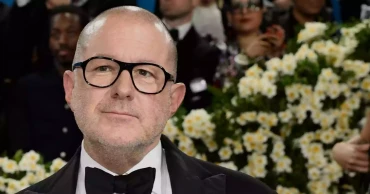
OpenAI taps Iconic iPhone designer Jony Ive for new AI hardware project in $6.5 billion deal
OpenAI, the company behind ChatGPT, has enlisted famed designer Jony Ive — best known for his role in creating Apple’s iPhone — to lead a major new AI hardware initiative.
As part of this move, OpenAI is acquiring io Products, a company Ive co-founded, in a deal worth approximately $6.5 billion. Ive gained worldwide recognition during his 27 years at Apple, where he played a key role in defining the design of iconic devices like the iPhone, especially in partnership with Steve Jobs. He left Apple in 2019.
Now, Ive is stepping into the forefront of the AI era. While OpenAI hasn’t disclosed exactly what the new product will be, analysts speculate it could involve a physical AI interface — possibly something like AI-integrated glasses, a robot, or even a vehicle — that brings generative AI out of the digital realm and into real-world devices.
OpenAI CEO Sam Altman has reportedly been collaborating with Ive and his design firm LoveFrom since 2023. In a letter posted on OpenAI’s website, Altman and Ive said their shared vision led to the formation of a new company to develop and manufacture a fresh generation of AI products.
That company, io, was officially incorporated in Delaware in late 2023 and registered in California in April 2024. OpenAI already held a 23% stake in io through an earlier partnership and will now acquire full control with a $5 billion equity purchase.
Ive will not join OpenAI as a staff member; instead, LoveFrom will remain independent while taking on major creative and design roles for both OpenAI and io. All three entities — OpenAI, LoveFrom, and io — are based in San Francisco.
Peter Welinder, a longtime OpenAI executive who has led its robotics and early hardware efforts, will head the new io division.
Altman, 40, is clearly aiming to replicate the kind of innovation that resulted from the collaboration between Jobs and Ive. When founding LoveFrom, Ive drew inspiration from Jobs’ belief in crafting products with deep care and humanity. His studio is located in a historically artistic part of San Francisco, once frequented by Beat Generation writers like Jack Kerouac and Allen Ginsberg.
OpenAI, just a couple of miles away, was originally launched as a nonprofit focused on safe AI research. Although it’s now deeply invested in commercial products like ChatGPT, it is still overseen by a nonprofit board. Altman recently announced that OpenAI will retain this governance model while exploring ways to better attract capital and pursue acquisitions — steps meant to keep the company competitive while staying true to its original mission.
It’s unclear whether Altman’s work with Ive began before or after his brief ousting from OpenAI in late 2023, which happened between io’s incorporation in Delaware and its later establishment in California.
1 year ago
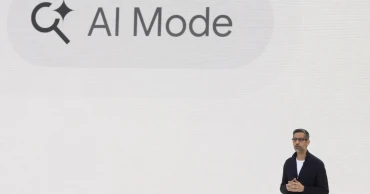
Google rolls out 'AI Mode' in major search engine overhaul
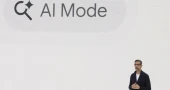
Google has launched a new "AI Mode" in the U.S. as part of its ongoing revamp of search, aiming to reshape how users find information online. Announced at its annual developer conference, the new feature allows users to interact with the search engine conversationally, like speaking with an expert.
This move marks a rapid expansion just two and a half months after limited testing via Google's Labs. The company is also integrating its advanced Gemini 2.5 AI model into search algorithms and testing tools like automatic concert ticket purchasing and live video-based search.
Google previewed a new pair of Android XR smart glasses—featuring a built-in AI assistant and camera—signaling a return to the smart glasses market. Designed with Gentle Monster and Warby Parker, the glasses will compete with Meta’s Ray-Ban offering. No release date or price was announced.
The broader AI push builds on Google's "AI overviews," which now appear atop search results and are used by 1.5 billion people monthly. These summaries have shifted user behavior, leading to longer, more complex queries—but also to a 30% decline in clicks to external websites, per BrightEdge.
Elon Musk, who's suing Microsoft, is also software giant's special guest in new Grok AI partnership
Despite concerns about misinformation and reduced web traffic, Google is moving forward amid rising competition from AI-powered alternatives like ChatGPT and Perplexity. The company insists this shift strengthens its dominance, with Google still receiving 136 billion monthly visits—far ahead of AI rivals.
Upcoming experiments will include AI-assisted booking through Project Mariner, video-based search, and deep topic exploration. A new $250/month "Ultra" subscription tier will offer premium AI tools and 30TB of storage, expanding beyond the current $20/month "Pro" plan.
Even Google's own AI admits that AI Mode is likely to increase its influence over online information access—while warning publishers of the potential impact on web traffic.
Source: With inputs from agency
1 year ago

Elon Musk, who's suing Microsoft, is also software giant's special guest in new Grok AI partnership
Elon Musk is in a legal fight with Microsoft but made a friendly virtual appearance at the software giant's annual technology showcase to reveal that his Grok artificial intelligence chatbot will now be hosted on Microsoft's data centers.
“It’s fantastic to have you at our developer conference,” Microsoft CEO Satya Nadella said to Musk in a pre-recorded video conversation broadcast Monday at Microsoft's Build conference in Seattle.
Musk last year sued Microsoft and its close business partner OpenAI in a dispute over Musk's foundational contributions to OpenAI, which Musk helped start. Musk now runs his own AI company, xAI, maker of Grok, a competitor to OpenAI's ChatGPT.
OpenAI CEO Sam Altman also spoke with Nadella via live video call earlier at Monday's conference.
Musk's deal means that the latest versions of xAI's Grok models will be hosted on Microsoft's Azure cloud computing platform, alongside competing models from OpenAI and other companies, including Facebook parent Meta Platforms, Europe-based AI startups Mistral and Black Forest Labs and Chinese company DeepSeek.
Microsoft confirms supplying AI to Israeli military, denies use in Gaza attacks
The Grok partnership comes just days after xAI had to fix the chatbot to stop it from repeatedly bringing up South African racial politics and the subject of “white genocide” in public interactions with users of Musk's social media platform X. The company blamed an employee's “unauthorized modification” for the unsolicited commentary, which mirrored South Africa-born Musk's own focus on the topic.
Musk didn't address last week's controversy in his chat with Nadella but described honesty as the “best policy” for AI safety.
“We have and will make mistakes, but we aspire to correct them very quickly,” Musk said.
Nadella was interrupted by protest over Gaza
Monday's Build conference also became the latest Microsoft event to be interrupted by a protest over the company's work with the Israeli government. Microsoft has previously fired employees who protested company events, including its 50th anniversary party in April.
“Satya, how about you show how Microsoft is killing Palestinians?" a protesting employee shouted in the first minutes of Nadella's introductory talk Monday. "How about you show how Israeli war crimes are powered by Azure?”
Nadella continued his presentation as the protesters were escorted out. Microsoft acknowledged last week that it provided AI services to the Israeli military for the war in Gaza but said it has found no evidence to date that its Azure platform and AI technologies were used to target or harm people in Gaza.
Microsoft to lay off about 3% of workforce
Microsoft didn't immediately return an emailed request for comment about the protest Monday.
Microsoft introduces new AI coding agent
Microsoft-owned GitHub also used the Seattle gathering to introduce a new AI coding “agent” to help programmers build new software.
The company already offers a Copilot coding assistant but the promise of so-called AI agents is that they can do more work on their own on a user's behalf. The updated tool is supposed to work best on tasks of “low-to-medium complexity” in codebases that are already well-tested, handling “boring tasks” while people “focus on the interesting work,” according to Microsoft's announcement.
The new tool arrives just a week after Microsoft began laying off hundreds of its own software engineers in Washington's Puget Sound region as part of global cuts of nearly 3% of its total workforce, amounting to about 6,000 workers.
1 year ago
Starlink begins operations in Bangladesh; lowest package costs Tk 4200
Starlink, a Non-Geostationary Orbit (NGSO) satellite internet provider owned by Elon Musk’s SpaceX, has officially started its operations in Bangladesh.
The announcement was made on Tuesday (20 May) in a Facebook post by Faiz Ahmad Taiyeb, Special Assistant to the Chief Adviser.
“On Monday (19 May) afternoon, they informed me over a phone call and confirmed the matter this morning on their X handle,” he said.
“Initially, Starlink is launching with two packages – Starlink Residence and Residence Lite. The monthly cost is Tk 6,000 for one and Tk 4,200 for the other. A one-time cost of Tk 47,000 will be required for setup equipment,” he added.
Faiz Ahmad also said there will be no speed or data limits. Individuals will be able to use unlimited data at speeds of up to 300 Mbps. Customers in Bangladesh can start placing orders from today.
“With this, Sir’s (CA's) expectation of launching within 90 days has been fulfilled,” he said.
He went on to say, “Although expensive, this creates a sustainable alternative for premium customers to access high-quality and high-speed internet services.”
“In addition, companies will have opportunities to expand their business into areas where fibre or high-speed internet services are yet to reach. NGOs, freelancers, and entrepreneurs will benefit from uninterrupted, high-speed internet throughout the year,” said the Special Assistant to the Chief Adviser.
BTRC issues licenses to Starlink to operate in Bangladesh
The Chief Adviser on Tuesday congratulated all involved as Starlink officially started its operations in Bangladesh, says his Deputy Press Secretary Abul Kalam Azad Majumder.
Prof Yunus on February 14 held an extensive video discussion with Elon Musk, the founder of SpaceX, and owner of Tesla and X, to explore future collaboration and to make further progress to introduce Starlink satellite internet service in Bangladesh.
On April 28, Chief Adviser Prof Yunus officially approved the license for Starlink to begin operations in Bangladesh, marking a significant step towards improving connectivity, especially in remote and underserved areas.
On April 7, Starlink applied to the BTRC for a licence to operate in the country under the regulatory framework titled ‘Guidelines for Non-Geostationary Orbit (NGSO) Satellite Services Operators in Bangladesh’.
CA Prof Yunus approves Starlink’s license to operate in Bangladesh
On March 25, Prof Yunus directed the relevant authorities to ensure the commercial launch of Starlink’s satellite broadband internet service in Bangladesh within 90 days.
In accordance with this guideline, Starlink submitted a formal application along with the applicable fees and required documents.
A decision to issue the license was taken in principle during a meeting of the commission on April 21.
Starlink becomes a new addition to Bangladesh’s internet landscape, marking the country as the second in South Asia—after Sri Lanka—to host services from the global satellite internet provider.
1 year ago
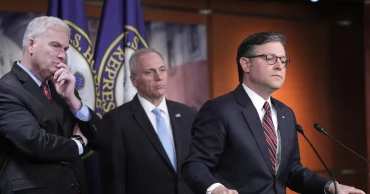
House Republicans include a 10-year ban on US states regulating AI in ‘big, beautiful’ bill
House Republicans caught the tech industry by surprise and sparked backlash from state governments after inserting a provision into their flagship tax bill that would block state and local regulation of artificial intelligence for the next ten years.
This short but impactful addition, included in the House Energy and Commerce Committee’s broad legislative package, represents a significant victory for the AI industry. Tech companies have long pushed for consistent, minimal regulation as they advance technologies they claim will revolutionize society.
Despite its potential scope, the measure faces an uncertain future in the Senate, where procedural constraints may prevent its inclusion in the final version of the GOP bill.
“I’m not sure it’ll survive the Byrd Rule,” said Senator John Cornyn, R-Texas, referring to the requirement that all elements of a budget reconciliation bill must primarily relate to fiscal matters rather than broader policy initiatives.
“That sounds to me like a policy change. I’m not going to speculate what the parliamentarian is going to do but I think it is unlikely to make it,” Cornyn said.
Senators in both parties have expressed an interest in artificial intelligence and believe that Congress should take the lead in regulating the technology. But while lawmakers have introduced scores of bills, including some bipartisan efforts, that would impact artificial intelligence, few have seen any meaningful advancement in the deeply divided Congress.
RobinRafan named Best Content Creator of 2025 at Kidlon-Powered 4th BIFA Awards
An exception is a bipartisan bill expected to be signed into law by President Donald Trump next week that would enact stricter penalties on the distribution of intimate “revenge porn” images, both real and AI-generated, without a person’s consent.
“AI doesn’t understand state borders, so it is extraordinarily important for the federal government to be the one that sets interstate commerce. It’s in our Constitution. You can’t have a patchwork of 50 states,” said Sen. Bernie Moreno, an Ohio Republican. But Moreno said he was unsure if the House’s proposed ban could make it through Senate procedure.
The AI provision in the bill states that “no state or political subdivision may enforce any law or regulation regulating artificial intelligence models, artificial intelligence systems, or automated decision systems.” The language could bar regulations on systems ranging from popular commercial models like ChatGPT to those that help make decisions about who gets hired or finds housing.
State regulations on AI’s usage in business, research, public utilities, educational settings and government would be banned.
The congressional pushback against state-led AI regulation is part of a broader move led by the Trump administration to do away with policies and business approaches that have sought to limit AI’s harms and pervasive bias.
Half of all U.S. states so far have enacted legislation regulating AI deepfakes in political campaigns, according to a tracker from the watchdog organization Public Citizen.
Most of those laws were passed within the last year, as incidents in democratic elections around the globe in 2024 highlighted the threat of lifelike AI audio clips, videos and images to deceive voters.
California state Sen. Scott Wiener called the Republican proposal “truly gross” in a social media post. Wiener, a San Francisco Democrat, authored landmark legislation last year that would have created first-in-the-nation safety measures for advanced artificial intelligence models. The bill was vetoed by California Gov. Gavin Newsom, a fellow San Francisco Democrat.
“Congress is incapable of meaningful AI regulation to protect the public. It is, however, quite capable of failing to act while also banning states from acting,” Wiener wrote.
A bipartisan group of dozens of state attorneys general also sent a letter to Congress on Friday opposing the bill.
“AI brings real promise, but also real danger, and South Carolina has been doing the hard work to protect our citizens,” said South Carolina Attorney General Alan Wilson, a Republican, in a statement. “Now, instead of stepping up with real solutions, Congress wants to tie our hands and push a one-size-fits-all mandate from Washington without a clear direction. That’s not leadership, that’s federal overreach.”
As the debate unfolds, AI industry leaders are pressing ahead on research while competing with rivals to develop the best — and most widely used —AI systems. They have pushed federal lawmakers for uniform and unintrusive rules on the technology, saying they need to move quickly on the latest models to compete with Chinese firms.
Sam Altman, the CEO of ChatGPT maker OpenAI, testified in a Senate hearing last week that a “patchwork” of AI regulations “would be quite burdensome and significantly impair our ability to do what we need to do.”
“One federal framework, that is light touch, that we can understand and that lets us move with the speed that this moment calls for seems important and fine,” Altman told Sen. Cynthia Lummis, a Wyoming Republican.
And Sen. Ted Cruz floated the idea of a 10-year “learning period” for AI at the same hearing, which included three other tech company executives.
“Would you support a 10-year learning period on states issuing comprehensive AI regulation, or some form of federal preemption to create an even playing field for AI developers and employers?” asked the Texas Republican.
Altman responded that he was “not sure what a 10-year learning period means, but I think having one federal approach focused on light touch and an even playing field sounds great to me.”
1 year ago