Arts-&-Culture

‘The Malvinas Are Argentine’ banner sparks national frenzy
A banner displayed by Argentina’s national football team after defeating England in the World Cup semifinals has reignited public interest in the disputed Falkland Islands, known in Argentina as the Malvinas, turning the territorial issue into a nationwide cultural phenomenon.
The hand-painted banner reading “Las Malvinas son Argentinas” (“The Malvinas are Argentine”) quickly spread across Argentina, appearing on T-shirts, murals, stickers, jerseys, artwork and social media. Thousands also downloaded a typeface inspired by the banner’s lettering.
The Falkland Islands, administered by Britain since 1833, are claimed by Argentina. The two countries fought a 10-week war over the islands in 1982, leaving 649 Argentine and 255 British troops dead. Britain cites a 2013 referendum in which islanders overwhelmingly voted to remain a British territory.
War veteran Edgardo Esteban said the World Cup had introduced a new generation to the Malvinas issue. Ahead of the semifinal, FIFA prohibited political messages inside the stadium, but Argentine players unfurled the banner after supporters threw it onto the pitch.
The display drew criticism from British politicians and prompted FIFA to charge the Argentine Football Association. Meanwhile, the banner sparked a merchandising boom and renewed political debate in Argentina. Experts say the incident also boosted global awareness, with Google searches for “Malvinas” surging 2,400% after the semifinal.
2 days ago
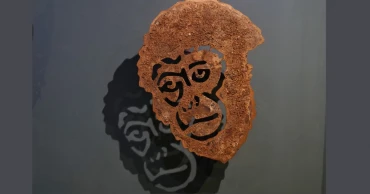
'Search Soul, Soil' exhibition held in Dhaka
Visitors thronged the final day of 'Search Soul, Soil', a group art exhibition featuring works by seven contemporary Bangladeshi artists at Alliance Française de Dhaka in Dhanmondi on Tuesday.
Centered on themes of memory, landscape, the environment, cultural heritage, biodiversity and the relationship between people and the land.
The exhibition showcased artworks by Banani Simlai, Dipro Bonik, Sithi Sinha, Lutfa Mahmuda, Md Faijul Islam, Md Hashem and Ruposhree Hajong before concluding its run.
Drawing on personal experiences and observations, the artists engage with contemporary environmental realities, ecological transformation and broader questions surrounding human existence. Against the backdrop of environmental degradation, biodiversity loss and the growing impacts of climate change, the exhibition encourages visitors to reflect on the relationship between nature, land and humanity.
5 days ago

UNESCO adds Greece’s Mount Olympus, Japan’s ancient capitals to World Heritage List
UNESCO on Sunday added Greece’s Mount Olympus, Japan’s ancient capitals of Asuka and Fujiwara, and South Sudan’s Boma-Badingilo Migratory Landscape to its prestigious World Heritage List during the World Heritage Committee session in South Korea.
The committee, meeting in the southeastern city of Busan through Wednesday, is reviewing dozens of nominations from around the world.
Mount Olympus, famed in Greek mythology as the home of the 12 Olympian gods, was recognized as a mixed cultural and natural heritage site after a 12-year campaign by Greece. Standing 2,918 meters above sea level, the country’s highest peak is renowned for both its mythological significance and rich biodiversity.
Greek officials welcomed the recognition, saying it reinforces the country’s commitment to preserving the mountain’s unique natural environment amid concerns that increased tourism could put additional pressure on the site.
8 days ago
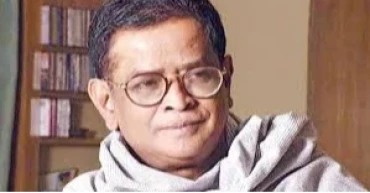
Humayun Ahmed remembered through nationwide commemorations
The 14th death anniversary of eminent playwright, novelist and filmmaker Humayun Ahmed is being observed across the country on Sunday through various commemorative programmes.
Widely regarded as one of the most influential figures in modern Bengali literature, Humayun Ahmed passed away on July 19, 2012, at the age of 63, after battling colorectal cancer at Bellevue Hospital in New York, USA.
To mark the day, his family and several cultural organisations have arranged a series of programmes in different parts of the country.
Various organisations and platforms are commemorating the day with diverse events, and fans are sharing emotional tributes on social media.
Born on November 13, 1948, in Kutubpur village of Mohanganj in Netrakona, Humayun Ahmed was the son of Foyzur Rahman Ahmed and Ayesha Foyez. He completed his SSC from Bogura Zilla School and HSC from Dhaka College.
He earned both his BSc and MSc in Chemistry from Dhaka University and joined its Chemistry Department as a lecturer. He later pursued a PhD in Polymer Chemistry from North Dakota State University in the US.
'Nondito Noroke' (1972) was Humayun Ahmed's debut novel, which gave Humayun the breakthrough and propelled his career as a writer.
The Ekushey Padak winner writer wrote over 200 fiction and non-fiction books, all of which were bestsellers in Bangladesh to date.
In his illustrious career, Humayun Ahmed won Bangla Academy Award, Lekhak Shibir Award, Shishu Academy Award, Michael Madhusudan Padak, Bachsas Award, and more for his outstanding contributions to the Bengali culture and entertainment sphere.
He debuted with his drama 'Prothom Prohor' (1983) for Bangladesh Television (BTV). His successful journey in television continued with popular drama serials 'Ei Shob Din Ratri', 'Bohubrihi', 'Ayomoy', 'Nokkhotrer Raat', 'Aaj Robibar' and most notably, 'Kothao Keu Nei' which created a historic hype in the nation.
Humayun Ahmed also explored success as a filmmaker in the early 1990s and went on to make a total of eight films in his filmmaking career, each based on his novels.
Two of his films, 'Syamol Chhaya' (2004) and 'Ghetuputra Komola' (2012) were the official Bangladeshi submission for the Academy Award for Best Foreign Language Film in their respective years.
He received seven Bangladesh National Film Awards in different categories for the films 'Shonkhonil Karagar' (as screenwriter), 'Aguner Poroshmoni', 'Daruchini Dwip' and 'Ghetuputra Komola'.
15 days ago
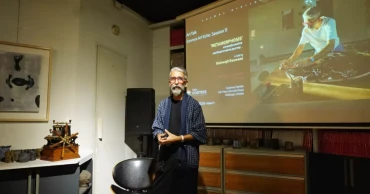
Cosmos Art Echo: Art Talk features Bishwajit Goswami’s journey of transformation
Gallery Cosmos and Cosmos Atelier71 hosted the 11th session of its artist talk series, Cosmos Art Echo, on Saturday, featuring the artistic transformation of distinguished Bangladeshi artist, art educator, curator and researcher Bishwajit Goswami.
The session, titled "Metamorphosis," was held at the Cosmos Atelier71 Studio at Cosmos Centre in Malibagh, bringing together artists, students, art educators and cultural enthusiasts for an in-depth discussion on transformation in artistic practice, cultural identity and contemporary visual language.
Through his multidisciplinary and research-based practice, Bishwajit reflected on his lifelong artistic evolution, saying nothing had been able to stand in the way of his journey of transformation.
Bishwajit Goswami’s practice centers on six foundational elements—Ma, Mati, Manush, Bhasha, Swadesh and Prokriti—representing mother, soil, people, language, motherland, and nature.
Through multidisciplinary approaches, he investigates how these interconnected elements shape collective identity. His practice emphasizes collaboration, site-responsive methodologies, and sustained dialogue with artisans and communities across local and international contexts.
Both his artistic and curatorial works advocate shared authorship, repositioning traditional forms within contemporary frameworks through processes of exchange.
Goswami said his creative practice is deeply rooted in nature, drawing inspiration from natural phenomena such as the tides, the roar of the sea and the first light of day entering his studio.
Reflecting on his role as an educator at the Faculty of Fine Arts, he described teaching as a continuous learning process, saying the enthusiasm and energy of young students, including watching them paint on large canvases, remain one of his greatest sources of inspiration.
He stressed that art should communicate with everyone- from rickshaw pullers to schoolchildren- and said he was proud that his wall-paintings were protected following the July movement because ordinary people felt connected to them.
Speaking about his curatorial works, Bishwajit said he focused on presenting the richness and strength of Bangladeshi culture to international audiences, citing his work with the Victoria and Albert Museum as an example.
23 days ago
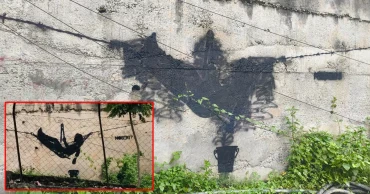
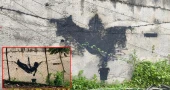
HOBEKI?’s first international Subodh graffiti disappears from Sikkim after 5 days
The first known international appearance of HOBEKI?’s iconic Subodh graffiti has disappeared from a wall in Rangpo, Sikkim, only five days after it was first reported.
The large stencil mural, which appeared near the Majitar Nala Bridge on the Gangtok–Rangpo Road around June 30, 2026, immediately attracted widespread attention across both Bangladesh and India. Its emergence marked the first documented appearance of HOBEKI?’s work outside Bangladesh and generated extensive discussion in newspapers, television, online media, and social media on both sides of the border.
HOBEKI? crosses borders: Subodh appears at Gateway to Sikkim
Several Indian news outlets interpreted the work from different perspectives. Some viewed it primarily as a remarkable example of contemporary street art, while others questioned its appearance in a sensitive border state and discussed possible security implications. The mural quickly became the subject of public debate, with discussions extending beyond art into questions of borders, identity, diplomacy, and public space.
ARTCON, an art agency documenting the artist's practice, has now learned that the mural has been removed. As of publication, no individual or authority has publicly claimed responsibility for its removal, and no official explanation has been issued. The circumstances surrounding its disappearance therefore remain unknown.
The removal is, in one sense, consistent with the inherently temporary nature of street art. Graffiti created on outdoor walls is constantly exposed to weather, redevelopment, repainting, political poster campaigns, and advertising. Bangladesh itself has witnessed numerous examples of significant graffiti works disappearing within days or months of their creation.
HOBEKI?‘s work, however, occupies a distinctive position within South Asian street art. The artist’s anonymity, highly recognisable visual language, and refusal to explain individual works have made each new Subodh mural an event in itself. Every appearance generates public curiosity, multiple interpretations, and, at times, controversy. That same combination has also meant that several of the artist’s earlier murals in Bangladesh have disappeared shortly after attracting public attention.
Social thinker Professor Manosh Chowdhury observed that politically sensitive public art often creates discomfort for certain sections of society and that graffiti carrying strong symbolic meaning has repeatedly disappeared in different contexts.
Expressing a complex reaction to its rapid destruction, Prof. Chowdhury noted that it triggers a "complicated emotion because this is a painting most people were not even supposed to see in person given its location, yet it was erased so quickly."
He reflected that while multiple works by 'Hobe Ki' or the 'Subodh series' have remained intact on several walls in Dhaka, others did not last long. However, because of its strategic location and the significance it had gained, the feeling is even more intricate, leaving a strange sense of loss.
The Sikkim mural itself invited interpretation without providing any explicit explanation. It depicted Subodh lying in a hammock woven from barbed wire, holding a wire cutter, with a bucket resting below and the Teesta River nearby. As with all of HOBEKI?’s works, the artist offered no statement explaining its meaning.
ARK Reepon, art analyst and founder of ARTCON, noted that although the wall has now been erased, the conversation it initiated continues. He observed that as with many significant works of street art, the mural’s physical life proved brief, but its cultural afterlife may prove considerably longer.
23 days ago

Ognipother Kobi to be produced on Poet Mohan Raihan
A full-length documentary titled Ognipother Kobi is being produced on the life, literary works, political ideals and social contributions of Bangla Academy Award-winning poet Mohan Raihan.
The documentary is being directed by acclaimed documentary filmmaker Masud Karim under the banner of the Bangladesh Documentary Filmmakers Association.
The film will chronicle various stages of Mohan Raihan's life, including his birth, childhood, upbringing, literary career, political engagement, social commitment and contributions to the Bengali language and culture. It will also explore his influence on contemporary literature, society and intellectual thought.
The first phase of filming has already been completed at several locations in Dhaka, including Dhaka College and the University of Dhaka. The remaining scenes will be shot in Sirajganj, the poet's birthplace, during the next phase of production.
The documentary features reflections on Raihan's life and literary achievements by several prominent academics and cultural figures, including Professor Emeritus Serajul Islam Choudhury, the late Professor Abul Kashem Fazlul Haq and noted dramatist Mamunur Rashid, along with other distinguished personalities.
Masud Karim has previously directed documentaries on legendary actor Soumitra Chatterjee, National Professor Anisuzzaman, journalist and writer Abdul Gaffar Choudhury, and The Bengali Language Movement in Assam, a historical documentary on the Bengali Language Movement in Silchar.
The premiere of Ognipother Kobi is scheduled to be held at the Bangladesh National Museum on August 1 to coincide with the 70th birth anniversary of poet Mohan Raihan.
The filmmakers said the documentary aims to introduce Mohan Raihan's life, literary legacy, ideals and lifelong struggles to younger generations while preserving an important chapter of Bangladesh's literary and cultural heritage for the future.
25 days ago

Japanese football fans praised for stadium cleanups, but face debate at home over gender roles
Japanese football fans, long admired for cleaning stadiums after World Cup matches, are now facing criticism at home over a perceived double standard in household responsibilities.
After recent match photos showed fans collecting litter from the stands with trash bags, social media users in Japan raised concerns that while some men are diligent in public spaces, they may not be equally involved in domestic chores.
A viral post compared a man cleaning up at a stadium with the same man relaxing at home, using his phone while his wife handled household work such as dishes and laundry. The post urged Japanese men to “pitch in more at home,” noting that the country ranks among the lowest globally in time spent by men on housework.
The post has been widely shared, gaining around 60,000 likes on X (formerly Twitter).
“Everyone wants to save the world, but no one wants to help mom do the dishes,” one user commented, quoting American author PJ O’Rourke.
Another user wrote that some of the fans seen cleaning stadiums likely leave childcare duties to their wives in order to attend matches.
Cleanliness and discipline in public spaces are deeply rooted in Japanese culture. However, data from the Organisation for Economic Co-operation and Development (OECD) shows a significant gender gap in unpaid domestic work. As of 2021, Japanese women spent more than three hours per day on unpaid labour, over five times more than men, who averaged just 47 minutes.
The gap is even wider in families with young children. A 2021 government survey found that in dual-income households with children under six, women spent over seven hours a day on housework and childcare, compared to less than two hours for men.
Some social media users also questioned whether the praise for overseas cleanliness overlooks similar issues within Japan, where public areas can become littered after large events.
Despite the debate, many others defended the fans, arguing that their stadium cleanups should be appreciated rather than criticised.
“There’s nothing embarrassing about it. It’s far better than headlines saying Japanese people are littering abroad,” one user wrote.
The practice has also inspired fans from other countries. A recent viral video showed Portuguese supporters collecting rubbish from stadium seats, with some users crediting Japanese fans for popularising the trend.
With inputs from NDTV
1 month ago
Monumental cave art transforms Paris’ oldest bridge into immersive sensory experience
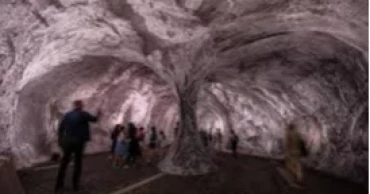
A striking cave-like installation has opened on Paris’ oldest bridge, temporarily turning the historic structure over the River Seine into a dark, immersive art space filled with sound, scent and light.
For weeks, a black, mountain-like structure had covered the Pont Neuf, raising curiosity among passers-by. It finally opened on Monday evening, allowing the public to step inside the artwork.
Once inside, visitors are met with a dramatic shift in atmosphere. The air carries the smell of damp earth, stone and smoke, while the sounds of low electronic pulses echo through the structure. Beneath it, the bridge’s old cobblestones remain visible underfoot, reinforcing the sense of walking through another world.
The installation, called the Pont Neuf Cavern, has been created by French street artist JR (artist), often described as the “French Banksy.” It is open free of charge and will remain accessible 24 hours a day until June 28.
Built mainly from printed fabric and air, the work rises about 18 metres above the Seine, transforming the centuries-old bridge into a temporary artificial cave.
Visitors described the experience as disorienting yet captivating.
“It feels like the city has disappeared,” said one visitor, noting that although the river remains just outside, the interior feels like stepping into an ancient landscape.
A key feature of the installation is its carefully designed scent environment. Olfactory artist Sarah Bouasse created shifting smells inspired by compounds found in rain-soaked soil. The scent changes as visitors move through the space, from wet earth to warmer, smokier tones.
Many visitors said the experience changed the way they moved across the bridge.
“Today I felt the stones under my feet. And smelled them too,” said one retiree, adding that it made him feel like a child again.
The sound design was created by Thomas Bangalter, known from the electronic duo Daft Punk. His audio installation adds deep rumbles, echoes and rhythmic pulses that intensify the cave-like effect.
Completed in 1607, the Pont Neuf — ironically meaning “New Bridge” — is the oldest standing bridge in Paris. The installation encourages visitors to experience the landmark not just visually, but through smell, sound and touch.
The project also pays tribute to artists Christo and Jeanne-Claude, who famously wrapped the bridge in fabric in 1985, attracting millions of visitors.
Unlike that earlier bright installation, JR’s version explores darkness, guiding visitors through a shadowed passage before they re-emerge into daylight on the other side.
The experience can also be enhanced through a smartphone-based augmented reality feature developed with tech company Snap, which adds digital bats, visual traces and a virtual dancer to the space.
JR has linked the concept to Plato’s allegory of the cave, suggesting modern people are similarly influenced by digital screens and algorithms shaping perception.
Visitors said the installation offers a rare pause in daily urban life.
“Paris needs things that make people stop,” said one visitor.
When the exhibition ends, the structure will be dismantled and its materials reused or recycled, returning the bridge to its normal state as traffic flows again over the historic Seine crossing.
1 month ago
World Cup teams bring global football excitement to small US cities
As the 2026 FIFA World Cup unfolds across North America, several smaller American cities are enjoying a rare moment on the global stage after being selected as training bases for some of the tournament’s biggest teams.
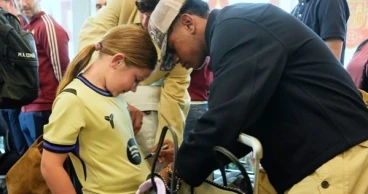
In Chattanooga, Tennessee, eight-year-old Beckham McClure waited for hours with a handwritten note hoping to catch a glimpse of Spain’s star players. When he finally saw them take the field, he turned to his father and whispered: “They’re real.”
The moment reflected the excitement spreading through communities that are hosting national teams between World Cup matches.
Defending European champion Spain has set up its training camp at Baylor School in Chattanooga, while Iraq is based at the historic Greenbrier resort in West Virginia. Germany has chosen Winston-Salem, North Carolina, as its World Cup headquarters.
The arrival of these teams has transformed local communities, bringing international attention and creating a festive atmosphere for football fans.
In Chattanooga, Spanish flags decorate hotels and public spaces, while banners welcoming the team have appeared across the city. Thousands of fans applied for a limited number of tickets to watch Spain’s training sessions at Baylor School.
Local resident Skip Schwartz said Spanish jerseys have become a common sight around the city.
“You can’t always tell whether the person wearing one is from Spain or a local supporter,” he said.
In Winston-Salem, tickets to watch Germany train sold out within minutes. Local businesses have embraced the opportunity, with restaurants and sports bars organizing viewing parties and offering German-themed menus.
Savannah Lahey, manager of a local football bar, said the event has encouraged many people to take an interest in the sport.
“It’s exciting to see people getting involved in something they may not have followed before,” she said.
Teams selected their training bases from a list of FIFA-approved facilities across North America. Higher-ranked teams received priority in choosing locations.
Despite having the option of larger cities such as Chicago and Los Angeles, Spain chose Chattanooga because of Baylor School’s facilities, convenient location and easy access to match venues.
The school upgraded and maintained its football pitches to meet FIFA standards, including strict requirements for field quality, drainage and irrigation systems.
Two grass training fields now serve as the centre of Spain’s daily preparations, while players are staying at a nearby downtown hotel.
For Baylor School officials and former students, Spain’s decision to use the campus is a source of pride.
“It’s hard to imagine that one of the world’s biggest football nations would choose this campus as its World Cup base,” said Schwartz, a member of the school’s board.
The presence of Spain has also created new supporters among local fans.
Tina Ankar, who attended one of the team’s open training sessions, said the experience made her eager to follow Spain throughout the tournament.
“Now we have another team to support besides the United States,” she said.
Students at Baylor School have also enjoyed unprecedented access to world-class football stars. Many were excited to see locker rooms temporarily assigned to players such as Pedri, Gavi and Lamine Yamal.
For 17-year-old student Heath Techasiriwan, the experience has changed his World Cup loyalties.
“Without a doubt, I’m supporting Spain,” he said.
Young goalkeeper Mathew Ramirez was thrilled when Yamal signed his Barcelona jersey after training.
Back in Chattanooga, Beckham McClure returned home with player autographs and selfies, still amazed that the football stars he usually watched on television were standing just a few feet away.
His father, Jaxon McClure, who now coaches hundreds of local children, said the city’s football culture has grown dramatically over the years.
“They could have chosen anywhere in the country,” he said. “And they chose us.”
1 month ago