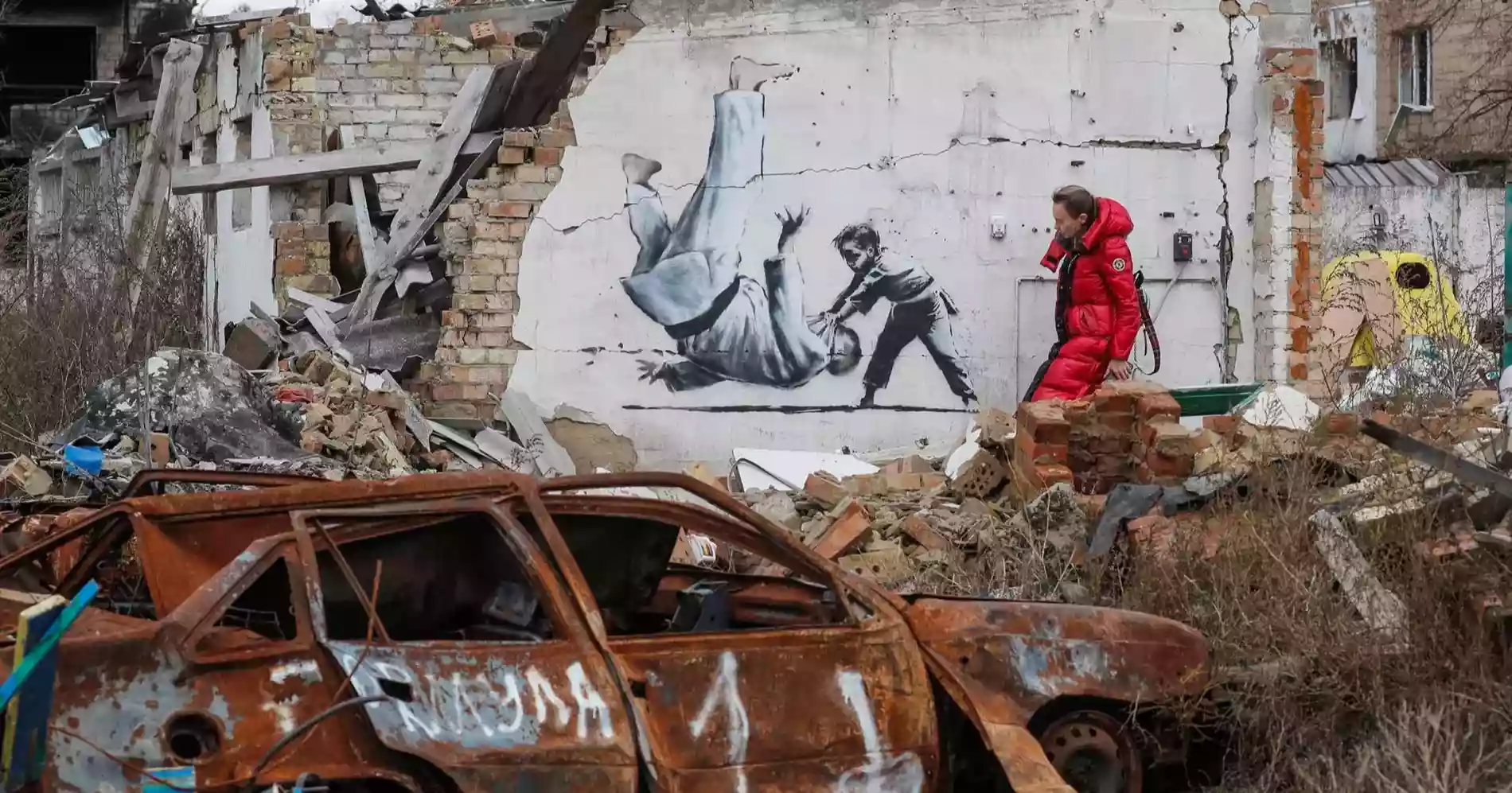
The reported unmasking of elusive street artist Banksy has sparked renewed debate over whether anonymity is essential to his artistic and commercial appeal.
For decades, Banksy’s identity has remained one of the art world’s most enduring mysteries, adding to the intrigue of his politically charged works seen across major cities and conflict zones. A recent report by Reuters has reignited speculation, prompting mixed reactions among fans and experts.
Many admirers expressed disappointment, arguing that revealing the artist’s identity diminishes the mystique surrounding his work. Some compared it to exposing a magic trick, saying the secrecy was part of the experience.
Banksy, widely believed to be Bristol-born Robin Gunningham, emerged from a tradition of street artists who used anonymity as a form of resistance. His works often address themes such as inequality, war and state power.
However, art dealers and analysts say the value of his work is unlikely to decline. They argue that collectors are drawn more to the message and cultural impact of the art than to the identity of the artist.
Experts also note that Banksy’s identity has long been an open secret in art circles, with previous media reports and investigations pointing to similar conclusions.
Despite the controversy, his work continues to resonate globally, from public murals to high-profile auction pieces.
As debate continues, many believe Banksy’s legacy will ultimately rest not on who he is, but on what his art represents.