Arts-&-Culture
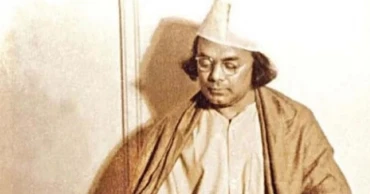
49th death anniversary of National Poet Kazi Nazrul Islam being observed
The nation on Wednesday is observing the 49th death anniversary of National Poet Kazi Nazrul Islam, recalling his undying legacy of defiance against injustice as well as his profound messages of love, humanity, and equality.
The poet, lyricist, composer and revolutionary voice of Bengali literature and music, affectionately known as ‘Dukhhu Mia,’ passed away on 12 Bhadra, 1383 (August 29, 1976) at the then PG Hospital (now BSMMU) in Dhaka.
Various socio-cultural organisations chalked out elaborate programmes to mark the day, including discussions, prayers and cultural events.
National Poet Kazi Nazrul Islam Institute organised a discussion titled 'Mrityunjayi Nazrul' alongside Hamd-Naat recitations and doa mahfil. Bangla Academy paid tributes at the poet’s grave and arranged solo lectures and cultural performances.
National Poet Kazi Nazrul Islam’s 126th birth anniversary today
In a Facebook post, the Nazrul Institute said, “On the morning of the 49th death anniversary of our National Poet Kazi Nazrul Islam, we gathered beside his grave to pray for his eternal peace. The Ministry of Cultural Affairs and Nazrul Institute jointly offered prayers, attended by Secretary Md Mofidur Rahman and Additional Secretary Abdullah Khan. The dua was conducted by Nazrul Institute’s Executive Director Md Latiful Islam Shibli, who prayed that tomorrow’s Bangladesh becomes the egalitarian, fraternal, and harmonious nation envisioned by the poet.”
Although Nazrul’s creative period lasted only 23 years, his literary works — poems, songs, essays and novels — remain timeless treasures of Bengali literature, inspiring generations in their struggles against exploitation and oppression. At the same time, he is revered as the eternal poet of love.
Following Bangladesh’s independence, Nazrul was brought to Dhaka with his family on May 24, 1972, with special permission from the Government of India.
He was accorded the status of National Poet, provided state accommodation in Dhanmondi, awarded an honorary D.Litt. by Dhaka University in 1974, and granted Bangladeshi citizenship in 1976. The same year, he was honoured with the Ekushey Padak.
Despite being popularly revered as the National Poet for decades, no official gazette notification had been issued until this year. In January 2025, the interim government formally declared Kazi Nazrul Islam as Bangladesh’s 'National Poet' effective from May 4, 1972, finally granting him long-awaited state recognition.
11 months ago

How Hurricane Katrina shaped a generation of New Orleans educators
When Hurricane Katrina struck 20 years ago, it devastated New Orleans and transformed its schools, leaving behind the nation’s first all-charter district. For many who lived through that upheaval, the experience shaped their futures — inspiring some to become educators themselves.
Ahead of the storm’s anniversary, three survivors shared with The Associated Press how Katrina altered their lives and careers.
A displaced student finds inspiration in TexasChris Dier, now a history teacher in New Orleans, was starting his senior year in neighboring Chalmette when Katrina hit. Evacuated to Texas, he finished school there after months in a trailer offered by strangers. Teachers stepped up in his darkest moments — providing supplies, tutoring, and even soccer cleats. “They made me feel like I belonged, not just a statistic,” he recalled. Once determined never to follow his mother into teaching, Dier said Katrina changed his outlook. “I saw how teachers responded. That inspired me.”
An eighth grader longs for New Orleans’ ‘love and attention’Jahquille Ross, now an educator and nonprofit leader, was in eighth grade when he evacuated. Shuttled through four schools in a year, he felt isolated and struggled academically. “The teachers didn’t go out of their way. I didn’t get the love and attention I was used to in New Orleans,” he said. Returning months later, he found strength in family and community. Inspired by supportive educators, Ross chose to teach, hoping to give young children — especially from Black communities — the same encouragement he once received.
Vermont’s dog mountain honors the bond between humans and their pets
A teacher loses her school and memoriesMichelle Garnett, who taught kindergarten for three decades, recalled the heartbreak of finding her school destroyed. Floodwaters ruined her classroom, along with irreplaceable keepsakes her parents had given her. “All was lost,” she said. Still, living with 23 family members in Baton Rouge, she found comfort in safety and togetherness. Garnett entered teaching out of necessity while caring for her ill daughter, but Katrina deepened her sense of purpose. “We think we choose a path, but God puts us where he wants us. Teaching is where I needed to be.”
Their stories reflect how Katrina’s devastation reshaped not just schools but lives — and how resilience, care, and community became lessons for a new generation of educators.
Source: Agency
11 months ago

Nasir Ali Mamun’s photography exhibition ‘Shotoborshe Sultan’ to celebrate SM Sultan’s birth centenary
A special photography exhibition titled 'Shotoborshe Sultan' will begin on Friday evening at Bengal Shilpalay in Dhanmondi marking the birth centenary of legendary Bangladeshi artist SM Sultan.
Bengal Foundation organised the exhibition in collaboration with HSBC Bangladesh.
The exhibition will showcase a rare and intimate visual journey of artist Sultan through the lens of eminent photographer Nasir Ali, widely known as the 'Poet with the Camera.'
It will feature portraits of the iconic artist alongside original negatives, handwritten letters, diary entries, drawings, and other memorabilia from Mamun’s private collection.
Many of these artifacts will be displayed publicly for the first time, offering an evocative glimpse into the extraordinary life of one of Bangladesh’s most visionary painters.
Marking his 65th solo exhibition, Mamun described the initiative as a significant milestone in his artistic career.
“For the first time, items from my personal collection— including three of his teeth, handwritten letters, diary pages with writings and drawings, unpublished sketches, and original negatives—will be on public display. To mark the occasion, Bengal Foundation and HSBC Bangladesh are jointly publishing a 160-page catalogue titled 'Seeding the Soul' - and altogether, this will be an important exhibition,” Nasir told UNB.
"It feels like the State has finally honored me with what I deserve:" Nasir Ali Mamun
'Shotoborshe Sultan' will remain open to visitors every day from 4 to 8 pm (except Sundays) until September 27 at Bengal Shilpalay, House 42, Road 27, Dhanmondi.
The inauguration ceremony will be attended by distinguished artist Monirul Islam and Matiur Rahman, Editor of The Daily Prothom Alo, as Guests of Honour. Md Mahbub ur Rahman, Chief Executive Officer of HSBC Bangladesh, will also be present on the occasion.
11 months ago
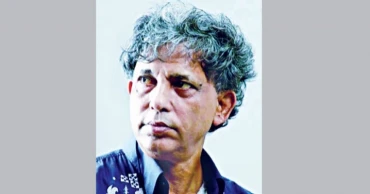
Nationwide cultural events mark Selim Al Deen’s 76th birth anniversary
The 76th birth anniversary of eminent playwright and theatre personality Selim Al Deen, widely known as 'Natyacharya', is being celebrated across the country through theatre festivals, seminars, exhibitions, processions and commemorative programmes.
On Monday morning, teachers, students and cultural organisations paid floral tributes at Selim Al Deen’s grave on the Jahangirnagar University (JU) campus.
The JU Drama and Dramatics Department arranged daylong programmes featuring theatre songs, a photography exhibition, a commemorative rally, and a seminar where Dhaka University’s Theatre and Performance Studies teacher Sudip Chakraborty presented a keynote paper.
Meanwhile, Dhaka Theatre and Gram Theatre jointly organised a four-day festival at Bangladesh Mahila Samity, which began on Friday with the staging of Deen’s Liberation War-based play 'Deyal'.
The festival will conclude Monday evening with the Dhaka Theatre Awards ceremony and the staging of Deen’s play 'Nimmojon', directed by Nasiruddin Yousuff.
Theatre troupe Swapnadal launched its two-day festival titled 'Natyacharya Selim Al Deen Janmotsab 2025' on Monday at Jahangirnagar University and Bangladesh Shilpakala Academy (BSA). The programme features special stagings of Deen’s iconic plays 'Hargaj' and 'Chitrangada', directed by his student Zahid Repon.
On Monday evening, 'Hargaj' will be staged for the 49th time at BSA’s Experimental Theatre Hall, while 'Chitrangada' will be staged on Tuesday evening to close the festival.
In Gaibandha, Sarathi Theatre is hosting a three-day festival at Dariapur featuring tree plantations, art competitions, cultural performances, and the staging of Kalindir Git on Wednesday. Bogura Theatre is also marking the occasion with art competitions, recitations, and theatrical readings at its office premises.
Separately, Selim Al Deen Sangrohashala arranged a two-day programme including a seminar on “Henrik Ibsen and Selim Al Deen: Eastern and Western Theatrical Forms and Modernity” at the National Theatre Hall, followed by a staging of 'Rupchan Sundarir Pala' by Bangalok.
Born on August 18, 1949, in Senerkhil village of Feni’s Sonagazi upazila, Selim Al Deen studied Bangla literature at Dhaka University and later joined Jahangirnagar University, where he founded the Drama and Dramatics Department.
A co-founder of Dhaka Theatre and Gram Theatre, he was awarded the Ekushey Padak in 2007, the Bangla Academy Award in 1984, and the National Film Award for Best Dialogue in 1994.
Selim Al Deen passed away on January 14, 2008, and was laid to rest near the central mosque of Jahangirnagar University.
11 months ago
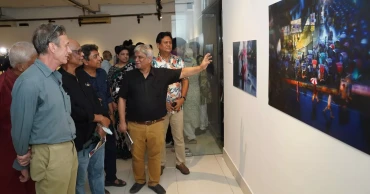
'Troubling Rain': Abir Abdullah's solo photography exhibition opens at AFD
Alliance Française de Dhaka (AFD) on Thursday inaugurated 'Troubling Rain', a solo photography exhibition by award-winning photographer and educator Abir Abdullah, at its La Galerie in the capital’s Dhanmondi.
The opening ceremony was attended by prominent artist Dhali Al Mamoon, architect Saif Ul Haque, Ekhon TV editorial head Tushar Abdullah, and art critic Moinuddin Khaled.
In the exhibition, Abir captures the contrasting faces of Dhaka’s monsoon season — celebrated in Bengali literature for its beauty and romance, yet marked by disruption and hardship. Shot over two decades, his images portray flooded streets, overturned umbrellas, and fragile urban infrastructure under relentless rain, offering intimate glimpses into the resilience of the city’s residents.
Abir Abdullah, currently the Photography Workshop Coordinator at AFD, studied at the Bangladesh Photographic Institute and Pathshala, later advancing his skills through global workshops and documentary projects. His career has been recognised with prestigious honours including the Mother Jones International Fund for Documentary Photography and the Alexia Foundation professional grant.
His works have been published in The New York Times, Asiaweek, and TIME, and exhibited in cities including London, Amsterdam, San Francisco, Perpignan, Quebec, and Sharjah.
'Troubling Rain' will remain open to visitors until August 23, from Monday to Saturday between 3 pm and 9 pm, at La Galerie, Alliance Française de Dhaka.
11 months ago
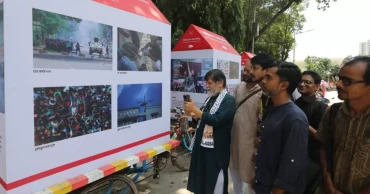
Travelling photo exhibition revisits battlegrounds of July–August uprising in Dhaka
A two-day travelling photo exhibition by Pathshala South Asian Media Institute titled “Photography in the People’s Uprising: July Photography – Witness to History and Tool of Struggle” began on Monday morning at Dhaka University’s Swoparjito Swadhinata Chattar, bringing to the streets powerful images that documented the July–August 2024 uprising.
The exhibition features works by 14 photographers who risked their lives to capture moments of intense street protests, violent crackdowns, and the spirit of resistance that defined the movement.
Organised as an open-air gallery, it aims to revisit key locations in Dhaka that turned into battlefields during the historic months — including the Central Shaheed Minar, TSC, Mohammadpur Beribadh, Mirpur, Jatrabari, Rampura, and Hatirjheel.
Renowned photographer and human rights activist Shahidul Alam, along with fellow photographers, teachers, students and other professionals, joined the opening event.
“This initiative has brought the gallery to the people — even working-class passers-by are stopping to see the images. Without photographers, perhaps Sheikh Hasina would still be in power; their work should be honoured and protected with proper copyright recognition,” Shahidul Alam said at the event.
Photographer Taslima Akhter said the exhibition serves to remember the days of the uprising, while Pathshala teacher Jannatul Mawa noted that when the media was unable to play its role, the photographs spoke the truth.
Photographer Jibon Ahmed, who also has a solo exhibition running almost simultaneously at Alliance Francaise Dhaka (AFD) of the photos he took during the Uprising, recalled facing live gunfire from the BGB targeting protestors, while Syed Ashraful Alam shared memories of capturing images amid the chaos in Uttara, and Suman Kanti Pal recounted similar experiences in Rampura.
Before setting out, the participating photographers reflected on the challenges of documenting the unrest that happened in July 2024.
Following the reminiscences, five vans carrying the photographs embarked on their journey through the city’s flashpoint areas, engaging with the public along the way. The exhibition will continue until Tuesday.
Participating photographers include Syed Ashraful Alam, Istiak Karim, KM Asad, Jibon Ahmed, Dipu Malakar, Noor Alam, Moin Bulu, Md Shafiqul Islam, Raihan Ahmed, Rahat Karim, Shuvra Kanti Das, Sultan Mahmud Mukut, Suman Kanti Pal, and Habibul Haque.
11 months ago
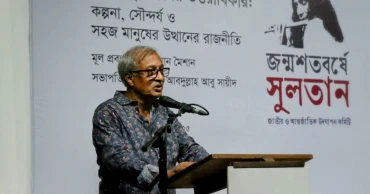
101st birth anniversary of legendary artist SM Sultan being celebrated
Today (August 10) marks the 101st birth anniversary of legendary Bangladeshi artist SM Sultan, born on August 10, 1924 in Machimdia village of Narail, Bangladesh.
The birth centenary of the revered artist will be celebrated through a two-year programme featuring discussions, exhibitions, book publications and research initiatives, organisers announced these on Saturday evening at Bengal Shilpalay in the capital’s Dhanmondi.
The inaugural event, a discussion titled 'The Legacy of Artist Sultan: Imagination, Beauty and the Politics of Uplifting the Common Man', was organised by the SM Sultan National and International Birth Centenary Celebration Committee.
Ekushey Padak-winning eminent photographer and Member Secretary of the committee Nasir Ali Mamun, in his welcome speech, said the centenary festivities had been stalled last year due to the post-uprising situation of the country in August 2024.
“This year, we are beginning a series of activities that will continue over two years, including art and photography exhibitions, seminars, symposiums, workshops and the SM Sultan Memorial Lectures,” Mamun said, adding that books on the artist’s life, works and philosophy would be published throughout the celebrations.
A video documentary by Mamun featured tributes from late sculptor Hamiduzzaman Khan; eminent artists Mustafa Monwar, Farida Zaman, Rokeya Sultana, Samarjit Roy Chowdhury, Kanak Chanpa Chakma; 1952 Language Movement veteran Ahmed Rafiq; writer Hasan Azizul Haq; educationist Professor Abdullah Abu Sayeed; researcher Badruddin Umar; art critic Moinuddin Khaled; and researcher Shahman Moishan, among others.
This was followed by the unveiling of the book 'Sultan Khonon', edited by Mamun.
Dhaka University Professor-researcher Dr Shahman Moishan delivered the keynote speech, calling Sultan as an artist who rejected colonial cultural structures and modernist conventions to develop his own visual language rooted in humanity.
“Full of adventure and thrill — moving from town to town, sometimes suddenly disappearing and reappearing — Sultan’s life is for us wrapped in mystery, illusion and curiosity; we see how Tareque Masud’s film 'Adam Surat' and Nasir Ali Mamun’s photographs capture that inward mystery. Sultan fashioned a mythic persona within history that mirrors the common people, and his life should be studied with utmost care," Shahman said.
Committee convenor and artist Monirul Islam highlighted Sultan’s distinctive portrayal of muscular human figures without conventional backgrounds or shading. “In his paintings, Sultan depicted people with powerful musculature; his works do not employ conventional backdrops or shading, yet this self-taught artist forged his own distinctive style,” Monirul said.
Bengal Foundation Chairman Abul Khair, Sultan’s disciple Bimanesh Biswas, art critic Prof Abdus Sattar, Prof Abul Mansur and art critic Mustafa Zaman also spoke at the event.
11 months ago
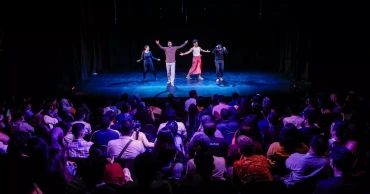
AFD's ‘Songs of Hawkers’ concludes two-day run at BSA
Alliance Française de Dhaka (AFD) wrapped up its two-day staging of 'Songs of Hawkers', an imaginative theatrical production by French director Zazie Hayoun, with a performance on Saturday at the Experimental Theatre Hall of Bangladesh Shilpakala Academy (BSA) in the capital.
Drawing from her long-held fascination with everyday life, Zazie transformed the spirited and chaotic world of Bangladeshi street hawkers into a playful, poetic and comedic stage performance. The production paid tribute to these tireless figures whose rhythmic calls, colourful wares and boundless energy form an integral part of the city’s streets.
11 months ago
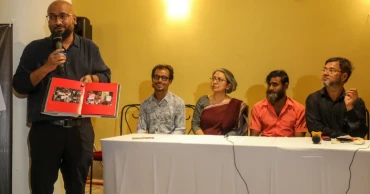
Jibon Ahmed's photographic publication ‘Witness to the Uprising’ launched at AFD
The photographic publication titled 'Witness to the Uprising' by noted photojournalist Jibon Ahmed was launched on Tuesday at Alliance Française de Dhaka (AFD), drawing a diverse audience of journalists, artists, intellectuals, and members of the diplomatic community.
Edited by Mashruk Ahmed and jointly published by University Press Limited (UPL) and Netra News, the 350-page book features over 170 striking photographs along with journal entries documenting the events of the July Uprising in 2024 — one of the most turbulent chapters in Bangladesh’s recent history.
Shot while on assignment and later while in hiding, Jibon Ahmed’s work offers a deeply personal and fearless visual narrative of protest, resistance, and the eventual collapse of a regime. His lens captures the raw emotion and chaos of the streets, standing as a testament to the power and responsibility of photojournalism under fire.
July Martyrs: Foreign Adviser opens month-long photography and graffiti show
11 months ago
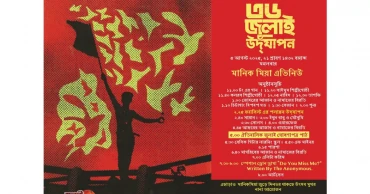
'July 36' to be commemorated with daylong cultural festivities on Tuesday
The month-long celebrations commemorating the historic July Uprising of 2024 will continue with a grand public event on Tuesday on Manik Mia Avenue in the capital, featuring cultural performances, a symbolic celebration of the fall of fascism, the historic reading of the July Declaration, and a special drone drama titled 'Do You Miss Me?' among daylong festivities.
Organised by the Ministry of Cultural Affairs and managed by Bangladesh Shilpakala Academy (BSA) with support from the Bangladesh National Parliament Secretariat, the event will begin at 11am and run throughout the day.
The cultural programme will kick off with performances by the band Tong, including songs like ‘July-er Puthi Gaan’, ‘Ami Chitkar Kore Kadite Chahiya’, and ‘Teesta Bachan, Dhobla Bachan’. This will be followed by Saimum Shilpigoshthi performing revolutionary songs including ‘Jegei Jokhon Uthechho Bondhu’, ‘Ei Andolon Sofol Hobe’, ‘Aay Tarunno Aay’, and ‘Boichhey Batash Boiree’.
Kolorob Shilpigoshthi will present ‘Tribhubone Priyo Muhammad’, ‘De De Pal Tule De’, ‘Teer Hara Oi Dhewyer Shagor’, and ‘Delhi Na Dhaka’. Solo performances will include ‘36 July’, ‘Manush Manusher Jonno’, and ‘Palashir Prantor’ by Nahid, and ‘Bangladesh’, ‘Ami Banglay Gaan Gai’, ‘Chol Chol’, and ‘Karar Oi Louho Kopat’ by Tashfee.
Following a break for Zuhr prayers, Chittagong Hip-Hop Hood will take the stage with tracks such as ‘Pehenol’, ‘Nawab’, ‘Rafqi’, and ‘Re 89’. Rapper Sejan will follow songs like ‘Kotha Ko’, ‘I Ain’t A Killer’, and ‘Hudai Hutashe’. Rock band Shunno will perform ‘Shotho Asha’, ‘Godhulir Opare’, ‘Behula’, ‘Bedona’, ‘Rajahin Rajjo’, and ‘Shono Mohajon’.
At 2:25pm, a symbolic commemoration of the fall of fascism will be observed, followed by a performance by popular singer Shayan featuring ‘July-er Gaan’, ‘Ami Gaichi Sobai’r Jonno’, and ‘Tajjob Bone Jai’. Singers Ethun Babu and Mousumi will present ‘Deshta Tomar Baper Naki’, ‘Gonojagoroner Gaan’, ‘Maa’, and ‘Amader Bangladesh’.
Iconic bands Souls and Warfaze will then perform back-to-back. Souls will play ‘Dekha Hobe Bondhu’, ‘Mon Shudhu Mon Chhuyeche’, ‘Brishti Dekhe Onek Kedechhi’, and ‘Nissongota’, while Warfaze will deliver ‘Maharaj’, ‘Osamajik’, ‘Nei Proyojon’, ‘Obak Bhalobasha’, ‘Purnota’, and ‘Tomake’.
After Asr prayers, the historic July Declaration will be read, followed at 5:30pm by ‘Amra Korbo Joy’ performed by the Basic Guitar Learning School. Ethnic band F Minor will present ‘Meye’, ‘Mukti’, and ‘Dahuk’.
Singer Parsha will perform ‘Chol Bhule Jai’, ‘Muktir Mondire’, and ‘Mora Jhonjhar Moto’. After Maghrib prayers, Elita Karim will present ‘Dhono Dhanno’, ‘Palashir Prantor’, and ‘Ghure Darao’.
The highlight of the evening will be a special drone drama titled 'Do You Miss Me?' from 7:30pm to 8pm. Authored by The Anonymous and jointly presented by the Governments of Bangladesh and China, the show will feature 2,000 drones recreating key moments and slogans from the July Uprising, showcasing scenes of student and public mobilisation that led to the eventual victory.
Finally, headliners Artcell will close the night with performances of ‘Swadhinota Medley’, ‘Dukkho Bilash’, ‘Pothchola’, ‘Onno Shomoy’, ‘Bangladesh’, and ‘Kandari Hushiyar’.
The entire event will be open to the public, according to BSA.
11 months ago