Others

NBR directs customs houses to maintain limited operations during Puja holidays
The National Board of Revenue (NBR) has asked all customs houses and customs stations across the country to take necessary measures to keep import and export activities running on a limited scale during the government holidays from October 20 to 22 on the occasion of Durga Puja.
In a letter issued on October 15, the NBR made the request in line with a directive from the Ministry of Public Administration to ensure uninterrupted international trade during the holiday period.
The letter asked the relevant authorities to take necessary steps to maintain limited import-export operations at all customs houses and stations during the holiday.
11 days ago
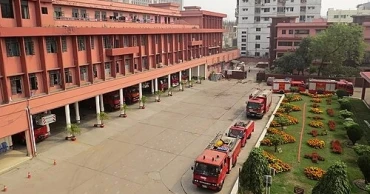
All 538 fire stations prepared for emergencies during Durga Puja: FSCD DG
Fire Service and Civil Defence (FSCD) has taken comprehensive measures to ensure fire safety at Durga Puja venues across the country, with all 538 fire stations ready to respond to emergencies during the festival.
Director General of Fire Service and Civil Defence Brigadier General Sultanul Afreen Junaid disclosed the preparations at a press conference held at the department’s headquarters in Dhaka on Saturday.
He said fire stations would remain on standby throughout the festival, monitoring fire safety at puja mandaps in their respective areas and maintaining round-the-clock communication with local administrations and puja committees.
During inspections, fire service personnel will assess fire risks and advise organisers on measures to address them.
They will also publicise the telephone numbers of nearby fire stations and the 102 hotline for emergency assistance, he added.
Temporary fire stations operating in different locations will remain on high alert, while officials at divisional, district and zonal levels will stay on standby to inspect puja venues and respond to emergencies.
The director general also said the central control room and all divisional control rooms would operate round the clock. Upon receiving an emergency call, they would direct one or more nearby fire stations to respond immediately.
All divisional and district offices, along with fire stations, will coordinate continuously with local administrations and take necessary decisions and implement measures in line with their directions, he said.
At immersion sites, the department will deploy personnel and volunteers, road rescue equipment and ambulances. Lighting units will also be deployed at night where necessary.
Control rooms will be maintained at the department’s headquarters and divisional and district headquarters to ensure continuous communication with fire stations under their respective jurisdictions.
Calling for greater public awareness, Sultanul Afreen said, “Awareness is protection,” and sought the media’s cooperation in raising awareness about fire safety alongside the department’s own efforts.
11 days ago
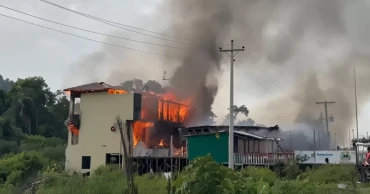
Cox’s Bazar’s Tuptup Resort was warned of fire risk in June: FSCD DG
Tuptup Resto & Resort, a wooden resort near Inani beach in Ukhiya upazila of Cox’s Bazar where a major fire left at least 10 people dead, did not have a fire service licence.
The resort was inspected in June and warned that it is risky, with a notice also issued, but its operation continued, said Director General of Fire Service and Civil Defence (FSCD) Brigadier General Sultanul Afreen Zunaid.
He came up with the comment while responding to questions from reporters at a press briefing on fire safety during Durga Puja at the Fire Service headquarters on Saturday noon.
He said the three-storey resort had a restaurant on the ground floor where food was prepared, while the second and third floors were used for tourist accommodation.
Asked about the failure to renew the licence and the continuation of operation despite warnings, he said the resort had not been operating in accordance with the rules.
The Fire Service received information about the fire at around 7:30am on Saturday.
The nearest fire station was 22 kilometres from the site and firefighters rushed to the scene and worked to bring the blaze under control, he said.
Asked about the cause of the fire, the director general said a thorough investigation is needed to know what happened.
Responding to another questions about the safety and approval status of resorts built with wood and other flammable materials in Cox’s Bazar and other tourist destinations across the country, he said many have not obtained the necessary permissions.
The Fire Service would take steps to issue notices to the relevant establishments after discussions with the parties concerned, he said.
He also stressed the need to convey fire safety messages through the Cox’s Bazar Development Authority and relevant associations.
Warning that the risk of such accidents could increase during the coming dry season, he urged all concerned to remain alert.
Asked what action could be taken against risky establishments that continue operating despite notices, the director general said the Fire Service would review its responsibilities and explore ways to ensure safety despite limitations in existing laws and monitoring.
On frequent fires in Old Dhaka, including risks posed by unauthorised factories, warehouses and explosive materials, he identified narrow roads and insufficient space between buildings in densely populated areas as major challenges.
These condition makes it difficult for firefighting vehicles and equipment to reach incident sites quickly.
He said compliance with relevant regulations and building codes is essential during construction.
However, introducing all necessary safety measures simultaneously in older settlements and structures is practically difficult and would require time.
Authorities are repeatedly raising awareness among those involved in constructing new buildings and establishing businesses to ensure compliance with the rules.
The director general also outlined plans to improve the Fire Service’s operational capacity in densely populated areas.
These include considering specialised three-wheeled vehicles to reach locations with narrow roads more quickly, he said.
It is also considering whether firefighters could carry hosepipes on motorcycles and connect them to water reservoirs in nearby buildings to help extinguish fires, he added.
11 days ago

bKash wins ‘Fintech Innovation of the Year’ at Bangladesh Fintech Award
In recognition of its contribution to digital financial inclusion through innovative technology and solutions, bKash has won awards at the “Bangladesh Fintech Award” for the fourth consecutive time. In the 4th edition of the award, the country's largest mobile financial service provider emerged as the winner of the prestigious ‘Fintech Innovation of the Year’ in the ‘MFS/DFS’ category, while also earning ‘Honourable Mention’ in both the ‘Payment’ and ‘Digital Lending’ categories.
Recently, Bangladesh Fintech Forum honoured organisations demonstrating innovation, impact, and leadership in the financial technology sector. Azmal Huda, Chief Product and Technology Officer of bKash, received the awards on behalf of the company, alongside senior officials of the organisation.
bKash’s holistic financial inclusion initiative, ‘The bKash Impact’, won the ‘Fintech Innovation of the Year’ accolade in the MFS/DFS category for bringing low-income and unbanked populations under the umbrella of formal financial services--including savings, loans, payments, remittances. Additionally, it has received two Honourable Mentions: ‘bKash NFC’ in the Payment category for enabling seamless contactless payments, and ‘bKash Merchant Loan’ in Digital Lending for expanding collateral-free credit to small and micro-entrepreneurs.
This year’s event honoured 13 winners and 8 Honourable Mentions across various categories.
11 days ago

PM makes surprise visits to 13 Dhaka locations; gives deadlines to improve cleanliness
Prime Minister Tarique Rahman on Saturday made surprise visits to 13 locations across Dhaka, including hospitals, educational institutions and government residential quarters to assess the quality of public services, cleanliness and overall management.
Starting at 9:10am, the prime minister visited different areas of Dhaka until 1:41pm, speaking to officials and examining cleanliness, service quality and overall management at various facilities, said his Deputy Press Secretary Hasan Shiplu.
He first visited Kuwait-Bangladesh Friendship Government Hospital in Uttara, followed by Rajuk Uttara Model College and Mirpur Cantonment Public School and College.
He then visited the National Heart Foundation of Bangladesh at Mirpur, Paikpara Staff Quarters and Government Bangla College.
The prime minister later inspected Bangladesh Shishu Hospital and Institute and Shaheed Suhrawardy Medical College and Hospital at Agargaon.
He also visited his old college Dhaka Residential Model College, where he addressed students and urged them to help build a clean Bangladesh and plant more trees.
Tarique subsequently visited Dhanmondi Government Boys' High School, Kalabagan Staff Quarters and Azimpur Government Officers' and Employees' Residential Quarters.
Expressing dissatisfaction with poor cleanliness and management at several locations, the prime minister gave the authorities concerned two weeks to improve cleanliness at the Azimpur government quarters.
Earlier, during his visit to Kuwait-Bangladesh Friendship Government Hospital, he gave the authorities seven days to improve the hospital's environment and cleanliness arrangements.
During his visit to Bangladesh Shishu Hospital and Institute, Tarique found Associate Professor Dr Rafiqul Islam smoking in his untidy room.
He immediately instructed the hospital chairman to take action against the doctor, who was subsequently suspended him.
The prime minister also visited a footpath freed from hawkers at Mirpur-10.
Dhaka North City Corporation Administrator Shafiqul Islam Khan Milton was present during the visit.
Throughout the surprise inspections, Tarique spoke to officials, students and members of the public, stressing the need for responsible action by the authorities concerned to improve public services, maintain cleanliness and protect public health.
11 days ago

PM orders cleanup of Azimpur government quarters within two weeks
Prime Minister Tarique Rahman on Saturday expressed strong dissatisfaction over the unhygienic environment at the Azimpur Government Officers’ and Employees’ Residential Quarters in the capital and gave the authorities two weeks to improve cleanliness and ensure a liveable environment.
He issued the directive during a surprise visit to the residential area, said PM’s Deputy Press Secretary Hasan Shiplu.
During the visit, the prime minister inspected the residential area, walkways and overall surroundings.
He questioned the authorities about the lack of cleanliness and expressed dissatisfaction with the maintenance and cleaning arrangements.
Tarique instructed the authorities concerned to ensure visible improvements in the overall cleanliness of the quarters within two weeks.
Residents of the quarters raised various complaints with the prime minister about the unhygienic environment and the law and order situation in the area.
They sought effective measures to improve the environment and ensure security.
The prime minister listened to their complaints and asked the authorities concerned to take necessary steps to resolve the problems.
During the visit, Tarique also exchanged greetings with children living in the quarters.
State Minister for Local Government, Rural Development and Cooperatives Mir Shahe Alam and Dhaka South City Corporation Administrator Abdus Salam were present.
11 days ago
PM visits college where he studied, urges students to help build country
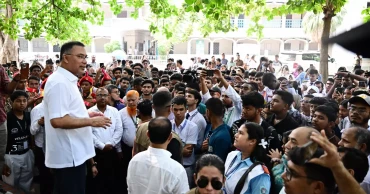
Prime Minister Tarique Rahman on Saturday visited Dhaka Residential Model College in the capital where he studied and urged students to play an active role in building the country by keeping it clean and green.
During the visit to the college at Mohammadpur where he studied, the prime minister spoke to students, calling on them to take responsibility for keeping their homes, educational institutions and surroundings clean and raising awareness among others.
Tarique said everyone, particularly the younger generation, must work together to make the country clean and liveable, as the government alone could not achieve this goal.
Referring to the 2024 mass uprising, the prime minister asked the students whether it has been achieved by any single political party.
“You made the 2024 movement successful through the mass uprising. Was it done by a single party? Everyone worked together, didn’t they?” he said.
Tarique said the collective efforts of young people have already proved that they could bring about major changes.
However, he said, their responsibility did not end with taking part in a movement as they must also contribute to rebuilding the country and creating a better Bangladesh.
Expressing concern over air pollution in Dhaka, Tarique said the capital’s air is becoming increasingly polluted, exposing people, particularly children, to various health risks.
He stressed the need to plant more trees to help address the situation.
The prime minister said the government has already taken initiatives to make the country clean and green, but those efforts could not fully succeed without the active participation of young people.
Tarique urged students to take responsibility for keeping the country clean and planting more trees.
“You are the future of this country. I have two requests to you: keep the country clean and plant more trees. This is your country, and its responsibility also rests with you,” he said.
11 days ago
Efforts to build a clean Bangladesh must start now, PM tells students
Prime Minister Tarique Rahman on Saturday urged young people to take the lead in preventing dengue, protecting the environment and keeping the country clean and green, saying efforts to build a clean and healthier Bangladesh for future generations must begin now.
“You will run this country in the future. So, we must start working now to build a beautiful, clean and healthy Bangladesh for the next generation,” he said.
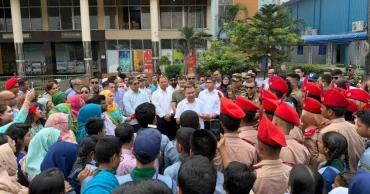
The prime minister made the call while addressing members of the Bangladesh National Cadet Corps (BNCC) and Scouts during a visit to Mirpur Bangla College in the capital.
Tarique said Bangladesh is a densely populated country, particularly in Dhaka, where keeping the city clean is a major challenge.
However, the prime minister said, it is possible through collective efforts.
He said young people should not limit their cleanliness activities to organised programmes but also take initiatives on their own and encourage their friends, relatives and neighbours to keep their surroundings clean.
Highlighting the close link between cleanliness and public health, the prime minister said people are more likely to remain healthy when their homes and surroundings are clean, while an unhygienic environment increased the risk of various diseases.
“If so many people fall ill, it will be difficult to arrange enough doctors and medicines to treat everyone. So, our first task is to keep people healthy. And to keep people healthy, we must keep the environment clean,” he said.
Stressing the importance of cleanliness in preventing dengue, Tarique said many people are infected with the disease every year and some die from it.
“Destroying mosquito breeding grounds and keeping homes and their surroundings clean are among the most effective ways to prevent dengue,” he said.
The prime minister said the government is placing special emphasis on conducting cleanliness drives every Saturday until November as part of its dengue prevention efforts.
He urged people to keep the areas around their homes, schools, colleges, workplaces and other institutions clean, particularly by ensuring that water did not accumulate anywhere.
Tarique also called for an end to the practice of dumping waste on roads, in canals, rivers and other water bodies, saying accumulated rubbish pollute the environment and created favourable conditions for the spread of germs and mosquito breeding.
Urging BNCC and Scouts members to raise public awareness, he said they should try to explain the importance of cleanliness to anyone found throwing rubbish on the street and help them dispose of it in designated places if necessary.
“Remember, you are working not just for yourselves but for the benefit of everyone,” the prime minister said.
Expressing concern over Dhaka’s air pollution, Tarique said the capital often ranked among the world’s most polluted cities, which he described as embarrassing.
He said protecting the environment required planting more trees as well as other measures.
Recalling his past tree-planting initiatives, the prime minister said around 80,000 neem saplings have been planted in Dhaka alone in 2004-05 through an organisation established in his father’s name.
Addressing the students, he said they should surpass his efforts by planting even more trees. “Now you have to go beyond me. You will plant more trees. InshaAllah, you can do it.”
The prime minister also recalled the history of neem trees on Saudi Arabia’s Arafat plain.
He said the area had once been almost treeless before then-President Ziaur Rahman sent neem saplings there.
Neem was selected on the advice of Bangladeshi scientists because it was suitable for Saudi Arabia’s climate, he said, adding that the trees later spread across the area and became known as “Zia trees”.
Citing Japan as an example of cleanliness, Tarique said its streets have very little rubbish, partly because people have developed the habit of not littering, rather than relying solely on cleaning services.
He stressed the need to keep rivers, canals and other water bodies clean and prevent water and environmental pollution. “People should stop throwing plastic bottles, polythene bags, food packets and other waste indiscriminately.”
The prime minister said collective efforts by BNCC and Scouts members and other citizens could help build a better Bangladesh.
“The future belongs to you. You will run this country,” he said.
Tarique visited Mirpur Bangla College as part of his surprise visits to hospitals and educational institutions to assess the dengue situation and cleanliness activities.
11 days ago
New cicada species identified in Bangladesh
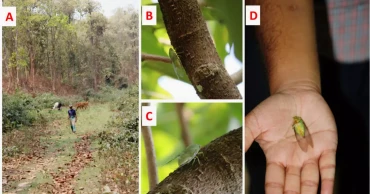
Researchers from Bangladesh, China and India have identified Dundubia annandalei, a species of cicada, in Bangladesh for the first time, adding a new species to the country’s recorded cicada diversity.
The identification was confirmed through field surveys, morphological analysis and an assessment of environmental data, according to the researchers.
The study was jointly conducted by Professor Dr Mohammad Abul Manjur Khan of the Department of Entomology at Bangladesh Agricultural University (BAU) and Kong Wei, a researcher at Northwest A&F University in China.
Indian researcher Babu Saddam and BAU postgraduate student Shahmot Jawad were directly involved in collecting field data and specimens and identifying the insect.
The research paper has been published in the international scientific journal Insects.
The research team told UNB that they collected 63 specimens during field surveys conducted in different parts of Bangladesh between February and March 2025. The specimens are preserved at the Entomology Department Museum at BAU.
One female cicada was collected from beneath a streetlight on the university campus.
The species was found in orchards of mango, litchi, dragon fruit, guava, pineapple, banana, jackfruit, lemon and orange.
Adult cicadas and their discarded exoskeletons were also identified on trees and in vegetation, including sal, bamboo, teak and jarul.
Morphological analysis showed that Dundubia annandalei is generally grass-green in colour when alive but turns brown when dried.
Although it resembles Dundubia terpsichore in appearance, a distinctive structural feature of the male insect is one of the key characteristics used to distinguish the species.
Before this discovery, only one species of the genus Dundubia — Dundubia ensifera — were documented in Bangladesh.
The researchers also used the MaxEnt species distribution modelling approach to assess the cicada’s current and potential future habitat suitability, Professor Manjur Khan said.
The model incorporated species occurrence records alongside environmental variables, including rainfall, temperature and elevation, to identify areas that could provide suitable habitats.
The findings showed that rainfall was the most influential factor in determining the species’ distribution. Variations in rainfall during warmer periods could particularly affect the availability of suitable habitats, while elevation and temperature were also important factors.
According to the researchers’ estimates, about 861,000 square kilometres within the study area are currently suitable for the species. Of this area, around 300,000 square kilometres were classified as highly suitable and 179,000 square kilometres as moderately suitable.
Climate change projections indicated that suitable habitat could expand to approximately 1.752 million square kilometres by 2060 and 1.94 million square kilometres by the end of the century under a relatively lower global warming scenario.
Under a higher-warming scenario, suitable habitat could temporarily contract around the middle of the century before expanding substantially, potentially reaching approximately 2.63 million square kilometres by 2100.
However, the researchers cautioned that these figures represent model-based projections of environmental suitability, not confirmed future distribution or evidence of increased agricultural damage.
Cicadas feed primarily on xylem sap — the fluid that transports water and minerals through plants during their immature stages. Although some cicada species can damage trees and crops, the study did not determine the extent to which the newly identified species affects agriculture in Bangladesh.
Professor Manjur Khan told UNB that cicadas are present in fruit orchards across the country.
Their loud breeding calls can often be heard around mango trees during the summer, particularly as mangoes mature, providing an indication of their presence in orchards.
He said commercial fruit cultivation was expanding in the country’s hilly regions, some of which the MaxEnt model identified as potentially suitable for the species.
However, insufficient research has been conducted to establish how the cicada affects commercial fruit orchards in those areas, particularly in terms of crop production and normal tree growth.
Identifying a new species is not enough; its distribution, life cycle, feeding habits and potential economic impact on agriculture must also be investigated, he said.
If the species is found to cause significant economic damage, effective management strategies will need to be developed.
Professor Manjur Khan stressed the need for long-term field research to assess potential agricultural risks.
He said cooperation from public and private institutions and funding agencies would be necessary to determine the species’ presence, the extent of any damage and appropriate management measures in commercial fruit orchards in hilly areas.
The researchers said sustained research support and systematic monitoring would help establish reliable evidence of the species’ ecological distribution and actual agricultural impact.
Such findings would enable authorities and researchers to take timely and effective preventive measures if future studies identify a risk of economic damage.
11 days ago

Around 31 million more at risk of poverty in Bangladesh: PPRC study
Poverty has risen to 27.93 per cent in Bangladesh, while about 31 million people in the "fragile middle" remain one shock away from falling below the line, according to a new study by the Power and Participation Research Centre (PPRC).
The findings were presented Saturday at the launch of the book "State of the Real Economy: Dynamics of Reversals and Resilience in Bangladesh" at the CIRDAP Auditorium in the city.
The launch coincided with the International Day for the Eradication of Poverty.
PPRC Executive Chairman Hossain Zillur Rahman and Senior Research Associate Namira Shameem, who edited the book, presented the key findings.
The book draws on the PPRC State of the Real Economy (SORE) survey, a nationally representative survey of 8,067 households across all eight divisions, conducted in May 2025.
According to the study, 27.93 per cent of people were below the upper poverty line in 2025, up from 18.7 per cent in the 2022 Household Income and Expenditure Survey (HIES).
The lower poverty line figure rose to 9.35 per cent from 5.6 per cent.
The expenditure Gini coefficient rose from 0.334 to 0.436, with urban inequality (0.532) far higher than rural (0.347).
The study found that 17.97 per cent of households are "vulnerable non-poor", above the poverty line but below median expenditure.
This is about 31 million people. More than half of these households have a chronically ill member, and only 27.5 per cent receive any safety-net support.
Average monthly household income of Tk 32,685 is almost equal to expenditure of Tk 32,615, leaving a surplus of just Tk 70.
The bottom 40 per cent spend more than they earn and food accounts for 54.9 per cent of household spending.
The presentation said the problem is less a lack of work than a lack of adequate work.
About 37.7 per cent of working adults worked fewer than 40 hours a week, including 65.5 per cent of employed women.
Besides, medical expenses triggered 67.4 per cent of financial crises as some 79.31 per cent of health spending is paid out of pocket.
Household debt exceeds savings by 44.6 per cent on average, and by 218 per cent in the poorest decile. Some 48.9 per cent of households reported “harassment and informal payments” in health services.
The presentation described a "politico-governance trap" that took hold between 2014 and 2024 and, it said, largely remains in place.
It cited a non-performing loan ratio of 33.2 per cent in June 2026, tax-to-GDP below 7 per cent in FY25 and net FDI of about 0.3 per cent of GDP in FY26.
Citing the IMF, World Bank and ADB, it noted FY27 growth projections of 3.2, 3.4 and 4.0 per cent respectively.
The study called for a "transition compact" with five pillars: economic democracy, new growth drivers, quality education, productive transformation and governance for speed.
Its sequenced action plan includes real-time household monitoring, a national skills intelligence system, a resilience floor for the vulnerable non-poor and safety-net targeting based on vulnerability rather than static poverty.
11 days ago