Others
JS body reviews central bank’s monetary policy, eyes shift to inflation-targeting regime
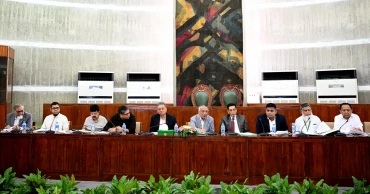
The Parliamentary Standing Committee on the Finance Ministry on Sunday held its first to review Bangladesh Bank’s monetary policy framework and discussed the future direction of monetary policy including a gradual transition from the existing interest rate-targeting framework to an inflation-targeting regime.
The meeting chaired by Committee Chairman Mushfiqur Rahman was held at the Jatiya Sangsad Bhaban.
At the meeting, Bangladesh Bank delivered a detailed presentation on its monetary policy, outlining the existing policy framework, its implementation and future priorities.
Following the presentation, the committee members held extensive discussions on the issues raised and exchanged views on the country’s monetary policy and financial sector.
According to the presentation, an appropriate monetary policy framework is indispensable for achieving the government’s vision of transforming Bangladesh into a trillion-dollar economy.
To support that goal, Bangladesh Bank highlighted the need for a gradual transition from the current interest rate-targeting monetary policy framework to an inflation-targeting framework.
The central bank noted that a number of emerging economies have successfully stabilised inflation in recent years by adopting inflation-targeting monetary policy frameworks.
Bangladesh could also move in that direction through the gradual adoption of a similar framework, it said.
As part of the proposed transition, the presentation suggested that the Bangladesh Bank Order, 1972 could be amended to make it more contemporary and better suited to the requirements of an inflation-targeting monetary policy regime.
The committee members discussed the presentation in detail and sought clarifications on various aspects of the proposed policy direction and the implementation of monetary policy.
They also exchanged views on issues relating to macroeconomic stability, inflation management and the role of the central bank in supporting sustainable economic growth.
Finance Minister Amir Khosru Mahmud Chowdhury attended the meeting as a member of the committee.
Chief Whip Md Nurul Islam, State Minister for Local Government, Rural Development and Cooperatives Mir Shahe Alam , and committee members Md Jalal Uddin, Moinul Islam Khan, Md Shahadat Hossain, Md Saiful Alam, Syed Zainul Abedin, and Md Abul Hasnat, also participated.
The meeting was also attended by the Secretary of the Financial Institutions Division, the Secretary of the Internal Resources Division, the Acting Chairman of the National Board of Revenue (NBR), senior officials of the Finance Ministry and its divisions, and officials of the Jatiya Sangsad Secretariat.
No formal recommendations or decisions were announced after the meeting.
8 days ago
Gas crisis deepens as LNG terminal outage disrupts supply, cripples household cooking
The ongoing gas crisis, triggered by a fire at a floating storage and regasification unit (FSRU) in Cox’s Bazar, is unlikely to ease anytime soon, leaving millions of households in Dhaka and surrounding areas struggling to cook.
The accident has reduced the country's total gas supply to below 2,150 million cubic feet per day (mmcfd), down from an average of around 2,700 mmcfd that had been maintained over the past year, despite the national daily demand standing at nearly 3,800 mmcfd.
The fire at the FSRU operated by Excelerate Energy at Moheshkhali on July 21 damaged one of its two boilers, forcing it to suspend operations, further plummeting the gas supply.
International expert teams from the UK and the United Arab Emirates have been working at the terminal since Thursday to repair the technical damage.
Tariqul Islam Khan, public relations officer of Bangladesh Oil, Gas and Mineral Corporation (Petrobangla), indicated that while efforts are underway, it will take more time before the facility can resume operation.
The severe supply shortfall has hit domestic kitchens the hardest, with gas pressure dropping to near zero or flickering feebly in many parts of the capital.
Residents in areas such as Mohammadpur, Kalabagan, Kafrul, Kazipara, West Tejturi Bazar, Mirpur, Rampura and Badda reported that stoves have remained unlit or unusable for days.
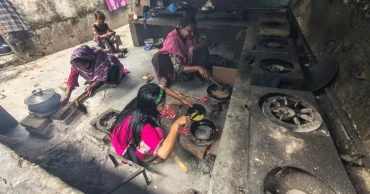
Stripped of regular gas supply, many low-income families have been forced to build temporary clay stoves and cook with firewood. Others who can afford it are turning to costly electric cookers or LPG cylinders, significantly increasing their daily household expenses.
Frustrated residents in several neighbourhoods, including Mohammadpur, have staged demonstrations and vented their anger on social media platforms over the persistent cooking crisis.
Beyond domestic kitchens, the shortage has severely impacted other sectors.
According to Petrobangla, gas-fired electricity generation has fallen by approximately 1,500 megawatts, raising concerns over widespread power cuts.
Long queues of vehicles have formed at CNG filling stations across the city, while industrial production has slowed down due to low gas pressure.
Petrobangla issued a statement apologising to consumers for the unexpected disruption and assured that technical teams are working continuously to restore the terminal.
Meanwhile, Titas Gas Transmission and Distribution PLC warned that low gas pressure will persist across Dhaka and adjacent districts until the situation improves.
8 days ago
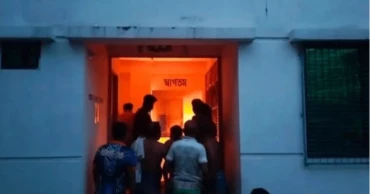
Six injured in Savar chemical warehouse fire
Six people, including four firefighters, suffered injuries after a massive fire broke out at a chemical warehouse in the Padma intersection area of Hemayetpur in Savar early Sunday.
The blaze erupted shortly after 1:00am at the warehouse in a six-storey building in the Shahidullah Housing area, said Monwar Hossain, team leader of Savar Fire Service and Civil Defence.
Locals noticed smoke billowing from the building and informed the local fire service.
Two firefighting units rushed to the spot and brought the fire under control around 7:00am after hectic efforts of nearly six hours.
However, the presence of highly flammable chemicals inside the warehouse triggered multiple explosions during the operation, leaving four firefighters, including Monwar, injured.
Two other people were also injured in the incident, Monwar said.
The other injured firefighters were identified as Md Shamim, Md Uzzal, and Md Omar Faruk, while the other victims were Mashiur Rahman and Jony.
Mashiur, who sustained serious injuries, was admitted to local Enam Medical College Hospital. Doctors said he is now out of danger.
Monwar said the fire might have originated from an electric meter.
8 days ago
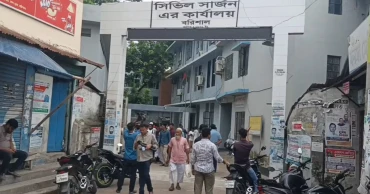
Students lock office, demand removal of newly appointed Barishal Civil Surgeon
Students from several educational institutions on Sunday staged a sit-in in front of the Barishal Civil Surgeon's Office and locked it later, demanding the cancellation of the appointment of newly appointed chief health officer of the district – Dr Md Moniruzzaman.
The protesters gathered around 10:00am, alleging that Dr Moniruzzaman, a former leader of the Swadhinata Chikitsak Parishad and an officer they described as a beneficiary of the previous fascist regime, should not have been appointed to the key public health post.
They also alleged that while serving as the Upazila Health and Family Planning Officer at Gournadi Upazila Health Complex, he had faced various allegations, including abuse of authority and administrative irregularities.
After staging the sit-in, the students went to the Civil Surgeon's office and found that Dr Moniruzzaman did not join his new workplace. They then symbolically locked the door of the office room designated for him.
Sabbir Hossain, a student of BM College who joined the protest, said appointing an official facing multiple allegations to head the health department of an important district like Barishal is unacceptable.
"We want a competent, honest and controversy-free officer to be appointed as the Civil Surgeon," he said.
Another student, Labanya Akter, said the people of Barishal deserve quality healthcare services and called for the appointment of a new Civil Surgeon in the public interest.
Student Nayeem Islam alleged that Dr Moniruzzaman had oppressed students during the previous government and said they do not want a "repressive and corrupt official" to serve in Barishal.
The protesters reiterated their demand for the immediate withdrawal of Dr Moniruzzaman, warning that tougher protest programmes will be launched if their demand is not met.
The Ministry of Health and Family Welfare on July 21 appointed Dr Moniruzzaman, who had been serving as an officer on special duty (OSD) attached to the Directorate General of Health Services after previously working at Gournadi Upazila Health Complex, as the Civil Surgeon of Barishal.
8 days ago
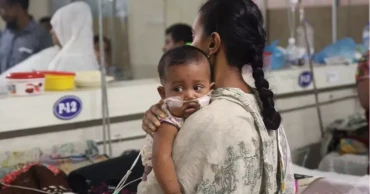
4 more suspected measles deaths reported in Bangladesh; toll rises to 820
Four more children died with symptoms consistent with measles in 24 hours until 8:00am on Sunday, raising Bangladesh’s combined tally of confirmed and suspected measles-related deaths to 820.
The Directorate General of Health Services (DGHS) has classified the latest deaths as suspected measles fatalities.
With the latest update, the number of suspected measles deaths has risen to 725 while the number of laboratory-confirmed measles deaths remained unchanged at 95.
A total of 990 new suspected measles cases were reported during the period, bringing the cumulative number of suspected cases nationwide to 123,753.
Meanwhile, 170 new confirmed measles cases were recorded, bringing the total number of laboratory-confirmed infections to 15,442.
Since March 15, a total of 106,239 patients with suspected measles have been hospitalised across the country, of whom 102,467 have recovered, according to DGHS data.
8 days ago
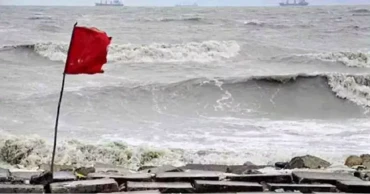
Maritime ports asked to keep local cautionary signal No 3
Maritime ports of Chattogram, Cox's Bazar, Mongla and Payra have been advised to keep hoisted local cautionary signal No 3 as the well-marked low over Northwest Bay & adjoining Odisha-West Bengal coasts intensified into a monsoon depression.
It is now lies over the same area at noon on Sunday about 425 km West-Southwest of Chattogram, 415 km West of Cox's Bazar, 245 km WestSouthwest of Mongla and 265 km West Southwest of Payra, said a special bulletin of Met office.
It is likely to move northwestwards and intensify further.
Under its influence, squally weather may affect the Maritime Ports, North Bay and adjoining Coastal areas of Bangladesh.
Maximum sustained wind speed within 44 km of the depression centre is about 40 kph rising to 50 kph in gusts or squalls.
Sea will remain moderate near the depression centre.
All fishing boats and trawlers over North Bay have been advised to take shelter immediately and remain in shelter till further notice.
8 days ago

Bangladeshi artist Sayma wins gold prize at 25th World Beauty Art & Design International Contest
Bangladeshi artist Sayma Sadia won the gold prize at the 25th World Beauty Art & Design International Contest held in Seoul, South Korea.
Organised by the World Beauty Art Association, the prestigious annual competition brings together talented beauty artists, educators, and professionals from around the world to showcase excellence in makeup, beauty, and artistic design, said a press release.
According to the officials, Sayma Sadia received the prize in the Makeup – General Category in recognition her outstanding artistic skill, creativity, and technical excellence.
Sayma is currently pursuing a Bachelor's degree in Beauty Design at Woosong University, South Korea.
8 days ago
100-bed accommodation facility at Hajj Camp announced for expatriates
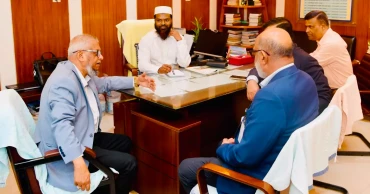
Expatriates’ Welfare and Overseas Employment Minister Ariful Haque Choudhury on Sunday announced the introduction of a 100-bed separate accommodation facility at the capital’s Ashkona Hajj Camp for overseas-bound workers who may need temporary shelter and overnight stay.
He made the announcement while visiting the Hajj Camp in the morning.
The initiative is being implemented by the Ministry of Expatriates’ Welfare and Overseas Employment following directives from Prime Minister Tarique Rahman and a proposal from the Religious Affairs Ministry, according to a press release.
The minister said the Wage Earners’ Centre, currently operated by his ministry, has accommodation facilities for 49 people.
“However, to reduce the suffering of expatriates during emergencies or sudden flight cancellations, another 100 beds will be arranged at the Hajj Camp, which is close to Hazrat Shahjalal International Airport,” he said.
Of the new facilities, 50 beds will be allocated for men and another 50 for women, Ariful added.
The overall cost of the initiative will be borne by the Wage Earners’ Welfare Board.
Highlighting the government’s expatriate-friendly policies, the minister said the government is committed to increasing facilities and services for migrant workers.
“Flights are often delayed or cancelled due to wars, adverse weather conditions and various other reasons. At such times, expatriates face accommodation problems at airports. This arrangement at the Hajj Camp will significantly reduce their hardship,” he said.
Expatriates’ Welfare and Overseas Employment Secretary Md Mokhtar Ahmed, Religious Affairs Secretary Munshi Alauddin Al Azad and senior officials of the Hajj Camp were present.
8 days ago
Govt sees no grounds to arrest former president Shahabuddin: Home Minister
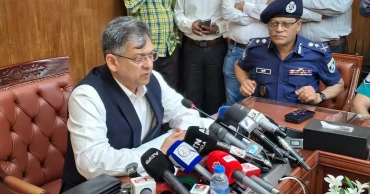
Home Minister Salahuddin Ahmed on Sunday said currently the government sees no grounds to take legal action against former President Mohammed Shahabuddin and he would receive all legal privileges and security as entitled under the law.
“There is nothing that we see as grounds for arresting the former president. He will get all the facilities he is entitled to under the law. He will also receive security,” the minister told reporters after a programme at the Secretariat where awards and honours were distributed among police members for bravery and commendable services.
“He will receive security from SSF and PGR for six months. Besides, police and other agencies will also ensure his security according to the law,” he added.
Responding to a question about ongoing demands by different quarters seeking the Shahabuddin’s arrest, the minister said people have the right to express their views and stage protests.
“However we have not found any statement there that requires our consideration,” he said.
The home minister said Shahabuddin performed his duties as president in accordance with the Constitution during his tenure.
“He carried out constitutional responsibilities during the final period of the authoritarian government, the interim government and the current government. We received his cooperation,” he said.
Referring to the constitutional immunity enjoyed by the president while in office, Salahuddin said Shahabuddin had such protection during his tenure as per the Constitution.
“If anyone has any allegations regarding any period outside his official responsibilities, those will be dealt with according to the law,” he said.
On a reported audio clip of an alleged phone conversation involving the former president, the minister said, “We have seen it in newspapers. We do not have any such information.”
“In today’s internet era, the idea that someone would have to go to London to talk to someone seems unrealistic to me,” he added.
On allegations of smuggling along the Sylhet border under political patronage, Salahuddin said he had no such information.
“If we receive any complaint, we will certainly investigate it,” he said.
Responding to a question on whether the recovery of an IED-like device near Motijheel metro station on the day of the Hindu community’s Ulta Rath Yatra had any motive, the minister said the government is not viewing the matter from that perspective.
He said law enforcement agencies and intelligence organisations worked together to ensure the peaceful completion of the Rath Yatra and Ulta Rath Yatra.
“The device was found coincidentally that day. I do not think it has any connection with the religious event,” he said.
The minister said the device was detected due to the alertness of Ansar members. Later, police cordoned off the area and a bomb disposal unit neutralised it.
He added that the Ansar members who identified the device would also be rewarded.
At the programme, police members were given financial rewards and certificates for arresting robbery suspects and recovering stolen goods as well as for recovering a lost bag of an expatriate and ensuring it reached the airport in time.
Salahuddin said such recognition would remain a lifelong achievement for the officers.
“They realise that the state honours them for public service. It will increase respect for their families and their standing in society, encouraging them to do more,” he said.
Asked why police medals were not awarded during this year’s Police Week, the minister said some irregularities were found while reviewing the list prepared in haste.
“After verification, some errors were detected and in one or two cases, irregularities were also found. The medals will be awarded after proper scrutiny and refinement of the list,” he said.
8 days ago
Preliminary registration for Hajj 2027 begins Monday
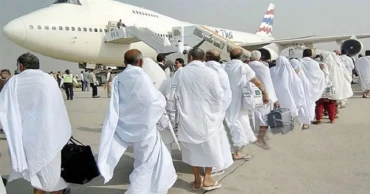
Preliminary registration for Hajj 2027 will begin on Monday and continue until September 24, with intending pilgrims required to complete the process within the stipulated period.
The schedule has been announced in line with the Hajj roadmap issued by Saudi Arabia's Ministry of Hajj and Umrah, the Ministry of Religious Affairs said on Sunday.
Prospective pilgrims will be able to complete primary registration through either the government or private management system by depositing Tk 3.5 lakh, it said.
Those who complete primary registration must pay the remaining amount of their selected Hajj package and complete final registration by December 10 this year.
Before primary registration, applicants must complete a pre-registration by depositing Tk 30,000, the ministry said.
Under the government arrangement, intending pilgrims can register online by creating an account on the e-Hajj system (hajj.gov.bd).
Registration will also be available through Union Digital Centres, divisional and district offices as well as its Baitul Mukarram office, district and upazila model mosques and the Dhaka Hajj Office.
Pilgrims registering under the government scheme must deposit the required amount at any branch of Sonali Bank using a voucher. Those registering through private Hajj agencies must deposit the money into the agency's designated bank account, the details of which will be available on the Hajj portal.
The ministry also announced several eligibility conditions for Hajj pilgrims.
Children below the age of 15 years will not be allowed to perform Hajj.
People suffering from serious chronic illnesses, including heart, lung, liver or kidney diseases, neurological or mental disorders, dementia, or cancer patients undergoing chemotherapy, biological therapy or radiotherapy, will also be ineligible.
Individuals with active infectious diseases that pose a public health risk, including tuberculosis and haemorrhagic fever, will likewise be barred from performing Hajj.
Women in the final two months of pregnancy or those with high-risk pregnancies will not be issued the required fitness certificate for Hajj.
During primary registration, pilgrims will be required to select their district for Hajj training and vaccination, the type of Hajj and their preferred Hajj package.
Applicants must also possess a passport valid until at least December 31, 2027, the ministry said.
Earlier, on July 21, the government announced two Hajj packages for 2027, setting the cost of maximum Hajj package at Tk 6,15,263 and minimum package at Tk 5,05,648.
8 days ago