Others
Two Sri Lankan fishermen rescued in Maheshkhali after drifting at sea for 36 days
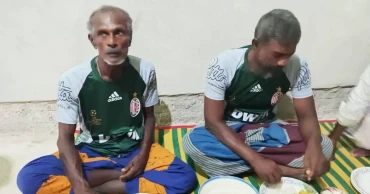
Two Sri Lankan fishermen, a father and his son, who had been drifting in the Bay of Bengal for 36 days after their boat suffered an engine failure, were rescued and handed over to Maheshkhali Police on Saturday.
According to the rescued fishermen, their ‘Danish boat’ lost engine power while they were fishing in rough weather. The boat continued drifting and eventually entered Bangladesh’s maritime territory.
They claimed that while they were stranded at sea, they were attacked by pirates, who took away all their belongings and supplies from the boat.
Local sources said fishermen from a fishing boat owned by Ziaur Rahman of South Para village under Kutubjom union in Maheshkhali spotted the stranded Danish boat carrying the two foreign fishermen in the area known as Gulirdhar while returning after fishing in the sea.
The fishermen rescued the father and son and brought the disabled boat to Tajiyakatha Ghat after tying it to their own fishing boat.
Following the rescue, the two Sri Lankan fishermen took shelter at the house of boat owner Ziaur Rahman.
Witnesses said the rescued Danish boat had no belongings inside and there were clear signs that the items kept on the boat had been looted.
Maheshkhali Police Station Officer-in-Charge (OC) Abdus Sultan confirmed the matter, saying the two foreign fishermen are now in police custody.
He said necessary steps are being taken to verify their identities and complete the required legal and diplomatic procedures.
9 days ago

Fire at garbage dump near Dhaka Airport under control
A fire that broke out at a garbage dump near Gate No. 8 of Hazrat Shahjalal International Airport in the capital on Saturday night has been brought under control.
Warehouses Inspector Anwarul Islam of the Fire Service and Civil Defence (FSCD) headquarters media cell said the fire was reported at around 9:20pm.
He said two units of the Airport Fire Service reached the spot within three minutes of receiving the information and started efforts to douse the blaze.
The fire is now under control, he said, adding that no casualties were reported in the incident.
9 days ago
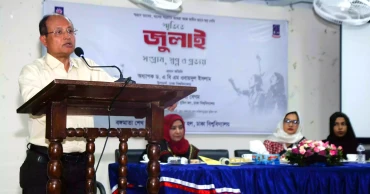
DU VC urges all to work from their respective positions to fulfill aspirations of July uprising
Dhaka University Vice-Chancellor Professor Dr ABM Obaidul Islam on Saturday urged everyone to work from their respective positions to fulfill the aspirations of the historic July mass uprising.
He made the call while addressing a discussion titled “July Struggle, Dreams and Commitment in Memory” organized by Sheikh Fazilatunnesa Mujib Hall at the hall auditorium marking the second anniversary of the July mass uprising.
Sheikh Fazilatunnesa Mujib Hall Provost Professor Dr Aleya Begum chaired the programme.
9 days ago
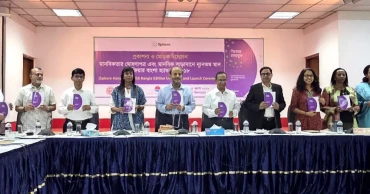
Speakers at book launch urge coordinated and standardized humanitarian response
Disaster-affected people have the right to receive humanitarian assistance with dignity, and humanitarian actors must uphold globally recognized standards of quality and accountability.
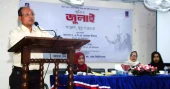
The Sphere Handbook brings together the Humanitarian Charter, Protection Principles, the Core Humanitarian Standard (CHS), and minimum standards for Health, WASH, Food Security and Nutrition, and Shelter and Settlement. The launch of its Bangla edition will enable frontline workers and humanitarian practitioners to understand better and apply these standards, strengthening the quality, accountability, and effectiveness of humanitarian response. Speakers highlighted these issues at the launch of the Bangla edition of the Sphere Handbook in Dhaka today. The event was organized by Sphere Community Bangladesh (SCB), COAST Foundation, and Disaster Forum. SCB serves as a platform to promote the Sphere standards and advance quality and accountability in humanitarian action across Bangladesh.
The Chief Guest was Razwanur Rahman, Director General of the Department of Disaster Management under the Ministry of Disaster Management and Relief. Special Guests included Carol Flore-Smereczniak, United Nations Resident Coordinator in Bangladesh, Juliette Murekeyisoni, Deputy Representative of UNHCR in Bangladesh and Netai Chandra Dey Sarkar, Director (MIM), Directorate of Disaster Management. Md. Iqbal Uddin moderated the event while Gawher Nayeem Wahra, Member Secretary of Disaster Forum, chaired the session.
Distinguished guest speakers included Zunaira Shams from Sphere Secretariat in Geneva; Tooba Siddiqi, Regional Sphere Focal for Asia; Takeshi Komino from Asian Disaster Reduction and Response Network; Md. Zahid Rahim from Health Cluster; Mainul Hossain Rony from Food Security Cluster; Rezaul Karim Chowdhury from COAST Foundation; Mehedi Hasan Shishir from IFRC; Moyeen Uddin Ahmed from CARE Bangladesh. Kobita Bose from Plan International Bangladesh; Tahmina Haque from NGO Platform Cox’s Bazar; Rabeya Begum from SDS; Mosheur Rahman for ESDO; Shamasuzzaman for Islamic Relief Bangladesh; Syed Shahrear Shabab from IOM; Sumon Ahsanul Islam from INSIGHTS; AKM Jasim Uddin from ADAB; Sheuly Sharma from Jago Nari; Disaster expert MA Halim, Shashanka Saadi, Dipu Mahmud; Antara Tithi from Save the Children; Koushik Ahmed from CONCERN; Sharif Al Kamal from Friendship; Roushon Ali from NAHAB;
Razwanur Rahman highlighted that applying humanitarian standards and translating the Sphere Handbook are key steps toward embedding these standards into government Standard Operating Procedures. Carol Flore-Smereczniak stressed moving from "paper to practice" to provide timely, dignified aid, while Juliette Murekeyisoni noted that localizing the handbook ensures accountability and inclusivity.
Rezaul Karim Chowdhury said we will use the handbook to ensure our response matches global standards. Zunaira Shams underscored inclusion of disability part in the standards. Tooba Siddiqi highlighted advocacy for the localization of the Sphere standards. Takeshi Komino said disaster-affected people should know their rights and entitlements; then they will be able to hold us accountable. We should follow the Sphere standards to let them know it. Kobita Bose said we should prioritize an action plan and share responsibilities for better implementation of the Sphere Standards across the country. Tahmina Haque emphasized wider application of these standards in the Rohingya response.
9 days ago

BCPS to host practical AI masterclass for communications professionals
As artificial intelligence (AI) continues to reshape the communications profession, the Bangladesh Communications Professionals Society (BCPS) is set to organise a special masterclass to help professionals integrate AI into their daily work and prepare for the evolving workplace.
Titled "AI in Development Communications," the masterclass will be held on August 8, 2026 (Saturday), at Unnayan Samannay Auditorium, Banglamotor, Dhaka.
The session will be facilitated by Md Abdur Rouf, Creative Lead (AI) at Nagad, who brings more than 12 years of experience in communications, creative strategy, and artificial intelligence.
He has trained professionals from corporate organisations, development agencies, and educational institutions on the practical application of AI.
Tony Michael Gomes, Chairperson of the Bangladesh Communications Professionals Society, said AI is not a replacement for communications professionals but a powerful tool that can enhance their capabilities.
"Professionals who can effectively use AI will be better positioned for the future. Through this masterclass, participants will learn which human skills will remain indispensable, which AI tools are most useful in everyday communications work, and how to leverage AI to work faster, smarter, and more strategically," he said.
The masterclass will provide hands-on training on AI-powered tools, prompt engineering, AI-assisted writing for press releases, reports, speeches, social media content, and communication strategies.
Participants will also learn how to use AI for research, data analysis, and improving productivity while maintaining the quality of communication outputs.
The programme is designed for professionals working in development organisations, corporate communications, media, government and non-government organisations, educational institutions, and for freelance communications practitioners.
Seats are limited, Registration is now open at: https://tinyurl.com/2dk7b9t8
9 days ago
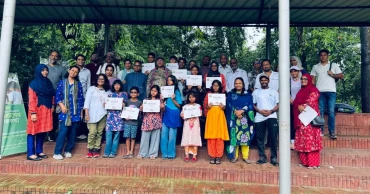
Children connect with wildlife through unique nature camp at Botanical Garden
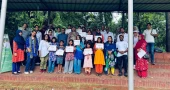
A unique nature camp titled "Bannyopraner Golpokotha" (Stories of Wildlife) was held at the National Botanical Garden in Mirpur on Friday, aiming to introduce children to wildlife and foster a deeper bond with nature.
Organised by Prokritipath Pathshala, the three-hour camp brought together children aged between five and 15, along with their parents, for an interactive outdoor learning experience.
The programme began with fun ice-breaking activities before participants explored the lush surroundings of the Botanical Garden to observe birds and other wildlife. The children sketched birds in their notebooks, recorded their names and characteristics, and took part in drawing sessions based on direct observation.
The organisers said the initiative was designed to encourage children to spend more time in nature at a time when much of their free time is dominated by mobile phones, tablets and other digital devices. They said children need to know and appreciate nature from an early age in order to develop a sense of responsibility towards protecting it.
The camp featured Jalal Ahmed, former president of the Bangladesh Bird Club, ornithologist and chairman of the Bangladesh Energy Regulatory Commission (BERC), as the lead mentor on wildlife.
Speaking at the end of the camp, Ahmed said he had enjoyed spending time with the children and was pleased to see them learning about birds and wildlife through play.
"I hope Prokritipath Pathshala will continue this wonderful initiative in the future," he said.
9 days ago
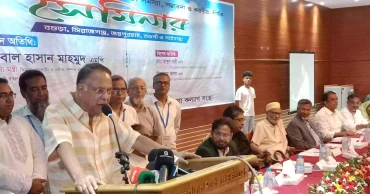
Banned AL looted country for 17 years, PM Tarique leading recovery efforts: Power Minister
Power, Energy and Mineral Resources Minister Iqbal Hasan Mahmud Tuku on Saturday alleged that the banned Awami League had plundered the country's resources during its 17 years in power, leaving behind a fragile economy that the government under Prime Minister Tarique Rahman is now working to rebuild.
Speaking as the chief guest at a seminar in Bogura, the minister also accused the previous government of distorting history and neglecting the development of northern Bangladesh.
"The Awami League is the only party that distorted history and created its own version of historical events. Those who study history must counter such distortions," he said.
Tuku claimed that the "fascist Hasina government" deprived the northern region of development and said the current administration is committed to ensuring balanced development across the country, with special attention to backward regions.
He made the remarks at a seminar titled Development, Problems, Prospects and Way Forward for Five Northern Districts—Bogura, Sirajganj, Joypurhat, Naogaon and Gaibandha, held at a five-star hotel in Bogura and organised by the Bogura History Study and Research Welfare Organisation.
The minister said Bogura once had several major industrial establishments, including a ceramic factory and Jamil Group Industries, but alleged that they were destroyed during the 1972-2025 period.
Highlighting the government's energy plans, Tuku said Prime Minister Tarique Rahman has set a target of generating 10,000 megawatts of electricity from solar energy within the government's five-year term and that work has already begun to achieve the goal.
He also encouraged local NGO TMSS to invest in solar power generation.
Speaking as a special guest, State Minister for Local Government, Rural Development and Cooperatives Mir Shahe Alam said the five northern districts had remained neglected for two decades and that the government has adopted a planned approach to address their development needs.
State Minister for Public Administration Abdul Bari said establishing an international airport in Bogura would attract foreign investment and further accelerate the district's economic growth.
The seminar was chaired by Dr CM Idris, president of the organising body, while its general secretary Syed Fazle Rabbi Dollar moderated the event. The keynote paper was presented by the organisation's leader Dr Matiur Rahman.
Several lawmakers from Bogura, Naogaon, Gaibandha, Joypurhat and Sirajganj, along with local government representatives, academics and researchers, addressed the seminar.
Principal of Government Mujibur Rahman Bhandari Women's College, Professor Dr. Bellal Hossain, delivered the welcome address at the event. Dr. AHM Masihur Rahman, Advisor to the Bogura History Practice and Research Welfare Association, delivered the greeting speech.
Around 25 academics and researchers from different universities and educational institutions, as well as representatives from various sectors, attended the seminar.
9 days ago

Around 9600 people die from drowning each year in Bangladesh: WHO
World Health Organization (WHO) has called for accelerated action to prevent drowning in Bangladesh, warning that around 9,600 people die from drowning in the country each year despite the availability of proven, life-saving interventions.
For children aged 1-4 years, drowning is the leading cause of death, with thousands of children, particularly those living in rural and low-income communities, losing their lives each year in incidents that are largely preventable.
Most drowning deaths among children under 5 occur within 20 metres of the home, mainly in ponds, ditches and water containers.
Every year on July 25, the world marks World Drowning Prevention Day to raise awareness that drowning deaths are preventable and to promote proven actions that save lives.
On World Drowning Prevention Day, WHO has called for accelerated action in Bangladesh to build on the country's leadership in drowning prevention through greater investment in evidence-based interventions, stronger partnerships and sustained action to address one of the world's most preventable yet overlooked public health challenges.
Every year, drowning claims more than 300 000 lives worldwide - equivalent to nearly 30 deaths per hour.
Almost one-quarter of these deaths occur among children under the age of 5. Globally, drowning is among the 10 leading causes of death for children aged 5-14 years.
Together, the 10 countries of the WHO South-East Asia Region account for 28% of drowning deaths worldwide.
"Drowning is a silent but preventable public health crisis. Every drowning death represents a tragedy that can and must be prevented,” said Dr Ahmed Jamsheed Mohamed, WHO Representative to Bangladesh.
“As we observe World Drowning Prevention Day, WHO reaffirms its commitment to supporting evidence-based action, stronger partnerships and increased investment in proven interventions that reduce drowning deaths.”
Bangladesh has demonstrated strong leadership in advancing drowning prevention nationally and globally, WHO said.
It has championed international resolutions on drowning prevention at both the United Nations General Assembly and the World Health Assembly, while the government-endorsed National Drowning Prevention Strategy and Action Plan (2025–2030) provides a framework for scaling up evidence-based interventions, including Anchal centres (community childcare centres), SwimSafe programmes (survival swimming education) and first responder training.
However, to build on this progress, greater urgency and sustained investment are needed to unlock the full health, social and economic benefits of evidence-based interventions, WHO said.
Evidence from Bangladesh shows that proven interventions save lives while delivering strong economic returns, with every US$1 invested estimated to generate US$ 9 in social and economic benefits.
On World Drowning Prevention Day, WHO highlighted four priority areas for action.
First, integrating drowning prevention into national health, education and disaster risk reduction policies. This is essential to ensuring a coordinated and sustainable response, recognizing that drowning is not only a water safety issue but also a major public health challenge that intersects with child health, education, disaster preparedness and community development.
Second, scaling up proven interventions that reduce drowning deaths such as Anchal centres, SwimSafe programmes and first responder training. Expanding access to these interventions, particularly in rural and underserved communities, will save thousands of lives each year while helping children develop lifelong water safety skills.
Third, strengthening partnerships and sustaining community engagement. By working together and building on their respective strengths, local authorities, development partners, civil society organizations, academic institutions, the private sector and communities can increase the reach of effective interventions, promote safer behaviours and foster a culture of water safety that protects future generations.
Fourth, enhancing investment in research, surveillance and data systems. Strengthening the evidence base on drowning and drowning prevention will support better decision-making, guide future policy and programme development and enable Bangladesh to measure progress towards reducing drowning deaths and achieving related Sustainable Development Goal targets.
"We know how to prevent drowning. The challenge now is to take proven interventions to scale and ensure they reach every child and every community at risk. With sustained political commitment, strong partnerships and continued investment, we can dramatically reduce drowning deaths and save thousands of lives each year," said Dr Ahmed Jamsheed Mohamed.
On World Drowning Prevention Day, WHO called on governments, partners and communities to unite behind proven solutions that save lives. Together, we can protect children, strengthen communities and ensure that far fewer families experience the devastating and preventable loss of a loved one to drowning.
9 days ago
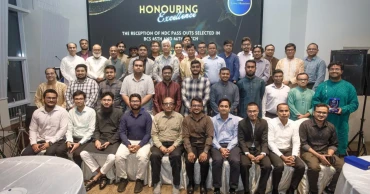
Club Notre Dame Bangladesh honours NDC alumni selected in 45th, 46th BCS
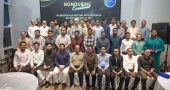
Club Notre Dame Bangladesh Ltd. (CNBL) has hosted a reception titled “Honoring Excellence” to recognise Notre Dame College alumni selected in the 45th and 46th Bangladesh Civil Service (BCS) examinations.
The reception was held at Fr. Peixotto Hall on the club premises on Thursday evening, said a press release.
According to the organisers, CNBL has been organising similar receptions over the past five years to honour Notre Dame College alumni who have achieved distinction in public service.
So far, more than 83 alumni have been presented with CNBL crests in recognition of their accomplishments.
CNBL President Naser Bukhtear, Executive Committee Member (Branding and PR) Adnan Nafis, and founding member N E Khoda Babu hosted the reception for the newly selected BCS officers.
The event was attended by senior government officials including commissioners, joint secretaries, deputy secretaries and professors who are also alumni of Notre Dame College.
9 days ago

6 more suspected measles deaths reported in Bangladesh, toll climbs to 816
Six more children died with symptoms consistent with measles in 24 hours until 8:00am on Saturday, raising Bangladesh’s combined tally of confirmed and suspected measles-related deaths to 816.
The Directorate General of Health Services (DGHS) has classified the latest deaths as suspected measles fatalities.
With the latest update, the number of suspected measles deaths has risen to 721 while the number of laboratory-confirmed measles deaths remained unchanged at 95.
A total of 613 new suspected measles cases were reported during the period, bringing the cumulative number of suspected cases nationwide to 122,763.
Meanwhile, 78 new confirmed measles cases were recorded, bringing the total number of laboratory-confirmed infections to 15,272.
Since March 15, a total of 105,298 patients with suspected measles have been hospitalised across the country, of whom 101,535 have recovered, according to DGHS data.
9 days ago