Others
Govt working to make Bangladesh regional aviation Hub: State Minister
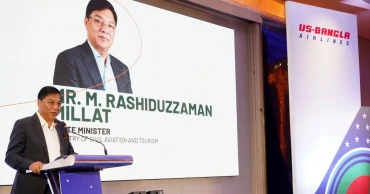
State Minister for Civil Aviation and Tourism Rashiduzzaman Millat on Wednesday said the government is working to develop Bangladesh into a regional aviation hub under the leadership of Prime Minister Tarique Rahman.
He said the government is preparing an integrated aviation master plan to ensure the sustainable, modern and planned development of the country's civil aviation sector over the coming decades.
The state minister made the remarks while addressing an event titled "Beyond with Boeing: Powering the Next Chapter of Aviation" as the chief guest at Hotel Sheraton in Dhaka.
Millat said US-Bangla Airlines has emerged as one of the country's leading aviation companies after beginning its journey as a domestic carrier.
He also said the government is pursuing investment-friendly policies to support private sector expansion, which would attract more investment to Bangladesh's aviation industry and create new growth opportunities.
Meanwhile, US-Bangla Airlines is adding 21 Boeing aircraft to its fleet through a lease programme worth nearly $1.5 billion, marking one of the largest fleet expansion initiatives in Bangladesh's private aviation sector.
The expansion will include 15 Boeing 737-8 aircraft and six Boeing 737-800s, which will be inducted into the airline's fleet in phases by 2027.
Prime Minister's Adviser on Civil Aviation and Tourism Humayun Kabir, National Parliament Whip Mia Nuruddin Ahmed Apu, US Ambassador to Bangladesh Brent T. Christensen, and senior officials from Boeing and US-Bangla Airlines attended the event.
5 days ago

Govt reconstitutes Freedom Fighters Welfare Trust board, executive committee
The government has reconstituted the Board of Trustees and Executive Committee of the Bangladesh Freedom Fighters Welfare Trust.
The Ministry of Liberation War Affairs issued two separate notifications recently in this regard.
Under the Bangladesh Freedom Fighters Welfare Trust Act, 2018, the Prime Minister has been made Chairman of the reconstituted Board of Trustees, while Liberation War Affairs Minister Ahmed Azam Khan will serve as Vice-Chairman.
The other members of the board are Dhaka-6 MP Ishraque Hossain, Kishoreganj-4 MP Md Fazlur Rahman, Cumilla-6 MP Md Monirul Haque Chowdhury, Noakhali-2 MP Zainul Abdin Farroque, the Secretary of the Finance Division, the Secretary of the Ministry of Industries and the Secretary of the Ministry of Liberation War Affairs.
The Managing Director of the Bangladesh Freedom Fighters Welfare Trust will act as the Member-Secretary.
Meanwhile, the government has also reconstituted the Trust's Executive Committee under Section 13 of the same Act.
Liberation War Affairs Minister Ahmed Azam Khan has been appointed President of the committee.
The executive committee members remain the same as the trustee board.
The Managing Director of the Bangladesh Freedom Fighters Welfare Trust will serve as the Member-Secretary of the Executive Committee.
5 days ago
All offices, post offices under Directorate of Posts declared smoke-free
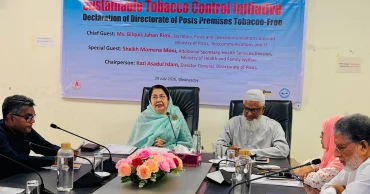
The Directorate of Posts on Wednesday officially declared all offices and post offices under its jurisdiction as 100% smoke-free and tobacco-free zones.
The announcement was made by Director General Kazi Asadul Islam during an event titled "Sustainable Tobacco Control Initiative: Declaration of All Offices and Post Offices Under the Directorate of Posts as Smoke-Free and Tobacco-Free" held at the Directorate of Posts conference room.
According to the declaration, under the Smoking and Tobacco Products Usage (Control) Act, 2005 (Amendment 2026), smoking and the use of tobacco products in public places are prohibited and punishable by law.
In line with this legislation and to protect public health, the purchase, sale and use of all tobacco products will be completely prohibited in all offices and post offices under the Directorate of Posts.
This measure aims to protect employees and visitors from exposure to secondhand smoke.
The event was attended by Posts and Telecommunications Division Secretary Bilquis Jahan Rimi as the chief guest and Additional Secretary of the Health Services Division Sheikh Momena Moni as a special guest.
5 days ago
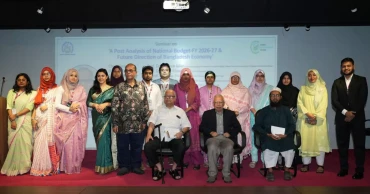
Seminar on budget organised by BUBT Economics Club
Economists and academics on Wednesday stressed that the success of the FY2026-27 national budget will depend on effective implementation, stronger institutions and preparing the country’s workforce with advanced technological skills.
The seminar, titled ‘A Post Analysis of National Budget-FY 2026-27 & Future Direction of Bangladesh Economy’, was organised by the BUBT Economics Club at the university’s International Conference Hall.
Speaking as the chief guest, National Professor Dr Mahbub Ullah said Bangladesh should now focus on strengthening domestic value addition instead of relying heavily on external financing after five decades of development.
He emphasised the importance of identifying investable capital to support economic growth and said the country’s ready-made garment sector must improve sustainability and adopt advanced technologies to remain globally competitive.
“The country must ensure that export earnings contribute to building domestic economic strength,” he said.
Prof Dr Syed Masud Husain, Dean of the Faculty of Business and Economics at BUBT, said post-budget analysis is essential for evaluating policy priorities and guiding the country’s long-term development.
Presenting the keynote paper, Prof Dr Muhammad Mahboob Ali of the Department of Economics analysed the FY2026-27 budget, highlighting the importance of effective implementation of the Annual Development Programme (ADP) and maintaining quality standards in development projects.
He said electricity distribution should remain under the existing public system but be managed transparently and free from corruption.
Referring to current economic challenges, Prof Ali pointed to inflationary pressure, revenue shortfalls and sluggish private investment, while noting that the budget places emphasis on human capital development and social protection.
He also called for compulsory technology education across all university disciplines, proposing the inclusion of artificial intelligence, the Internet of Things (IoT), blockchain and deep learning in undergraduate curricula to equip graduates with skills needed in the post-Least Developed Country (LDC) graduation era.
The session was chaired by Prof Dr Md Mahmudul Hassan, Chairman of the Department of Economics at BUBT, who said such academic discussions contribute to informed policymaking and the country’s long-term economic development.
Other speakers included Tareq Imam Zahid, Assistant Professor of Economics; Md Rakibul Islam, Assistant Professor of Economics; and Prof Dr Munshi Mahbubur Rahman, Dean of the Faculty of Sciences and Engineering.
Participants agreed that although the FY2026-27 budget presents a positive vision, its success will ultimately depend on efficient execution, stronger institutional capacity and creating employment opportunities for the country’s growing youth population.
5 days ago
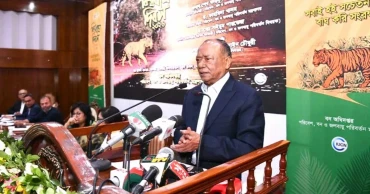
Govt committed to protecting Sundarbans tigers: Environment Minister
The government is committed to conserving tigers and their natural habitat in the Sundarbans, Environment, Forest and Climate Change Minister Abdul Awal Mintoo said on Wednesday.
"Conserving tigers is not only about protecting a single species, it is also linked to safeguarding other wildlife, forest resources, breeding grounds and the overall ecosystem of the Sundarbans," he said while speaking at a discussion in the capital, marking World Tiger Day 2026 as the chief guest.
The theme of this year's observance was "Be aware, conserve tigers."
The tiger is Bangladesh's national animal and serves as a natural guardian of the Sundarbans. As a keystone species, it plays a vital role in maintaining the forest's food chain and ecological balance, he said.
The minister also said the government has recently formed a 10-member commission to protect safe habitats for wildlife and reduce human-wildlife conflict.
The commission will work to increase the number of Bengal tigers in the Sundarbans, recover illegally occupied forest land and raise awareness among communities living near forests, he added.
The numbers of tigers in the Sundarbans have been gradually increasing due to government initiatives, continuous efforts by the Forest Department and cooperation from local communities, claimed the minister.
According to camera trap surveys, the number of tigers in the Sundarbans increased from 106 in 2015 to 114 in 2018 and 125 in 2024.
The minister said Village Tiger Response Teams, Community Patrol Groups and forest-dependent local communities are playing important roles in tiger conservation.
The government has adopted a "zero tolerance" policy against tiger poaching and illegal trade of tiger parts and trophies. The Wildlife Crime Control Unit and wildlife management and nature conservation departments will be further strengthened to combat wildlife crimes, he said.
Besides, financial rewards ranging from Tk 25,000 to Tk 50,000 have been introduced for providing information on tiger-related crimes, he said.
Speaking as a special guest, Environment, Forest and Climate Change State Minister Shaikh Faridul Islam said tigers represent Bangladesh's courage and heritage.
The government has expanded protected areas to ensure better conservation of Sundarbans tigers, he said adding 80 ponds have been dug in the Sundarbans to increase access to fresh water for tigers and 20 elevated areas have been created for their resting places.
The state minister said the Prime Minister has given directives to take necessary measures to protect biodiversity.
Besides, nylon fencing has been installed to separate human settlements from forest areas, helping prevent tigers from entering local communities, he said.
Acting Secretary of the Ministry of Environment, Forest and Climate Change Dr Fahmida Khanam said tigers play a crucial role in maintaining the food chain of the Sundarbans.
She emphasised the need for sustainable tourism and said controlling the number of tourists visiting the forest should also be considered to ensure tiger conservation.
The discussion was chaired by Chief Conservator of Forests Md Amir Hossain Chowdhury. Professor Dr M A Aziz of the Department of Zoology at Jahangirnagar University and Khulna Divisional Forest Officer Imran Ahmed made thematic presentations at the event.
WildTeam Chief Executive Dr Md Anwarul Islam and IUCN Bangladesh Country Representative Bipasha S Hossain also spoke at the programme.
5 days ago
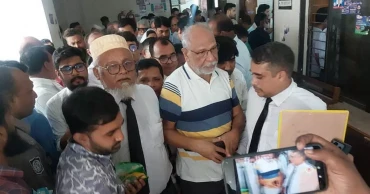
Ex-minister Latif Siddiqui arrested over Shapla Chattar crackdown
The Detective Branch (DB) of Dhaka Metropolitan Police (DMP) arrested former minister Abdul Latif Siddiqui from the capital’s Gulshan area on Wednesday evening in connection with a case filed with the International Crimes Tribunal (ICT) over the Shapla Chattar massacre during a Hefazat-e-Islam Bangladesh rally in 2013.
A special DB team conducted a raid on Latif Siddiqui’s residence and arrested him around 6:00pm, said DB chief Mohammad Shafiqul Islam.
He said the former minister was arrested in connection with the ICT case linked to the Shapla Chattar incident
The DB chief, however, did not disclose further details about the allegations or the next legal steps.
Latif Siddiqui, a former minister of the Awami League government, will be produced before the competent court in connection with the ICT case, he said.
On July 27, the prosecution submitted formal charges against 41 people, including ousted Prime Minister Sheikh Hasina and Latif Siddiqui, before the ICT in connection with the Shapla Chattar crackdown.
According to the prosecution, 58 people were killed at four locations, including Dhaka, during the Hefazat rally on May 5, 2013.
The investigation agency has identified 32 victims in Dhaka, 20 in Narayanganj, five in Chattogram and one in Cumilla.
5 days ago
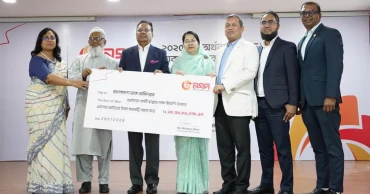
Minister dismisses Nagad sale rumours, says it must be made more profitable, competitive
Posts, Telecommunications and Information Technology Minister Faqir Mahbub Anam on Wednesday directed mobile financial service (MFS) provider Nagad to become a more profitable, transparent and competitive institution, dismissing recent media reports claiming it is being sold for Tk 1,500 crore as "baseless rumours."
He urged journalists to verify information with the relevant authorities before publishing such reports. "We are a transparent government, and our doors are always open for journalists," he said while speaking at a programme at Dak Bhaban in Agargaon.
At the programme, Nagad handed over a cheque for Tk 18.57 crore to the Directorate of Posts as its revenue share under an agreement between the two organisations.
The programme was chaired by Nagad Administrator Md Motasem Billah, while Posts and Telecommunications Division Secretary Bilquis Jahan Rimi and Director General of the Directorate of Posts Kazi Asadul Islam were present as special guests.
Mahbub Anam said the government will provide all necessary support to strengthen Nagad and continue discussions on improving its services while fostering healthy competition in the MFS sector.
He said Nagad must strengthen public trust through better services, technology and accountability. “People have confidence in Nagad because it is a government institution and that trust must be upheld through improved service quality and stronger governance.”
Calling the revenue transfer "a happy day" for the government, the minister said the government generally spends money, but receiving profits from a state-linked institution reflects both success and effective management.
He said the government is approaching six months in office and has been working to implement its commitments under the Prime Minister's guidance, adding that Nagad's profitability demonstrates the government's efforts to improve public institutions.
Highlighting the importance of digital financial services, Mahbub Anam said technology becomes meaningful only when its benefits reach ordinary people, including those in remote areas, small businesses, expatriate families, students and women entrepreneurs.
He said greater competition, innovation and customer-friendly services in the MFS sector will contribute to the country's overall economic growth.
The minister also stressed the need to modernise the postal service through digital and financial services alongside conventional postal operations, saying efforts are underway to better integrate Nagad with the Directorate of Posts.
Bangladesh Post is now offering parcel delivery services across the country at significantly lower costs than many private operators, helping make logistics services more affordable, he said.
Referring to criticism surrounding Nagad in recent years, Mahbub Anam said some of the company's previous activities had created negative perceptions among customers.
He urged the Directorate of Posts to strengthen monitoring under the existing agreement and ensure transparency and accountability so that Nagad becomes a trusted financial institution.
The minister said government agencies and the private sector should work together based on mutual trust, transparency and accountability to maximise the use of state assets and improve public services.
He expressed optimism that Nagad's revenue contribution to the Directorate of Posts will continue to grow through improved technology, better customer service and stronger governance.
Mahbub Anam said Nagad currently has around 9 crore registered customers, including nearly 3 crore active users, with monthly transactions amounting to Tk 35,000-40,000 crore, adding that there is considerable scope for further expansion if its software infrastructure is upgraded.
He also said the ministry is exploring ways to modernise more than 9,000 post offices across the country so they can provide improved services, particularly in rural areas where postal outlets remain the primary government service point.
Nagad has so far paid around Tk 313 crore to the government in VAT and taxes this year, the minister said, adding that the government's policy is to turn loss-making public enterprises into profitable institutions.
5 days ago

US-Bangla to add 21 Boeing aircraft under $1.5 billion deal
US-Bangla Airlines is going to add 21 Boeing aircraft to its fleet through a lease programme worth nearly $1.5 billion, marking one of the largest fleet expansion initiatives in Bangladesh's private aviation sector.
The expansion will include 15 Boeing 737-8 aircraft and six Boeing 737-800s, which will be inducted into the airline's fleet in phases by 2027.
The announcement was made at an event titled “Beyond with Boeing” held at a city hotel on Wednesday.
State Minister for Civil Aviation and Tourism Rashiduzzaman Millat attended the event as the chief guest.
In his speech, the state minister said US-Bangla Airlines has grown from a domestic carrier into one of Bangladesh's leading international airlines through its commitment to safety and quality services.
He said the opening of the third terminal at Hazrat Shahjalal International Airport will increase the airport's annual passenger handling capacity to 2.4 crore, making the airline's fleet expansion a timely move to meet rising demand.
Millat also noted that Biman Bangladesh Airlines is adding 14 new Boeing aircraft to its fleet, saying the combined expansion will strengthen the country's aviation sector and improve travel services for domestic and international passengers.
US Ambassador to Bangladesh Brent T Christensen described the agreement as a historic milestone for Bangladesh's aviation industry.
The Boeing leasing deal represented not only the expansion of an airline's fleet but also an investment in Bangladesh's future, creating opportunities for economic growth, strengthening regional and international connectivity, supporting tourism and trade, and generating high-quality jobs, he said.
Boeing Vice President Paul Righi said the fleet expansion marks an important milestone for US-Bangla Airlines as it enters the next phase of growth with modern, fuel-efficient aircraft.
US-Bangla Group and US-Bangla Airlines Managing Director Md Abdullah Al Mamun said nearly 70 percent of passengers on Bangladesh's international routes are still carried by foreign airlines.
"The addition of the new aircraft will significantly enhance the capacity of Bangladeshi airlines on international routes and help retain a substantial amount of foreign currency within the country," he said.
Mamun said the airline aims to evolve beyond a successful carrier into a fully integrated global aviation group.
He said the expansion will support international route growth as well as investments in cargo operations, maintenance, repair and overhaul (MRO) services, flight catering and aviation training to build a comprehensive aviation ecosystem.
According to the airline, the new aircraft will enable increased flight frequencies on existing routes across South Asia, Southeast Asia, East Asia and the Middle East.
US-Bangla also plans to launch services to several new international destinations, including Bengaluru, Hyderabad, Colombo, Kathmandu, Johor Bahru, Penang, Kunming, Shenzhen, Beijing, South Korea, Japan, Kuwait, Bahrain, Madinah, Dammam and Salalah.
The airline also announced plans to develop Chattogram and Sylhet as regional international aviation hubs by permanently deploying Boeing aircraft at the two airports and operating direct international flights to destinations in the Middle East and South Asia.
Mamun said sustainable growth of Bangladesh's aviation industry will require new airports, competitive policies, skilled human resources, modern MRO facilities and internationally accredited aviation training centres.
He said US-Bangla has already launched self-financed programmes to train pilots and aircraft engineers. The airline is also establishing an international-standard aviation training centre in Purbachal and developing a modern flight catering facility in Bangladesh.
According to the airline, the fleet expansion will contribute not only to its own growth but also to the development of Bangladesh's private aviation sector, tourism, international trade, employment and foreign exchange earnings.
US-Bangla also said it is planning to add next-generation wide-body aircraft in the future to operate long-haul flights to Europe, North America and Australia.
5 days ago

CIID nets Tk 19 lakh from undeclared confectionery import at Ctg port
The Customs Intelligence and Investigation Directorate (CIID) has recovered more than Tk 19 lakh in additional revenue after detecting excess quantities of imported confectionery products in a consignment at the Chattogram Port.
According to the CIID, officials of its Chattogram Regional Office conducted a physical examination of an imported consignment belonging to Rainbow Corporation following a tip-off.
CIID seizes Tk27 crore Rolls-Royce from Dhaka's Baridhara
The consignment, imported under Bill of Entry No. C-1138706 dated July 5, 2026, contained higher quantities of goods than those declared by the importer.
During the inspection, officials found 7,132.25 kg of chocolate against the declared quantity of 6,704.56 kg. They also found 2,684.88 kg of wafers instead of the declared 2,572.16 kg.
Overall, the consignment contained 540.41 kg more than the declared weight, representing an excess of 5.83 percent over the declared net weight, the CIID said.
Following adjudication of the case, the authorities realised an additional Tk 8,13,440.57 in customs duties and taxes. They also imposed a financial penalty of Tk 10,00,000 and a redemption fine of Tk 1,00,000.
In total, the government recovered Tk 19,13,440.57 in additional revenue from the consignment.
5 days ago
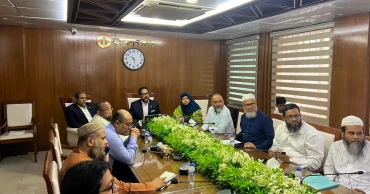
Contractors to be blacklisted for irregularities in dev work: Monzoor
State Minister for Housing and Public Works Ahmmad Sohel Monzoor on Wednesday warned that contracts of the firms concerned will be cancelled if they fail to complete project work with honesty within the stipulated time, or if any irregularity is detected in their work.
“A neutral third party will verify, alongside the own representative team of the National Housing Authority, whether project work is being carried out properly and honestly. If any irregularity is observed in the development work, the firm concerned will be blacklisted,” he said.
Housing minister, newly appointed development authority chairs pay tribute to Zias
The state minister was speaking at a view-exchange meeting on the development activities and progress of various projects of the National Housing Authority held at its conference room in Segunbagicha.
He also urged all officials, employees and stakeholders of the housing authority to remain vigilant so that no irregularity or corruption occurs in the bidding process and construction work.
Monzoor said project work must be completed within the fixed timeframe while maintaining the highest quality standards at minimal profit margins to make the country free from corruption.
Officials and engineers of the National Housing Authority, along with contractors registered with the authority, were present at the meeting.
5 days ago