others
50,000 sit for AI training selection test
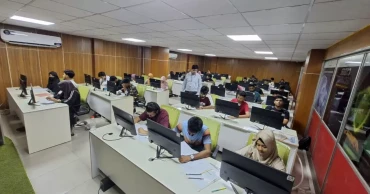
The written examination for selecting trainees under the “Skills Development through Artificial Intelligence (AI) Technology for ICT-Literate Youth” project was held simultaneously in all 64 districts on Tuesday, with around 50,000 applicants appearing for the test.
Nearly 83,000 applications were submitted for the programme nationwide. After verification, around 50,000 applications were found valid, making those applicants eligible to participate in the selection process.
Following the verification process, around 50,000 applications were declared valid, making those applicants eligible to participate in the written examination.
In the first phase of the project, a total of 1,600 trainees will be selected, with 25 participants chosen from each of the country's 64 districts.
Project Director Md Atikur Rahman said every stage of the selection process is being closely monitored and that trainees will be selected solely on merit and qualifications based on the results of the written, practical, and viva examinations.
He also announced that the practical and viva examinations for successful candidates in the written test will be held on Wednesday, while the final results are expected to be published on July 30. Training activities for the selected participants will begin simultaneously in all 64 districts on August 2.
Under the two-year project, jointly undertaken by the Ministry of Youth and Sports and implemented by the Department of Youth Development, a total of 11,200 young men and women will receive AI-focused training. Among them, 9,600 participants will receive Basic AI training, while 1,600 will be enrolled in the Advanced AI programme.
The training will be conducted in 448 batches, with 25 participants in each batch. Each course will run for two months and include 50 classes, providing a total of 300 hours of instruction.
Beyond learning how to use AI tools, participants will develop practical skills in AI-powered content creation, digital marketing, video production, data analysis, workflow automation, business management, and technology-driven employment, preparing them for careers in the rapidly evolving digital economy.
6 days ago
Govt vows quick restoration of gas supply
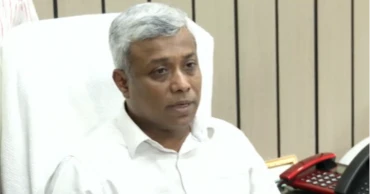
The government on Tuesday once again apologised for the public suffering caused by the ongoing gas crisis, saying it is working on multiple fronts to restore normal supply after a major mechanical fault at a floating storage and regasification unit (FSRU) disrupted imported LNG supply.
“The technical failure at one of the country’s FSRUs has significantly reduced gas supply to the national grid, causing shortages for industries, power plants, CNG filling stations and household consumers,” State Minister for Power, Energy and Mineral Resources Aninda Islam Amit said while speaking to reporters at the Secretariat.
He said the government deeply regretted the temporary inconvenience faced by the public and assured that efforts are underway to resolve the crisis as quickly as possible.
The state minister said Prime Minister Tarique Rahman spoke over the phone with Malaysian Prime Minister Anwar Ibrahim earlier in the day and sought Malaysia’s cooperation in addressing Bangladesh’s current energy crisis.
According to Amit, the Malaysian Prime Minister assured Bangladesh that his government will take the necessary steps at the earliest possible time to provide whatever assistance might be feasible.
“We have sought their cooperation. They will inform us whether there is any opportunity for an immediate solution. If they can provide one immediately, Alhamdulillah. Otherwise, they will let us know in what form they can extend their cooperation,” he said.
The disruption occurred after a technical problem developed at one of the country’s floating LNG terminals, forcing a temporary suspension of gas supply from the facility to the national gas grid.
The affected FSRU had been supplying around 500-600 million cubic feet of gas daily. Because of the fault, the national grid is currently receiving around 500 million cubic feet less gas each day.
The reduced supply has affected industrial units, power stations and CNG filling stations across different parts of the country. In several areas, low gas pressure has prevented CNG stations from receiving adequate gas, leading to long queues of vehicles and temporary public inconvenience.
Amit said the Energy and Mineral Resources Division held detailed discussions on Tuesday with senior officials of Excelerate Energy, which operates the affected FSRU, to expedite repairs to the damaged terminal.
He expressed hope that gas supply of around 280-300 million cubic feet per day will resume early next week, while the FSRU is expected to become fully operational by the end of the following week.
The state minister also said the government has begun exploring alternative energy sources as part of a long-term strategy to reduce such vulnerabilities.
He said a Japanese delegation, led by an adviser to the Japanese Prime Minister, also held discussions on energy cooperation earlier in the day.
The government, Bangladesh Oil, Gas and Mineral Corporation (Petrobangla) and the Energy and Mineral Resources Division are working continuously to ease public suffering and are closely monitoring the overall gas supply situation, Amit said.
He expressed optimism that the gas supply situation will improve once the technical problem at the FSRU is fully resolved, while once again apologising to consumers for the temporary disruption.
6 days ago
Securing govt jobs for Tk 125 without lobbying unprecedented in Bangladesh: Mir Helal
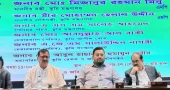
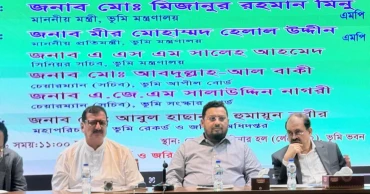
State Minister for Land, and Chittagong Hill Tracts Affairs Mir Mohammed Helal Uddin on Monday said securing a government job through a transparent recruitment process for only Tk 125, without lobbying or bribery, is unprecedented in Bangladesh.
He made the remarks while addressing the inauguration of an orientation programme for newly recruited Peshkars (court clerks) at the central seminar hall of the Directorate of Land Records and Surveys (DLRS) in the Bhumi Bhaban in Tejgaon.
Land Minister Md Mizanur Rahman Minu attended the programme as the chief guest with DLRS Director General Md Abul Hasanath Humayun Kabir in the chair.
Addressing the new recruits, Mir Helal said they obtained their jobs without any recommendation or undue influence by paying only Tk 125 in application fees, describing their accounts of the recruitment process as "truly inspiring."
He alleged that the country had been plagued by corruption and irregularities over the past 20 years and said misconduct by a small number of dishonest officials at the field level had tarnished the image of the entire land administration.
Urging the recruits to uphold integrity, the state minister said they must perform their duties with honesty and remain away from corruption.
Highlighting the importance of public service, he quoted Prime Minister Tarique Rahman as saying that citizens visiting government offices for services are the "true owners of the country."
"You must realise that the people are the owners of the country and deserve the highest standard of service," Mir Helal said, urging officials to embrace the spirit of "Bangladesh First" in building a self-reliant nation and ensuring equitable services for all, particularly marginalised communities.
Speaking as the chief guest, Land Minister Minu praised the transparency of the recruitment process and the merit-based selection of the new employees.
He said the government remains committed to reducing social inequality, improving the welfare of underprivileged people and establishing a corruption-free working environment.
Senior Secretary of the Ministry of Land ASM Saleh Ahmed, Chairman of the Land Appeal Board Md Abdullah Al Baki, Chairman of the Land Reform Board AJM Salahuddin Nagri, and senior officials of the Ministry of Land and the Directorate of Land Records and Surveys were present.
6 days ago
Fakhrul for social movement to eliminate drugs
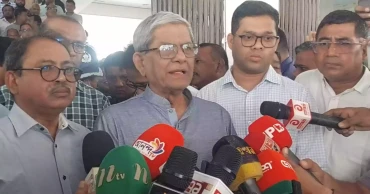
Local Government, Rural Development and Co-operatives Minister Mirza Fakhrul Islam Alamgir on Tuesday said drug abuse cannot be eradicated through legal action alone, stressing the need to build a nationwide social movement against narcotics.
"We have launched an anti-drug campaign. We want to turn it into a social movement involving everyone, and I believe there is no alternative to this. It is not possible to eliminate drugs only through laws and punishment," he told reporters after an anti-drug awareness meeting at the conference room of the Thakurgaon Deputy Commissioner's office.
The meeting was organised to raise public awareness and strengthen social resistance against drug abuse.
Fakhrul, also BNP secretary general, expressed optimism that the initiatives being taken in Thakurgaon will produce positive results and urged all sections of society to play a constructive role in the campaign.
"Our main task is to spread awareness that drugs are harmful and to highlight their devastating impact on people's lives," he said.
The minister urged the administration, teachers, parents, public representatives, social organisations and the general public to work together to prevent drug abuse.
Deputy Commissioner Mohammad Rafiqul Huq, Superintendent of Police Belal Hossain, district BNP President Mirza Faisal Amin and General Secretary Paigam Ali, along with other officials and political leaders, were present at the programme.
6 days ago
Man to die for killing seven-year-old boy in Ctg
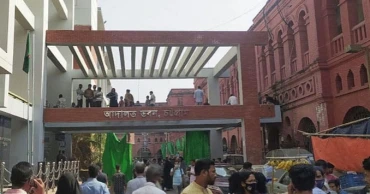
A Chattogram court on Tuesday sentenced a man to death for killing a seven-year-old boy in 2016.
Judge of the Chattogram Additional Metropolitan Sessions Judge Court-2 Nishaduzzaman delivered the judgement.
The condemned convict is Al Amin, 44, son of Zinnat Ali of Nikli in Kishoreganj district. The court also fined him Tk 25,000.
It also sentenced him to seven years in jail and fined him Tk 5,000, in default to suffer two months more in jail, for concealing the body after the murder.
According to the prosecution, the convict strangled Md Mahfuz, son of Md Mahbub of the Halishahar area of Chattogram city, with a towel on September 5, 2016, over previous enmity with his family and dumped the body in a canal adjacent to his house.
Police later recovered the body and a case was filed at Halishahar Police Station.
Police submitted a charge sheet against Al Amin on April 27, 2017.
6 days ago
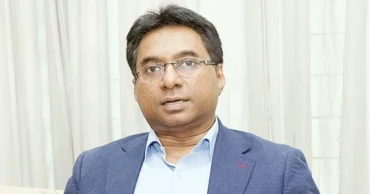
Selim Raihan joins TIB Board of Trustees
Prof Dr Selim Raihan, executive director of the South Asian Network on Economic Modeling (SANEM), has joined the Board of Trustees of Transparency International Bangladesh (TIB) as a new member.
He attended the 128th meeting of the TIB Board of Trustees held on Tuesday.
Selim Raihan, also a professor of the Department of Economics at Dhaka University, will serve as a member of the board for a three-year term, said a TIB press release.
He obtained his postgraduate degree from Dhaka University and PhD from the University of Manchester, UK.
Selim Raihan serves as a member of the Board of Directors of the Global Development Network (GDN). He is also an Honorary Senior Research Fellow at the University of Manchester and an alumnus of Harvard University’s programme on “Cutting Edge of Development Thinking.”
6 days ago
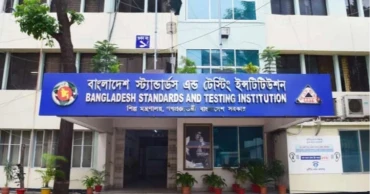
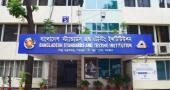
BSTI says will verify toothpaste microplastics findings before taking action
The Bangladesh Standards and Testing Institution (BSTI) has said it will take action only after scientifically verifying the findings of a recent study that detected microplastics in most types of toothpaste available in the market.
In a statement on Tuesday, it said a study by the Environment and Social Development Organization (ESDO), a private research organisation, found microplastics in 26 out of 34 toothpaste types it tested, raising public concern.
As the issue involves public health and the environment, BSTI said it is treating the matter with the utmost importance.
Microplastics are plastic particles measuring 5 millimetres or less and are usually invisible to the naked eye. According to the World Health Organization (WHO), they are an emerging environmental and public health concern. However, research into their health effects is still ongoing, and the WHO has said more studies are needed to better understand the risks.
BSTI said the United States was the first country to ban the intentional use of plastic microbeads in toothpaste and rinse-off cosmetic products under the Microbead-Free Waters Act of 2015. Under European Union Regulation (EU) 2023/2055, manufacturers have until 17 October 2027 to stop using intentionally added microplastics in toothpaste and rinse-off cosmetics.
Many countries have already banned the intentional use of plastic microbeads in toothpaste. However, BSTI noted that the standards of countries such as India, Pakistan and Sri Lanka, as well as those of international organisations, including ISO and ASTM, do not specify limits or bans on unintentional microplastics in toothpaste.
There is also no internationally accepted limit or standard testing method for such contamination.
Bangladesh has its own toothpaste standard, BDS 1216:2012 Specification for Toothpaste. Under SRO Nos. 50 and 51 of 2019, toothpaste manufacturers must obtain a BSTI licence after their products are tested for chemical, microbiological and safety requirements under the standard before they can be sold.
Although the Bangladesh standard does not specifically ban microplastics, it includes a list of 81 approved ingredients for toothpaste, and microplastics are not among them.
BSTI said manufacturers' quality control systems are also checked before licences are issued, leaving no scope for the intentional use of microplastics in toothpaste production.
The national standards body said it will not be scientifically correct to conclude that a manufacturer deliberately used microplastics simply because plastic particles were found in a test, or to assume the product poses a health risk without further evidence.
It said detailed testing is needed to identify the type, source and quantity of the particles and to assess any possible health risks.
To verify the findings, BSTI has requested the full research report, testing methods, raw data and other relevant information from the research organisation. It is also collecting information on raw materials, product ingredients and synthetic polymers from manufacturers and importers.
The agency has also begun collecting toothpaste samples from the market and factories for independent confirmatory testing at accredited laboratories in Bangladesh or abroad.
If the tests confirm that any product fails to meet Bangladesh standards or contains unapproved ingredients, BSTI said it will take legal action against those responsible under existing laws.
At the same time, the agency said it will not be appropriate to declare any toothpaste brand unsafe or of poor quality before completing proper scientific and legal verification.
BSTI also said it has started reviewing the national toothpaste standard in consultation with experts, research institutions, the Department of Environment, the Directorate General of Drug Administration, dentists, manufacturers and consumer representatives.
Once sufficient scientific evidence is available, the standard will be updated to include restrictions on the intentional use of plastic microbeads in toothpaste, mandatory disclosure of ingredients and appropriate testing methods.
BSTI urged the public not to be influenced by rumours or panic. It advised people to maintain good oral hygiene, avoid swallowing toothpaste and rely on verified information.
The agency reaffirmed its commitment to protecting public health, maintaining scientific integrity and safeguarding consumer interests.
6 days ago
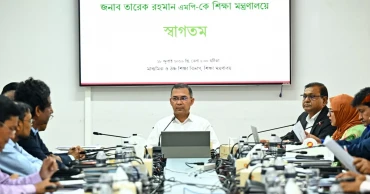
Quality education for every student govt's top priority: PM
Prime Minister Tarique Rahman on Tuesday reaffirmed the government's commitment to overhauling the country's education system through coordinated reforms, effective monitoring and the timely implementation of plans to bring qualitative improvements at every level of education.
"Ensuring quality education for every student in the country is one of the government's highest priorities. We will continue implementing coordinated initiatives, effective monitoring and timely plans to bring qualitative improvements at every level of the education system," he said.
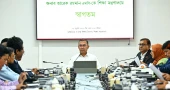
The Prime Minister made the remarks while visiting the Ministry of Education for the first time since assuming office, said a press release issued by his Press Wing.
During the visit to the ministry at the Bangladesh Secretariat, Tarique Rahman reviewed its overall activities and exchanged views with senior ministry officials, heads of its departments and agencies, and experienced education officers working at the field level.
A detailed presentation was made on the ministry's ongoing activities, development projects, progress in implementing the national education policy and overall administrative performance.
After reviewing the presentation, the Prime Minister provided necessary directives to the officials.
He stressed the need to improve the standard of education, ensure students' regular attendance in classrooms, strengthen effective teaching, provide continuous and up-to-date training for teachers, expand technology-based education and reinforce administrative accountability.
Tarique Rahman also held direct discussions with experienced education officials from the field level, who shared their experiences, highlighted the realities and challenges in the education sector and offered recommendations for improving educational standards.
He listened to their views attentively and emphasised that field-level experience and recommendations should be given due importance in policymaking and implementation.
The Prime Minister said the government's goal is to ensure that every student, regardless of location or background, receives quality education through an efficient, accountable and modern education system.
He urged officials and employees of the ministry to carry out their responsibilities with dedication, professionalism and a strong commitment to public service.
Tarique Rahman also issued necessary directives for the overall development and modernisation of the country's education sector.
6 days ago

Cabinet body approves shortening tender period for fuel imports
The Cabinet Committee on Economic Affairs on Tuesday approved a proposal to shorten the tender submission period for importing refined petroleum products.
It also approved another proposal to process a liquefied natural gas (LNG) supply deal with Gunvor USA LLC through the government-to-government (G2G) route.
Both the proposals came from the Energy and Mineral Resources Division.
Finance Minister Amir Khosru Mahmud Chowdhury presided over the meeting held at the Bangladesh Secretariat.
The committee gave nod to the proposal for reducing the tender preparation and submission period from 42 days to 21 days for the import of refined petroleum products by the Bangladesh Petroleum Corporation (BPC) through open international tender for the September to December 2026 period.
According to the proposal, the shortened timeframe is intended to facilitate the timely completion of the procurement process for refined fuel imports during the specified period.
The committee also approved a proposal submitted by Gunvor USA LLC for the supply of LNG to Bangladesh in both the short and long term through the government-to-government (G2G) procurement method.
Both proposals were placed before the committee by the Energy and Mineral Resources Division .
6 days ago

Govt fast-tracks new LNG terminal at Maheshkhali amid acute gas crisis
The government has moved to fast track the installation of a new Floating Storage and Regasification Unit (FSRU) at Kutubjom in Maheshkhali, Cox’s Bazar, as Bangladesh struggles with an acute natural gas shortage worsened by the recent fire at an existing LNG terminal.
The Cabinet Committee on Economic Affairs on Tuesday, chaired by Finance Minister Amir Khosru Mahmud Chowdhury, gave its policy approval to process a proposal submitted by China’s China National Energy Engineering & Construction Co. Ltd (CNEE) for the development of the Kutubjom FSRU under a government to government (G2G) arrangement.
The proposal was placed by the Energy and Mineral Resources Division.
The approval marks the first formal step towards developing another LNG import facility at Maheshkhali, a move officials believe has become increasingly urgent following the disruption to gas supplies caused by the recent fire at one of the country’s operational FSRUs.
Bangladesh currently relies heavily on imported liquefied natural gas to compensate for the steady decline in domestic gas production.
Imported LNG is regasified through floating terminals before being injected into the national transmission network.
The recent fire at an FSRU significantly reduced regasification capacity, forcing Petrobangla to curtail gas supply to industries, power plants, fertiliser factories and households.
The incident exposed the country’s dependence on only a limited number of LNG terminals and highlighted the absence of sufficient redundancy in the import infrastructure.
The disruption has intensified an already severe gas crisis. According to official estimates, Bangladesh’s daily gas demand is around 3,800 million cubic feet (MMCFD), while supply has fallen to roughly 2,700 MMCFD, leaving a deficit of about 1,100 MMCFD.
The shortage has affected industrial production, electricity generation and household consumers across the country.
Business leaders, particularly from the textile and garment sectors, have repeatedly urged the government to restore adequate gas supply, saying many factories are operating far below capacity because of extremely low pipeline pressure.
During recent meetings with business representatives, the government indicated that decisions on expanding LNG import infrastructure would be taken soon as part of broader efforts to improve energy security.
The proposed Kutubjom FSRU would strengthen Bangladesh’s LNG import network by providing additional regasification capacity and reducing the risks associated with dependence on only a few floating terminals.
Bangladesh began importing LNG in 2018 through its first floating terminal at Maheshkhali to offset declining domestic gas production.
LNG has since become an increasingly important component of the country’s energy mix, supplying gas to power generation, industries and other sectors.
The proposed Kutubjom FSRU is expected to enhance the resilience of Bangladesh’s gas supply system by diversifying import infrastructure and reducing the impact of unexpected disruptions at individual terminals, although detailed technical specifications, investment costs and implementation timelines are yet to be disclosed.
6 days ago