A floating fishing community in Bangladesh’s southern coastal region is set to be digitally and socially integrated into mainstream services through a new multi-sector initiative aimed at improving access to financial services, education and healthcare.
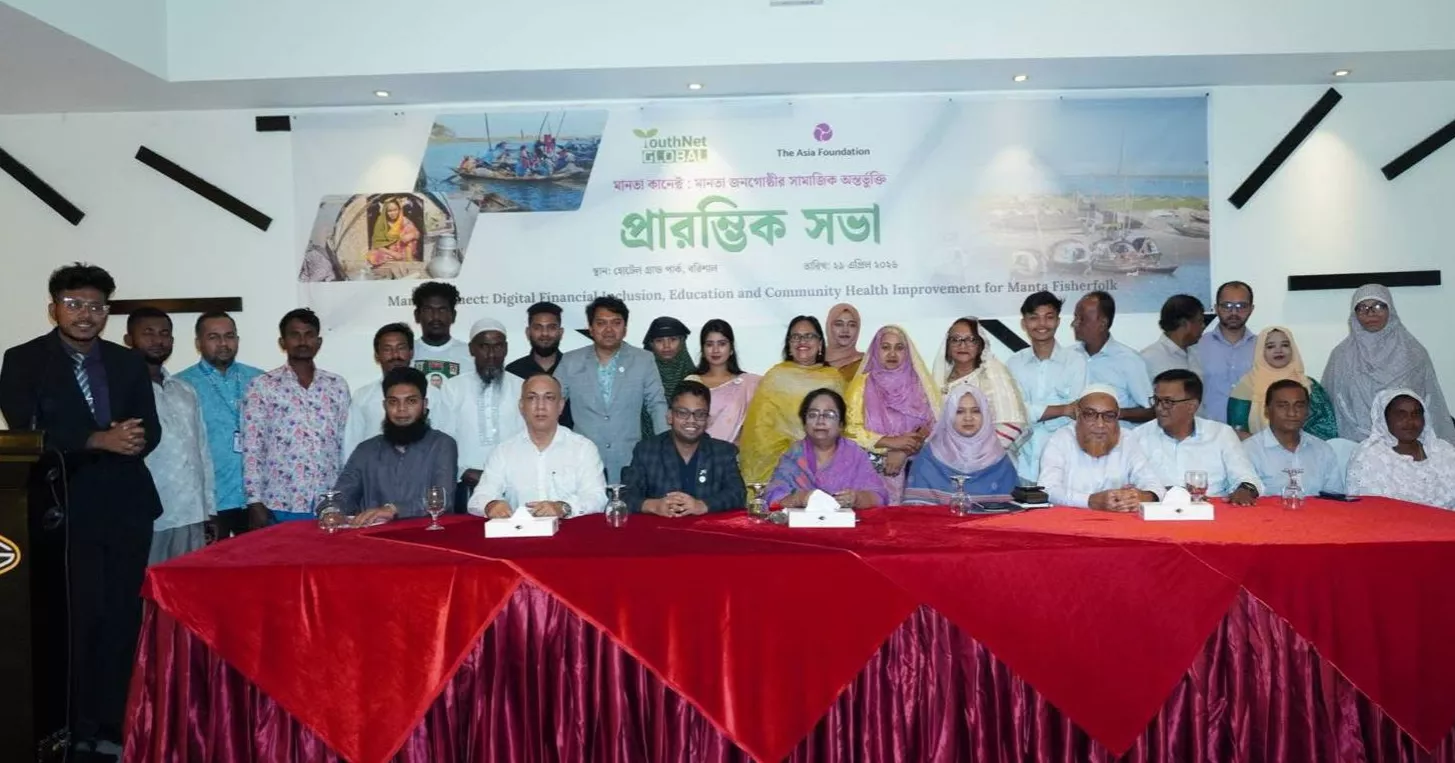
The programme, titled “Manta Connect,” was officially launched on Wednesday at a city hotel in Barishal. It is being implemented by youth-led organisation YouthNet Global in partnership with The Asia Foundation, with support from JAAGO Foundation Trust and DocTime under The Asia Foundation’s Impact and Innovation Fund.
The initiative targets the Manta community, a traditionally mobile and boat-dwelling fishing population living on rivers in Bangladesh’s southern belt. Displaced over generations by river erosion, many Manta families continue to depend on fishing for their livelihoods while remaining outside formal systems of land ownership, civil registration, banking and public services.
Due to their mobile lifestyle and limited access to administrative systems, a significant number of Manta households lack birth registration and formal identity documents, creating barriers to school enrolment, healthcare access and financial inclusion. Children from the community frequently face difficulties in accessing education, while families often rely on informal mechanisms for health and income support.
Speaking at the launch, Barishal City Corporation Administrator Advocate Bilkis Akhter Jahan Shireen said inclusive development must ensure that no community is left behind.
“Development becomes meaningful only when it reaches the most excluded populations. A society cannot progress by leaving anyone behind,” she said, calling for coordinated efforts among local government, civil society and development organisations.
The event was chaired by Sohanur Rahman, Executive Coordinator of YouthNet Global.
Special guests included Dr S M Monzur-e-Elahi, Civil Surgeon of Barishal; Mocha: Farida Sultana, Upazila Nirbahi Officer (UNO) of Barishal Sadar; Md Anisuzzaman, Senior Assistant Director of the Department of Fisheries; Md Shahabuddin Sardar, Deputy Director of the Department of Youth Development; A K M Akhtaruzzaman Talukder, Deputy Director of the Department of Social Services; and Md Mostafa Kamal, District Primary Education Officer of Barishal.
From the development partner side, A M Sajjad Khan, Senior Project Manager of The Asia Foundation, attended as a special guest.
The programme was welcomed by Arifur Rahman (Shuvo), General Secretary of YouthNet Global, and Jasim Sardar, President of the Manta Development Committee, who delivered introductory remarks.
A panel discussion titled “Inclusive Development of the Manta Community: Livelihoods, Education, Health, Climate Challenges and Solutions” featured speakers including Sajjad Parvez, Assistant Director of the Department of Social Services; Nadhira Jahan, Chairperson of Tungibaria Union Parishad; Shah Alam, Chairperson of Charbariya Union Parishad; and Manta women leader Rabea Begum, among others.
Panelists highlighted the need for coordinated action to improve access to education for children, expand women’s income-generating opportunities and ensure accessible healthcare services for river-based communities.
Project organisers said Manta Connect will combine digital financial inclusion tools, education support services and community-based healthcare access. The programme will also include awareness-building activities and skills development training aimed at strengthening community resilience and improving access to public services.
YouthNet Global Executive Coordinator Sohanur Rahman said the intervention seeks to bridge long-standing service gaps affecting the community.
“This programme is designed to connect the Manta community with essential services they have been systematically excluded from, while strengthening their capacity to participate in formal systems,” he said.
Organisers added that the initiative will be implemented in phases, with the long-term objective of improving living standards and enabling sustainable social and economic inclusion for one of Bangladesh’s most climate-vulnerable and underserved populations.