others
Gas supply to improve from next week, return to normalcy a week later: Amit
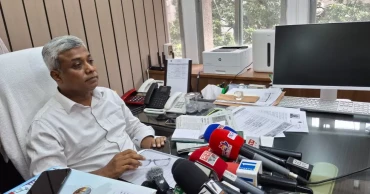
State Minister for Power, Energy and Mineral Resources Aninda Islam Amit on Monday once again apologised to the public for the ongoing gas crisis, expressing hope that supply will begin to improve from next week, with full restoration expected about a week later.
Speaking to reporters at his office at the Secretariat, he said the government is making every possible effort to resolve the crisis, which has severely affected households, industries and transport services.
"We know homemakers are struggling to cook, industries have had to scale back production, and pressure on CNG stations has disrupted public transport. We sincerely apologise to the people for the hardship," the state minister said.
He said the disruption was not caused by any government agency but stemmed from a problem involving a private operator responsible for ensuring part of the country's gas supply.
"We are working jointly with them around the clock. We cannot provide an immediate solution due to certain limitations. However, our teams are working 24/7 with the company, and we hope the situation will start improving from next week, InshaAllah," Amit said.
Referring to the floating storage and regasification unit (FSRU) in Moheshkhali of Cox’s Bazar where the technical fault occurred, he said the facility normally supplies around 500 to 550 million cubic feet of gas per day.
According to information provided by the operator, the state minister said, the FSRU is expected to resume supplying around 280 to 300 million cubic feet of gas per day to the national grid from next week.
"If they can restore about 50 percent of the supply next week, the plan is to return to 100 percent capacity in the following week," he added.
7 days ago
SSC, equivalent exams results to be published August 10
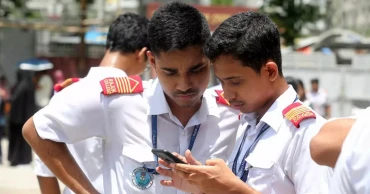
The results of the Secondary School Certificate (SSC) and equivalent examinations 2026 will be published simultaneously across Bangladesh on August 10, Bangladesh Inter-Education Boards Coordination Committee announced on Monday.
Students will be able to access their results online through the respective education board websites, from their educational institutions, and via SMS after the official publication, said a press release of the committee.
The results were initially expected to be released on July 20 but were delayed as preparations for publication could not be completed on time.
This year's SSC and equivalent examinations began on April 21 and concluded on May 20, with more than 1.85 million students appearing under the country's education boards.
7 days ago
Bangladesh reports five more suspected measles deaths; toll reaches 825
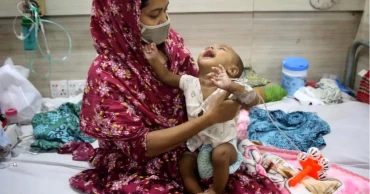
Five more children died with measles-like symptoms in 24 hours until 8:00am on Monday, raising the combined tally of confirmed and suspected measles-related deaths to 825 in the country.
According to the Directorate General of Health Services (DGHS), all the latest fatalities were suspected measles deaths.
With the latest update, the number of suspected measles deaths has risen to 730, while the number of laboratory-confirmed measles deaths remained 95.
A total of 992 new suspected measles cases were reported during the 24-hour period, bringing the cumulative number of suspected cases nationwide to 124,745.
Meanwhile, 113 new confirmed measles cases were recorded, bringing the total number of laboratory-confirmed infections to 15,555
Since March 15, a total of 107,654 patients with suspected measles have been hospitalised across the country, of whom 103,467 have recovered, according to DGHS data.
7 days ago
Presidential Election: EC to meet acting Speaker Tuesday ahead of schedule announcement
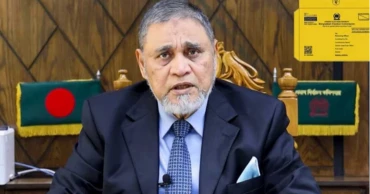
The Election Commission led by Chief Election Commissioner (CEC) AMM Nasir Uddin will meet acting Speaker Barrister Kayser Kamal on Tuesday morning ahead of the announcement of schedule for the presidential election.
“The Election Commission led by the Chief Election Commissioner will meet the acting Speaker of the Jatiya Sangsad at 11am on July 28 (Tuesday),” said Rashed Mizan, Assistant Director (Public Relations) of Parliament Secretariat on Monday.
Earlier, the EC Secretariat sent a letter to the Parliament Secretariat seeking an appointment with the Speaker.
In the letter signed by EC Senior Secretary Akhtar Ahmed and addressed to the Secretary of the Jatiya Sangsad Secretariat, the Commission said Mohammed Shahabuddin resigned as the president from office on July 24.
According to Article 123(2) of the Constitution, an election to fill the vacant office of the President must be held within 90 days of the post becoming vacant due to resignation, it cited.
The letter also referred to Sections 5(2) and 5(3) of the Presidential Elections Act, 1991, which requires the Election Commission to hold discussions with the Speaker before announcing the presidential election schedule.
The EC requested the Speaker's office to arrange a meeting with the Chief Election Commissioner at a convenient date and time fixed by the Speaker.
According to the letter, the Election Commissioners and the EC Senior Secretary will be present during the meeting.
In line with the Presidential Election Act, 1991, the Election Commission is going to consult the Speaker before issuing the election schedule.
If Parliament is in session, the Commission is required to issue the election notification at least seven days before the polling date. If Parliament is not in session, the Commission, in consultation with the Speaker, must convene a meeting of Members of Parliament at least seven days before the election.
As part of the process, the Jatiya Sangsad Secretariat will send the list of MPs to the EC, which will prepare and publish the electoral roll for the presidential election before announcing the schedule.
Deputy Speaker Kayser Kamal has been serving as the acting Speaker as the Speaker Hafiz Uddin Ahmad took the charge as the acting President following the resignation of Mohammed Shahabuddin on Friday last.
Article 54 of the Constitution provides that the Speaker shall discharge the functions of the President until a new President is elected. While the Speaker is acting as President, Article 74(3) provides that the Speaker's functions shall be performed by the Deputy Speaker.
7 days ago

Dismissed police personnel seek PM's intervention for reinstatement
A group of dismissed police personnel on Monday urged the Prime Minister to intervene and ensure their reinstatement, claiming they were removed from service during the Awami League government's tenure due to political persecution rather than proven misconduct.
They made the demand during a human chain programme held in front of the Jatiya Press Club in the capital.
Speaking at the programme, representatives of the dismissed personnel said they were among 1,522 police officers and employees who had either been dismissed or forced into retirement without fair departmental inquiries.
They alleged that the previous government removed hundreds of honest and competent police personnel to serve political interests and suppress dissent.
According to the protesters, after the change in government they appealed to the interim government for justice.
They claimed the Home Ministry later issued an order supporting their reinstatement on humanitarian grounds.
Following the ministry's decision, Police Headquarters formed a 10-member high-level committee, led by a Deputy Inspector General (DIG), to review the cases, they said. The committee reportedly examined the matter over six months before submitting four recommendations.
They also said Police Headquarters' Media Cell announced through the media on February 8, 2025, that the 1,522 dismissed police personnel would soon be reinstated, raising hopes among the affected members and their families.
However, they alleged that despite the Home Ministry's order, the committee's findings and the public announcement, the reinstatement process has yet to be implemented.
The protesters further claimed there had been inconsistencies in implementing the committee's recommendations. They alleged that although the committee recommended reinstating only those who had received two favourable verdicts from the Administrative Appellate Tribunal, some personnel with only one favourable verdict were later allowed to return to service.
Addressing the gathering, former Sub-Inspector Mamun Sirajul Haque urged the prime minister to ensure implementation of the Home Ministry's reinstatement order and the Police Headquarters committee's recommendations, expressing hope that the affected 1,522 families would be able to regain their livelihoods and return to serving the country.
7 days ago
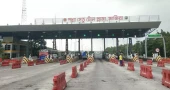
Padma Bridge ETC toll revenue surpasses Tk 10 crore, vehicle registrations top 1,000
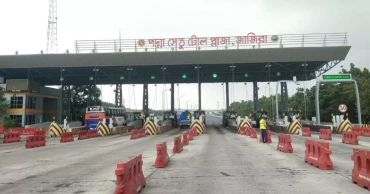
The Electronic Toll Collection (ETC) system at the Padma Bridge has crossed another milestone collecting over Tk 10 crore in tolls while registering over 1,000 vehicles since its launch, the Bangladesh Bridge Authority said on Monday.
The authority said toll collection across the country has gained fresh momentum through the ETC system, introduced following an announcement by Prime Minister Tarique Rahman.
The initiative, aimed at replacing manual toll collection with a unified cashless and digital system nationwide, has quickly won the trust of bridge users, it said.
As of Sunday, total toll collection through ETC stood at Tk 10,08,24,600, marking the crossing of the Tk 10-crore milestone.
The number of vehicles registered under ETC including long-haul buses, commercial trucks and private cars that regularly use the bridge, has risen to 1,008. Since the service began, a total of 56,406 vehicles have crossed the bridge seamlessly by paying tolls electronically.
Bridges Division Secretary and Bridge Authority Executive Director Mohammad Abdur Rouf said the authority has been working tirelessly to implement the prime minister's visionary decision to bring discipline to road transport and ensure convenience for the public through ETC-based toll collection.
He said collecting over Tk 10 crore in tolls and registering more than 1,000 vehicles through the ETC system is not merely a statistic but a major success in making the country's public transport sector technology-friendly and cashless. "I extend my heartfelt thanks and congratulations to all officials, employees, technical partners, transport owners' associations and bridge users who placed their trust in this system for this achievement."
To ease the process for users, toll payment at the Padma Bridge has been made simple and fast. Customers can now pay tolls through popular mobile financial services (MFS) such as Tap, bKash, Nagad and Upay, as well as through mobile and digital banking apps of various commercial banks, eliminating the hassle of standing in long queues for cash transactions.
Currently, toll payments at the Padma Bridge can be made through various MFS apps and the apps of Trust Bank's TAP, Midland Bank, NCC Bank, Prime Bank and Mutual Trust Bank.
Users can complete registration by entering the "Motor Vehicle Registration" option under "D-Toll" in the relevant app, providing the vehicle number and the last four digits of the chassis number. After registration, users need to recharge the required amount through the "D-Toll Top-Up" service.
For first-time use, vehicle owners must visit the registration booth near Mawa toll plaza or the toll booth itself to verify their BRTA-approved RFID tag. Once registered, users can cross the Padma Bridge seamlessly through the ETC lane, using the same RFID tag issued by BRTA without needing a separate tag.
Leading bus operators on the country's south-western routes, including Emad Paribahan, Dola Paribahan, Sarbik Paribahan and Golden Line Paribahan, along with numerous commercial and private vehicle owners, have already registered for ETC and are regularly using the facility, the authority said.
Vehicles using the ETC lane do not need to stop at the toll plaza, instead paying tolls automatically while maintaining a speed of around 60 kilometres per hour.
This has reduced waiting time at the plaza to zero and prevented severe congestion during peak periods such as Eid. Since vehicles no longer need to stop and start, fuel wastage has been reduced and carbon emissions lowered, ensuring a more sustainable and environment-friendly transport system.
The Bridge Authority said it firmly believes the ETC model at the Padma Bridge has set a new benchmark for highway and bridge management across the country. Following the prime minister's directives, efforts are under way to bring the Padma Bridge's toll collection fully under an automated system, while extending cashless ETC facilities to other major bridges, expressways and tunnels across the country.
The authority urged all transport owners and drivers to complete ETC registration for their vehicles as soon as possible, reaffirming its commitment to ensuring faster, safer and world-class modern road services for the public.
7 days ago
Climate change projected to cause more AC adoption for wealthy, shorter lives for poor: Report
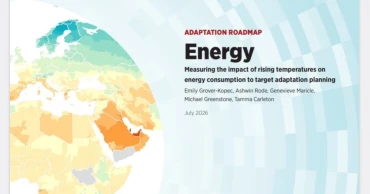
Climate-driven temperature changes are on track to cause about 430,000 more deaths annually by 2050-with 10 times more deaths occurring in poor countries than in richer countries, according to a new report released on Monday.
How many of those lives can be saved largely depends on access to energy, particularly the electricity needed for cooling.
Yet, a new Climate Impact Lab report finds that many of the regions most impacted by extreme heat will also lack the resources to power the cooling needed to adapt.
"Bangladesh is a clear example of why electricity access and electricity use are not the same thing. Nearly the whole country already has power access, yet people in the hardest-hit regions are not using much more of it, even as heat deaths there are projected to climb. Having a connection is not the same as increasing how much power gets used. That gap is what this report points to," said Ashwin Rode, Director, Scientific Research, Energy Policy Institute at the University of Chicago and Fellow at the Climate Impact Lab.
Michael Greenstone, a co-founder of the Climate Impact Lab and the Milton Friedman Distinguished Service Professor in Economics at the University of Chicago said air conditioning is a life saver, and climate change will no doubt lead to more AC adoption in today’s wealthy countries.
"Our research finds, however, that in too many countries around the world people will not be able to respond in the same way. The result is one of climate’s great cruelties-lots of death in the very countries that have contributed the least to climate change,” Greenstone said.
"These findings are a clarion bell that many countries do not have much time to improve the functioning of their electricity markets so they deliver inexpensive and reliable energy and identify other successful adaptations that can save lives.”
The report finds that today only the world's richest have the resources needed to power cooling.
As the world warms, many middle-income countries will see their economies grow enough and their energy markets mature enough to support greater consumption of electricity and access to cooling.
Electricity used for cooling is projected to grow seven times more in middle-income than in low-income countries due to climate change.
In fact, the growth of electricity use per person due to a warming climate in low-income countries is projected to be so small it would only be enough to power a single LED bulb for four months.
The same poor countries projected to see so little increase in electricity also tend to be hotter than other countries.
The report identifies areas in 18 countries—home to 676 million people—that are trapped in this deadly combination of extreme heat and lack of cooling.
Due to hotter temperatures and little projected increase in energy consumption, around 377,000 people in these areas are set to die annually by 2050.
All of these people live in either low-income or lower middle-income countries today, mostly in northern sub-Saharan Africa such as Niger, Mali, Burkina Faso and Chad.
The rest live in Southern Asia, including Pakistan, Bangladesh, Nepal and Myanmar.
These trapped countries sit in stark contrast to their wealthier neighbors. For example, countries across the Gulf like Bahrain, Kuwait and Saudia Arabia are equally as hot as sub-Saharan Africa.
But Gulf countries consume much more electricity for cooling and are projected to have big increases, leading to far fewer deaths.
Take Niger and Saudi Arabia. The projected increase in electricity use per person in Niger will be 1/9th that of Saudi Arabia, and communities in Niger will lose 27,000 more lives annually in 2050 due to a warmer climate than its wealthier counterpart.
“We’ve identified the places most at risk of seeing more people die from the heat and least able to power up ACs to save them, so people and governments can zero in on saving the greatest number of lives,” said Ashwin Rode, a fellow at the Climate Impact Lab and director of scientific research at the Energy Policy Institute at the University of Chicago (EPIC).
“Communities will need to find ways to protect people from heat like improved energy access, employing heat early warning systems and action plans, expanded healthcare access, and targeted social programs. But as of now, many adaptation approaches remain untested. We’re working to change that.”
The Climate Impact Lab is developing a global playbook of data-driven, adaptation priorities and tested adaptation strategies for funders national and local governments, and the people that will increasingly face climate risks.
The approaches proven thus far to be effective are available in the Lab’s Adaptation Inventory.
This report, with a focus on energy use, is the second in the Lab’s Adaptation Roadmap series that takes as its starting point the urgent need to embrace adaptation as a central part of the strategy to confront climate change, alongside greenhouse gas emissions mitigation.
The Climate Impact Lab’s global network of economists, climate scientists, data engineers, and risk analysts are identifying where climate adaptations are most needed and what investments will deliver the greatest benefits to communities.
7 days ago
Monsoon depression intensifies into deep depression over Northwest Bay
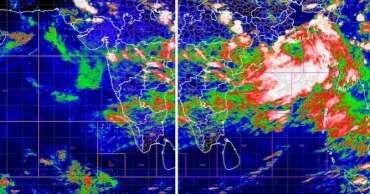
The monsoon depression over Northwest Bay and adjoining Odisha-West Bengal coasts intensified into a deep depression.
It is now lies over Northwest Bay and adjoining West Bengal-North Odisha coasts (near
lat. 21.2°N and lon. 88.1°E) at 0600 am on Monday (27 July, 2026) about 425 km west-southwest of Chattogram, 430 km west of Cox's Bazar, 220 km west-southwest of Mongla and 260 km west-southwest of Payra, said a special bulletin of Met office.
It is likely to move north-northwestwards and cross West Bengal-north Odisha coasts by evening on Monday.
Under its influence, squally weather may affect the Maritime Ports, North Bay and adjoining Coastal areas of Bangladesh.
Maximum sustained wind speed within 48 km of the deep depression centre is about 50 kph rising to 60 kph in gusts or squalls.
Sea will remain rough near the deep depression centre.
Maritime ports of Chattogram, Cox's Bazar, Mongla and Payra have been advised to keep hoisted local cautionary signal No 3.
All fishing boats and trawlers over North Bay have been advised to remain in shelter till further notice.
7 days ago

BMD forecasts light to moderate rain across country
Bangladesh Meteorological Department (BMD) has forecast light to moderate rain across the country in the next 24 hours commencing 9am on Monday.
“Light to moderate rain or thunder showers accompanied by temporary gusty wind are likely to occur at most places over Rajshahi, Dhaka, Khulna, Barishal and Chattogram divisions and at a few places over Rangpur, Mymensingh and Sylhet divisions, with moderately heavy to heavy falls at places across the country,” the BMD said.
Teknaf recorded the country’s highest rainfall of 49mm in the 24 hours till 6am on Monday.
Day and night temperatures may fall slightly across the country.
The axis of the monsoon trough runs through Rajasthan, Uttar Pradesh, Bihar, the centre of the deep depression and Assam, extending across the southern part of Bangladesh.
Monsoon is active over Bangladesh and strong over the North Bay.
7 days ago

DMP urges Dhaka residents to register with CIMS to help strengthen public safety
The Dhaka Metropolitan Police (DMP) has urged all landlords, tenants and mess residents in the capital to register with the Citizen Information Management System (CIMS), saying the digital database is playing an important role in strengthening public safety and technology-based policing.
According to the DMP, around 3,673,238 households have so far been registered in the CIMS database, which contains information on more than five million residents. Describing the initiative as an ongoing process, the police said participation by all city residents is essential to ensuring both individual and national security.
The software-based CIMS programme was formally launched at Ramna Police Station on Sept 1, 2016, to enhance security across the capital. It was later expanded to all police stations in Dhaka in 2017, while the CIMS mobile app was introduced in 2019 to make the registration process easier for citizens.
The DMP said CIMS stores accurate and updated information on residents, making beat policing more effective. The database also helps prevent crime, supports investigations, assists in identifying missing persons, verifies the identities of suspected individuals and enables faster access to information during emergencies.
Registration forms are available at all police stations and police outposts in Dhaka. Residents can collect the forms, fill them out and submit them to the respective police station. The DMP advised applicants to keep a photocopy of the completed form for future reference.
The capital's police stations are divided into multiple beats, each overseen by a designated beat officer. Residents may contact their respective beat officers directly for police assistance. Those who change their address are required to register again with the police station having jurisdiction over their new residence.
The DMP said CIMS also benefits landlords by helping verify the identities of tenants, reducing the risk of criminals or fraudsters taking shelter in rented properties and protecting landlords from unnecessary harassment.
Tenants, meanwhile, can become acquainted with their beat officers, seek legal assistance when necessary and benefit from identity verification through the system.
The police said the CIMS database has been contributing to criminal investigations by helping identify absconding offenders, verify information on suspects and facilitate prompt action to prevent crime. It also strengthens beat policing and enhances public trust between citizens and the police.
The DMP called on all landlords, tenants and mess members in the capital to complete their CIMS registration to help build a safer, smarter and crime-free Dhaka.
8 days ago