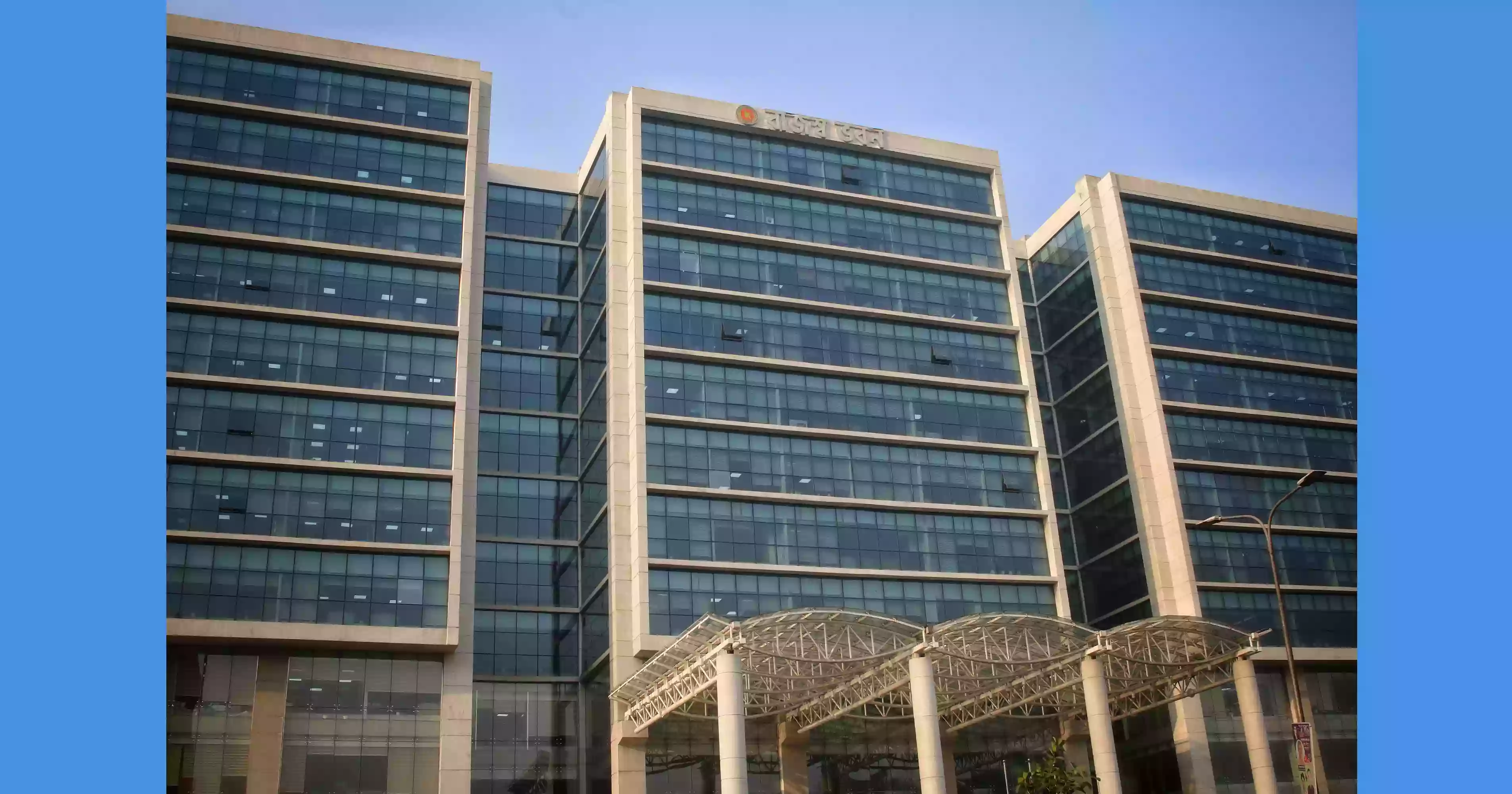
National Board of Revenue (NBR) Chairman Md Abdur Rahman Khan on Monday said Bangladesh has already slipped into a form of debt trap, and the nation must confront this uncomfortable truth if it wants to restore stability.
“despite wide-ranging debates on growth, inflation and economic management, the core challenge remains unchanged: Bangladesh must significantly increase domestic revenue to reduce its dependence on borrowing,” he said.
He was Speaking at a seminar on the Bangladesh State of the Economy 2025 and the Sustainable Development Goals: Bangladesh Progress Report 2025 as the chief guest at the NEC Conference Room in the capital’s Sher-e-Bangla Nagar area.
The event was organised by the General Economics Division (GED) of the Planning Commission in collaboration with UNICEF Bangladesh.
The NBR chief said all indicators point to the same conclusion. “We have already gone into a long-term debt trajectory. The sooner we accept this reality, the sooner we can move forward,” he said.
He noted that although revenue collection has expanded from Tk 168 crore in 1972 to Tk 3.78 lakh crore in the last fiscal year, the amount remains far below what the economy requires to operate without leaning on external financing.
Khan expressed concern over the continuous decline in the tax-GDP ratio, which has dropped from above 10 percent a few years ago to just around seven percent at present.
He described the trend as dangerous for an economy already struggling with limited fiscal space. He pointed out that even Uganda, often mentioned humorously in discussions, maintains a tax-GDP ratio of around 12.5 percent. According to him, Bangladesh’s deteriorating ratio reflects both structural problems in GDP measurement and large portions of economic activity that remain outside the tax net.
The NBR chairman acknowledged that long-standing tax exemptions and distortions—especially in the VAT system—have weakened domestic mobilisation and pushed the country deeper into debt dependence.
He noted that despite the intention of VAT being a consumer-borne tax, business groups have continued to demand exemptions, contributing to widespread distortions and revenue losses.
“Traders are simply collectors on behalf of the state. VAT is paid by the final consumer. But we have failed to make this understood,” he said.
He warned that Bangladesh’s reliance on import duties for revenue is unsustainable, particularly in view of upcoming LDC graduation, when preferential duties will decline. This means the country must shift its focus to income tax and a clean, distortion-free VAT system. He suggested that Bangladesh may even need a completely new VAT law to ensure fair, uniform and efficient implementation.
Khan further said that the weakness in revenue mobilisation has already forced Bangladesh into heavier borrowing, deepening concerns about a debt trap. Reduced development spending, stagnating imports, stress in the banking sector and leakage across tax streams have all contributed to falling tax intake.
These weaknesses, he said, increase the government’s reliance on debt to finance essential operations.
The NBR chief highlighted ongoing efforts to reverse the trend, including stricter enforcement in areas where revenue losses are high, expanded digitalisation across tax systems, automated audit selection and refund processes, and measures to discourage excessive cash transactions.
He emphasised that digitalisation — both within NBR and across government systems — is essential for transparency and accountability, and for closing the loopholes that perpetuate revenue leakage.
He also said that NBR will no longer issue tax exemptions on its own, as all exemptions will now require parliamentary approval under the newly adopted tax expenditure policy.
NBR uncovers Tk 9 crore revenue evasion by United Tobacco
According to him, this approach will help bring discipline and reduce arbitrary tax waivers that have narrowed the revenue base.
Khan confirmed that the process of separating tax policy from tax administration is nearing completion, and that two independent divisions headed by separate secretaries will soon be in operation. He said the reform is expected to bring fairness, reduce distortions and support sustainable revenue growth.
Reiterating that debt pressures are already constraining the economy, Khan said Bangladesh must act decisively. “We cannot move forward by denying the truth. Our only remedy now is to strengthen domestic revenue, eliminate distortions, and restore discipline in the tax system.”