others

Barishal’s Manta community calls for inclusive public services and social protection
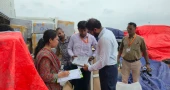
Members of Barishal’s floating Manta fisherfolk community have urged authorities to ensure better access to public services, social protection and recognition of their rights.
The demand was raised at a dialogue titled “Dialogue with Local Authorities” held at Barishal Club on Thursday under the MantaConnect project, implemented by YouthNet Global with support from The Asia Foundation.
The event brought together local authorities, government officials, development partners and Manta community representatives to discuss challenges faced by river-dependent families, including limited access to education, healthcare, financial services, land rights and government support.
Barishal City Corporation Administrator Advocate Bilkis Akter Jahan Shirin, who attended the event as chief guest, said all people are equal and pledged to support marginalised communities.
She said, “We are all human beings, and we have to live together. Everyone is equal to me. We cannot move forward by creating divisions among people based on identity or background.”
She added, “It is our responsibility to work for communities that have been left behind. Land rights and basic services are important issues for sociallly excluded people. At a personal level, I will work for the Manta community. They can come to the City Corporation with their needs, and I will always stand beside them.”
Jashim Sardar, a Manta community representative said access to education, healthcare and social protection remains a major challenge for families living in river areas, stressing the need for stronger connections with public institutions and long-term support.
YouthNet Global Executive Coordinator Sohanur Rahman said the Manta people should be recognised first as citizens with equal rights and dignity.
“Ensuring their access to education, healthcare, financial inclusion and social dignity is a matter of fundamental rights,” he said.
YouthNet Global General Secretary Arifur Rahman Shuvo said the Manta people are an integral part of Bangladesh’s society and have the right to participate fully in social and economic development.
Government officials attending the dialogue assured continued cooperation to improve access to available services, while participants stressed the need for stronger coordination among institutions to ensure sustainable development and inclusion of the community.
4 days ago
Action to be taken over canal excavation irregularities: Relief Minister Dulu
Disaster Management and Relief Minister Asadul Habib Dulu on Thursday said the government will investigate allegations of irregularities in canal excavation projects and take action if any wrongdoing is found.
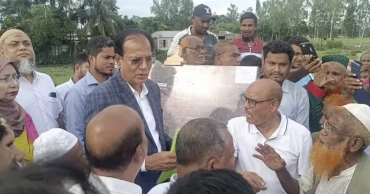
Speaking to reporters after visiting the Zia Canal in Kukrul area of Rangpur city, the minister said authorities have received reports of irregularities in some canal excavation works and those complaints would be thoroughly investigated.
He also said the government is planning to bring the maintenance of trees along both sides of canals under a social agreement scheme. Under the initiative, poor local residents, particularly women, will be entrusted with maintaining one to two kilometres of roadside trees. They will receive a share of the benefits from the trees while ensuring their protection and care.
Referring to the government's election pledge, Dulu said the ruling party had promised to excavate 25,000 kilometres of canals within five years. He said the Prime Minister inaugurated the programme soon after assuming office and canal excavation work is currently underway across the country.
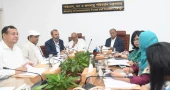
Earlier in the day, Dulu attended a meeting of the management committee of Rangpur Medical College Hospital and later inspected its facilities.
During the visit, he announced that 10 additional ICU beds would be introduced at the hospital within the next two months, raising the total number of ICU beds to 20. He also said the entire hospital would be brought under CCTV surveillance to strengthen security.
The minister said all illegal structures inside the hospital premises would be removed and additional manpower would be recruited through outsourcing to improve healthcare services.
4 days ago
Call for coordinated action for sustainable e-waste management in Bangladesh
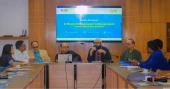
Experts, policymakers and environmental advocates on Thursday called for coordinated national action, stronger implementation and greater public participation to tackle Bangladesh's growing electronic waste (e-waste) challenge, stressing that the country must adopt sustainable and circular economy-based solutions.
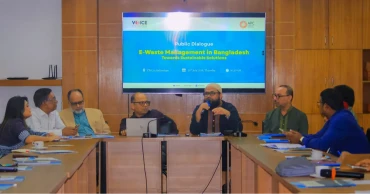
The call came at a national public dialogue titled "Electronic Waste Management in Bangladesh: Towards Sustainable Solutions", organised by rights-based advocacy organisation VOICE with support from the Association for Progressive Communications (APC) at the YWCA auditorium in Dhaka.
The discussion focused on strengthening environmental governance, accountability and sustainable e-waste management as Bangladesh's digital economy continues to expand.
According to a recent assessment presented by VOICE, Bangladesh generates around 30 lakh tonnes of e-waste annually, a figure projected to rise to 46.2 lakh tonnes by 2035 if current trends continue.
At present, only about 10 percent of the country's e-waste is processed through 14 formal recycling facilities, while the remainder is handled by the informal sector, raising serious environmental and public health concerns.
Presenting the keynote paper, VOICE Deputy Director Musharrat Mahera highlighted existing policy and implementation gaps and outlined recommendations for improving the country's e-waste management system.
Speaking as the chief guest, Department of Environment Director Mohammed Solaiman Haider said sustainable e-waste management requires collective responsibility beyond government initiatives.
"Every institution must identify its own challenges and take responsibility for addressing them. Alongside government efforts, private investment, decentralised approaches and multi-stakeholder collaboration are essential for sustainable electronic waste management," he said.
Prof Mostafizur Rahman of Jahangirnagar University's Department of Environmental Sciences warned that Bangladesh should prepare for the increasing volume of e-waste generated by renewable energy technologies, particularly solar panels.
He stressed the need for safe recycling systems, stronger research, greater private sector investment and closer collaboration among government agencies, industry and the informal sector.
Consultant (Medical Waste Management) at the Directorate General of Health Services (DGHS) Tarit Kanti Biswas said effective e-waste management requires adequate infrastructure, stronger enforcement and sustainable financing alongside policy reforms and awareness campaigns.
Concluding the event, VOICE Executive Director Ahmed Swapan Mahmud emphasised that public awareness should become a national priority.
He said awareness campaigns, outreach programmes and workshops should be expanded across public and private universities to equip young people with the knowledge needed to adopt responsible e-waste practices and contribute to sustainable management.
Representatives from Citizens' Initiative, Bangladesh Poribesh Andolon (BAPA), Work for a Better Bangladesh (WBB) Trust, recycling companies and media organisations also attended the dialogue.
Participants recommended implementing a coordinated national policy, establishing an effective monitoring mechanism and ensuring active engagement of government, private sector and civil society to build a sustainable e-waste management system.
They also highlighted the importance of promoting environmentally sound recycling practices and advancing circular economy initiatives so that electronic waste can be transformed from an environmental burden into a valuable resource.
4 days ago
43% of 2026 tree plantation target achieved: Adviser Nazrul
Nazrul Islam Khan, the prime minister's political adviser and a member of BNP's Standing Committee, on Thursday said 43 percent of the tree plantation target set for 2026 under the government's five-year, 25-crore tree plantation programme has already been achieved.
"A total of 5,14,88,930 saplings were planned to be planted across various ministries, divisions and agencies in 2026, of which nearly 43 percent had already been planted so far," Nazrul made the remarks while addressing the 4th meeting of the cell formed to implement the government's election pledge of planting 25 crore trees in five years.
DSCC to plant 300,000 trees over five years
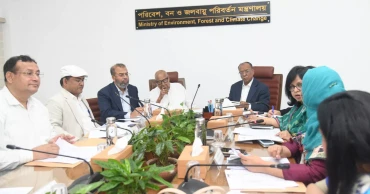
The meeting was held at the conference room of the Ministry of Environment, Forest and Climate Change, where Nazrul currently oversees the cell's activities.
He said ministries and agencies lagging behind in achieving their targets have been instructed to accelerate plantation activities by making full use of the current monsoon season.
The programme must be turned into a nationwide social movement, Nazrul said, stressing the need to involve women, the younger generation, students and rural communities from all sections of society.
He said concerned institutions must act responsibly to ensure that native tree species suited to local soil, climate and biodiversity are planted at appropriate locations, while also ensuring the survival rate of the saplings.
Environment, Forest and Climate Change Minister Abdul Awal Mintoo said that beyond planting saplings, ensuring regular post-plantation care, protection and effective monitoring is essential to make the government's election pledge of planting 25 crore trees in five years a success.
He called for enhancing the capacity of both public and private nurseries and stressed prioritising native species by following the "right tree, right place" policy.
The minister urged encouraging people to plant economically beneficial trees such as coconut, palm, date palm and betel nut, and suggested planned plantation on government khas land, roads, railways, riverbanks, chars and coastal areas.
He also emphasised involving students, scouts, the Bangladesh National Cadet Corps (BNCC), Rovers, youth organisations, voluntary bodies, the private sector, industrial establishments and NGOs in the programme.
State Minister for Environment, Forest and Climate Change Shaikh Faridul Islam said two crore trees will be planted in coastal areas between December and January, which would help achieve this year's target by next January.
He said an integrated monitoring system will be developed to oversee the care, protection, replanting where necessary, and survival rate of the planted saplings.
Saimum Parvez, special assistant to the prime minister on environment, forest and climate change affairs, said effective action plans must be formulated to create more than three and a half lakh green jobs through the participation of women, youth and rural communities in the plantation drive, alongside developing new nursery entrepreneurs across the country.
The meeting also discussed progress on developing a "Tree Monitoring App" to digitally record the GPS-based location, species, plantation date, geo-tagged photographs and care details of every planted tree.
The app is designed to display the survival rate of trees, replacement plantation data, district- and institution-wise progress, and real-time reports on a national dashboard.
4 days ago
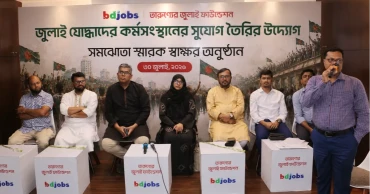
Bdjobs, Tarunner July join hands to create employment opportunities for injured July fighters
Country’s leading job portal Bdjobs and ‘Tarunner July Foundation’ have joined hands to create employment opportunities for the injured and unemployed fighters of the July 2024 mass uprising.
On the occasion of signing the Memorandum of Understanding (MoU), a press conference held in the capital’s Karwan Bazar on Thursday (July 30).
Fahim Mashroor, Founder and Chief Executive Officer of Bdjobs, and Md. Sagar Uddin, President of Tarunner July Foundation, signed the agreement on behalf of their respective organizations.
Under the initiative, Bdjobs and Tarunner July will provide tailored technical and vocational training to injured and currently unemployed July fighters to prepare them for the job market. Career development workshops covering CV writing and interview techniques will also be organized to help them secure suitable employment. Additionally, candidate profiles will be given special highlighted visibility on the Bdjobs platform to capture the attention of prospective employers.
Speaking at the event, Bdjobs CEO Fahim Mashroor noted that over 1,400 people were martyred and around 20,000 were injured or disabled during the anti-autocracy movement in July and August 2024.
"Although some rehabilitation projects have been undertaken by the government, many injured fighters and their families are currently facing severe financial hardship," Mashroor said.
"Many lost their jobs following the 2024 movement due to medical treatments, while others are struggling to find employment due to physical disabilities,” he said.
Aamar Bangladesh Party (AB Party) President Mujibur Rahman Manju highlighted the historical significance of the uprising, noting that politicians across government and opposition parties are now able to practice politics freely because of the July movement’s success.
He urged all sectors out of a sense of gratitude to step forward to alleviate the financial distress of the injured, thanking Bdjobs for taking the initiative. Manju also requested the Ministry of Expatriates' Welfare and Overseas Employment to facilitate low-cost overseas employment opportunities for July fighters.
Rehana Sultana, an injured victim from Narsingdi, shared her ordeal at the event while carrying her child. She recalled being pregnant in July when a bullet passed through her body during police firing. Despite surviving against all odds, she brought her child to the event as a testament to her survival.
Md. Sagar Uddin, President of Tarunner July Foundation, reaffirmed the foundation's commitment to working for the welfare of those injured in 2024, stating that the joint initiative with Bdjobs is a continuation of these ongoing efforts.
The event was moderated by Ahadul Islam, General Secretary of Tarunner July. Among others present were Rokeya Begum, Member of Parliament and mother of martyr Jabir; Sajjadul Islam Miraj, Member Secretary of BNP’s Dhaka Metropolitan North Jubo Dal; and several injured July fighters, according to a press release.
4 days ago
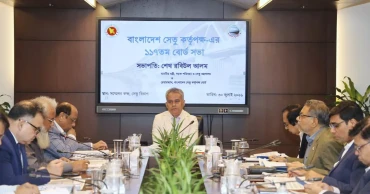
Bridge Authority approves 55MW solar plant on Jamuna Bridge land
The Bangladesh Bridge Authority (BBA) has approved leasing 120 acres of land at the Jamuna Bridge site to Northwest Power Generation Company Limited (NWPGCL) for setting up a 55-megawatt solar power plant, aimed at promoting environment-friendly and sustainable energy generation.
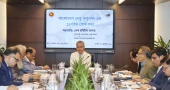
The decision was taken at the 117th board meeting of the Bridge Authority held at the conference room of Setu Bhaban on Thursday afternoon, chaired by Road Transport and Bridges Minister and Chairman of the BBA Board Shaikh Rabiul Alam.
Board members attended the meeting both in person and through the Zoom online platform, and shared their opinions on various proposals.
At the outset of the meeting, Bridges Division Secretary Mohammad Abdur Rouf and Executive Director of the Bangladesh Bridge Authority presented the agenda and gave a detailed account of the progress made in implementing decisions of the previous board meeting.
Following discussion and review, the board took a series of key decisions.
Apart from approving the solar plant land lease, the board decided to revise the existing rehabilitation policy for flat allocation at the Rehabilitation Village, in order to better safeguard the rights of families affected by the Dhaka Elevated Expressway construction project.
As part of the government's green employment initiative, the board also approved incorporating solar panel installation into the Bridge Authority's scope of work and preparing a master plan in this regard.
The meeting approved renewal of the agreement for operating BIAM Laboratory School at Diabari in Uttara.
The board also decided to establish a Centre for Bridge Research and Training (CBRT) under the Bangladesh Bridge Authority to build professional knowledge, expertise and research capacity in constructing and maintaining larger structures.
Additionally, the board approved replacing the term "annual scholarship" with "annual education grant assistance" under the Bangladesh Bridge Authority Officers and Employees Welfare Trust Rules, 2010 to clarify the nature of the welfare benefit.
In his remarks as chair, Minister Rabiul said the present government is working to build a sustainable and environment-friendly communication system.
He directed all officials and authorities concerned to work with dedication to ensure quick and transparent implementation of all decisions taken by the board.
4 days ago

Minister urges Grameenphone to address concerns over call drops, network quality
Posts, Telecommunications and Information Technology and Science and Technology Minister, Faqir Mahbub Anam on Thursday urged mobile network operators to take effective measures to address issues related to call drops, network quality and the pricing of voice and data packages.
The Minister made the remarks while addressing the inauguration ceremony of Grameenphone's "Digital Inclusion for Marginalized Communities – Phase II" initiative as the Chief Guest at Sheraton Dhaka in Banani today.
The minister said that under the leadership of Prime Minister Tarique Rahman, Bangladesh is working relentlessly to expand digital connectivity across the country.
To achieve the national goal of becoming a US$1 trillion economy by 2034, the Government is placing strong emphasis on meaningful digital inclusion, digital literacy, and the development of a skilled workforce.
Calling for further expansion of telecommunications services in remote and underserved areas, the Minister said that no region should be left behind in the country's digital transformation journey.
He emphasised that accessible and affordable connectivity is essential for inclusive development and improving people's quality of life.
Referring to public concerns over telecommunications services, the minister said that while business growth is important, equal importance must also be given to customers' expectations and interests.
Later, the minister formally inaugurated Grameenphone's "Digital Inclusion for Marginalized Communities – Phase II" programme.
Grameenphone Chief Executive Officer (CEO) Yasir Azman, Chairman of the Bangladesh Telecommunication Regulatory Commission (BTRC) Major General (Retd.) Md. Emdad Ul Bari, senior government officials, representatives from the private sector, development partners, and other stakeholders were present at the event.
4 days ago
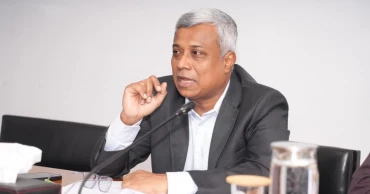
No wasteful spending on unplanned and unnecessary projects: Aninda Islam Amit
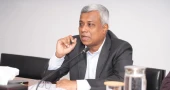
State Minister for Power, Energy and Mineral Resources Aninda Islam Amit on Thursday said the government would not allow a repeat of past practices of wasting public money on unplanned and unnecessary projects, stressing the need for evidence based planning and priority setting.
He made the remarks while attending two separate meetings at the Secretariat, one on improving the efficiency and cost effectiveness of energy and electricity demand, production and distribution, and the other on reviewing unapproved projects under the Power Division and determining their priorities.
At the meeting on the energy sector, the State Minister underscored the importance of preparing a comprehensive mapping of the country’s mineral resources.
He said Bangladesh needs a clear geographical and data based master map showing the location and potential of its mineral resources.
4 days ago
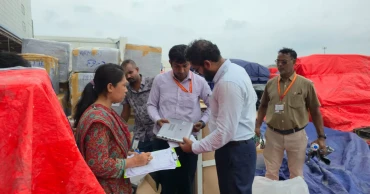
Customs seizes 101 cartons of misdeclared imported goods from UAE
Customs Intelligence and Investigation Directorate (CIID) officials have seized 101 cartons of allegedly misdeclared imported goods worth around Tk 1 crore at the air freight area of Hazrat Shahjalal International Airport, suspecting violations of Bangladesh’s import regulations.
The seizure was made on Thursday during a joint operation by officials from the CIID headquarters and its Air Freight Circle at the yard adjacent to Delivery Gate No. 8 of the airport’s air freight terminal.
According to the CIID, the consignment was imported from the United Arab Emirates by Sardar Global Trade under Air Waybill No. 176-63518722.The importer, through its nominated C&F agent Fahim 5 Star Ltd., submitted Bill of Entry No. C-764177 dated July 29, 2026 in the ASYCUDA World system for customs clearance.The declaration stated that the consignment contained motor parts, cosmetics, mini PCs, tablets, projectors and computer parts.
However, acting on prior intelligence, customs officials intercepted the shipment and carried out a physical examination.
4 days ago

ADP implementation falls to five-year low in FY26: IMED
The implementation rate of Annual Development Programme (ADP) fell to a five-year low in the fiscal year 2025-26, with ministries and divisions utilising only 67.52 per cent of the revised allocation, according to the Implementation Monitoring and Evaluation Division (IMED).
The latest IMED report showed that ministries and divisions implemented development projects worth Tk 141071.89 crore during July-June of FY26 against the revised ADP allocation of Tk 208,935.53 crore.
ADP implementation limps just over 40% in ten months of fiscal
The implementation rate was significantly lower than 68.18 per cent recorded in FY25, 80.63 per cent in FY24, 85.17 per cent in FY23 and 92.74 per cent in FY22, making FY26 the weakest performance in the past five years.
According to the report, the revised ADP allocation for FY26 stood at Tk 208,935.53 crore, compared with Tk 226,166.88 crore in FY25, Tk 254,391.64 crore in FY24, Tk 236,560.67 crore in FY23 and Tk 219,601.91 crore in FY22.
The total implementation during FY25 was Tk 154,189.83 crore, while expenditure reached Tk 205,118.38 crore in FY24, Tk 201,486.78 crore in FY23 and Tk 203,648.49 crore in FY22.
The IMED data also showed that spending in June 2026, the final month of the fiscal year, amounted to Tk 40,308.12 crore, accounting for 19.29 per cent of the revised ADP allocation.
In comparison, ministries and divisions spent Tk 43,318.10 crore in June 2025, representing 19.09 per cent of the revised ADP allocation for that fiscal year.
The ADP is the government’s principal public investment programme, financing infrastructure, education, health, energy, transport and other development projects.
The implementation rate is regarded as a key indicator of the government’s ability to execute development activities within the fiscal year.
The lower implementation in FY26 came despite substantial public investment allocations, highlighting challenges in project execution and timely utilisation of development funds.
4 days ago