USA

US Supreme Court allows Trump administration to revive restrictive asylum policy at Mexico border
The US Supreme Court on Thursday cleared the way for the Donald Trump administration to potentially reinstate a controversial immigration policy that had previously limited the number of migrants allowed to seek asylum at the US-Mexico border.
In a 6-3 ruling, the court overturned a lower court order that had blocked the practice, known as “metering,” which was first introduced under former President Barack Obama and later expanded during Trump’s first term.
The policy restricted the number of asylum applications accepted each day at border crossings, leading to long waiting lines and makeshift camps on the Mexican side of the border. Immigration advocates argued that the practice triggered a humanitarian crisis, while the Trump administration maintained it was necessary to manage rising numbers of asylum seekers.
Although the policy is not currently in effect, administration officials argued that it remains an important tool that should be available to future presidents.
Federal attorneys said migrants turned away at the border were not denied asylum permanently and could return later to apply, though critics noted that waitlists often stretched into the thousands.
The case is one of several immigration-related disputes before the Supreme Court, including challenges involving birthright citizenship and temporary legal protections for migrants fleeing conflict and instability.
Under US law, migrants who reach American soil are generally entitled to apply for asylum and seek protection if they fear persecution in their home countries.
However, the Justice Department argued that individuals stopped before being formally admitted into the country had not legally “arrived” in the United States and therefore were not entitled to immediate asylum processing.
Writing for the majority, Justice Samuel Alito said, “A guest does not arrive in a house when he knocks on the front door.”
Justice Sonia Sotomayor strongly dissented, warning that the ruling undermines America's long-standing commitment to offering refuge to those fleeing persecution.
The metering policy was first used during the Obama administration amid an influx of Haitian migrants at the San Diego-Tijuana border crossing and was later expanded to all crossings along the Mexican border during Trump's first term.
The practice ended in 2020 when broader restrictions were imposed during the COVID-19 pandemic and was formally rescinded by former President Joe Biden in 2021.
A federal judge in California ruled in 2021 that the policy violated asylum seekers' rights and federal law requiring migrants to be screened for fear of persecution. That decision was later upheld by an appeals court before reaching the Supreme Court.
US asylum law allows individuals seeking refuge to apply for protection regardless of whether they entered the country legally, provided they can demonstrate a credible fear of persecution based on factors such as race, religion, nationality, political opinion or membership in a particular social group. Those granted asylum are allowed to remain in the United States, work legally and eventually apply for permanent residency and citizenship.
1 month ago
Senate Republicans reject Iran war powers resolution after Trump rebukes dissenters
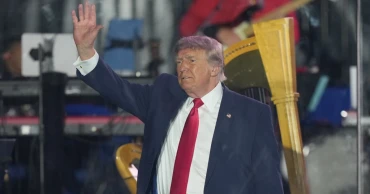
Senate Republicans late Wednesday voted down a war powers resolution aimed at curbing President Donald Trump's military actions against Iran, a day after a similar measure had passed, following intense pressure from the president.
The vote came hours after Trump sharply criticized Republican senators during a private lunch meeting for allowing the earlier resolution to advance, deepening tensions within the party over the administration's Iran policy.
The dispute has complicated Republican efforts to focus on domestic issues ahead of the elections, particularly concerns over affordability and the economy.
During the closed-door meeting with Senate Republicans, Trump questioned why any GOP senator would support a measure seeking to limit further US military action against Iran.
Republican Senator Bill Cassidy of Louisiana, one of four Republicans who backed the resolution, defended his position, saying the administration had failed to adequately explain its objectives in Iran to the American people.
"This is supposed to last four weeks. It's lasted four months. Our original objectives have not been achieved," Cassidy later told reporters.
According to Cassidy, the exchange became heated when he said he would continue supporting war powers resolutions until Congress received a full briefing on developments in Iran.
Trump reportedly raised his voice and repeatedly instructed Cassidy to sit down. A person familiar with the private meeting said the president at one point referred to the senator as a "lunatic."
Cassidy acknowledged that he also lost his temper during the confrontation, saying afterward that his reaction "was not appropriate."
Meanwhile, congressional Democrats on Wednesday called for investigations into renovations at the Lincoln Memorial Reflecting Pool, adding to the political turbulence surrounding the president's troubled $16 million rehabilitation project.
1 month ago
Zelenskyy says Russia shifting air defenses to protect Moscow
Ukrainian President Volodymyr Zelenskyy has claimed that Russia is redeploying a large portion of its air defense systems to protect key locations, including Moscow, as Ukrainian long-range drone attacks continue to strike targets deep inside Russian territory.
In a video address late Wednesday, Zelenskyy said Russia has strengthened defenses around Moscow, the town of Valdai, where Russian President Vladimir Putin has a residence, and the Kerch Bridge, a crucial supply route linking mainland Russia with Crimea.
According to Zelenskyy, hundreds of air defense missile launchers have been concentrated around Moscow, while nearly 90 launchers have reportedly been moved to Valdai from other regions.
Ukraine has significantly increased drone strikes on Russian military and energy facilities in recent months. Kyiv says the attacks have disrupted fuel supplies and military logistics, creating additional challenges for Russian forces more than four years into the war.
Ukrainian drones have recently targeted Moscow and St. Petersburg, while Kyiv is also seeking to weaken Russian control over Crimea, the Black Sea peninsula annexed by Russia in 2014.
Zelenskyy suggested that the redeployment of air defense systems could leave other parts of Russia more exposed to Ukrainian drone attacks. He said Ukraine's latest generation of drones can travel more than 1,500 kilometers.
"There are growing difficulties for Russia because Putin continues to reject proposals for meaningful talks and a peaceful settlement," Zelenskyy said.
Trump praises Zelenskyy
US President Donald Trump, who has previously criticized Zelenskyy, offered rare praise for the Ukrainian leader on Wednesday.
Speaking at the White House, Trump described Zelenskyy as "courageous" and said he was "doing pretty well" in the conflict.
Zelenskyy said he secured commitments for continued international support during the recent G7 summit and expressed hope that additional military assistance would strengthen Ukraine's campaign against Russia.
He added that Ukraine's operations, including those targeting Crimea, had been carefully planned and could increase pressure on Moscow to pursue peace negotiations.
Ukraine watching Belarus closely
Zelenskyy also said Ukrainian intelligence believes Belarus has switched off signal relay equipment that Kyiv claims was used to help guide Russian drones toward targets in Ukraine.
Last week, Ukraine demanded that Belarus remove the equipment and warned it could take action if the systems remained operational.
Despite the reported shutdown, Zelenskyy said concerns remain about Belarus, which allowed Russian forces to use its territory during the initial invasion of Ukraine in 2022.
Ukrainian authorities on Wednesday ordered mandatory evacuations from communities in the northern Chernihiv region near the Belarus border starting July 1.
Meanwhile, the Washington-based think tank Institute for the Study of War said Belarusian leader Alexander Lukashenko continues to balance relations between Moscow and Kyiv, while avoiding direct involvement in the war.
Ukraine's military chief, Oleksandr Syrskyi, recently said the country is strengthening defenses along its northern border and establishing new drone units in the area.
Russian strikes hit gas stations in Ukraine
Russia launched one ballistic missile and 90 attack drones overnight, according to Ukraine's air force.
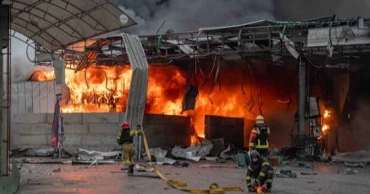
A Russian drone strike hit a gas station in the northeastern Sumy region on Thursday morning, injuring four people, including two employees, regional governor Oleh Hryhorov said.
He added that Russian forces have targeted gas stations in the region 13 times this month.
In the southern city of Zaporizhzhia, another overnight Russian attack injured a woman and damaged a gas station, according to regional governor Ivan Fedorov.
Russia's Defense Ministry said its air defense systems shot down 269 Ukrainian drones between late Wednesday and early Thursday. Several Russian airports also temporarily restricted flights during the attacks.
1 month ago
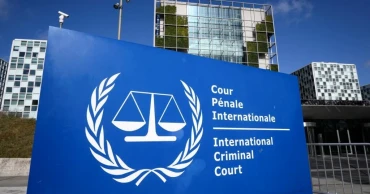
ICC judges sue Trump administration over sanctions
Three judges of the International Criminal Court (ICC) have filed a lawsuit in a federal court in Manhattan, challenging sanctions imposed on them by the Trump administration last year.
The judges, Kimberly Prost of Canada, Solomy Balungi Bossa of Uganda and Reine Adelaide Sophie Alapini-Gansou of Benin, argue in the lawsuit that the sanctions amount to “extra-judicial pressure” by targeting their financial and personal interests.
They claim that US President Donald Trump is seeking to punish them for previous judicial decisions made by the ICC, including the issuance of arrest warrants for Israeli Prime Minister Benjamin Netanyahu and the court’s decision to open an investigation into alleged war crimes committed by US troops in Afghanistan.
According to the lawsuit, the sanctions have significantly affected their ability to carry out routine activities. US sanctions generally prevent individuals from using financial institutions connected to the United States and can restrict access to various online services.
The judges said the measures have made it difficult to receive payments, manage financial affairs and travel internationally, creating major obstacles to performing their professional responsibilities. #Reports Al Jazeera
1 month ago
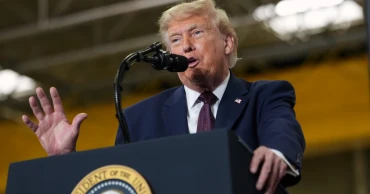
Trump says Iran deal will benefit US farmers, but Tehran rejects claim
President Donald Trump and Vice President JD Vance say the interim agreement reached with Iran to end the war could bring significant benefits to American farmers.
However, Iranian officials have rejected those claims, and experts on sanctions say it remains unclear how billions of dollars in frozen Iranian assets could be directed toward purchases from U.S. farmers.
Under a tentative agreement reached last week, the Strait of Hormuz would reopen and Iran would be allowed to resume unrestricted oil exports during a 60-day period while Washington and Tehran negotiate a broader settlement. The memorandum of understanding also includes provisions to unfreeze Iranian assets.
The agreement has drawn criticism for not directly addressing issues Trump cited when launching military action against Iran on Feb. 28, including Tehran’s nuclear programme, missile development and support for groups such as Hezbollah in Lebanon and Hamas in Gaza.
Responding to critics on Tuesday through his Truth Social platform, Trump argued that the deal would provide a financial boost for American agriculture.
He said the U.S. Treasury Department would release Iranian assets into escrow accounts controlled by the United States and that the funds would be used exclusively to purchase food and medical supplies from the United States, including corn, wheat and soybeans produced by American farmers.
“These are things that are desperately needed by Iran,” Trump wrote.
Vance also said after high-level talks in Switzerland that frozen Iranian funds held abroad would be used to purchase American agricultural products.
Iran, however, strongly disputed that interpretation.
Iranian Foreign Ministry spokesperson Esmail Baghaei said any future agricultural imports would be based on price and quality rather than conditions imposed by Washington.
“It is interesting that the philosophy and goal of the war, which was the destruction of the Iranian civilization and the collapse of Iran, has become enriching American farmers,” Baghaei said.
Iran’s ambassador to Geneva, Ali Bahreini, also rejected Vance’s assertion that the United States and Qatar would determine how Tehran spends its unfrozen assets.
“Iran is the only country who decides what to do with those assets,” Bahreini told reporters.
A U.S. official, speaking on condition of anonymity because they were not authorized to comment publicly, dismissed the apparent contradiction and said Iranian officials were addressing a domestic audience.
Joseph Glauber, a research fellow emeritus at the International Food Policy Research Institute, said Iran is unlikely to stop buying food from its traditional suppliers.
According to Glauber, Iran currently imports agricultural products from countries including Brazil, India, Turkey, Canada, Australia, Argentina and members of the European Union.
He said any U.S. requirement forcing Iran to buy American products could create tensions with competing suppliers.
Under previous sanctions arrangements, revenue earned by Iran from exports such as oil sales to South Korea or electricity sales to Iraq was typically placed in escrow accounts and released only with U.S. Treasury approval. Such funds were generally limited to purchases of non-sanctioned goods, including food and medicine.
On Monday, the U.S. Treasury approved sales of Iranian oil, petrochemicals and petroleum products through Aug. 21, although the announcement did not mention escrow accounts.
Richard Goldberg of the Foundation for Defense of Democracies, who helped coordinate pressure campaigns against Iran during Trump’s first administration, said on social media platform X that he would welcome clarification if Iran were indeed restricted to purchasing only U.S. agricultural products.
Richard Nephew, a senior research scholar at Columbia University’s Center on Global Energy Policy and a former sanctions adviser in the Obama and Biden administrations, said many questions remain about how the new agreement would work in practice.
Asked whether Washington could require Iran to use the unfrozen assets to buy American farm products, Nephew said such a move was technically possible.
“All you really need to do is to tell a foreign bank that they can move the money but only to a U.S. bank to buy soybeans or whatever,” he said in an email.
However, he noted that banks are not obligated to comply. If they refuse, the United States could impose sanctions on them.
Nephew added that such an approach would be unusual because Washington generally avoids creating the impression that national security policy is being used for financial gain.
1 month ago
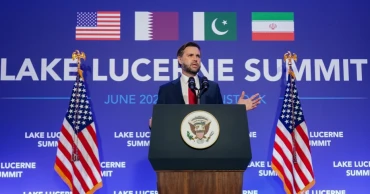
Talks with Iranian officials set 'good foundation' to end war: Vance
U.S. Vice President JD Vance said Monday that his extensive discussions with senior Iranian officials in Switzerland had created a "good foundation for a successful final deal" aimed at permanently ending the war that began in late February between Iran and the U.S.-Israel alliance.
Vance and other U.S. officials said progress had been made on several issues, including establishing mechanisms to keep the Strait of Hormuz, a crucial route for global energy shipments, open and addressing the conflict between Israel and Iran-backed Hezbollah fighters in southern Lebanon, where a ceasefire appeared to be holding.
The interim agreement signed last week by U.S. and Iranian leaders ended active fighting and established a 60-day period for negotiations on key issues, including the future of Iran's nuclear programme. Western countries have long expressed concerns that Tehran could use the programme for military purposes, an allegation Iran denies.
Vance left Switzerland while technical teams continued negotiations. Meanwhile, U.S. President Donald Trump highlighted efforts to reopen the Strait of Hormuz and boost oil supplies, saying the key to a lasting resolution was Iran's respect for the United States.
"As long as they respect us, I don't want to use the word fear because that's an inappropriate word, but as long as they respect us, we're not going to have any trouble," Trump said from the Oval Office.
Iran effectively shut down the Strait of Hormuz after U.S. and Israeli attacks on Feb. 28, triggering sharp increases in fuel prices worldwide. Under the interim agreement, the waterway is expected to reopen. Dozens of vessels passed through the strait over the weekend, although the main shipping channel remains mined and closed.
Iranian parliamentary speaker Mohammad Bagher Qalibaf, who led Iran's negotiating team, said Iran would continue managing the strait in accordance with international law.
"Hopefully we can activate the strait again, in terms of passage, and bring prosperity back to regional and global economy," Qalibaf told Iranian state media while returning from Switzerland.
Qalibaf and Foreign Minister Abbas Araghchi later travelled to Oman, where they met Foreign Minister Badr al Busaidi to discuss ongoing peace efforts and maritime security in the Strait of Hormuz.
As part of the interim agreement, the U.S. Treasury on Monday issued a 60-day waiver allowing certain transactions involving Iranian oil. The move could permit limited Iranian oil imports into the United States, something that has not occurred on a significant scale since the 1990s.
Shipping activity through the Strait of Hormuz continued to recover. Data from analytics firm Kpler showed 71 confirmed vessel transits during the weekend, including 35 crossings on Saturday alone. Before the conflict, the strait typically handled between 100 and 130 vessels daily.
Many ships are still avoiding the central shipping lane because of mines, instead using northern routes through Iranian waters or southern routes through Omani waters.
Oil markets reacted positively to the developments. Brent crude fell 3.2% to $77.52 per barrel, closer to pre-war levels, while U.S. benchmark crude dropped 2.6% to $73.86 per barrel.
Trump's influence loomed over negotiations
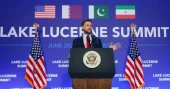
Although Trump did not attend the talks, known as the "Lake Lucerne Summit," his influence remained significant throughout the discussions. Negotiations began Sunday and continued into Monday, despite occasional tensions triggered by comments made by Trump from Washington.
"We haven't built the house, but we've laid a successful foundation to get to a good place for the American people," Vance told reporters.
The vice president also suggested the U.S. could unfreeze Iranian assets to finance purchases of American agricultural products, including soybeans, corn and wheat. He said the proposal was developed by Jared Kushner, Trump's son-in-law and a key U.S. negotiator, in coordination with Qatari officials.
According to Vance, Qatar would oversee the process, and Iranian funds released under sanctions relief would be used to buy American products for the benefit of the Iranian people.
Iran has not publicly responded to the proposal. Tehran has long sought access to billions of dollars in frozen assets blocked by sanctions, banking restrictions and legal disputes imposed by the United States and other countries.
Progress reported on Lebanon issue
Iranian officials also reported progress on efforts to halt fighting between Israel and Hezbollah in Lebanon, describing the issue as a crucial element of any broader peace agreement.
Foreign Minister Araghchi wrote on X that mediators had achieved "major progress" toward ending the conflict in Lebanon. However, he stressed that the true test would be whether the proposed mechanism succeeds in preventing further clashes between Israel and Hezbollah.
Neither Israel nor Hezbollah is formally part of the U.S.-Iran agreement.
Still, the ceasefire between the two sides appeared to be holding as of Monday evening.
"We have not detected trajectories from either side since yesterday," said Tilak Pokharel, spokesperson for the United Nations peacekeeping mission in southern Lebanon, known as UNIFIL.
He noted that Israeli military movements and airspace violations continued, but Hezbollah has not claimed any attacks against Israeli forces since Saturday.
The current lull marks the longest pause in fighting since the latest Israel-Hezbollah conflict erupted on March 2.
1 month ago
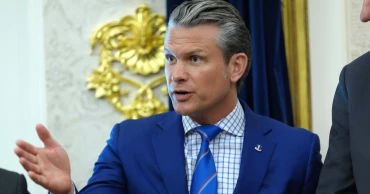
Pentagon seeks $80 billion from Congress for Iran war
The Pentagon has informed U.S. senators that it needs about $80 billion, mostly to cover the cost of the war with Iran, adding to the already massive increase in military spending sought by President Donald Trump.
Although the White House Office of Management and Budget has not yet submitted a formal request to Congress, Defense Secretary Pete Hegseth has been lobbying lawmakers on Capitol Hill, including during meetings on Monday evening. According to two people familiar with the matter, Deputy Defense Secretary Stephen Feinberg told senators last week that the funding request had been forwarded to the Office of Management and Budget. The Wall Street Journal first reported the development.
Lawmakers divided over war funding
The request comes at a politically sensitive time, as many lawmakers remain skeptical about Trump's agreement with Iran to end the conflict and are uncertain about future U.S. involvement. The White House has already proposed a record $1.5 trillion defense budget, nearly 50% higher than the current fiscal year's military spending.
Senate Majority Leader John Thune said he expects the administration to submit a supplemental funding request for the war and that lawmakers will review it carefully once it arrives.
"We need to make sure we're doing everything we can to replenish and resupply munitions that have been depleted, not only because of Iran but from previous operations as well," said Thune, a Republican from South Dakota.
The Pentagon has not commented publicly on the proposal.
However, the request is likely to face resistance from lawmakers who oppose Trump's decision to go to war and question increasing military spending while many Americans continue to struggle with rising living costs.
"You're spending families' hard-earned tax dollars on a war that many strongly oppose," Democratic Senator Patty Murray told Hegseth during a congressional hearing last month.
Pentagon budget plans
Apart from the Iran-related funding, Republicans are seeking about $1.1 trillion through the regular appropriations process, which typically requires bipartisan support. They also hope to secure another $350 billion later this summer through a separate measure that could pass largely along party lines.
The new $80 billion request is significantly higher than the $29 billion estimate Hegseth provided Congress last month. That earlier figure mainly covered replacing munitions, repairing equipment and operational costs for deployed forces. It did not include the cost of rebuilding or repairing U.S. military facilities damaged during the conflict.
The latest request is, however, much lower than the Pentagon's initial estimate of $200 billion at the start of the war. Early projections put the cost of the first week alone at $11.3 billion.
Concerns over rising costs
Democratic Senator Brian Schatz of Hawaii said the final cost could exceed the proposed $80 billion and suggested there is little support among Democrats for a war-focused funding package.
"I haven't found anyone who wants to do this," Schatz said.
Republican Senator Jim Banks of Indiana argued that the funding should be viewed primarily as a way to replenish military stockpiles and strengthen the U.S. defense manufacturing sector.
"I would sell it to my state as an investment in our defense industrial base and bringing defense production back to Indiana," Banks said.
Senator Jack Reed, the top Democrat on the Senate Armed Services Committee, said any supplemental defense package should be considered alongside broader negotiations on overall federal spending, including non-defense programs.
Meanwhile, Republican Senator John Hoeven of North Dakota said he has been working with the administration to expand the package by including disaster relief for states affected by wildfires and severe weather, as well as assistance for farmers.
"I think that's the kind of combination that could pass," Hoeven said.
Hegseth declined to answer questions from reporters at the Capitol on Monday evening.
During a Senate hearing last month, however, he defended the costs associated with the conflict, asking lawmakers: "What is the cost of Iran obtaining a nuclear weapon?"
He acknowledged that President Trump's decision to confront the threat of a nuclear-armed Iran comes with financial costs, adding that the administration is fully aware of those consequences.
1 month ago
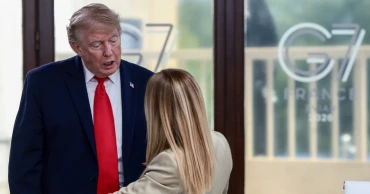
Trump-Meloni row deepens over disputed G7 summit photograph
US President Donald Trump on Saturday intensified a diplomatic dispute with Italian Prime Minister Giorgia Meloni, reiterating his claim that she repeatedly sought a photograph with him during the recent Group of Seven (G7) summit and criticising Italy’s stance during the Iran war.
In a post on his social media platform from the Camp David presidential retreat, Trump said Meloni had asked “over and over” for a picture with him at the G7 meeting in France. He also claimed that her popularity in Italy was declining and suggested it was linked to her refusal to support US efforts aimed at preventing Iran from acquiring or developing a nuclear weapon.
The remarks followed comments Trump made in an interview with Italian broadcaster La7, where he alleged Meloni had “begged” for the photograph. Meloni dismissed the claim as “completely fabricated.”
The dispute prompted Italy’s foreign minister to cancel a planned visit to the United States, while members of Meloni’s government publicly defended her.
Trump also criticised Italy for not allowing the US military to use Italian landing strips and runways during the Iran conflict, reviving longstanding complaints about NATO allies’ defence cooperation. Italy had declined in March to allow US bombers bound for the Middle East to use a military base in Sicily without parliamentary approval.
Trump further claimed that Meloni now “wants to be friends again” following the initial US-Iran agreement aimed at ending the war.
1 month ago
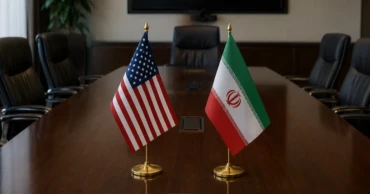
Vance delays Switzerland trip for new Iran nuclear talks
The White House said Thursday night that Vice President JD Vance was delaying a trip to Switzerland to lead a new round of negotiations with Iran over its nuclear program — raising questions about what’s next for the tentative agreement to end the war.
It said the team lead by Vance had been ready to leave but was postponing, citing difficult logistics for negotiations. The announcement followed a report from Al-Mayadeen, a pan-Arab satellite channel that is politically allied with the Iranian-backed Lebanese militant group Hezbollah, that Iran was delaying sending its delegation to Switzerland over Israel’s ongoing military campaign in Lebanon.
The postponement came after the U.S. said it had lifted its blockade, allowing oil tankers to begin freely moving through the Strait of Hormuz after months of being unable to use the critical channel. But the initial agreement has drawn sharp criticism from some in the U.S. — including a few congressional Republicans — who worry Washington ceded too much to Iran with relief from sanctions and a potential $300 billion fund to help with rebuilding.
Earlier, Vance took the relatively unusual step of appearing at the White House to defend the deal, arguing that while it offers concessions, Iran first has to comply with U.S. demands.
“As they dial up their good behavior, we can dial up the economic relief,” Vance said. “If they dial down their good behavior, we can turn it off.”
The vice president had said during those remarks that he was not sure of the timing of the planned trip to Switzerland, and the postponement makes that even less clear.
A top Trump administration envoy told U.S. lawmakers in a private briefing that Iran will invite the U.N.’s nuclear watchdog agency to inspect its nuclear sites. And Iranian Supreme Leader Ayatollah Mojtaba Khamenei had seemed to endorse direct negotiations for his officials.
“It is obvious that the face-to-face negotiations that will be held in the future will not mean accepting the enemy’s opinion,” he said in a statement read by state media.
It was Khamenei’s first reaction to the agreement, and it was interpreted as a shift in Iran’s approach. Hard-liners, especially Khamenei’s father, the previous supreme leader, have long opposed direct talks, especially after the U.S. pulled out of the 2015 nuclear deal between Iran and world powers.
The supreme leader has not been seen in public since he was wounded in a strike at the start of the war.
Lawmakers told Iran will invite UN inspectors to its nuclear sites
The agreement states that Iran’s stockpile of highly enriched uranium must at minimum be diluted under international supervision. It also says that Iran shall not procure or develop nuclear weapons — a commitment it has made previously.
Trump envoy Steve Witkoff told members of Congress that Iran will invite the International Atomic Energy Agency to inspect its nuclear sites and begin work on identifying and uncovering the locations of Tehran’s enriched material, which is believed to be buried under rubble.
Witkoff’s private briefing was described by two people familiar with the conversation who spoke to The Associated Press on condition of anonymity to share the closed-door details.
The agreement requires Iran to “commit to renounce their nuclear ambitions in writing,” said White House spokeswoman Olivia Wales. The IAEA did not respond to a request for comment.
Witkoff told congressional leadership and members of national security-related committees that the agreement that the U.S. struck with Iran did not include any side deals, but a side letter was drafted between Tehran and the IAEA extending the invitation.
Witkoff said the letter to IAEA Director-General Rafael Mariano Grossi would enable him to bring U.S. nuclear inspectors to Tehran.
Vance defends U.S.-Iran deal and has sharp words for Israel
Earlier, Pakistani Prime Minister Shehbaz Sharif postponed a planned visit to Switzerland, where Islamabad officials had originally planned to host a ceremonial signing ceremony for the agreement. That visit was postponed because the agreement had already been signed by both Iran and the U.S., said two senior officials who spoke on condition of anonymity because of the sensitivity of the matter.
President Donald Trump signed the initial pact with Iran on Wednesday while dining with French President Emmanuel Macron at the Palace of Versailles. The deal is slated to take immediate effect and extends a ceasefire while giving each side 60 days to hammer out broader agreements on larger issues.
Vance, who was initially personally skeptical of the U.S. going to war with Iran, has increasingly become the administration’s face of the conflict and has been outspoken in defending the deal.
At the White House on Thursday, he shrugged off criticism about the confusing rollout of the initial deal, saying, “I don’t think our public messaging has been chaotic.”
He also offered a blunt warning to Israel, which has pushed the U.S. to take a harder stance against Iran and launched attacks on the Iranian-backed Hezbollah militia in Lebanon throughout the war, including just before the deal extending the ceasefire was reached. Those attacks complicated the peace efforts with Iran.
Trump “is the only head of state in the entire world who is sympathetic to the nation of Israel at this moment in time,” Vance said. “And he happens to be the head of state of the world’s superpower.”
Shipping starts to pick up
Trump said he signed the agreement to avoid “economic catastrophe” in the U.S., after the war caused oil prices to skyrocket, made financial markets skittish and fueled inflation. The deal caused gas prices to fall and stock markets to rise — though rallies could be threatened again depending on how the next round of U.S.-Iran talks go.
The vice president said more than 12.5 million barrels of oil went through the Strait of Hormuz on Wednesday night and said that the U.S. easing its blockade of Iran means “honoring our end of the early part of the agreement on the military side.”
U.S. Central Command said American warships “will remain in the general area to make sure that all aspects of the agreement are adhered to, obeyed and in full force and effect.”
Iranian state media said shipping had “normalized” at Iran’s southern ports but added that the strait remains supervised and under the control of the Iranian military, and transiting through the vital waterway still requires coordination.
Major shipowners began moving vessels through the strait after the agreement was signed, according to maritime data company Lloyd’s List Intelligence, though Lloyd’s did not give data on how many ships have passed through the strait as of Thursday.
In a media briefing, Richard Meade, editor-in-chief of Lloyd’s List, said for the first time in 110 days, ships owned by major companies are transiting the strait after effectively being marooned there since February. months to fully reopen the strait, and the two alternative routes do not have as much capacity as the strait’s central passage.
1 month ago
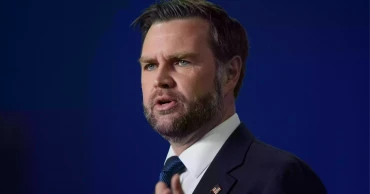
US lifts naval blockade on Iranian ports under interim deal: Vance
The United States has formally lifted its naval blockade on Iranian ports as part of the interim agreement aimed at ending the war with Iran, Vice President JD Vance said Thursday, as the Pentagon confirmed the move while maintaining a military presence in the region.
Speaking at a White House briefing, Vance said more than a dozen ships had been allowed to pass through the blockade and that a record volume of oil since the conflict began was now moving through the Strait of Hormuz.
According to Vance, about 12.5 million barrels of oil transited the strategic waterway on Wednesday, signalling a significant resumption of maritime trade following the agreement.
The development came after President Donald Trump signed an interim agreement with Iran that calls for Tehran to dilute its stockpile of highly enriched uranium and includes a waiver of US-backed sanctions, allowing Iran to resume unrestricted oil exports.
Separately, US Central Command (CENTCOM) announced that the US military had officially lifted the blockade on Iranian shipping.
In a statement posted on social media, CENTCOM said US Navy vessels would, however, remain in the region to ensure all terms of the agreement are fully implemented and observed.
The US Navy currently has more than a dozen vessels, including two aircraft carriers, deployed in waters near Iran.
Meanwhile, US Defense Secretary Pete Hegseth announced a six-month Pentagon review of American military deployments in Europe, saying the future size and role of US forces would depend on how quickly NATO allies assume greater responsibility for their own security.
Hegseth also criticised European NATO members, urging them to increase their contribution to the alliance's collective defence.
1 month ago