usa
Trump imposes 50% tariffs on most Canadian goods
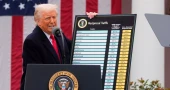
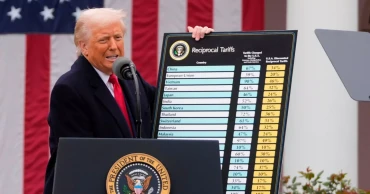
US President Donald Trump on Monday imposed a 50% tariff on most Canadian goods, accusing Canada of unfairly discriminating against American automobiles, alcohol and dairy products, in a move that could intensify trade tensions and fuel inflation.
The tariffs, introduced under Section 338 of the 1930 Trade Act, will take effect in 30 days, allowing time for negotiations. Energy products, potash, fish and critical minerals are exempt, but goods previously covered under the US-Mexico-Canada Agreement (USMCA) are included after the US declined to renew the 2020 pact.
Canadian Prime Minister Mark Carney said Ottawa remains committed to "free and fair trade" and is ready to negotiate, while Ontario Premier Doug Ford urged Canada to respond with matching tariffs if the measures proceed.
Business leaders on both sides called for negotiations, warning of economic damage. Analysts also cautioned that invoking the rarely used Depression-era law could increase uncertainty and potentially expand tariffs to other US trading partners.
The move poses political and economic risks for Trump ahead of November's midterm elections. Critics warned the tariffs would raise consumer prices and trigger retaliation, while the administration argued they would encourage manufacturing to return to the US.
Trump also ordered a review of possible additional tariffs over Canadian wildfire smoke affecting US air quality. He further accused Canada of maintaining discriminatory policies on US autos, alcohol and cheese, citing retaliatory measures taken after earlier US tariffs over fentanyl-related disputes.
13 days ago
US launches more airstrikes on Iran after announcing another service member's death
The United States conducted a new round of airstrikes early Monday targeting Iran after announcing the death of another American service member, and Iran fired missiles toward Jordan that risked widening the conflict into neighboring Israel.
Step by step, the U.S. and Iran have inched closer to all-out war as last month's interim deal meant to permanently end the fighting has crumbled and shipping traffic in the Strait of Hormuz has largely stalled. Both sides have targeted civilian infrastructure relied on by millions of people, while benchmark Brent crude rose Monday above $90 a barrel, further fueling a global energy crisis sparked by the conflict.
The U.S. military said the service member was killed in Iraq on Saturday during the “controlled detonation” of a downed Iranian drone.
“We hit them very hard again tonight,” U.S. President Donald Trump said. “And we did that in honor of the” soldiers killed.
US launches ninth night of Iran strikes
Earlier, the military said its strikes targeted Iran's paramilitary Revolutionary Guard to retaliate for Friday's killing of troops in Jordan. One service member was missing after that attack, and the military's new statement said “unidentified remains” were found Sunday and were being examined. Since the war began, 17 U.S. service members have been killed.
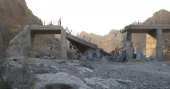
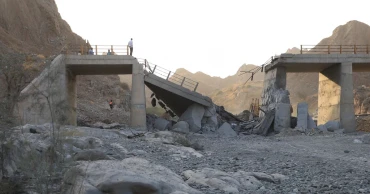
The renewed exchanges of fire, now in their second week, have seen the U.S. target bridges and electrical facilities in Iran.
The U.S. military’s Central Command announced a new round of strikes early Monday, now into their ninth straight night. Central Command said it targeted “Iranian military command centers, air defense and coastal surveillance sites, maritime capabilities, missile and drone launch sites and communications networks.”
There was no immediate word from Iran on any casualties or damage from the attacks. Iranian state media reported explosions being heard in southern and northwestern Iran.
As the strikes began, a ship caught fire early Monday in the Strait of Hormuz near the coastline of Oman, the British military said. It was unclear what sparked the blaze off Oman, which has been a route the U.S. military has encouraged ships to travel to avoid Iran's control. The Guard later claimed it was targeting tankers in the strait.
Tehran has retaliated by hitting U.S.-allied countries throughout the Middle East.
Bahrain, Jordan and Kuwait again activated air defenses for incoming Iranian drones and missiles. Early Monday, the U.S. Embassy in Bahrain issued a warning saying “Iran may seek to target unspecified locations in central Manama,” the capital, without elaborating.
Israel warned that missiles launched toward neighboring Jordan could cause fire to spill over into Israeli territory for the first time in weeks.
Iran says a nuclear site under construction was hit
Footage released Sunday by the U.S. military appeared to show strikes carried out by fighter jets and by Tomahawk cruise missiles launched from the sea. One target site appeared to be in a valley of a mountainous region. The Guard often has missile bases and other military equipment tucked into mountain ranges.
Iran’s atomic energy agency said U.S. strikes targeted the construction site of a planned nuclear power plant in the southwest, state television reported.
Satellite images from Planet Labs PBC of the Darkhovin nuclear plant site showed earth clearing but little construction as of July 9. Iran did not previously announce it as being targeted.
The International Atomic Energy Agency said the site, in the “very early stages of construction,” contained no nuclear material when the U.N. watchdog last visited.
Jordan and nearly every Gulf Arab state have been targeted
Jordan's military said it shot down several Iranian missiles. The country hosts major U.S. bases and relies on U.S. air-defense systems. The missiles did not cause casualties or damage, according to Jordan's military.
Jordan later summoned Iran's chargé d’affaires to protest, state-run television reported.
Israel's military said Iranian missiles launched toward the Jordanian port city of Aqaba just across the border could spill over, warning Israelis to expect the first air-raid sirens in weeks.
Eilat, the Israeli city that neighbors Aqaba, cited security officials as saying two interceptors were launched from its outskirts to prevent the fall of debris.
During the latest fighting, Iran has focused attacks on U.S.-allied Arab states rather than Israel, which launched the war with the U.S. on Feb. 28. “We are prepared to immediately resume combat,” the Israeli military chief of staff, Lt. Gen. Eyal Zamir, said.
Kuwait said one of its power and water desalination plants was attacked for the second time in two days, causing fires. Its Ministry of Electricity, Water and Renewable Energy said the power grid remains stable. In Kuwait, about 90% of drinking water comes from desalination.
The secretary-general of the six-nation Gulf Cooperation Council, Jasem Mohamed al-Budaiwi, has accused Iran of war crimes for strikes on infrastructure and civilian facilities.
International humanitarian law generally protects civilian infrastructure such as bridges and power plants from attack, but such sites can lose protections if used for military purposes. In such cases, attacks must be proportionate and minimize civilian harm.
The Strait of Hormuz remains key to the conflict
Trump has threatened to target Iran’s power stations and bridges to try to compel Tehran to loosen its hold on the Strait of Hormuz, which saw one-fifth of global oil supplies transit before the war. Recent attacks suggest the U.S. military is carrying out that plan.
The U.S. in the past week reimposed a naval blockade on Iranian ports to halt its shipments of crude oil. The military on Saturday said it had redirected six ships and disabled one since then.
The halfway point has passed in the 60 days the deal set out to negotiate the permanent end of the war and other issues, including Iran's nuclear program.
Iranian authorities on Sunday said at least 50 people have been killed and 517 wounded in the latest U.S. strikes. Iran has provided no overall information on its materiel losses.
Far from the region, the war's effects on the prices of fuel and other goods have hit some of the world's most vulnerable areas hard.
14 days ago
Why American elections are so complicated — and secure
In a speech to the nation Thursday evening, President Donald Trump said Americans deserve secure elections, and he claimed to be using federal authority to prevent them from being “stolen.”
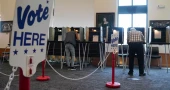
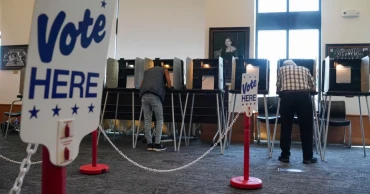
In fact, one of the strongest security features of U.S. elections is the fact that they aren’t conducted at the federal level. America votes in more than 10,000 different election jurisdictions, each with different rules set by state and sometimes local governments.
That structure makes the nation’s elections extraordinarily complicated — and also safe from widespread fraud. And when misconduct does happen — rarely — security protocols frequently catch it.
Decentralized elections date back to the nation’s founding
Voter fraud can happen, but it’s rare and there are safeguards to catch it
Most Americans by now have probably heard stories about someone casting multiple ballots, or voting in the name of dead relatives, or stealing mail ballots from mailboxes.
When these incidents happen, they are often caught and prosecuted.
Voting more than once, tampering with ballots, lying about your residence to vote somewhere else or casting someone else’s ballot are crimes that can be punished with hefty fines and prison time. Non-U.S. citizens who break election laws can be deported.
For anyone still motivated to cheat, election systems in the United States are designed with multiple layers of protection and transparency intended to stand in the way.
For example, for in-person voting, most states either require or request voters provide some sort of identification at the polls. Others require voters to verify who they are in another way, such as stating their name and address, signing a poll book or signing an affidavit.
For absentee voting, all states require a voter’s signature, and many states have further precautions, such as having bipartisan teams compare the signature with other signatures on file, requiring the signature to be notarized or requiring a witness to sign.
That means even if a ballot is erroneously sent to someone’s past address and the current resident mails it in, there are checks to alert election workers to the foul play.
AP review found there was too little voter fraud to tip the 2020 election
Trump has spent six years insisting he won the 2020 election, a campaign he lost to former President Joe Biden.
An Associated Press review in 2021 dug into every potential case of voter fraud in the six battleground states that Trump disputed. It found fewer than 475 cases — a number that would have made no difference in that race.
Allegations from Trump of massive voting fraud have been refuted by a variety of judges, state election officials and an arm of his own administration’s Homeland Security Department. In 2020, then-Attorney General William Barr, a Trump appointee, told the AP that no proof of widespread voter fraud had been uncovered. “To date, we have not seen fraud on a scale that could have effected a different outcome in the election,” he said at the time.
America’s highly decentralized system of voting exists because the nation’s Founding Fathers gave authority over elections to the states, rather than the federal government. While Congress has the power to regulate elections — and has used that authority to pass such laws as the Voting Rights Act — the Constitution makes clear that states have primary authority to set the “times, places and manner” for elections.
There also is no national election agency that administers the presidential contest, something that’s different from many other countries. And when it comes to doing the day-to-day work of running an election, the responsibility falls to officials at the local level — usually a clerk or election supervisor — with help from staff and volunteers.
While differences in election laws can get confusing, election security experts say this structure is a strength. That’s because to pull off stealing a presidential election — as Trump falsely claims was done to him in 2020 — it would require large numbers of election workers in the most competitive counties across the country who are willing to risk prosecution, prison time and fines while working with officials from both parties willing to look the other way. And everyone somehow would have to keep quiet — a highly unlikely scenario.
There are also shared practices and security measures in place across the country that together work to ensure that only eligible voters can cast a ballot and only one ballot is counted for each.
17 days ago
US cuts foreign journalist visas to 240 days, limits Chinese reporters to 90 days
The Trump administration has announced sweeping changes to visa rules for foreign journalists, reducing the maximum stay for most international reporters in the United States to 240 days and limiting Chinese journalists to just 90 days, prompting criticism from press freedom advocates and a warning of possible retaliation from Beijing.
Under a new rule issued Thursday by the Department of Homeland Security (DHS), the long-standing "duration of status" system, which allowed foreign journalists to remain in the US as long as they met visa requirements, will be replaced with fixed-term visas. The new policy is scheduled to take effect 60 days after publication in the Federal Register, although visa holders will be able to apply for extensions.
The DHS said the change is intended to strengthen oversight and improve the vetting of foreign journalists and other temporary visa holders.
However, media rights organisations condemned the move, arguing that frequent visa renewals would create uncertainty and make it more difficult for international journalists to report from the United States.
Reporters Without Borders (RSF) described the decision as a serious setback for press freedom, saying the eight-month visa limit would undermine the ability of foreign news organisations to operate effectively in the country.
The Committee to Protect Journalists (CPJ) also criticised the policy, calling it inconsistent with the principles of a country that promotes freedom of expression.
The administration has imposed an even stricter limit on journalists from mainland China, reducing their visa validity to 90 days. The rule does not apply to reporters from Hong Kong or Macao.
The move is expected to add further strain to already sensitive US-China relations, despite recent efforts by both governments to stabilise ties.
China's Foreign Ministry condemned the measure as discriminatory and urged Washington to revoke what it described as policies targeting Chinese journalists.
Foreign Ministry spokesperson Lin Jian said Beijing reserved the right to take reciprocal countermeasures if the restrictions remain in place.
The latest decision comes as President Donald Trump's administration continues to tighten immigration rules and intensify its criticism of news organisations. While foreign journalists are not classified as immigrants, the revised visa policy also affects some other temporary visa categories, including students and exchange visitors, by replacing open-ended stays with fixed periods.
A similar proposal was introduced during Trump's first term in 2020 but was withdrawn after President Joe Biden took office in 2021.
During Trump's previous administration, Chinese journalists were also limited to 90-day visas in response to China's treatment of American reporters, including the expulsion of several Wall Street Journal journalists. The Biden administration later eased those restrictions, allowing Chinese journalists to remain in the United States for up to one year before the latest policy reversal.
17 days ago
More than half of House Democrats back bid to cut US military aid to Israel
More than half of House Democrats voted Wednesday in favor of removing $3.3 billion in US military aid to Israel, marking the clearest sign yet that once-solid bipartisan support for the country is weakening following Israel's war in Gaza, which has killed thousands of Palestinians.
The amendment was defeated by a 314-104 vote and was not added to a broader national security spending bill. However, the outcome highlighted the growing divisions within the Democratic Party and across the United States over Israeli Prime Minister Benjamin Netanyahu's handling of the war, which is nearing its third year.
The vote also exposed divisions among House Democratic leaders and was widely viewed as an early test ahead of the US midterm elections that will determine control of Congress. More than 100 Democrats supported eliminating the military aid, while nearly as many opposed the measure. Most Republicans voted to keep the funding in place.
House Democratic Leader Hakeem Jeffries, who opposed the amendment, nonetheless said US policy in the Middle East needs to change.
"For the good of Israel and the Palestinian people, American policy in the Middle East must change," Jeffries said.
In a letter to fellow Democrats before a private caucus meeting this week, Jeffries wrote that he believes "there are more decisive ways to achieve the urgent change necessary when it comes to the far-right Netanyahu government."
Democrats increasingly divided over Israel
The widening disagreement over Israel is creating new tensions within the Democratic Party, particularly as progressive candidates, including self-described democratic socialists, gain momentum in several high-profile House races ahead of the midterm elections.
While many mainstream Democrats continue to support US assistance to Israel, an increasing number have criticized Netanyahu's military strategy as the conflict has continued since Hamas launched its attack on Israel on Oct. 7, 2023.
House Democratic Whip Katherine Clark of Massachusetts announced she would support the amendment to suspend the military assistance.
Republicans have used the issue to argue that Democrats are increasingly influenced by their party's progressive wing, even as House Speaker Mike Johnson faces internal disagreements from Republicans aligned with President Donald Trump's "America First" agenda, many of whom favor reducing foreign military spending.
According to an AP-NORC poll conducted this month, about one-third of US adults—including roughly half of Democrats—believe Israel has committed genocide against Palestinians during the Gaza war. Israel and the US government strongly reject that accusation, although it has been raised by several human rights organizations.
Amendment introduced by Thomas Massie
The proposal to eliminate military aid to Israel was introduced by Rep. Thomas Massie, a libertarian-leaning Republican from Kentucky who recently lost his bid for reelection after Trump endorsed his primary challenger.
Speaking on the House floor, Massie argued that the $3.3 billion would be better spent on domestic priorities such as roads, bridges and veterans, particularly as the US faces rising budget deficits. He also said American-supplied weapons had been used against "oftentimes innocent civilians."
"I think we should stop it—we should put them on a diet," Massie said.
Former House Democratic leader Steny Hoyer of Maryland strongly opposed the amendment, saying continued US support for Israel remains vital to American national security.
"I rise in strong opposition to this amendment, which would dangerously undermine American national security," Hoyer said.
He argued that reducing aid would weaken the United States' ability to counter groups such as Hamas and Hezbollah, which he said "expressly target American citizens and military personnel."
Lawmakers face pressure ahead of electionsMembers of Congress faced lobbying efforts from both supporters and critics of continued US military assistance to Israel as the midterm elections approach.
The pro-Israel lobbying group AIPAC urged its supporters to contact lawmakers and oppose the amendment.
"We must ensure his dangerous amendment is defeated," AIPAC said in a statement before the vote.
Meanwhile, the progressive advocacy organization J Street opposed the amendment, calling it too broad and poorly drafted, but acknowledged that it provided many Democrats with a rare opportunity to publicly express concern over how US military assistance has been used by the Israeli government.
J Street President Jeremy Ben-Ami said many Democrats wanted to register their opposition to the use of American military aid and US-supplied weapons in Gaza, the West Bank, Lebanon and elsewhere.
He added that despite disagreements over the amendment, most Democrats remain united in supporting both the security of Israelis and the rights of Palestinians.
18 days ago
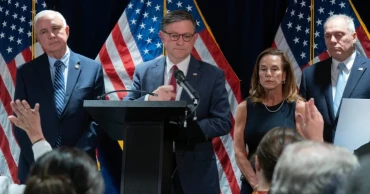
House Republicans unveil $95bn package for Iran war, farm aid and elections
House Republicans on Wednesday unveiled a 47-page, $95 billion budget resolution aimed at boosting defense spending, supporting farmers and tightening voter registration rules that President Donald Trump signed into law last year.
The proposal would supplement Pentagon funding for the Iran war, provide aid to farmers facing higher fuel and fertilizer costs as well as retaliatory tariffs, and fund election reforms requiring proof of US citizenship for voter registration.
Biden to release memoir 'Promise Me, America' after US midterm elections
The measure is a scaled-down version of a broader proposal after conservatives raised concerns over its cost and impact on the federal deficit. It does not include spending cuts or other measures to offset the new expenditures.
Under the plan, the Armed Services Committee could draft legislation adding up to $60 billion to the deficit, followed by $13 billion for the Intelligence Committee, $12 billion for the Agriculture Committee and $10 billion for the House Administration Committee, which would oversee election law changes.
House Speaker Mike Johnson expressed confidence the measure would advance, accusing Democrats of blocking efforts to strengthen election security and support the military.
The Budget Committee is expected to consider the resolution on Thursday, with a full House vote planned for next week before lawmakers begin a five-week August recess.
Both the House and Senate must approve the same budget resolution before Republicans can use the reconciliation process to pass the package with a simple majority, bypassing the Senate's usual 60-vote threshold. Democrats are expected to strongly oppose the measure.
19 days ago
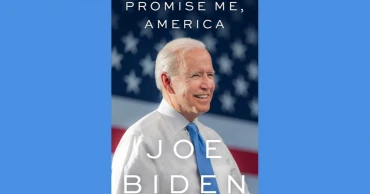
Biden to release memoir 'Promise Me, America' after US midterm elections
Former US President Joe Biden will publish a new memoir this November reflecting on his presidency, key policy decisions and his decision to withdraw from the 2024 presidential race, his publisher announced on Wednesday.
The memoir, titled "Promise Me, America," is scheduled for release on November 17, about two weeks after the US midterm elections in which Democrats hope to regain control of Congress.
According to publisher Little, Brown and Company, the book will cover a range of topics, including the US economy, major domestic and foreign policy decisions, and Biden's choice to end his bid for a second term in office.
In a video released alongside the announcement, Biden said the memoir focuses on the challenges the United States faced during his presidency and the decisions he made while in office.
"'Promise Me, America' is about the challenges we faced as a nation. It's about the decisions I made and why I made them. Most of all, it's about my faith in the promise of America," he said.
The timing of the book's release has drawn attention as it comes shortly after the congressional elections. Some Democrats remain divided over Biden's political legacy and his decision to initially seek re-election before stepping aside following a widely criticised debate performance against Republican Donald Trump in June 2024.
Party leaders have sought to keep the election campaign focused on President Donald Trump's record rather than renewed debate over Biden's presidency.
Biden, who will turn 84 three days after the book's publication, joins a long tradition of former US presidents publishing memoirs about their years in office. Financial details of the publishing agreement were not disclosed, though presidential memoirs have traditionally commanded multi-million-dollar book deals.
The title echoes Biden's 2017 memoir, "Promise Me, Dad," which chronicled the illness and death of his son Beau Biden.
Biden's presidency began amid the COVID-19 pandemic and shortly after the January 6, 2021, attack on the US Capitol. His administration was marked by major infrastructure and economic legislation, as well as responses to conflicts in Ukraine and the Middle East.
The memoir is also expected to address questions surrounding Biden's health during his presidency. Concerns intensified after his debate performance in June 2024, which ultimately led him to abandon his re-election campaign. Then-Vice President Kamala Harris became the Democratic nominee but lost the election to Trump.
Former first lady Jill Biden wrote in her recent memoir that she feared her husband had suffered a medical emergency during the debate because he appeared unusually weak and disoriented. She also acknowledged that the White House's explanation that Biden had a cold failed to satisfy many observers.
Questions over Biden's health continued throughout his presidency, with both Republicans and Democrats criticising his administration over its handling of the issue. In 2025, journalists Jake Tapper and Alex Thompson published "Original Sin," examining Biden's physical decline and his decision to seek another term.
Also in 2025, Biden announced he had been diagnosed with prostate cancer. In his video message announcing the memoir, he said he has been undergoing treatment and that it is progressing well.
"I've been spending a lot of time with my family. I'm dealing with a cancer diagnosis, been getting treatment, and it's going really well," Biden said, thanking supporters for their prayers and well-wishes.
The publisher said Biden plans to promote the memoir through interviews and a book tour following its release.
19 days ago
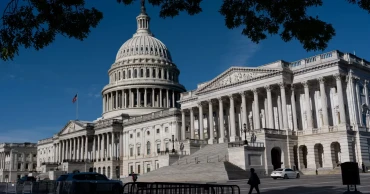
US House passes bill to make daylight saving time permanent
The US House of Representatives on Tuesday passed a bill that would make daylight saving time permanent, ending the twice-yearly clock changes if it becomes law.
The measure, known as the "Sunshine Protection Act," was approved by a 308-117 vote. It now heads to the Senate, where its prospects remain uncertain. If passed there, it would require President Donald Trump's signature to become law.
Daylight saving time is observed between spring and fall, when clocks in most parts of the United States are set one hour ahead of standard time. Under the bill, states would still have the option to opt out if their legislatures act before the measure takes effect.
Supporters, including the White House, said making daylight saving time permanent would provide more daylight during the hours when most Americans are active.
Republican Rep. Gus Bilirakis of Florida said Americans are ready to "ditch the switch," arguing that changing clocks twice a year creates unnecessary disruption.
He said the change would give families more evening daylight to spend outdoors while also benefiting local businesses.
"In my home state of Florida, where tourism is a cornerstone of our economy, having more predictable daylight hours is a practical improvement that benefits workers, businesses and visitors alike," Bilirakis said.
Opponents argued that permanent daylight saving time would result in darker winter mornings, potentially creating safety risks for children waiting for school buses and for commuters travelling to work before sunrise.
Democratic Rep. Mary Gay Scanlon of Pennsylvania said millions of Americans would begin their winter mornings in complete darkness, with sunrise coming well after many people had already left home.
Democratic Rep. Jim McGovern of Massachusetts said he supports the proposal but questioned whether Congress should be prioritising it while many Americans continue to struggle with rising housing, food, utility and healthcare costs.
A 2025 poll conducted by The Associated Press-NORC Center for Public Affairs Research found that if Americans had to choose one system year-round, 56% preferred permanent daylight saving time, which provides more evening daylight but less morning light. About four in 10 respondents favoured permanent standard time, offering more morning daylight and earlier sunsets.
Ahead of the House vote, the White House described the Sunshine Protection Act as a popular and common-sense reform, saying President Trump would be advised to sign the bill if it reaches his desk.
Congress has debated the benefits and drawbacks of daylight saving time for decades since it was first introduced as a wartime measure in 1942. The Senate approved a similar bill four years ago, but it failed to advance in the House.
19 days ago

US lawmaker urges Congress to reclaim authority to end Iran war
US Congresswoman Delia Ramirez has criticised President Donald Trump over the latest US airstrikes on Iran, accusing his administration of escalating the conflict soon after reaching a ceasefire agreement.
"Last night, Trump launched a series of strikes on Iran, shortly after establishing a ceasefire deal. And today he is threatening to launch more," Ramirez wrote in a post on X.
"We cannot rely on warmongers to bring an end to this war. Congress must reclaim our authority and hold the administration accountable!" she added.
Ramirez's remarks came after US Senator Elizabeth Warren also urged Congress to act to stop Trump's war.
Last month, the US House of Representatives and the Senate approved a bipartisan War Powers Resolution directing the president to halt military action against Iran unless Congress formally declares war or authorises the use of military force. #From Al Jazeera
25 days ago
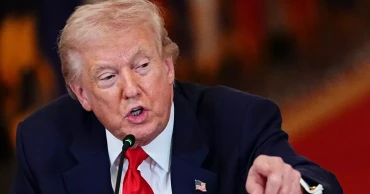
U.S. may strike Iran again tonight: Trump
The United States may strike Iran again "hard tonight," U.S. President Donald Trump told reporters here Wednesday on the sidelines of the NATO summit.
Trump said Tehran has been "behaving very badly" regarding a recently signed peace memorandum of understanding, citing recent drone and missile attacks as well as "assaults" on U.S. ships.
The United States could resume a naval blockade against Iran in the Strait of Hormuz and possibly take over Iran's Kharg Island, he said.
He added that the United States has lost 200 people during the latest conflict in the Middle East.
Still, Trump suggested that the U.S. negotiation team might continue its efforts.
The remarks came as the United States and Iran traded fresh attacks from Tuesday night to Wednesday, marking a new round of escalation.
The United States has launched strikes against 80 Iranian targets allegedly in response to recent Iranian attacks on commercial vessels transiting the Strait of Hormuz. Later, Iran's Islamic Revolution Guard Corps attacked 85 U.S. military sites in Bahrain and Kuwait.
26 days ago