Others
NASA chief visits Russia's Baikonur for US-Russian crew launch to ISS
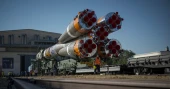
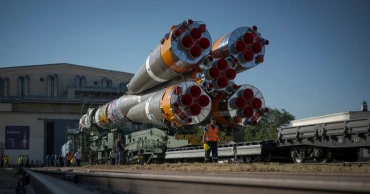
NASA Administrator Jared Isaacman attended Tuesday's scheduled launch of a joint U.S.-Russian crew to the International Space Station (ISS), highlighting continued space cooperation between Washington and Moscow despite ongoing tensions over Russia's war in Ukraine.
Isaacman's visit to the Russia-leased Baikonur Cosmodrome in Kazakhstan marked the first trip by a NASA chief to the facility in eight years.
During a meeting with the crew on Monday, Isaacman thanked Russia's state space agency, Roscosmos, for its efforts in preparing the mission, saying the work carried out over the past several months demonstrated the professionalism and dedication of everyone involved.
Ahead of the launch, Isaacman also met Roscosmos chief Dmitry Bakanov.
NASA astronaut Anil Menon and Russian cosmonauts Pyotr Dubrov and Anna Kikina were set to lift off aboard the Roscosmos Soyuz MS-29 spacecraft for an eight-month mission aboard the ISS.
The mission will be Menon's first journey to space, while it marks the second spaceflight for both Dubrov and Kikina.
Once aboard the station, the three will join NASA astronauts Jessica Meir, Jack Hathaway and Chris Williams, European Space Agency astronaut Sophie Adenot, and Roscosmos cosmonauts Sergei Kud-Sverchkov, Sergei Mikaev and Andrei Fedyaev.
Former Cold War rivals, the United States and Russia have continued to cooperate on the ISS and other space activities despite strained relations following Russia's military action in Ukraine in 2022. The two countries have maintained crew exchange missions, with American and Russian astronauts flying aboard each other's spacecraft.
However, broader space cooperation has stalled. Plans for possible Russian participation in NASA's Artemis lunar exploration programme have been abandoned, while Roscosmos has expanded cooperation with China on a planned lunar mission as Russia deepens economic and technological ties with Beijing amid Western sanctions.
20 days ago

2 Spaniards gored as San Fermin festival ends with final bull run
Spain's famous San Fermin festival ended on Tuesday with two Spanish runners being gored during the eighth and final bull run.
An 18-year-old man from Pamplona was gored in the thigh at the first bend of the route after a bull charged into a small group of runners. The animal knocked two men onto the cobblestone street and tossed another over its horns.
A 46-year-old man from central Spain was gored in the chest near the end of the route, where the path narrows before entering the bullring. The bulls are later killed there by matadors during the day's bullfights.
Both injured men were taken to a local hospital for treatment. Eight other runners, including an 86-year-old British man, received medical care for minor injuries.
The six fighting bulls, accompanied by steers, completed the 875-metre route from the holding pen to the bullring in about two and a half minutes. Their speed often catches runners off guard, especially with more than a thousand people packed into the narrow streets.
The last death during the San Fermin bull runs occurred in 2009. However, serious injuries, including gorings and broken bones, remain common as many first-time participants and foreign tourists join experienced local runners. Many injuries also happen when frightened runners fall.
This year's San Fermin festival marked the 100th anniversary of the publication of Ernest Hemingway's novel The Sun Also Rises, which helped bring the festival worldwide recognition.
20 days ago
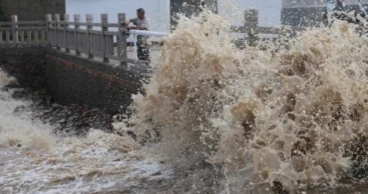
Heavy rain collapses house roof, killing 11 in northwest Pakistan
At least 11 people, most of them women and children, were killed overnight after heavy rain caused the roof of a mud-brick house to collapse in Pakistan's northwestern Khyber Pakhtunkhwa province, police and rescue officials said Tuesday.
The incident took place in Kohat district, said Bilal Faizi, spokesperson for the provincial emergency service.
Rescue teams recovered the bodies from the debris and handed them over to their families for burial, Faizi said.
Meanwhile, heavy monsoon rain also battered the Gilgit-Baltistan region on Monday, triggering landslides that blocked several roads and damaged homes, according to regional emergency services.
Authorities have advised tourists to avoid travelling to northern Pakistan because of the increased risk of landslides and flash floods.
Pakistan experiences heavy monsoon rainfall every year, and the seasonal downpours often cause floods and landslides, leading to deaths and widespread destruction.
In 2022, record monsoon rains and devastating floods submerged nearly one-third of the country, killing 1,739 people and causing an estimated $30 billion in losses.
20 days ago
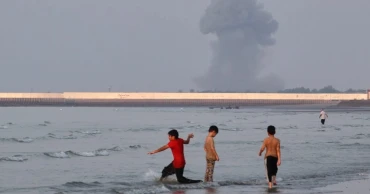
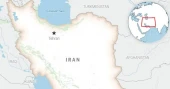
US strikes Iran as tensions flare over Strait of Hormuz; Tehran launches retaliatory attacks
The United States carried out fresh airstrikes on Iran early Tuesday, hours after President Donald Trump announced that Washington was "reinstating" a blockade on Iran in the Strait of Hormuz and suggested that other countries' ships could be charged for safe passage through the strategic waterway.
Iran responded by launching attacks on Bahrain and Jordan and targeting two United Arab Emirates-linked oil tankers passing through the Strait of Hormuz. The attacks killed one sailor and injured eight others, while the UAE warned it could retaliate against Tehran, raising fears of a wider regional conflict.
The latest escalation comes as the US and Iran struggle for control of the Strait of Hormuz, a key global shipping route that has carried about one-fifth of the world's traded crude oil and natural gas during peacetime.
Oil prices reacted quickly, with Brent crude rising above $84 a barrel in early Tuesday trading, its highest level in a month. Although still below the nearly $120 seen during the height of the conflict, the increase could push up energy costs worldwide.
The renewed fighting has also further weakened a temporary ceasefire between Washington and Tehran. The two sides were nearly halfway through a 60-day period meant to produce a permanent agreement addressing Iran's disputed nuclear programme and other issues.
According to the US military's Central Command, the strikes targeted Iranian coastal defence systems, missile and drone sites, and maritime facilities around Abu Musa, Bandar Abbas, Bushehr, Chahbahar, Jask and Konarak.
Iran confirmed that the areas had come under attack but did not immediately report casualties or damage.
The US military said the operation was intended to reduce Iran's ability to attack civilians and commercial vessels in the Strait of Hormuz.
Speaking at the White House shortly after the strikes, Trump described the operation as "another major attack."
"We're hitting them very hard. And it'll continue, and we'll see what happens," he told reporters. He also claimed the US was taking control of the strait and restoring the blockade.
Trump also expanded on his earlier proposal to charge ships for using the Strait of Hormuz, marking a major shift from longstanding US policy supporting free navigation through international waterways without tolls.
Such a move would challenge long-established international maritime practices and could further disrupt global trade and increase tensions in the region.
Meanwhile, the UAE's Defence Ministry said Iran fired two cruise missiles at the oil tankers Mombasa and Al Bahiyah in the Strait of Hormuz. Both vessels caught fire, but the blazes were later brought under control.
The UAE said one Indian sailor was killed while six Indian and two Ukrainian crew members were injured. Abu Dhabi warned that it reserved the right to respond.
Iran's Revolutionary Guard claimed responsibility for the attack, saying the ships had ignored repeated warnings and entered what it described as a minefield.
Bahrain also reported fresh Iranian missile attacks early Tuesday, sounding air raid sirens three times and urging residents to seek shelter.
Jordan's military said it intercepted four Iranian missiles. The country hosts US military forces and has been targeted by Iran several times in recent days.
Earlier Monday, Trump said the interim agreement reached with Iran last month had been designed to test Tehran's intentions, accusing the Iranian government of failing to honour its commitments.
Iran, however, maintains that it has the right to regulate shipping through the Strait of Hormuz and potentially impose fees under the interim agreement, a claim rejected by Washington.
The US military and the International Maritime Organization have tried to establish an alternative shipping route along Oman's coast outside Iranian control, but Iran has also attacked vessels using that route, prompting repeated US military responses and further exchanges of fire.
On social media, Trump said the US was restoring the Iranian blockade while insisting that other countries would continue to have open access to the strait. He also proposed that the US recover security costs by collecting 20% of cargo values from commercial shipping, although no details were provided. Secretary of State Marco Rubio, who is visiting the region, said there would be no fees for ships using the waterway.
The US military said its blockade of Iranian ports would resume from midnight Wednesday local time in Dubai.
Separately, Israeli and Lebanese delegations were scheduled to meet in Rome on Tuesday for US-mediated talks aimed at advancing a framework agreement announced last month. The deal calls for the withdrawal of Israeli forces from southern Lebanon in exchange for the disarmament of the Iran-backed Hezbollah group, although implementation has stalled.
A ceasefire remains in place in Lebanon, but uncertainty persists over whether it can survive if the conflict between the United States and Iran expands into a full-scale war.
20 days ago
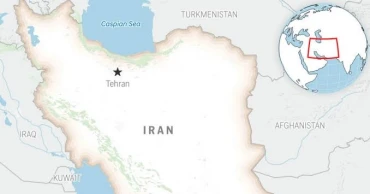
Iran executes two Islamic State members over armed rebellion conviction
Iran on Tuesday executed two members of the Islamic State (IS) group after they were convicted of armed rebellion against the Islamic Republic, according to state television.
The executed men were identified as Mohieddin Abdollahi and Hossein Palani. State media said they were part of an IS cell established after the group's territorial collapse in Iraq and Syria and were allegedly plotting attacks inside Iran.
Authorities said security forces uncovered the group's hideout in the Bamo mountain region near the Iraqi border before the planned attacks could be carried out. The operation left several militants dead, while others were arrested. Three members of Iran's Revolutionary Guard were also killed during the raid.
Officials said security forces recovered weapons, ammunition and other military equipment from the hideout.
The two men were sentenced to death after being found guilty of armed rebellion. Their executions were carried out by hanging after Iran's Supreme Court upheld the verdicts. The judiciary did not specify where the executions took place.
20 days ago

Ousted South Korean leader Yoon receives 2-year prison sentence
A South Korean court on Monday sentenced ousted President Yoon Suk Yeol to two years in prison for illegally receiving manipulated opinion polls free of charge from a political broker in exchange for political favors that may have helped him secure his party's nomination ahead of the 2022 presidential election.
The Seoul Central District Court found Yoon guilty of violating the country's political funding law. Political broker Myung Tae-kyun was also sentenced to 18 months in prison on the same charge.
Wife of South Korea's ex-President Yoon sentenced to 7 years for corruption
According to the court, Myung conducted 14 opinion polls using manipulated data for Yoon between June and October 2021 without payment. In return, Yoon allegedly used his influence to help former lawmaker Kim Young-sun become the conservative People Power Party's candidate in the 2022 legislative by-election.
The case is one of seven criminal trials involving the former conservative president, who was impeached after briefly imposing martial law in December 2024, triggering South Korea's biggest political crisis in decades.
Last week, the Supreme Court upheld a seven-year prison sentence against Yoon in another case, the first of his convictions to be reviewed by the country's highest court.
Yoon has appealed several convictions, including a February life sentence on rebellion charges linked to his failed power grab. His lawyers also said they would appeal Monday's verdict, arguing it was based on insufficient evidence.
Yoon's short-lived martial law declaration on Dec. 3, 2024, ended within hours after lawmakers forced their way into the National Assembly despite a security blockade and voted to revoke the order. He was later impeached by parliament and formally removed from office by the Constitutional Court. After being released from custody earlier this year, Yoon was re-arrested in July and remains in detention while facing multiple criminal trials.
21 days ago
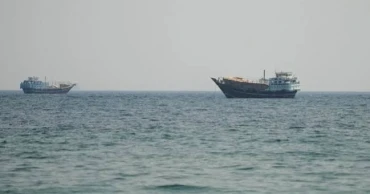
US, Iran trade claims over control of Strait of Hormuz as tensions escalate
The United States and Iran on Monday both claimed authority over the Strait of Hormuz following a weekend of military exchanges across the Middle East, raising fresh concerns over regional stability and the prospects for diplomacy.
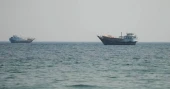
The latest escalation began after Iran targeted a container ship in the strategic waterway off Oman on Sunday. The incident once again highlighted the Strait of Hormuz's critical role in global energy trade, with the passage historically handling about one-fifth of the world's seaborne crude oil and natural gas exports. Since the conflict began, repeated attacks on commercial shipping have disrupted maritime traffic and heightened concerns over the security of the route.
The two countries are approaching the midpoint of a 60-day interim arrangement intended to pave the way for negotiations on a lasting settlement. Instead, the agreement has been overshadowed by repeated confrontations centred on the strait, fuelling fears that full-scale hostilities could resume.
UN Secretary-General António Guterres warned that a return to all-out conflict would have devastating consequences.
The US military's Central Command said its forces struck dozens of targets across Iran on Monday, including air defence systems, radar installations, missile and drone facilities and small naval vessels. It stressed that the Strait of Hormuz remains an international waterway and rejected Tehran's claim of exclusive control.
European Union foreign policy chief Kaja Kallas also called for ensuring freedom of navigation through the strait.
Iran's Islamic Revolutionary Guard Corps dismissed the US position, insisting the waterway falls within Iran's territory and warning against what it described as foreign interference.
The conflict spilled into neighbouring countries, with missile warning sirens sounding in Bahrain, home to the US Navy's Fifth Fleet, while Kuwait reported intercepting incoming projectiles. Jordan's military said it shot down four Iranian missiles without any casualties or damage.
Inside Iran, authorities reported strikes in Hormozgan, Khuzestan and Markazi provinces that left at least two people dead, according to state media. Iranian outlets also reported attacks in Sistan and Baluchestan province.
Sunday's Iranian attacks also affected Bahrain, Kuwait, Qatar, Jordan and Oman. Omani authorities, whose territorial waters form part of the Strait of Hormuz, summoned an Iranian diplomat in protest over the attack.
Separately, a drone strike targeted a base of an Iranian Kurdish opposition group in Iraq's Kurdistan region, although no immediate claims of responsibility were made.
The US military said it had carried out around 140 strikes on Iranian military infrastructure on Sunday, significantly expanding its operations compared with previous attacks. President Donald Trump later said the US had inflicted heavy damage during the operation.
Iran responded by targeting countries hosting US military forces while reiterating that it should have sole authority over the Strait of Hormuz and could potentially impose charges on ships using the passage.
Although Tehran declared the strait closed, Washington maintained that shipping continued through the waterway with US military support helping vessels follow safer routes near Oman's coast.
The disruption has shaken global energy markets, although oil prices have retreated from wartime peaks of around $120 a barrel.
Iranian Foreign Ministry spokesperson Esmail Baghaei accused the United States of undermining the interim agreement and worsening instability in the region. He also said Tehran would not permit International Atomic Energy Agency inspectors to visit nuclear sites bombed by the US in 2025.
Despite the renewed violence, diplomatic efforts are continuing. Pakistan, Qatar and Egypt remain engaged in mediation, with Pakistan urging both sides to reduce tensions during talks with Iran's foreign minister.
Meanwhile, Iran's new Supreme Leader Ayatollah Mojtaba Khamenei, in his first public statement since the funeral of his father Ayatollah Ali Khamenei, vowed that Iran would avenge his father's killing.
21 days ago
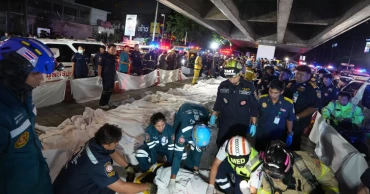
Fire rips through Bangkok music bar, killing at least 27
A devastating fire swept through a music bar in Bangkok late Sunday night, leaving at least 27 people dead and dozens injured in the Thai capital's deadliest fire in 17 years.
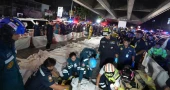
The blaze broke out shortly before midnight at the Rong Beer Na Ladprao bar in northern Bangkok. Authorities said firefighters managed to bring the fire under control about 30 minutes later, but not before it claimed dozens of lives.
Images from the scene showed flames engulfing the single-storey building as thick black smoke rose into the sky. Shoes and other personal belongings were left scattered outside as patrons rushed to escape.
By Monday morning, police had sealed off the area while forensic teams searched the charred structure to determine the cause of the fire.
The building's front windows had been shattered by the blaze, with burned furniture, damaged sound equipment, television sets and musical instruments visible inside. Tables still holding empty beer bottles remained amid the destruction.
National Police Chief Kittharath Punpetch said many of the victims were found inside windowless bathrooms near a rear exit, where they may have sought refuge from the flames and smoke.
He said investigators believe the rear exit may have been difficult to access because of obstacles, including a candy sales table placed in the hallway, while darkness caused by the power outage may also have prevented people from finding the escape route.
Another exit near the kitchen may have been partially blocked by shelves and lockers, he added, noting that there were indications some exit doors could have been locked.
Investigators are examining the area above the performance stage, where decorative materials were installed, to determine whether flammable materials or faulty electrical wiring contributed to the fire.
Prime Minister Anutin Charnvirakul said a musician performing at the venue told him smoke was seen coming from an electrical circuit breaker near the stage before the power failed. An explosion followed, and thick smoke rapidly spread throughout the building.
According to Bangkok's Erawan Emergency Medical Centre, 73 people were injured, including 25 who remain in critical condition.
Bangkok Governor Chadchart Sittipunt said most of the fatalities were caused by smoke inhalation. Authorities are working to identify several victims, many of whom were not carrying identification documents.
Buddhist monks visited the site on Monday to offer prayers for the victims, while health workers distributed face masks to people in the area because of lingering smoke and fumes.
Officials also established a registration centre for relatives searching for missing family members.
Singer Sukanya Wongwongwai said she rushed to the scene after learning about the fire because several members of her band had been performing at the venue. She said one band member was killed, three were hospitalised and another remained missing.
She said survivors told her the venue was plunged into darkness when the fire started, making it nearly impossible to locate exits or other people as thick smoke filled the building.
Thailand has witnessed several deadly nightclub and entertainment venue fires in recent decades. In 2022, a blaze at a music venue in eastern Thailand killed 14 people. Earlier, a fire during New Year's Eve celebrations at Bangkok's Santika nightclub in 2009 claimed 66 lives and injured more than 200 others.
22 days ago
Fresh US strikes raise stakes in Hormuz crisis
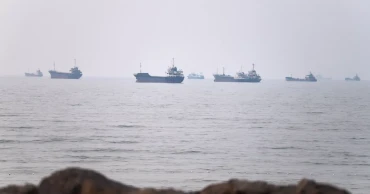
The United States launched several waves of strikes on Iran into Monday morning over an Iranian attack on a container ship in the Strait of Hormuz that set it ablaze and left a crew member missing over the weekend. Iran retaliated by targeting countries across the Middle East.
Missile alert sirens sounded at dawn Monday in Bahrain, home to the U.S. Navy's 5th Fleet. There was no immediate word on damage.
Iranian state media acknowledged the latest attacks on its soil early Monday, describing explosions in several locations with at least one person being killed.
Iranian attacks on Sunday stretched Bahrain, Kuwait, Qatar, Jordan and even Oman — whose territorial waters with Iran make up the strait. The narrow mouth of the Persian Gulf, which once saw a fifth of all oil and natural gas pass through it, has become the key issue challenging an interim deal between the U.S. and Iran.
Iran and the U.S. are nearly at the midway point of the 60-day period of that deal, which was supposed to set up talks for a permanent end to the war. Instead, it has devolved into a series of attacks over the strait and its future, worrying world leaders the Iran war could resume.
“A return to full-scale hostilities would have catastrophic consequences,” United Nations Secretary-General António Guterres said in a statement.
22 days ago
A timeline of the Iran conflict and negotiations
The United States and Iran have again traded strikes after a week in which U.S. President Donald Trump mused that fragile negotiations between them might be “over.”
The countries are now nearly halfway through the 60-day period that began with their signing of an interim deal aimed at permanently ending the war.
At stake are the lives of Iranians and others throughout the region, including Israel and Lebanon, along with foreign residents of Gulf nations, U.S. military personnel stationed in multiple countries and thousands of mariners on ships still hoping to exit the Strait of Hormuz.
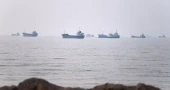
The strait between Iran and Oman, considered an international waterway before the war, has become one of Tehran’s strongest pressure points in talks. Iran insists it alone now controls the strait.
Here’s a brief timeline of the war and efforts to end it:
Feb. 28
Israel and the U.S. attack Iran, killing Supreme Leader Ayatollah Ali Khamenei and other top officials, sparking the war. Iran quickly responds with strikes against Israel and across the Gulf region and asserts control over the Strait of Hormuz, a key waterway for global oil and natural gas supplies from the Gulf.
March 2
The Iranian-backed Hezbollah militant group in Lebanon enters the war by firing rockets at Israel.
Israel retaliates, leading to an invasion that will occupy large swaths of southern Lebanon.
March 8
Iran names one of Khamenei’s sons, Mojtaba, as the new supreme leader. He still has not been seen in public and is believed to be in hiding after reportedly being hurt in the war’s opening strikes.
22 days ago