
Israel announced on Monday that it had killed the intelligence chief of Iran’s Revolutionary Guard, as tensions in the region continue to escalate.
Defense Minister Israel Katz confirmed the development, stating that Israeli forces are targeting militant leadership in response to attacks on civilians. He warned that Iran’s leadership is now under constant threat and vowed that Israel would continue pursuing them individually.
Katz also claimed that Israeli operations have significantly weakened Iran’s steel and petrochemical sectors, adding that further strikes would aim to damage the country’s infrastructure and reduce its ability to support attacks against Israel.
Meanwhile, Israel and the United States launched a series of coordinated strikes across Iran, resulting in more than 25 deaths. Iran retaliated by firing missiles toward Israel and several Gulf countries, heightening fears of a broader regional conflict.
Explosions were reported throughout Tehran, with airstrikes causing heavy damage in several areas, including near Azadi Square and the Sharif University of Technology. Among those killed was Maj. Gen. Majid Khademi, identified by Iranian state media as the intelligence chief of the Revolutionary Guard.
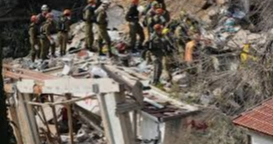
Iranian missile attacks also struck the northern Israeli city of Haifa, where at least two people were killed in a residential building collapse, and others were reported missing.
In response to incoming threats, countries including Kuwait, United Arab Emirates, and Saudi Arabia activated their air defense systems. Ongoing Iranian attacks on energy facilities and control over the Strait of Hormuz—a vital global oil route—have driven up energy prices worldwide.
U.S. President Donald Trump has issued a deadline for Iran to reopen the strait, warning of severe consequences if it fails to comply. He threatened further strikes on Iran’s infrastructure, including power plants, and suggested the country could face devastating setbacks.
Diplomatic efforts are underway, with mediators from Egypt, Pakistan, and Turkey proposing a 45-day ceasefire and the reopening of the Strait of Hormuz to allow negotiations to end the conflict. However, neither Iran nor the U.S. has formally responded to the proposal.
Despite mounting pressure, Iran has shown no indication of easing its control over the waterway, which remains a critical chokepoint for global oil shipments.
Airstrikes across Iran have caused significant casualties and damage, including attacks on residential areas and infrastructure. Since the conflict began, the death toll has climbed into the thousands across multiple countries, with widespread displacement reported, particularly in Lebanon.
The situation remains volatile, with ongoing military actions, rising casualties, and uncertain diplomatic prospects.