Others
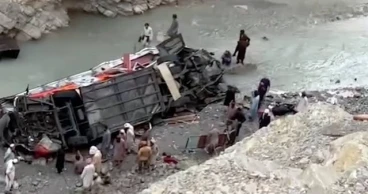
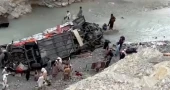
40 killed as overcrowded bus plunges into ravine in Pakistan
At least 40 people were killed and eight others injured after an overcrowded passenger bus plunged into a rocky ravine in Pakistan's southwestern Balochistan province early Friday, officials said.
The accident occurred in the Dana Sar area, near the border between Balochistan and Khyber Pakhtunkhwa provinces, when the speeding bus went out of control and fell into a deep ravine, according to Shahid Rind, spokesperson for the Balochistan government.
Rind said the bus was carrying more passengers than its capacity after taking aboard people from another bus that had broken down along the route.
Rescue teams reached the scene and began efforts to identify those killed in the crash.
President Asif Ali Zardari expressed deep sorrow over the tragedy, offering condolences to the families of the victims and wishing the injured a speedy recovery. He also directed the relevant authorities to ensure the injured receive the best possible medical care.
Balochistan Chief Minister Sarfraz Bugti also expressed grief over the loss of lives and instructed officials to provide the best available treatment to those injured.
Road accidents are frequent in Pakistan due to poor road conditions, weak enforcement of traffic regulations and unsafe driving, especially on mountainous roads.
In May, 17 people were killed and five others injured when a minibus crashed into a bus parked along a motorway in northwestern Pakistan.
1 month ago
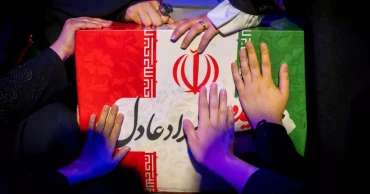
What to know about the funeral and burial of Iran's Supreme Leader Ayatollah Ali Khamenei
Iran is preparing for a dayslong funeral and burial ceremony for its late Supreme Leader Ayatollah Ali Khamenei, months after he was killed during the war involving Iran, the United States and Israel.
The ceremonies, beginning Saturday in Tehran, are expected to draw large crowds as authorities seek to demonstrate public support for the country's leadership. Khamenei, who led Iran for nearly 40 years, was killed on Feb. 28 after the United States and Israel jointly launched military strikes. His funeral was postponed because of the ongoing conflict.
The event is seen as a major test for Iran's leadership following months of unrest and a nationwide crackdown on anti-government protests.
Officials are expected to encourage government workers, supporters and paramilitary groups to participate in the funeral processions. However, large crowds also raise concerns about possible stampedes, similar to deadly incidents during previous state funerals in Iran.
The ceremonies will also take place during a fragile ceasefire and an interim agreement between Iran and the United States, which has reduced tensions enough for senior Iranian officials to appear publicly.
It remains unclear whether Iran's new Supreme Leader, Ayatollah Mojtaba Khamenei, the late leader's son, will attend the ceremonies. He is believed to have been injured in the attack that killed his father and has not appeared in public since.
Khamenei's body will lie in state at Tehran's Grand Mosalla on Saturday and Sunday. On Monday, it will be carried through the streets of Tehran before being taken to the holy city of Qom, about 120 kilometers south of the capital, where ceremonies will continue on Tuesday.
On Wednesday, the body will be taken to Karbala in neighboring Iraq, home to the shrine of Imam Hussein, an important religious site for Shiite Muslims. The same day also marks the anniversary of the nationwide protests against Khamenei's rule, during which thousands of people were reportedly killed in a security crackdown.
The final stop will be Mashhad, Iran's second-largest city, where Khamenei will be buried at the Imam Reza shrine.
The shrine, dedicated to Imam Reza, the eighth imam in Shiite Islam, is one of the religion's holiest sites and attracts millions of pilgrims every year. Several prominent Shiite clerics, including former Iranian President Ebrahim Raisi, who died in a helicopter crash in 2024, are also buried there.
Authorities are taking precautions to avoid a repeat of deadly crowd crushes seen at previous high-profile funerals.
During the funeral of Ayatollah Ruhollah Khomeini, founder of the Islamic Republic, in 1989, millions gathered in Tehran. The crowd overwhelmed security, causing Khomeini's coffin to fall into the crowd. Reports at the time said at least eight people were killed and around 11,000 were injured.
A similar tragedy occurred during the funeral of Revolutionary Guard General Qassem Soleimani in 2020, when a stampede killed at least 56 people and injured more than 2,000.
Meanwhile, efforts to reach a permanent agreement to end the Iran war continue. An interim deal reached in June opened a 60-day period for negotiations covering Iran's nuclear programme and the future of the Strait of Hormuz.
Technical-level talks began in Qatar this week, but progress has been slowed by major differences between the two sides and renewed exchanges of fire involving Iran and the United States over the strategic waterway.
1 month ago

Man dies after setting himself on fire outside UN headquarters in New York
A 52-year-old man died after setting himself on fire outside the United Nations headquarters in New York on Thursday while carrying a Tibetan flag, authorities said.
According to the New York Police Department, officers responded to a 911 call around 6:30 p.m. and found the man with severe burns. He was taken to a hospital, where he was later pronounced dead.
Police said the incident is under investigation. Officials did not say what may have led to the act.
The man's identity has not been released because his family has not yet been informed.
A UN spokesperson said the incident occurred after all scheduled meetings had ended for the day and did not disrupt any UN activities.
The incident comes against the backdrop of the long-running dispute over Tibet. China says Tibet has been part of its territory for more than 700 years, and the ruling Communist Party has governed the Himalayan region since 1951. Many Tibetans, however, say Tibet was effectively independent for much of its history and have protested what they describe as Beijing's strict rule.
According to the International Campaign for Tibet, more than 150 Tibetans died after setting themselves on fire between 2009 and 2022 in acts of protest.
China does not recognize Tibet's government-in-exile, known as the Central Tibetan Administration, and has not held talks with representatives of the Dalai Lama since 2010.
1 month ago

What makes a ‘heat dome,’ and what does it mean?
These unbearably hot and humid summer months that put millions of people across the globe at risk are typically made possible by phenomena known as heat domes.
Heat domes can make already-high temperatures even more extreme and prolonged, and they are worsening in severity and becoming more frequent as the planet warms.
Here's what to know.
What makes up a heat dome, and what does it do?
Heat domes are essentially high-pressure systems hovering above a region that trap heat and humidity, experts say.
They result from the northward flow of warm air. That system sends air sinking, pressure increasing and temperatures rising.
“The concept of a heat dome really means that the air in this region is so warm, and we know that warm air expands," said Jennifer Francis, a climate scientist at the Woodwell Climate Research Center. "It basically means that the layers of the atmosphere are bulging upward as well.”
Simply put, heat domes cause heat waves. They’re associated with very dry, sunny conditions that last for multiple days at a time, trap heat at the surface and help to amplify it, said Zachary Labe, climate scientist at Climate Central, an independent collective of scientists.
How has heat affected the world this year?
Heat impacted various regions of the world early in 2026.
The continental United States registered its most abnormally hot month in 132 years of records in March, with record-shattering extremes first in the Southwest and then across the rest of the nation. Heat scorched the French Open and scorched parts of India in May. Extreme heat has since been top of mind for the World Cup across the U.S., Canada and Mexico.
Starting mid-June, Europe has baked under unseasonable highs of around 40 degrees Celsius (104 Fahrenheit) in many places due to a heat dome.
Now, much of the Eastern U.S. is expected to be slammed by a long heat wave in the coming days, and already, much of the Southwest is experiencing temperatures around 100 degrees Fahrenheit (38 Celsius) this week and those temperatures could reach elsewhere by the Fourth of July holiday.
What role does climate change play?
Science shows that as the planet warms — the result of humans burning coal, oil and gas — heat waves get worse, last longer and become more frequent.
“Heat waves like this are so directly connected to the climate crisis and climate change,” Francis said, "and it’s because of how we’ve been burning fossil fuels and cutting down forests for so long and increasing the concentration of heat-trapping gasses in the atmosphere.
“These kinds of heat waves and droughts and associated fires are all increasing just as we would expect them to in a warming world,” she said.
How can I stay safe?
Experts say people need to stay hydrated when sweltering heat and humidity hit.
Be sure to avoid outdoor exercise in the heat of the day — and find shade, or if you can, access to air conditioning. Some cities offer resources and cooling centers to provide relief.
Cooling off in nearby pools or bodies of water can also help.
Heat domes can make it difficult to fully recover from high temperatures at night, so finding ways to stay cool during the day and evening hours are important.
“It’s those night times — especially, locations and people, who don’t have access to adequate cooling, really need to be aware of the impacts that added heat stress will have and their body’s ability not to be able to cool down," Labe said, "because humidity is going to be a really key factor in boosting those heat impacts.”
1 month ago
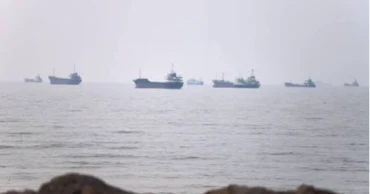
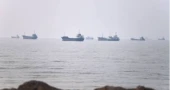
Iran warns oil tankers to follow approved routes in Strait of Hormuz
Iran on Thursday warned that all oil tankers passing through the Strait of Hormuz must use routes approved by Tehran or face a "forceful response," raising fresh concerns over security in one of the world's most important energy shipping lanes.
The warning was issued by Iran's Khatam al-Anbiya military command and broadcast on state television, a day after US and Iranian officials held indirect talks through mediators in Qatar aimed at reaching a lasting agreement following the Iran war.
The reason behind the latest warning was not immediately clear. However, it came shortly after the US military's Central Command said officials from the United States and Middle Eastern countries meeting in Bahrain had reaffirmed their commitment to ensuring the free flow of commercial shipping through the Strait of Hormuz.
Iran's statement said any vessel that fails to follow its designated routes or ignores its navigation rules would face an "immediate and forceful response" from the country's armed forces.
"Any failure to comply, deviation from the designated route, or disregard for the navigation protocols of the Islamic Republic of Iran in the Strait of Hormuz will be met with an immediate and forceful response from the armed forces, endangering the security of the violating vessels," the statement said.
Iran also criticised the continued presence of US military aircraft over the strait, saying it creates insecurity and threatens regional stability.
"Any attempt by the United States to interfere in security matters or any disruptive action in the Strait of Hormuz will be considered a threat to Iran's national sovereignty and will be met with a rapid and decisive reaction," the statement added.
The Strait of Hormuz, located at the entrance to the Persian Gulf, is one of the world's busiest oil shipping routes and has become a key issue in negotiations over a permanent settlement following the conflict involving Iran.
Under an interim agreement, Iran and the United States had allowed ships to pass through the strait without paying transit fees for 60 days. However, Tehran has insisted it should control shipping routes and eventually charge vessels for using the waterway.
The United States and several Gulf Arab countries have rejected the proposal. Efforts by Oman and a United Nations agency to establish an alternative shipping route near Oman's coast triggered regional attacks last weekend, underscoring the continuing tensions.
1 month ago
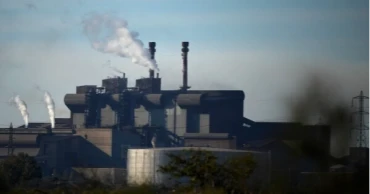
EU tightens steel import rules, targets low-cost online parcels amid trade gap with China
The European Union on Wednesday introduced new measures to protect its steel industry and curb the growing number of low-cost online parcels entering the bloc, as it seeks to address its widening trade imbalance with China.
The European Commission announced a new customs duty of 3 euros ($3.42) on low-value parcels and stricter rules on steel imports, saying the measures are aimed at ensuring fair competition for European businesses and improving consumer protection.
European Commission President Ursula von der Leyen said the rapid increase in cheap online imports has put European retailers at a disadvantage and raised concerns over product safety.
"Today's change is about restoring fairness for European businesses and better protecting our consumers," she said in a post on social media.
The Commission also said the updated steel import rules are intended to protect European factories and jobs from the effects of excess global steel production, particularly as subsidised steel from China continues to put pressure on manufacturers worldwide.
The EU's trade deficit with China reached about 360 billion euros ($410 billion) in 2025 and has continued to grow this year.
Under the new rules, the EU will end the customs exemption for parcels worth less than 150 euros. The Commission said Chinese online shopping platforms Temu and Shein account for around 90% of these shipments.
According to the Commission, about 5.9 billion low-value parcels entered the EU in 2025, up sharply from 1.4 billion in 2022. While these parcels represented just 2% of the total value of imports, they accounted for 97% of all imported packages. Many were found to fail EU safety standards, while others raised environmental concerns because of excessive plastic packaging.
Bernd Lange, chairman of the European Parliament's trade committee, welcomed the move, saying Europe was finally taking action against the flood of cheap imported goods.
However, Gary Ng, a research fellow at the Central European Institute of Asian Studies, said the new 3-euro charge is relatively small and may have only a limited impact because the price difference between European and Chinese products remains large. He said shoppers and online retailers could also reduce the impact by combining orders.
The EU has also introduced tighter steel import controls by setting annual tariff-free quotas of 18.3 million metric tons. Imports exceeding those limits will face a 50% tariff across 26 categories of steel products.
Importers will also be required to provide more information about where the steel was originally produced to prevent companies from avoiding EU rules by shipping Chinese steel through third countries.
The European Steel Association has warned that Europe's steel industry is facing a serious downturn, with production falling to its lowest level in decades.
Although China produces more than half of the world's steel, most EU steel imports come from countries including the United Kingdom, Ukraine, India, Taiwan, Türkiye, Japan and South Korea. Some exemptions have been granted to Ukraine because of the war with Russia.
An EU official said the bloc remains willing to cooperate with like-minded partners to address global overcapacity in the steel market, while stressing the need for fair competition.
Analysts expect Beijing to oppose the new measures even though they are not aimed exclusively at China.
China's Ministry of Commerce warned in May that it would respond firmly to any discriminatory actions targeting Chinese companies or products.
Chinese researchers have also cautioned that growing trade restrictions by the EU, the United States and other countries could create what they described as a "wolf pack effect," with multiple nations introducing tariffs and investment restrictions against Chinese exports.
Beijing has rejected concerns over what some analysts call "China Shock 2.0," arguing that its exports and technological advances benefit the global economy.
Although the EU has taken a less confrontational approach than the United States, analysts say Brussels is becoming more determined to protect its industries.
Last month, leaders of the Group of Seven (G7) called for stronger supply chains for critical minerals to reduce dependence on China.
Chinese Foreign Ministry spokesperson Guo Jiakun said this week that China and the EU are partners rather than rivals, adding that Europe's economic challenges are not caused by China.
Chinese Commerce Minister Wang Wentao met EU Trade Commissioner Maroš Šefčovič in Brussels on Monday to discuss trade issues.
Šefčovič said the EU remains open to trade but must protect its industrial base and ensure fair competition, adding that meaningful progress in rebalancing trade should be achieved before an October deadline. "The status quo is not an option," he said.
1 month ago
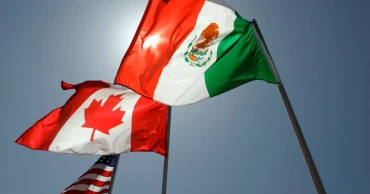
US, Canada and Mexico begin difficult talks on renewing North American trade deal
The United States, Canada and Mexico have begun negotiations to renew their regional trade agreement, a process expected to take months and possibly longer as major disagreements threaten to complicate the talks.
The three countries trade about $1.9 trillion worth of goods and services every year, or roughly $5 billion a day. Canada and Mexico have now overtaken China as the United States' two largest trading partners, making the outcome of the negotiations highly important for businesses across North America.
Many companies are hoping the talks will bring greater certainty after a year of changing tariff policies under President Donald Trump. However, analysts say the negotiations are likely to be difficult.
The U.S.-Mexico-Canada Agreement (USMCA), negotiated during Trump's first term, officially came up for review on Wednesday under a provision requiring the pact to be reconsidered every six years.
"There’s going to be a lot of drama this summer," said Diego Marroquín Bitar, a fellow at the Center for Strategic and International Studies, during a recent trade forum.
One of the biggest sticking points is the U.S. proposal to shift more manufacturing, particularly vehicle production, to the United States.
Washington wants stricter rules requiring a larger share of products to be made in North America, and specifically in the United States. Officials are also pushing for a new rule that would require at least 50% of every vehicle covered by the agreement to be produced in the United States.
Canada and Mexico strongly oppose the proposal, saying it goes against the principles of regional economic integration.
Analysts warn that tougher production requirements could disrupt established supply chains and increase vehicle prices in the United States, where the average new car already costs nearly $50,000.
The USMCA replaced the North American Free Trade Agreement (NAFTA) in 2020. While it largely preserved NAFTA's framework, it introduced stricter rules on regional content and higher wage requirements for some manufacturing sectors, particularly the auto industry.
The agreement currently requires that 75% of a vehicle's content originate in North America to qualify for duty-free treatment, up from 62.5% under NAFTA. The United States now wants that threshold raised further.
Trade experts say automakers have spent years restructuring supply chains to meet the existing requirement, making further changes costly and time-consuming.
Although Wednesday marks the start of the review process, experts do not expect an immediate agreement.
Oscar Ocampo, director of economic development at the Mexican Institute for Competitiveness, said negotiations are likely to continue for years if necessary. Under the agreement, the three countries have until 2036 to reach a new deal before the current pact expires.
At the same time, any member country can withdraw from the agreement by giving six months' notice, raising concerns in Canada and Mexico after Trump recently said he was "not looking to renew" the pact.
Ocampo believes the president is using the uncertainty as leverage to pressure Mexico on border security and immigration rather than preparing to abandon the agreement altogether.
Canada has so far played a limited role in the discussions, while the United States and Mexico have already held talks.
Patrick Childress, a former U.S. trade negotiator, warned that Canada risks being presented with a deal negotiated mainly between Washington and Mexico and being left with little room to negotiate.
Canadian Prime Minister Mark Carney said the three countries plan to hold a virtual meeting on Wednesday and stressed that his priority is to modernize the agreement.
Businesses across North America say their biggest concern is not necessarily new trade rules but uncertainty.
Shawn Miller, co-founder of Michigan-based importer PKGD Group, said companies need stable policies to plan ahead.
"If the rules change, the rules change. But we'd really like to know what they're going to be and have them stay that way for a while," he said.
PKGD imports tequila, mezcal and other agave-based spirits from Mexico. Earlier this year, three of its shipments were unexpectedly hit with a 25% tariff before qualifying products under the USMCA were later exempted, leaving the company with an additional cost of about $105,000.
Miller said smaller businesses do not have the legal teams or trade specialists available to large multinational companies, making sudden policy changes especially difficult to manage.
1 month ago

China tightens export restrictions on 40 Japanese firms amid rising tensions
China has imposed new export restrictions on 40 Japanese companies, accusing them of supporting Japan's military expansion, in the latest sign of worsening ties between Beijing and Tokyo.
The Chinese Commerce Ministry on Monday placed 20 Japanese entities, including subsidiaries of Mitsubishi Electric and Mitsubishi Heavy Industries, on its export control list. The move bars Chinese and foreign suppliers from exporting China-made dual-use goods—items that have both civilian and military applications—to those firms.
Another 20 companies, including Mitsui E&S as well as divisions of Fujitsu and Komatsu, were added to a watch list. Chinese exporters dealing with these firms must now obtain special licences, conduct risk assessments and provide written assurances that the products will not be used for military purposes.
Beijing defended the measures as lawful and necessary, saying they are intended to curb what it described as Japan's pursuit of "new militarism." The ministry urged Tokyo to reverse its current policies and reflect on its past actions.
Japan strongly protested the restrictions, with Chief Cabinet Secretary Minoru Kihara calling them "unacceptable and extremely regrettable." He said the government would assess their impact before deciding on an appropriate response.
Relations between the two countries have become increasingly strained over security issues, particularly following comments by Prime Minister Sanae Takaichi suggesting Japan could become involved if China used force against Taiwan. Beijing, which claims Taiwan as its territory, views the issue as highly sensitive.
Japan has also expanded its defence capabilities in recent years by deploying longer-range missiles, easing restrictions on weapons exports and increasing defence spending. On Monday, Japan's Ground Self-Defense Force announced the deployment of a Type-12 missile launcher on the remote island of Minamitorishima, a move widely seen as a response to China's growing military presence in the Pacific.
This is the second round of such measures by Beijing this year. In February, China imposed similar export controls on another 40 Japanese firms.
Chinese authorities insisted the restrictions target only a limited number of companies involved in dual-use technology and would not disrupt normal trade between the two countries.
Analysts said the latest move is intended more as a diplomatic signal than an economic sanction. George Chen, a partner at advisory firm The Asia Group, said Beijing appears increasingly concerned about closer defence cooperation between Japan, the United States and other regional partners.
He warned that bilateral relations are likely to remain fragile unless both sides take steps to ease tensions.
The latest developments come as China continues to increase military and coast guard activities around Taiwan. Earlier this month, Chinese coast guard vessels carried out patrols east of the island in what state media described as a warning to Japan and the Philippines over maritime issues. Last week, the United Kingdom, Germany and France jointly criticised China's activities near Taiwan and reiterated their opposition to any unilateral change to the status quo.
1 month ago
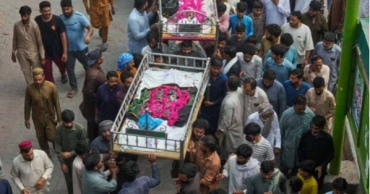
Roof collapse at Lahore tutoring centre kills 14 children, several injured
At least 14 schoolchildren were killed and eight others injured after the roof of an under-construction tutoring centre collapsed in Pakistan's eastern city of Lahore on Tuesday, according to police and rescue officials.
Senior police official Faisal Kamran said the injured children were receiving treatment at a hospital. He added that the owner of the tutoring centre and another individual had been arrested following the incident.
Rescue workers continued searching through the debris amid fears that more children could be trapped beneath the rubble. Preliminary findings suggest the tutoring centre was operating in an old building, where the roof of an unfinished second floor apparently gave way due to poor construction.
Building collapses are a recurring problem in Pakistan, largely because of weak enforcement of construction regulations. Many buildings are constructed using low-quality materials, while safety standards are often overlooked to cut costs.
Emergency responders, assisted by local residents, rushed to the scene shortly after the collapse. Volunteers used shovels and even their bare hands to clear the rubble in a desperate effort to rescue trapped children.
As victims' bodies were returned to their families, scenes of mourning unfolded outside hospitals and in the neighbourhood where the tutoring centre was located. Grieving parents and relatives gathered to receive the bodies, while funeral prayers were expected later in the day.
The tragedy also sparked public anger, with residents demanding strict action against the tutoring centre's owner for allegedly operating classes in what they described as an unsafe and deteriorating building.
Lahore, the capital of Punjab province, has a large number of private tutoring centres attended by students after regular school hours.
President Asif Ali Zardari and Prime Minister Shehbaz Sharif expressed deep sorrow over the incident, offering condolences to the bereaved families and wishing the injured a speedy recovery. They also stressed the need for stronger safety measures to help prevent similar accidents in the future.
1 month ago
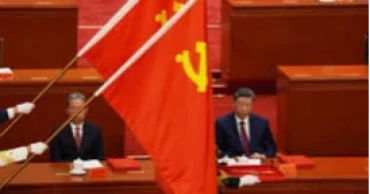
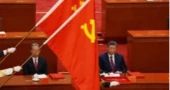
Xi says China's development offers a model for developing nations
Chinese President Xi Jinping on Wednesday said China's rapid industrial growth offers a valuable example for developing countries, as he projected greater confidence in the country's role on the global stage.
Speaking at an event marking the 105th anniversary of the founding of the ruling Communist Party, Xi said China had achieved in just a few decades what took many wealthy nations centuries to accomplish.
"We advocate the building of a community with a shared future for humanity, providing Chinese wisdom, Chinese solutions and Chinese strength for addressing major issues facing humanity," Xi said.
Xi, who is in his 14th year as China's leader, said the country is ready to contribute its experience and ideas to help address global challenges.
China has long criticized U.S. influence over the international system. While Beijing says it does not seek to replace the existing global order, it wants reforms that better reflect the interests of developing countries.
Last year, China engaged in a major trade dispute with the United States that led President Donald Trump to reduce some of the import tariffs imposed on Chinese goods.
Xi said the world is going through a period of uncertainty and major change, leaving humanity at a critical turning point. He repeated China's commitment to building a new type of international relationship aimed at promoting global peace and development.
His speech at the Great Hall of the People in Beijing echoed key messages from his address during the Communist Party's 100th anniversary in 2021. These included strengthening China's military and pursuing the country's goal of bringing Taiwan under Beijing's control.
Xi also stressed the need to modernize the military more rapidly to meet world-class standards while maintaining the Communist Party's firm leadership over the armed forces.
In recent years, several senior military officers have been removed as part of an anti-corruption campaign that analysts say has also helped strengthen Xi's control over the military.
1 month ago