Others
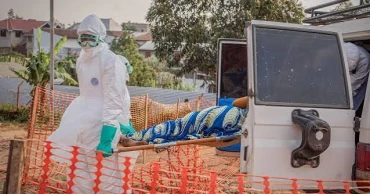
DR Congo steps up Ebola response as cases top 1,307
The Democratic Republic of the Congo (DRC) has reported 1,307 confirmed Ebola virus disease cases, including 377 deaths, as authorities intensified efforts to contain the outbreak through stricter public health measures.
Government data released Monday showed that, as of Sunday, 180 patients had recovered, while 615 others were receiving treatment or medical care. The case fatality rate stood at 28.8 percent, while health officials had successfully traced 81.3 percent of identified contacts.
Congo sees sharpest daily rise in Ebola cases since outbreak began
To curb transmission, the government has banned mass gatherings in the capital, Kinshasa, and the provinces of Tshopo, Haut-Uele and Bas-Uele, according to local media citing a circular issued by the Ministry of Interior. The restrictions, announced by Interior Minister Jacquemain Shabani to provincial governors, cover political rallies, public marches and other events to reduce physical contact and slow the spread of the virus.
President Felix Tshisekedi said a comprehensive Ebola response plan worth US$319 million had been prepared, with emergency funds already released to support field operations, contain the outbreak and save lives.
In his Independence Day address, Tshisekedi urged citizens to follow health guidelines, report suspected infections and reject misinformation, describing Ebola as "a health emergency" requiring responsibility and solidarity.
The DRC declared the current Ebola outbreak in mid-May. Health authorities say response efforts continue to face challenges from community transmission, population movement and limited access to some affected areas.
1 month ago
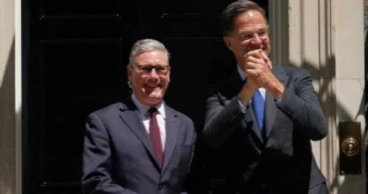
UK unveils future defence plan centred on drones, autonomous systems amid spending debate
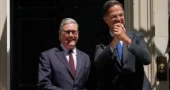
Britain on Tuesday unveiled a long-awaited defence investment plan that puts drones, autonomous fighter aircraft and uncrewed submarines at the heart of its future military strategy, reflecting how modern warfare is increasingly being shaped by advanced technology.
The plan comes after months of delays caused by disagreements between military leaders and Treasury officials over defence funding. Like many NATO members, Britain is facing growing pressure to boost military spending in response to Russia's increasingly aggressive actions and concerns over long-term US security commitments.
Prime Minister Keir Starmer said the strategy is designed to prepare Britain for what he described as "a more dangerous and volatile world than at any time for decades."
However, the plan stops short of committing to raise defence spending to 3% of the UK's gross domestic product (GDP) by 2030, a key issue that contributed to the resignation of former Defence Secretary John Healey on June 11.
Healey had criticised the government for not investing enough in the armed forces despite growing security threats. Referring to British intelligence assessments, he warned that Russia could be in a position to attack a NATO member by 2030. He said the Treasury's proposal would increase defence spending to only 2.68% of GDP by 2030, after reaching 2.6% next year.
Starmer said new Defence Secretary Dan Jarvis had revised and strengthened the investment plan. The updated proposal includes £15 billion (about $20 billion) in new spending, higher than the £13.5 billion previously offered but still well below the £28 billion defence officials had sought.
The prime minister said Britain would reach the 3% spending target during the next parliamentary term, which could run until 2034.
He said the investment would ensure British armed forces have the advanced capabilities needed to respond to evolving security threats and protect the country. The full defence plan is scheduled for publication later on Tuesday.
The roadmap also outlines how Britain intends to increase defence spending to NATO's target of 3.5% of GDP by 2035 as it seeks to rebuild military strength after years of budget pressures.
Britain has closely studied the war in Ukraine, where drones have become a key part of the battlefield. Ukrainian forces are estimated to use around 200,000 drones every month to defend against Russian attacks.
As part of the new strategy, Britain plans to invest billions of pounds in drone technology across the army, navy and air force. Instead of building a planned fleet of new destroyers, the Royal Navy will develop hybrid ships that can serve as command centres for drone operations.
Speaking at a drone manufacturing facility near London, Starmer said the nature of warfare is changing rapidly. He pointed to Ukraine's use of advanced technology to damage Russia's Black Sea Fleet, carry out strikes deep inside Russian territory and slow the advance of one of the world's largest armies.
Britain's defence review also comes as US President Donald Trump continues urging NATO allies to spend more on defence. Trump has repeatedly argued that European countries should contribute more to their own security instead of relying heavily on the United States.
The defence plan is expected to remain a major issue after Starmer leaves office. Following the recent resignations of Healey and junior Defence Minister Al Carns, Starmer announced last week that he would step down as prime minister. He is expected to attend the NATO summit in Turkey on July 7-8 before leaving office.
Former Greater Manchester Mayor Andy Burnham, who is widely seen as the frontrunner to succeed Starmer, is expected to face pressure to maintain the defence commitments outlined in the new strategy.
Opposition Conservative Party defence spokesperson James Cartlidge criticised the plan, calling it "too little, too late."
He said the review was nearly a year overdue and accused Starmer of pushing it through in an effort to secure a political legacy.
1 month ago

Kidnapped eagle returns to Serbia after dramatic rescue across the Middle East
A young eastern imperial eagle named Feliks has returned safely to Serbia after being captured by poachers, illegally traded across the Middle East and rescued through a complex cross-border operation involving wildlife activists, refugees and the Serbian military.
The one-year-old eagle began his first migration to the Middle East last August but disappeared after his tracking signal was lost in Syria in late October.
Wildlife experts later discovered that Feliks had been captured by poachers and offered for sale through illegal wildlife trading networks.
His rescue has drawn attention to the growing problem of illegal wildlife trafficking and the efforts of conservation groups working to stop it.
"It's getting worse year after year," said Michel Sawan, head of the Lebanese Association for Migratory Birds, who helped coordinate the rescue. He said the successful mission exceeded expectations.
Feliks belongs to the protected eastern imperial eagle species, which was once on the brink of disappearing from Serbia. In 2017, only one breeding pair remained, but conservation efforts by the Bird Protection and Study Society of Serbia (BPSSS) have helped increase the population.
Before his migration, Feliks was fitted with an identification ring and a satellite transmitter that allowed researchers to monitor his journey.
He first flew across North Macedonia, Greece and Turkey before reaching Syria, where his signal suddenly disappeared.
According to Sawan, poachers in Syria often trap migratory birds by placing water in desert areas, using nets, shooting them or even chasing them with motorcycles.
After being captured, Feliks was advertised for sale in online groups used for illegal wildlife trading.
Sawan contacted people he knew in Syria and began efforts to recover the bird. He refused to pay smugglers but continued working through local contacts.
Feliks was first sold to a buyer in Lebanon and later taken back into Syria before conservationists managed to recover him.
Transporting the eagle into Lebanon proved difficult because of regional fighting and poor weather.
Eventually, a group of refugees carried Feliks across the Nahr al-Kabir River, which forms part of the Syria-Lebanon border, hidden inside a potato sack.
After reaching a bird sanctuary in Beirut, Feliks faced another challenge. The outbreak of war involving Iran in February complicated plans to fly him back to Serbia.
Following three unsuccessful attempts, the Serbian military arranged his return using a transport aircraft serving troops in a United Nations peacekeeping mission in Lebanon.
Feliks finally arrived back in Serbia on June 22.
He is now being kept in quarantine for 21 days at a zoo in northern Serbia before being released back into the wild with a new tracking transmitter.
Conservationists say the eagle still faces threats in Serbia, including accidental poisoning and collisions with power lines, despite years of successful efforts to restore the species.
The BPSSS, supported by a European Union-funded project, has helped increase the country's eastern imperial eagle population from a single breeding pair in 2017 to 29 breeding pairs today.
Researchers hope Feliks will soon return safely to the skies and continue his life in the wild.
1 month ago

Explosion in Monaco injures three; suspect escapes to France
Three people, including a Ukrainian businessman and a child, were seriously injured after an explosive device detonated at a residential building in Monaco, while the suspected attacker fled across the border into France, authorities said.
The blast took place around 9 p.m. on Monday at the entrance of a residential building near the French border, according to Monaco's Minister of State Christophe Mirmand.
The two adults and the child were taken to hospitals in France for treatment.
Authorities in Monaco and France have launched a joint search for the suspect, whose motive remains under investigation.
Mirmand said the suspect escaped on foot into France shortly after the explosion and was tracked through surveillance cameras in Monaco and the nearby French town of Beausoleil.
A French national police official confirmed that French police are assisting in the investigation and searching for the suspect, but did not provide further details.
The attack shocked the tiny Mediterranean principality, where such incidents are rare.
Monaco's ruler, Prince Albert II, condemned the explosion, calling it "an odious act," and said all security and emergency services had been mobilized to protect the public.
French broadcaster BFM and Ukrainian news outlet Ukrainska Pravda identified one of the injured as Ukrainian construction tycoon Vadym Iermolaiev.
According to Ukrainska Pravda, Iermolaiev was placed under Ukrainian sanctions in 2023 over alleged ties to Russia. Authorities have not confirmed whether he was the intended target of the attack.
1 month ago
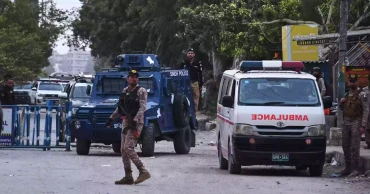
Pakistani airstrikes in Afghanistan kill 36 civilians, wound over 160, officials say
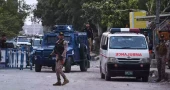
At least 36 civilians were killed and more than 160 others injured in overnight Pakistani airstrikes in eastern Afghanistan, Afghan officials said Monday, as tensions between the two neighbouring countries continue to rise.
Pakistan said its security forces carried out a ground operation along the Afghanistan border late Sunday, followed by airstrikes targeting militant hideouts and safe havens. Information Minister Attaullah Tarar said 29 militants were killed during the operation, which he described as a response to a series of recent militant attacks inside Pakistan.
Afghanistan's Taliban-led government strongly condemned the strikes, calling them a "cowardly act of aggression" and an "act of brutality."
Deputy Taliban spokesman Hamdullah Fitrat said Pakistani forces first struck a house in Chamkani district of Paktia province, killing an elderly man and a child and injuring several family members.
According to Fitrat, residents rushed to the scene to help the victims, but the area was hit again, killing 28 villagers and injuring 158 others.
In a separate strike on a village in Giyan district of Paktika province, six people, mostly women and children, were killed when another house was hit, he said.
Fitrat also said a civilian home in Kunar province was struck, killing around 30 livestock but causing no human casualties.
Pakistan has faced a sharp increase in attacks targeting police and security forces in recent years. Authorities blame the outlawed Tehrik-e-Taliban Pakistan (TTP) and allied militant groups for most of the violence. Although separate organizations, the TTP is closely allied with Afghanistan's Taliban, which returned to power in Kabul in 2021.
The latest Pakistani operation came a day after militants attacked the headquarters of the paramilitary Rangers in Karachi, killing three soldiers.
Pakistan's military said security forces killed three attackers and arrested another suspect, whom it identified as an injured Afghan national. The militant group Jamaat-ul-Ahrar, a splinter faction of the Pakistani Taliban, claimed responsibility for the attack.
The latest cross-border operation took place less than three weeks after Pakistan carried out similar airstrikes inside Afghanistan targeting what it described as militant bases.
The strikes ended about a month of relative calm following what Islamabad had earlier described as an "open war" between the two neighbours, despite international efforts to reduce tensions.
Cross-border fighting has intensified in recent months, with hundreds of people reported killed since February, when Afghanistan launched retaliatory strikes following earlier Pakistani air raids.
Several rounds of talks have failed to produce a lasting ceasefire. China hosted negotiations between the two sides in April, after which Beijing said both countries had agreed to avoid further escalation and work toward a peaceful solution.
1 month ago
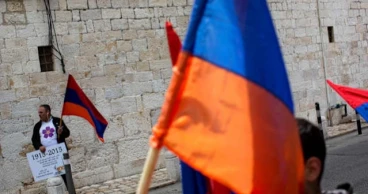
Israel's Cabinet backs recognition of Armenian genocide, deepening rift with Turkey
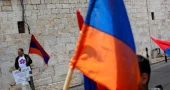
Israel's Cabinet has unanimously approved a proposal to officially recognize the mass killings of Armenians by the Ottoman Empire during World War I as genocide, marking a major policy shift that highlights worsening relations with Turkey.
The proposal, approved on Sunday, still requires the approval of Israel's Parliament before becoming official.
For decades, Israel avoided formally recognizing the killings as genocide, largely to maintain relations with Turkey, which strongly rejects the term and has campaigned against such recognition worldwide. However, ties between the two countries have steadily worsened, particularly during the conflicts in Gaza, Lebanon and Iran.
Israeli Foreign Minister Gideon Saar, who presented the proposal to the Cabinet, said the Armenian genocide has long been supported by extensive historical evidence but has faced organized efforts to deny or downplay it.
He noted that several Israeli leaders, including Prime Minister Benjamin Netanyahu, have previously referred to the events as genocide, though Israel's Parliament has never formally adopted that position.
"It is never too late to do the right thing," Saar said, describing the move as both a moral and historical responsibility.
According to Saar, 32 countries, including the United States, Syria and Lebanon, have already officially recognized the Armenian genocide.
Turkey strongly criticized Israel's decision, calling it politically motivated and accusing Israel of trying to divert attention from allegations over its military campaign in Gaza.
In a statement, Turkey's Foreign Ministry said Israel was attempting to hide its own actions against Palestinians and dismissed the recognition effort as an attempt to ignore historical and legal facts.
Relations between Israel and Turkey, once close allies, have steadily deteriorated since the rise of Turkish President Recep Tayyip Erdogan.
Israel has also faced repeated accusations from the United Nations, Turkey and other international bodies that its military campaign in Gaza amounts to genocide. Israel firmly rejects the allegations, saying its military targets Hamas militants rather than civilians and accusing Hamas of using civilians as human shields.
The war in Gaza began after Hamas launched its attack on Israel on Oct. 7, 2023. Gaza's Health Ministry says more than 73,000 people have been killed in the conflict, about half of them women and children. Israel disputes allegations of genocide and says it is acting in self-defense.
Last week, a panel of independent experts appointed by the United Nations accused Israel of deliberately killing children in Gaza and repeated claims that genocide had occurred. Israel rejected the report, calling it false and defamatory.
1 month ago

Rights group says Vietnam intensifying crackdown on dissent with broad laws
Vietnam is increasingly using broadly worded laws to arrest activists, critics and ordinary citizens seen as challenging the ruling Communist Party, according to a new report released Monday by human rights organization The 88 Project.
The report says the government arrested at least 56 people on politically related charges in 2025, marking the third straight year of rising arrests. That figure is twice the number recorded in 2022. The group noted that the actual number is likely much higher because it only counted cases where those arrested were publicly identified and their cases could be tracked.
According to the report, the government under Communist Party General Secretary To Lam has stepped up its use of criminal laws to silence dissent. To Lam, the country's former top security official, became party chief in 2024 and was also elected president earlier this year.
The report says many of the arrests are linked to growing concerns within Vietnam's leadership over the possibility of a so-called "color revolution," referring to mass protest movements that brought political change in countries such as Ukraine and the Philippines.
It also points to similarities with neighboring China, where authorities have long faced criticism for suppressing dissent through broad legal powers. Despite occasional tensions over territorial disputes in the South China Sea, China and Vietnam agreed earlier this year to strengthen cooperation on political security and preventing so-called color revolutions.
Ben Swanton, co-director of The 88 Project, said Vietnam has become far less tolerant of criticism under To Lam's leadership.
"The country has become a police state that allows no dissent," Swanton said, adding that the current situation marks a sharp decline from the relatively more open environment of the 2010s, when civil society groups had greater space to engage in public policy discussions.
Vietnam's Foreign Ministry did not respond to requests for comment on the report.
A key concern highlighted in the report is the growing use of Article 331 of Vietnam's penal code, which allows authorities to sentence people to up to seven years in prison for "abusing democratic freedoms" in ways deemed harmful to the state.
Human Rights Watch previously said the government has expanded the use of Article 331 beyond political activists to include ordinary people who publicly criticize government officials or raise concerns over issues such as land rights, religious freedom, Indigenous rights and corruption.
The report notes that among those charged under Article 331 last year were three men behind the YouTube channel "Nguoi Da Tin" accused of posting videos containing what authorities described as distorted information.
The 88 Project also documented several politically related arrests in 2025, including a Montagnard activist who was arrested in Thailand and sent back to Vietnam, a writer accused of spreading anti-state propaganda, and a man who helped residents in Ha Tinh province seek compensation after losing land to a highway project.
The report concludes that Vietnamese authorities are imposing increasingly harsh punishments not only on journalists and human rights defenders but also on political exiles and citizens using legal means to challenge government decisions.
1 month ago
Unexpected rescue brings hope after Venezuela tragedy
A mix of rescue teams and civilians on Sunday peered at a mountain of rubble almost indistinguishable from the other ruins lining swathes of the northern Venezuelan coast following two devastating earthquakes.
In the days since Wednesday's 7.2 and 7.5 quakes, search teams and locals had believed that there were no signs of life under the concrete mass in La Guaira state, one of the hardest-hit areas.
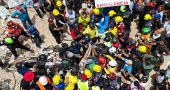
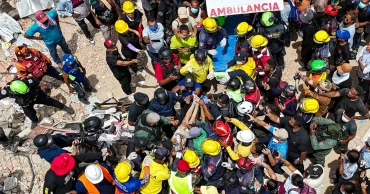
Then on Sunday came a burst of movement. A pair of dust-coated legs was pulled out of a hole by rescue teams from Virginia, France and Venezuela.
Teams gently carried the man from the structure where he had been trapped for four days, his body slack but still gripping his phone, onto a black tarp and administered an IV.
Then came his young son, pulled shirtless and almost unresponsive over a pack of hard-hat clad rescue workers with the words “Fairfax County Urban Search & Rescue” emblazoned on the backs.
“Slow, slow, gentle, gentle,” chanted rescue teams in a mix of Spanish and English, as they passed the father and son through a crowd of onlookers into a nearby ambulance.
The teams burst out into applause days into search and rescue efforts, at a time that hope of finding survivors was dimming.
Associated Press journalists Juan Pablo Arraez and Matías Delacroix were among the throng of people who witnessed the rescue.
On Sunday, Arraez said they were scouring the La Guaira region “trying to see if we can see any miracles” when they found the U.S. rescue teams and local civilians calmly working to pull the father and son out of the building.
“At this stage many begin to lose hope. You see that in their faces,” Arraez said, as helicopters flew overhead. “When somebody makes it out alive, this father and son. It’s more than a glimpse, it’s real hope for people.”
The one-two punch of the earthquakes has been the greatest natural disaster the South American nation has faced in decades.
Authorities reported 1,450 people were dead on Sunday, with thousands more injured and many more missing.
The first 48 to 72 hours after a natural disaster are crucial to rescue efforts, though survival can be extended if people have access to food and water.
But small moments of optimism, solidarity and humanity like this have cut through almost overwhelming grief.
Venezuelan firefighters poured water into the mouth of a dust-covered dog peeking its head through cracks in the concrete.
After being trapped for 70 hours, one woman sat up on a stretcher, grinning and waving at cheering crowds as she was loaded on a gurney into an ambulance.
1 month ago
14 killed in Saudi Aramco helicopter crash
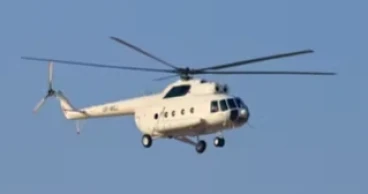
A helicopter belonging to Saudi Aramco has crashed, killing all 14 people on board, the Saudi Press Agency reported Sunday, citing the country's Energy Ministry.
The helicopter crashed in the country's eastern coastal city of Ras Tanura, the ministry said, adding the deaths were all Saudi citizens.
Investigations are underway to determine the causes of the crash, it said.
Saudi Aramco, Saudi Arabia's state-owned energy giant, is widely recognized as the world's largest corporate crude oil producer.
1 month ago

France sees 1,000 more deaths amid heat wave
France saw around 1,000 additional deaths last week at the height of its record-smashing heat wave, the country's public health agency said Sunday, as Europeans elsewhere were suffering through yet another day of new temperature highs that sparked wildfires in Germany and had Berlin police using water cannons to cool down the crowds.
Temperature records were toppled in several countries on the weekend as the heat wave slowly moved toward eastern parts of the continent.
In Germany, a new nighttime temperature record was reported Sunday from Kubschütz, in eastern Saxony, where the temperature did not drop below 29.4 degrees Celsius (84.9 Fahrenheit). The nightly record came only hours after a daytime record of 41.5 C (106.7 F) in Möckern-Drewitz in Saxony-Anhalt, according to preliminary data by the German Weather Service DWD. The previous record was set a day earlier.
A new study from the World Weather Attribution, a Europe-based collaboration of scientists, reported Friday that the record-breaking heat and humidity in Europe this week would not have been possible without climate change.
The rapid study found that the heat would have been virtually impossible just five decades ago, and is 200 times more likely today than it would have been 20 years ago.
France records surge in deaths during heat wave
France saw a surge in deaths last week at the height of its record-smashing heat wave, including a sharp increase in calls to private homes, especially in the Paris region, the national public health agency said Sunday.
There were more than 1,200 deaths on Wednesday, when France was sweltering under its hottest temperatures ever, increasing to more than 1,400 deaths on each of the two following days, Public Health France said.
In April and May, before the heat wave, France’s rate of deaths was about 900 to 1,000 per day, it said.
The agency concluded that France experienced a total of at least 1,000 additional deaths during those three days alone, an estimate it cautioned is likely to increase as more data is collected, including for deaths at home.
The increase in deaths was sharpest in areas under red warnings of extreme heat, it said. Those warnings blanketed about three-quarters of the country at the peak of the heat wave. The agency said that 85% of the deaths involved people aged 65 and above.
Heat sparks wildfires in forests contaminated with WWII ammunition
In Gohrischheide, in eastern Germany, a fire broke out in a large forest that's still contaminated with ammunition from World War II, which made the firefighters' efforts to put out the flames even more dangerous and complicated.
1 month ago