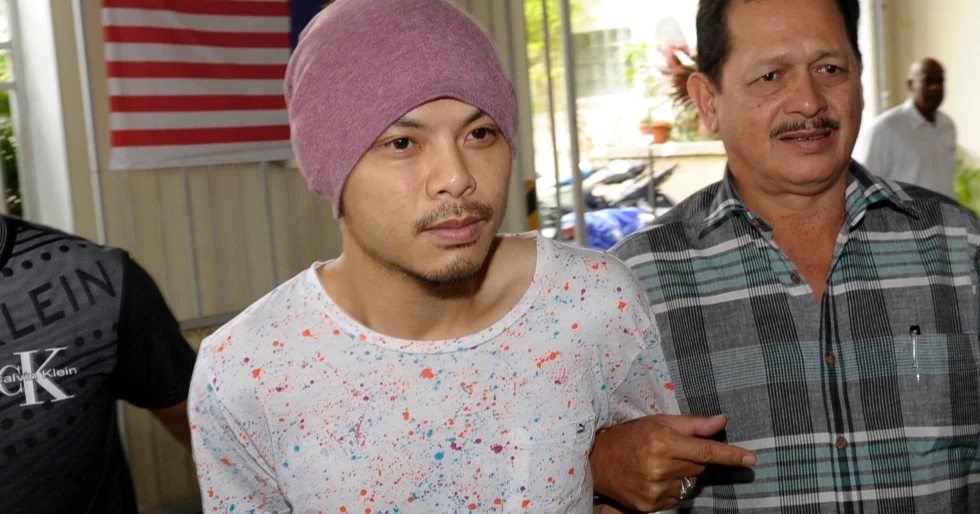
Malaysian rapper and filmmaker Wee Meng Chee, popularly known as Namewee, has been detained to assist police in their investigation into the murder of a Taiwanese social media influencer, his lawyer confirmed Wednesday.
Lawyer Joshua Tay said Namewee, 42, surrendered to police early Wednesday and will remain in custody for six days. Police had launched a search for him after they reclassified the death of Taiwanese influencer Hsieh Yu-hsin as a murder following new evidence.
Hsieh, 31, who had over half a million Instagram followers and an OnlyFans account, was found dead in a hotel bathtub in Kuala Lumpur on October 22. According to local media, Namewee was the last person seen with her before her death. He was briefly detained earlier and separately charged with drug possession, allegations he has denied.
A former nurse known online as “Nurse Goddess,” Hsieh had arrived in Malaysia on October 20 for a four-day trip. Police are awaiting full post-mortem and toxicology results before confirming the cause of death.
In an Instagram post after surrendering, Namewee expressed sadness over Hsieh’s death and pledged full cooperation with investigators. “I hope the probe will be conducted thoroughly, objectively, and fairly,” his lawyer Tay said.
Namewee, known for his provocative and satirical work on politics, race, and religion, has faced multiple arrests over the years. His music videos and films often draw controversy in Malaysia, where he has been accused of insulting national and religious sentiments.
He was detained in 2016 over a video titled Oh My God, which featured scenes at various houses of worship and used the Malay word “Allah.” In 2018, he was arrested again following complaints about another video featuring dancers in dog masks, which authorities claimed insulted Islam.
Namewee maintains that his work targets hypocrisy and abuse of power, not religion or race.
The rapper has also been banned in China since 2021 after releasing a song with Australian singer Kimberley Chen that mocked Chinese nationalism and referenced Taiwan’s sovereignty.
Source: AP