others
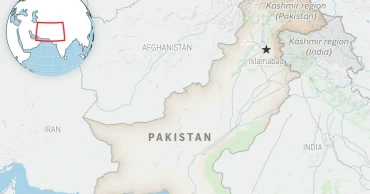
9 police officers killed in militant attack on post in southwest Pakistan
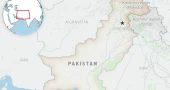
Militants attacked a police post in Pakistan's southwestern Balochistan province overnight, killing nine police officers and injuring several others, officials said Tuesday, as violence continues to escalate in the restive region.
The attack took place in a remote area of Ziarat district, where dozens of armed militants stormed the police post, triggering a fierce gunbattle, police said.
During the assault, the attackers abducted eight police officers. However, all of them were later rescued during a security operation, according to Balochistan government spokesman Shahid Rind.
Rind said security forces later carried out a clearance operation in the area, killing 15 militants. He added that intelligence-based operations against militant groups would continue and vowed a strong response to future attacks on security personnel.
No group immediately claimed responsibility for the assault. However, suspicion is likely to fall on the banned Baloch Liberation Army (BLA), which has been behind a series of attacks in the province.
The BLA recently claimed responsibility for a suicide attack on a security post in the coastal town of Jiwani over the weekend, although the government has not confirmed the claim.
Authorities also said armed men attacked civilians on the outskirts of Quetta during the weekend. Since then, local residents have been staging a sit-in near the city, demanding better security and stronger protection from future attacks.
Interior Minister Mohsin Naqvi blamed the latest assault on what he described as Indian-backed militants, although he did not provide any evidence to support the allegation. India has repeatedly rejected Pakistan's claims that it supports separatist groups in Balochistan or the Pakistani Taliban.
Naqvi paid tribute to the slain police officers and expressed condolences to their families, saying such attacks would not undermine peace efforts.
The Pakistani Taliban, also known as Tehrik-e-Taliban Pakistan (TTP), also maintains a presence in Balochistan and has carried out several attacks in the province.
Balochistan, Pakistan's largest but least populated province, has long faced separatist insurgencies and militant violence. The BLA, which the United States designated a foreign terrorist organization in 2019, has carried out numerous attacks on security forces and civilians in recent years.
27 days ago
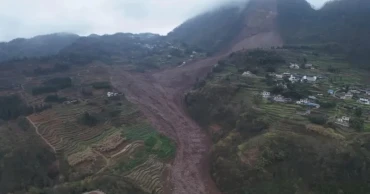
5 killed, 12 missing after landslide in northwestern China
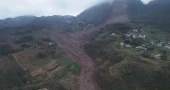
At least five people were killed and 12 others remained trapped after a landslide struck northwestern China's Gansu province on Tuesday, according to state media.
The landslide occurred shortly before 7 a.m. in Nanhe township of Longnan city, burying 33 people, the official Xinhua News Agency reported.
Rescue teams pulled several people from the debris, but efforts were continuing to reach those still trapped.
The cause of the landslide was not immediately known.
Images broadcast by state-run CCTV showed excavators and rescue workers searching through large piles of earth in a heavily forested area under clear skies.
Authorities evacuated nearby residents as rescue operations continued.
27 days ago
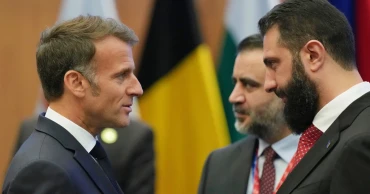
Macron visits Syria, first major Western leader since Assad's fall
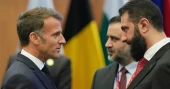
French President Emmanuel Macron arrived in Syria on Monday, becoming the first major Western leader to visit the country since the fall of former President Bashar al-Assad in 2024.
The visit marks a significant diplomatic milestone as Syria seeks to rebuild ties with Western nations under the leadership of President Ahmad al-Sharaa following more than a decade of conflict.
Macron was received at Damascus International Airport by Syrian Foreign Minister Asaad al-Shibani before beginning a series of meetings focused on regional security, political transition and economic cooperation.
According to Syria's state-run SANA news agency, the French president is accompanied by a business delegation to explore investment and reconstruction opportunities.
In a message posted on social media, Macron reaffirmed France's support for the Syrian people, saying he was committed to a sovereign, united and peaceful Syria.
During the visit, Macron is scheduled to meet President al-Sharaa at the presidential palace and hold discussions with representatives of Syrian civil society. The two leaders are also expected to oversee the signing of several memorandums of understanding before addressing a joint news conference.
The French presidency said Macron's visit reflects France's support for efforts to build a stable and inclusive Syria in line with the aspirations expressed during the 2011 Arab Spring.
Macron previously hosted al-Sharaa in Paris in May 2025, where he called on European and US partners to ease long-standing sanctions on Syria. Most of those sanctions have since been lifted.
France has been among the Western countries backing Syria's new leadership despite initial concerns in some capitals over al-Sharaa's Islamist background and his previous role leading Hayat Tahrir al-Sham, a group once linked to al-Qaida.
Western governments have continued to monitor the new administration's commitment to democratic reforms and the protection of women and minority rights.
Macron's visit comes during a relatively calm period in the Middle East following the recent conflict involving Iran and Lebanon. He is expected to travel next to Ankara for the NATO summit, where al-Sharaa is also expected to attend and hold talks with US President Donald Trump.
Although Syria has avoided becoming directly involved in the region's latest conflicts, the country continues to face enormous reconstruction challenges after 13 years of civil war that devastated infrastructure, displaced millions of people and left its economy in severe distress.
27 days ago
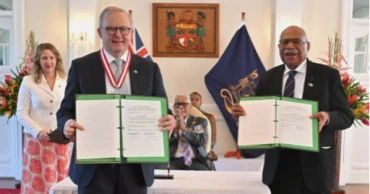
Australia, Fiji sign mutual defence pact as Canberra strengthens Pacific ties amid China concerns
Australia and Fiji on Monday signed a new mutual defence agreement, marking another major step by Australian Prime Minister Anthony Albanese to strengthen ties in the South Pacific as Canberra seeks to counter China's growing influence in the region.
Later on Monday, Chinese state media reported that China had test-fired a long-range ballistic missile from a submarine in the South Pacific. Australia criticised the missile test, calling it destabilising.
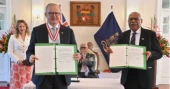
Albanese and Fijian Prime Minister Sitiveni Rabuka signed the Ocean of Peace Alliance in Fiji's capital, Suva. The two leaders also signed the Vuvale Union, an economic agreement under which Australia will invest more than 1 billion Australian dollars (about $693 million) in Fiji over the next 10 years.
The Ocean of Peace Alliance is Fiji's first mutual defence treaty. For Australia, it is its fourth such agreement after long-standing defence treaties with the United States and New Zealand signed in 1951, and a bilateral defence pact with Papua New Guinea signed last year.
"The Ocean of Peace Alliance introduces a mutual defence obligation, and there's no higher obligation than to come to each other's aid at a time of need," Albanese told reporters.
Rabuka said he did not expect Beijing to react negatively to the new agreements.
"I do not expect China to have any severe pushback on either government. I believe they will welcome the understanding between Australia and Fiji," he said.
He added that the agreements would not affect Fiji's ties with China or Australia's relationship with Beijing.
According to China's state-run Xinhua News Agency, the missile test was part of routine military training and carried a dummy warhead. China last carried out a similar missile test in the Pacific two years ago, when it launched an intercontinental ballistic missile with a dummy warhead.
Australian Foreign Minister Penny Wong, who attended the signing ceremony in Fiji, declined to speculate whether the missile launch was intended as a response to the new defence pact.
"I'll leave China to speak to its intent," Wong said.
She said China had informed Australia in advance about the missile test.
"Australia has been clear with China that we regard this as destabilising to the region," Wong said.
She added that the test came at a time when China is rapidly expanding its military capabilities without providing the level of transparency and reassurance expected by countries in the region.
In Beijing, Chinese Foreign Ministry spokesperson Mao Ning described the launch as a routine military exercise and said it was not aimed at any particular country.
"We hope that the relevant countries will avoid overinterpretation," Mao said.
Commenting on the Australia-Fiji defence agreement, Mao said China's cooperation with Pacific island nations is based on mutual respect and equality and is not intended to serve political interests.
She urged other countries to respect the independence of Pacific island nations, support their sustainable development and avoid actions that could harm the interests of third parties.
Australia has been working to strengthen its position as the preferred security partner in the Pacific since China signed a secret security agreement with the Solomon Islands in 2022. That deal raised concerns in Canberra and its allies over the possibility of a Chinese naval base being established in the South Pacific.
Albanese is scheduled to visit the Solomon Islands on Tuesday for talks with Prime Minister Matthew Wale after the two countries agreed to hold further discussions on a security agreement.
Wale said during a visit to Australia last month that his government would review the Solomon Islands' security deal with China.
On Wednesday, Albanese will host Papua New Guinea Prime Minister James Marape and Tongan Prime Minister Fatafehi Fakafānua in Brisbane.
Australia's defence treaty with neighbouring Papua New Guinea is set to take effect on Wednesday.
Last week, Australia and Vanuatu also signed the long-awaited Nakamal Agreement, covering security and economic cooperation. The deal is designed to prevent China from establishing a military base in Vanuatu.
Albanese signed the agreement with Vanuatu Prime Minister Jotham Napat in Canberra, nine months after Vanuatu rejected an earlier draft over concerns it could limit the country's ability to attract infrastructure investment.
China last week expressed concern that the Nakamal Agreement could be aimed at Beijing.
28 days ago
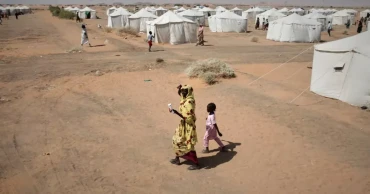
Over 300 children killed or injured in Sudan war in six months: UNICEF
More than 300 children have been killed or injured in Sudan over the past six months, with most of the casualties caused by drone strikes, the UN children's agency UNICEF said Monday.
Sudan has been engulfed in conflict since April 2023, when fighting broke out between the Sudanese military and the paramilitary Rapid Support Forces (RSF).
According to UNICEF, the fighting is now mainly focused in the Kordofan, Darfur and Blue Nile states, where drone attacks account for around 60 percent of child casualties.
The United Nations, the United States, the United Kingdom and other countries have raised concerns over the risk of further atrocities as the Sudanese military and the RSF battle for control of the strategic city of el-Obeid in North Kordofan.
The war has killed at least 59,000 people, forced around 13 million people from their homes and pushed large parts of Sudan into famine. More than 30 million people now require humanitarian assistance.
UNICEF said drone strikes and artillery shelling have damaged civilian infrastructure, including schools, markets, fuel depots and water facilities, putting more than 500,000 people at risk. Many civilians have also endured conditions resembling a prolonged siege for more than a year.
"Children are being caught in a relentless cycle of violence, displacement and deprivation," said Sheldon Yett, UNICEF's representative in Sudan.
The UN urged all parties to the conflict to protect civilians and civilian infrastructure, ensure safe, rapid and unhindered humanitarian access, and take every possible measure to keep children out of harm's way.
28 days ago
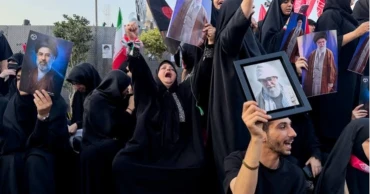
Mourners fill Tehran streets for Ayatollah Khamenei's funeral, chant against Trump
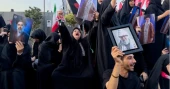
Huge crowds of mourners dressed in black filled the streets of Iran's capital on Monday as the funeral procession for late Supreme Leader Ayatollah Ali Khamenei continued, with many participants chanting slogans calling for the death of U.S. President Donald Trump.
Khamenei's coffin, draped in the Iranian flag, was placed on a truck decorated to resemble the ornate lattice surrounding the shrine of an imam. The coffins of several members of his family, who were killed in a Feb. 28 airstrike during the war launched by Israel and the United States, were also carried in the procession.
The large turnout, encouraged by Iran's clerical leadership as a display of national unity and strength, came as Tehran prepares to resume negotiations with the United States on reaching a permanent end to the conflict that claimed the life of the 86-year-old leader.
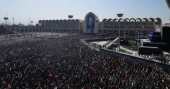
Live footage broadcast by Iranian state television showed a massive crowd stretching for several kilometres from Tehran's Azadi (Freedom) Square along the city's main boulevard. The gathering appeared larger than the funeral procession held in 2020 for Revolutionary Guard General Qassem Soleimani, which attracted more than one million mourners.
Authorities did not immediately release an official estimate of the crowd size as the truck carrying the coffins moved slowly through the streets. Many mourners carried banners and placards calling for Trump's death.
"Today is a very difficult day because we are attending the funeral of our leader," mourner Fatima Hassan said. "We are not here to say goodbye. We are here for revenge, and we will take revenge."
Many mourners reached out to touch the truck carrying Khamenei's coffin, while others threw scarves and personal belongings toward attendants so they could briefly touch the coffin, a traditional practice in Iran believed to bring blessings.
To help people cope with the heat, attendants standing on fire trucks sprayed water mist over the crowd. Officials repeatedly urged mourners through loudspeakers to walk slowly, avoid pushing and remain along the edges of the road to prevent accidents.
Revolutionary Guard General Hasan Hasanzadeh, who is overseeing the funeral arrangements, said the coffins would travel through Tehran over a 12-hour journey before reaching Mehrabad International Airport.
Iranian authorities have closed major roads, restricted airspace and suspended much of daily activity during the mourning period, which began on Saturday and will continue until Thursday. Khamenei will be buried at the Imam Reza shrine in Mashhad, his birthplace.
"This is the last time I will see him," said mourner Maryam Alizadeh through tears. "Our generation lived with him for decades."
As the funeral ceremonies continued, calls for retaliation over Khamenei's death grew louder. Many mourners displayed signs demanding the deaths of both Trump and Israeli Prime Minister Benjamin Netanyahu. One effigy of Trump was seen hanging along the procession route.
"We are here to show that his path will continue," mourner Sahar Zaraatgar said. "All of us will continue on his path, and we will certainly avenge his death against the U.S. and Israel."
U.S. authorities have monitored Iranian threats against Trump and other senior officials for years following Trump's order to kill General Qassem Soleimani in 2020. Iran has repeatedly denied plotting to assassinate Trump, although hardline propaganda has frequently portrayed him as a target.
During the recent conflict, Trump also threatened to destroy Iran's civilisation if tensions escalated further.
Meanwhile, negotiations between Washington and Tehran remain on hold until after Khamenei's burial. The United States hopes to resume talks aimed at reopening the Strait of Hormuz, curbing Iran's disputed nuclear programme and securing a lasting end to the war.
The funeral has also served as a demonstration of national unity as Iran continues to demand greater control over the strategically important Strait of Hormuz, a key global energy shipping route that it closed during the conflict. The United States has rejected those demands, while disagreements also remain over Iran's nuclear programme and the conflict involving the Iran-backed Hezbollah group in Lebanon.
Iran's new Supreme Leader, Ayatollah Mojtaba Khamenei, has not appeared publicly during the funeral ceremonies. He is believed to be in hiding after reportedly being wounded in the airstrike that killed his father.
During the war, before an April ceasefire took effect, Israel targeted several senior Iranian leaders, in some cases reportedly using their public appearances to identify their locations. Israeli officials have also threatened to kill the younger Khamenei.
28 days ago
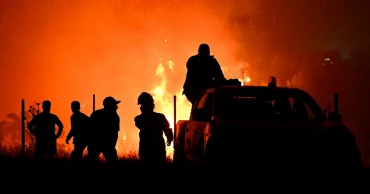
Hundreds of firefighters battle Portugal blaze; Greece issues toxic smoke alert
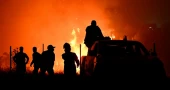
Hundreds of firefighters continued battling major wildfires in Portugal and Greece on Sunday, while authorities in northern Greece warned residents to stay indoors because of toxic smoke from a burning recycling plant.
In Portugal, more than 1,200 firefighters, supported by nearly 400 vehicles and 15 aircraft, were trying to contain a wildfire in the central Vouzela region that has been burning since Thursday. According to the European Union's Copernicus satellite monitoring agency, the fire had scorched about 12,000 hectares by Sunday.
Fast-moving wildfire forces evacuations near Greece's Thessaloniki
The European Union's Civil Protection and Humanitarian Aid department said Spain sent 120 firefighters and 45 vehicles to Portugal on Friday, while Italy and Spain also deployed three firefighting aircraft to assist.
In Greece, a wildfire that reached a recycling plant near the Thessaloniki suburb of Oraiokastro on Saturday evening forced evacuation alerts for three suburbs and a facility housing 157 people with special needs. Strong winds spread the flames, prompting the deployment of about 160 firefighters overnight until water-dropping aircraft joined the operation at daybreak.
Authorities advised residents in parts of Thessaloniki to remain indoors with windows and doors closed because of toxic smoke.
Mayor Pandelis Tsakiris said several homes and businesses were damaged. Police arrested a 76-year-old man on suspicion of accidentally starting the fire with sparks from his vehicle. Fire officials said about 85% of Greece's wildfires are caused by negligence, despite increasing use of satellite technology to detect fires.
29 days ago
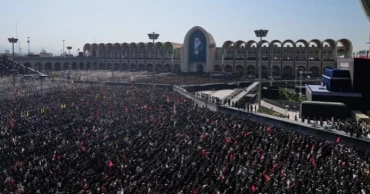
Iranian leaders attend prayers for Khamenei as anti-US rhetoric intensifies
Iran's senior leaders and several sons of the late Supreme Leader Ayatollah Ali Khamenei appeared in public on Sunday to attend funeral prayers in Tehran, marking one of the first major public gatherings of top officials since the recent war with Israel. The event also saw renewed calls from mourners and speakers for revenge against U.S. President Donald Trump.
The appearance of Iran's top leadership before hundreds of thousands of mourners highlighted growing confidence about their security after the conflict, during which Israeli airstrikes reportedly killed the 86-year-old Khamenei, several members of his family and other senior officials.
During the war, Israeli forces also targeted other high-profile Iranian figures, in some cases reportedly using their public appearances to locate them for attacks.
However, Iran's new Supreme Leader, Ayatollah Mojtaba Khamenei, did not appear at the ceremony. He is believed to be in hiding after reportedly being wounded in the strike that killed his father. Israel has also threatened to target him as Iran continues negotiations with the United States on a permanent end to the conflict and issues related to the Strait of Hormuz, a key global oil shipping route.
Among the mourners was 42-year-old nurse Ziba Naderi, who said the country should follow the guidance of its new leader.
"I heard the calls for revenge, but our leader should decide what we need to do," she said. "We must follow his instructions."
Funeral prayers at Tehran's Grand Mosalla were led by 97-year-old Shiite cleric Ayatollah Jafar Sobhani.
Several senior Iranian officials attended the ceremony, including President Masoud Pezeshkian, Parliament Speaker Mohammad Bagher Qalibaf, Revolutionary Guard commander Gen. Ahmad Vahidi and Esmail Qaani, head of the Quds Force. Khamenei's sons Masoud, Meysam and Mostafa also appeared publicly for the first time since the war.
The venue displayed posters and graffiti calling for the deaths of Trump and Israeli Prime Minister Benjamin Netanyahu.
Poet Mohammad Rasouli, who hosted the event before the prayers, led chants of "Death to America!" and "Death to Israel!" Speaking through loudspeakers, he questioned why Trump was "still alive," drawing loud cheers from the crowd. It was one of the strongest public threats against the U.S. president made during the funeral events.
At the same time, Trump was speaking in Washington during celebrations marking the 250th anniversary of the United States.
Referring to recent U.S. military actions, Trump said, "We've had tremendous success. You look at Venezuela, you look at Iran. We wiped it out, wiped out their military."
Sunday's funeral drew a much larger crowd than Saturday's events. Thousands of mourners dressed in black carried banners praising Khamenei while some called for retaliation against Trump.
"I came here to demand revenge," said 29-year-old grocery worker Gholamreza Sabooni. "They killed our leader, so Trump should be killed."
U.S. authorities have monitored Iranian threats against Trump and other American officials for years, particularly after Trump ordered the 2020 killing of Gen. Qassem Soleimani, the former commander of the Quds Force. Iran has repeatedly denied plotting to assassinate Trump, although hard-line groups have frequently circulated propaganda depicting him as a target.
During the recent conflict, Trump also warned that the United States could destroy Iran's civilization if tensions escalated further.
Iranian authorities said Khamenei's body will be taken to several cities in Iran and neighboring Iraq before being driven through the streets of Tehran on Monday. National mourning will continue until Thursday, when he will be buried at the Imam Reza shrine in Mashhad, his birthplace.
Authorities have closed roads, restricted airspace and suspended many daily activities during the mourning period. No official estimate of attendance at the funeral ceremonies has been released, though similar memorial events were also held across Iran.
Negotiations with the United States aimed at reaching a permanent end to the war have been postponed until after the funeral ceremonies.
Many mourners said Iran should maintain a firm stance in future diplomacy.
"Our foreign policy should ensure that the blood of our martyred leader is respected and that no country can act against Iran without facing a serious response," said mourner Mohammad Reza Sharifi.
29 days ago
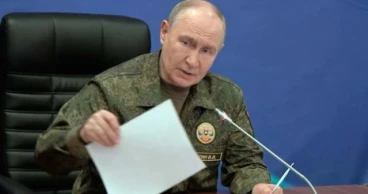
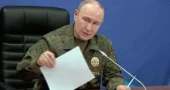
One killed in Crimea attack as Putin, Zelenskyy hold separate calls with Trump
A Ukrainian attack on Russian-occupied Crimea killed one person and injured two others early Sunday, according to Moscow-installed officials, as Russian President Vladimir Putin and Ukrainian President Volodymyr Zelenskyy held separate phone calls with US President Donald Trump on efforts to end the war.
Sergei Aksyonov, the Russia-appointed governor of Crimea, said the attack struck the northern part of the peninsula. One of the injured was reported to be in serious condition. He did not provide further details.
In recent weeks, Ukraine has intensified long-range strikes on military and infrastructure targets in Crimea as part of its efforts to isolate the strategically important peninsula, which Russia seized and illegally annexed in 2014.
Western officials and analysts say Ukraine's growing ability to strike deep inside Russian-controlled territory has increased pressure on the Kremlin, while Russia's battlefield advances have slowed in recent months.
The latest attack came shortly after Zelenskyy and Putin held separate telephone conversations with Trump.
In a post on X, Zelenskyy said he congratulated Trump on the 250th anniversary of US independence and discussed the situation on the battlefield.
"There is a real prospect of ending this war, and America's determination will be crucial," Zelenskyy wrote, adding that the two leaders agreed to continue discussions in person during the upcoming NATO summit in Ankara.
Meanwhile, the Kremlin described Putin's nearly 90-minute phone conversation with Trump on Saturday as "constructive."
Kremlin foreign policy adviser Yuri Ushakov said Putin also congratulated Trump and the American people on the 250th anniversary of US independence. The call was the fourth conversation between the two leaders this year.
According to Ushakov, Trump reaffirmed his willingness to help bring about a quick end to the fighting and support efforts to reach a peaceful settlement. He said Trump's envoys, Steve Witkoff and Jared Kushner, would continue mediation efforts and remain ready to visit Moscow.
Ushakov said Putin again stressed that Russia prefers a diplomatic solution, provided its long-standing demands are taken into account.
At the same time, Putin accused Ukraine and its European allies of trying to prolong and escalate the conflict, claiming they have misjudged the situation on the battlefield.
He also told Trump that Russian forces continue to make gains, capturing one settlement after another.
Putin specifically claimed that Russian troops had captured the Ukrainian stronghold of Kostyantynivka, describing it as an important step toward taking full control of Ukraine's Donetsk region.
Ukraine has rejected Russia's claim that Kostyantynivka has fallen.
29 days ago
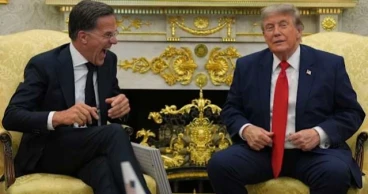
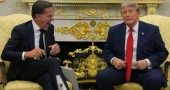
NATO chief faces fresh test as Trump demands allies' loyalty ahead of Turkey summit
NATO Secretary-General Mark Rutte heads into this week's NATO summit in Turkey facing a new challenge as US President Donald Trump shifts his focus from defense spending to demanding greater "loyalty" from America's allies.
Since taking office nearly two years ago, Rutte has spent much of his time trying to keep the United States committed to the 32-member military alliance. He has often praised Trump in an effort to ease tensions over the president's repeated threats to pull the US out of NATO.
For years, Trump's main complaint was that European allies were not spending enough on defense. At last year's NATO summit, member countries agreed to significantly increase military spending, bringing it closer to US levels as a share of national economic output.
But NATO now faces a different challenge: turning that extra money into stronger military capabilities, especially as European countries grow increasingly concerned about the threat from Russia.
During a White House meeting last month, Rutte presented Trump with a chart titled "The Trump Trillion," highlighting that European allies and Canada have invested $1.2 trillion in defense since 2017.
However, Trump appeared unimpressed. He criticized some NATO allies for refusing to join the US and Israel in military action against Iran, saying he wanted "loyalty" rather than financial contributions.
"We don't need their money. We don't need anything. I just want loyalty," Trump said.
Trump also suggested he might have skipped the upcoming NATO summit if it were not being hosted by Turkish President Recep Tayyip Erdogan, one of the few foreign leaders he has openly praised.
The remarks suggest both Erdogan and Rutte may face an uphill task in keeping the summit focused on alliance unity.
Traditionally, NATO's secretary-general, a role always held by a European, works to build consensus among member states and represent the alliance as a whole.
However, during both of Trump's presidencies, Rutte and his predecessor, Jens Stoltenberg, have devoted much of their efforts to preventing the United States from distancing itself from NATO.
Trump has repeatedly questioned America's commitment to the alliance. He has threatened to withdraw from NATO, suggested pulling US troops out of Europe, and raised doubts about defending allies that fail to spend enough on their militaries. He has also expressed interest in taking control of Greenland, a self-governing territory of NATO member Denmark.
Rutte has responded with careful diplomacy and public praise for Trump.
At the White House last month, he highlighted that increased European defense spending has created tens of thousands of American jobs and generated a $300 billion backlog of European military equipment orders from US manufacturers.
Rutte also gently challenged Trump's claim that NATO had failed to support the US during its military operation against Iran, noting that up to 5,000 American aircraft had flown from bases in Europe before an April ceasefire.
Meanwhile, NATO allies have become increasingly concerned after the Pentagon announced plans to reduce the number of US troops, warships, aircraft and drones available to defend Europe in the event of an attack.
Trump has also given mixed signals about whether US troop levels in Europe will rise or fall.
The uncertainty comes as Russia continues testing Europe's defenses. A study released Thursday said Moscow has increased drone activity near military bases across several European countries.
NATO summits are traditionally designed to demonstrate the alliance's commitment to collective defense under Article 5, which states that an attack on one member is considered an attack on all. The clause has been invoked only once, after the Sept. 11, 2001, attacks in the United States.
Last year's summit in The Hague ended on a positive note after allies agreed to boost defense spending, with Trump describing NATO members as a "nice group of people."
This year's gathering in Turkey is expected to be more difficult.
Rutte has argued that Europe's increased defense investment allows the US to shift more attention toward security challenges posed by China while European allies take greater responsibility for supporting Ukraine.
However, Trump's latest demand for greater "loyalty" from allies has added a new layer of uncertainty ahead of the summit.
In his memoir, former NATO Secretary-General Stoltenberg recalled that Trump nearly derailed the alliance's 2018 summit.
"If an American president says he no longer wishes to defend the other allies and leaves a NATO summit in protest, then the NATO treaty and its security guarantee aren't worth very much," Stoltenberg wrote.
29 days ago