others
US-Iran deal aims to reopen Strait of Hormuz, Israel hurdles remain
The United States and Iran have reached a tentative agreement aimed at extending their fragile ceasefire and reopening the Strait of Hormuz, a key global shipping route, though major uncertainties remain as Israel continues military operations and refuses to pull back from occupied territory in Lebanon.
Details of the understanding were not immediately made public. The deal is expected to allow the flow of oil and gas through the Strait of Hormuz, which is vital for global energy supplies. Iran, however, said the agreement would only take effect after it is formally signed, which Pakistan, acting as a key mediator, said would happen on Friday in Switzerland.
Despite the announcement, the agreement quickly faced obstacles. Israel’s ongoing fighting with the Iran-backed Hezbollah group in Lebanon continued, including Israeli strikes on Beirut’s southern suburbs on Sunday. Israel joined the US in launching the war on February 28.
In its first response after the deal was announced, Israeli Defence Minister Israel Katz said Israel would not withdraw from territories it has seized in Lebanon under any interim arrangement. He said Israel intends to remain in occupied areas in Lebanon, Syria and the Gaza Strip indefinitely. Iran has linked progress on the deal to an end to Israeli attacks on Hezbollah positions in Lebanon.
Katz also warned that any Iranian attack in response to Israeli strikes would trigger a strong Israeli retaliation.
Over the past two and a half years, Israel has taken control of roughly 1,000 square kilometres of territory across Gaza, Lebanon and Syria, an area slightly smaller than New York City.
The agreement between the US and Iran also sets a 60-day timeline to address Iran’s stockpile of highly enriched uranium and its nuclear programme, a long-standing point of dispute. The issue had earlier been addressed in the 2015 nuclear deal, from which the US withdrew during President Donald Trump’s first term, worsening tensions that later escalated into conflict.
Trump, celebrating his 80th birthday, announced the development on social media and said the Strait of Hormuz would be reopened and a US naval blockade lifted. He later clarified that the opening would depend on the signing scheduled for Friday.
Iran’s Deputy Foreign Minister Kazem Gharibabadi also confirmed the agreement on state television, saying Tehran would not begin implementing it until it is signed. He said the talks involved mediation by Qatar.
The announcement was welcomed by several world leaders, including those in China and Europe, who said reopening the Strait of Hormuz was crucial for stabilising global energy prices and trade. Chinese officials urged both sides to proceed with signing the memorandum as planned.
France said the agreement could help end hostilities across the region, including in Lebanon, while urging all parties to respect the deal. European Union foreign policy chief Kaja Kallas expressed hope that the signing would go ahead and said reopening the strait was essential for global stability, although some leaders, including Luxembourg’s foreign minister, remained cautious about the outcome.
British Prime Minister Keir Starmer also welcomed the breakthrough, calling for efforts to restore free navigation in the strategic waterway and to build lasting peace in the region.
Pakistan announced the agreement first, with Prime Minister Shehbaz Sharif saying both sides had agreed to an immediate halt to military operations on all fronts, including Lebanon. Pakistani officials said broader technical negotiations on Iran’s nuclear programme would continue over the next 60 days, with the possibility of an extension if needed.
Iranian state media, citing the Supreme National Security Council, said the war would end immediately once implementation begins and that the US blockade would be lifted in full.
Qatari mediators later left Tehran after lengthy talks, while further preparatory meetings are expected in Doha this week. It remains unclear who will sign the agreement on Iran’s behalf.
US Vice President JD Vance said preparations were still underway for Friday’s signing, adding that President Trump could also attend. However, some Republican lawmakers in the US expressed concern, including Senator Lindsey Graham, who said Iran’s interpretation of the deal appeared to differ from that of US negotiators.
1 month ago
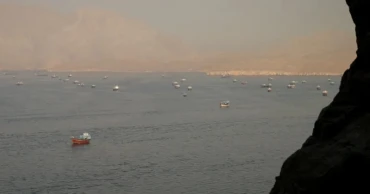
Trump hails Iran agreement, but major questions remain over its future
US President Donald Trump has welcomed a newly announced agreement with Iran as a major diplomatic breakthrough, though uncertainty remains over key details that could determine whether the deal succeeds.
Trump described the agreement as a “great deal” that would bring peace and stability to the Middle East. In a social media post on Sunday, he said the strategically important Strait of Hormuz would remain open to commercial shipping and that the United States would end its naval blockade.
“Let the oil flow!” Trump wrote, expressing confidence that the agreement would help ease tensions in the region.
However, many important questions remain unresolved, particularly regarding Iran’s nuclear programme and how the agreement will be implemented.
US Vice President JD Vance said the deal includes provisions aimed at ensuring Iran does not develop a nuclear weapon and that Washington will be able to verify compliance.
Despite those assurances, uncertainty remains over restrictions on uranium enrichment and the future of Iran’s stockpile of highly enriched uranium.
Further discussions are expected during a 60-day extension of the current ceasefire, when technical negotiations will continue to address unresolved issues.
Iran has also signalled caution. The country's Supreme National Security Council said final negotiations would not proceed until the other side fulfils its commitments under the memorandum of understanding.
Analysts say how both sides interpret and implement those commitments will play a critical role in determining whether the agreement holds.
The deal could also have significant implications for global energy markets. Experts warn that oil exports through the Strait of Hormuz are unlikely to return immediately to normal levels, as shipping backlogs, mine-clearing operations and production adjustments may take several weeks.
Another key factor is Israel’s role in the region.
According to reports, Trump expressed frustration with Israeli Prime Minister Benjamin Netanyahu over military strikes in Lebanon that he believed could have jeopardised the nearly completed agreement.
Although the deal survived that tension and was publicly announced, observers say renewed military action could threaten its stability. Any disruption to shipping through the Strait of Hormuz could once again affect global energy supplies and international markets.
The agreement may also have political implications inside the United States.
Vance acknowledged that the conflict had contributed to higher energy prices, increasing financial pressure on many Americans. He expressed hope that energy costs would begin to decline following the agreement.
Whether lower oil prices translate into broader economic relief could influence public opinion ahead of the upcoming congressional midterm elections.
Recent polling suggests that many Americans remain dissatisfied with the state of the economy. Concerns over inflation, energy costs and household expenses continue to put pressure on the administration and the ruling Republican Party.
Even so, the agreement is being viewed as a potentially important step toward reducing regional tensions and easing economic uncertainty, although its long-term success will depend on the outcome of upcoming negotiations and developments in the wider Middle East.
With inputs from BBC
1 month ago
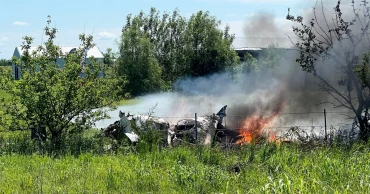
Skydiving flight crash in Missouri leaves 12 dead
A plane carrying a pilot and 11 passengers on a skydiving outing in Missouri crashed in a field and was engulfed in flames Sunday, killing all aboard, authorities said.
The crash happened shortly after the plane took off from a local airport around 11:30 a.m., and some of the occupants' family members witnessed the crash, said Bates County Sheriff Chad Anderson.
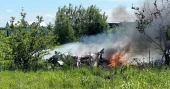
A heap of blue and silver mangled metal lay in the grass near Butler Memorial Airport with a massive lineup of emergency vehicles gathered on a nearby street. Clergy and volunteers went to the site to assist relatives, Anderson said, and officials were working Sunday afternoon to identify all victims and notify their next of kin.
Officials with the Federal Aviation Administration were also on scene Sunday afternoon, Anderson said, and a team from the National Transportation Safety Board was en route.
The private plane was operated by Skydive Kansas City, said Dennis Jacobs, the acting airport manager and Bates County Emergency Management Agency director. It was identified as a single engine turboprop plane.
“It had just taken off and made a left turn” before the crash, Jacobs said. “In my opinion, I think it was losing power, and he was trying to make it over to the highway and land, and he stalled and went down nose first and caught fire.”
Emergency responders put out the fire in the wreckage soon after the crash, Jacobs said, calling the scene “brutal.” First responders also checked the area under the flight path and did not find anyone who might have tried to jump out before the plane came down, he said.
The Pacific Aerospace 750XL that crashed is a model that’s popular for skydiving and also has proven useful for carrying cargo, aerial surveying and medical evacuation flights. The aircraft can carry more than 4,000 pounds (1,800 kilograms) and is capable of taking off and landing on short runways, according to the manufacturer. The plane was built in 2010, according to FAA records.
Sky diving companies operate in the region eight or nine months of the year, with the season usually starting in late March or early April and lasting into October or November. Someone answering the phone at Skydive Kansas City declined to speak to a reporter from The Associated Press.
The crashed occurred on a sunny day in the area. Data from the digital flight tracking company FlightAware shows the plane had already completed two short flights on Sunday before the crash. Two more successful flights were logged Saturday, and five on Friday, according to FlightAware.
It’s not yet known what factors may have contributed to the crash, Missouri Highway Patrol Sgt. Justin Ewing said, and those details will be part of the investigation carried out by NTSB officials.
The sheriff emphasized that the public is safe and this “appears to be an accident.”
Aviation safety expert Jeff Guzzetti said poor maintenance has been a factor in a number of previous skydiving plane crashes because these companies are not held to a high standard under FAA rules. Guzzetti said skydiving companies are governed by the same rules any private plane owner has to follow and not the more stringent rules that charter flight operators and airlines adhere to.
“There’s been a whole history of skydiving accidents for inadequate maintenance and deficient safety culture,” said Guzzetti who used to be a crash investigator for both the NTSB and FAA.
The exact cause of Sunday’s crash won’t be clear for a year or more until the NTSB publishes its final report.
The NTSB has previously raised concerns about the weak oversight for skydiving operators in past crash investigations. The agency said after a 2019 crash that killed 11 people in Hawaii that the FAA’s regulatory system isn’t strong enough to ensure the safety of skydiving flights.
.The small airport serves around 30 aircraft, all privately owned, including crop dusting companies and sky dive operators, Jacobs said.
The small town of Butler has a population of around 4,300 people and is roughly 65 miles (105 kilometers) south of Kansas City. The Butler Memorial Airport, as well as the highway that runs beside it, will remain closed while federal investigators are on the scene, Anderson said Sunday afternoon.
1 month ago
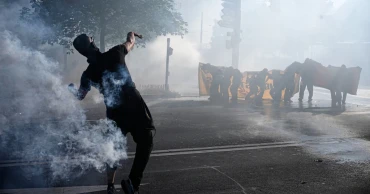
Protesters clash with police in Geneva ahead of G7 summit in France
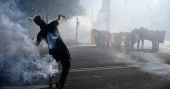
Riot police fired tear gas and water cannons in clashes with stone-throwing youths during a protest on Sunday in Geneva against the G7 group of wealthy nations, a day before its leaders including U.S. President Donald Trump hold a summit in nearby France.
A violent standoff extended into the evening after a series of incidents — including a car set ablaze and a bank’s windows smashed — along the route of an afternoon march that drew an estimated 20,000 people, including some 600 so-called “Black Bloc” militants, according to figures from Geneva police spokesman Alexandre Brahier.
The demonstration, which had been previously organized by a hodgepodge of activist groups after weeks of negotiations with local authorities, was otherwise peaceful — with environmentalists, women’s rights advocates, supporters of Palestinians and foes of imperialism, fascism and capitalism.
Early on during the march, firefighters extinguished a Tesla that was set ablaze next to the central bus stop and a phalanx of riot police cordoned off a secure area as a crowd congregated nearby.
A handful of demonstrators ripped down wooden barriers that were previously erected to protect a Banque du Leman and smashed its windows.
Several groups of dozens of youths wearing black hoodies, masks and goggles were mixed in among the other marchers — including behind an anti-Trump banner. Two with their faces totally covered refused to speak with The Associated Press and silently waved off questions before the protest began.
Some protesters fired flares toward officers or tore up chunks of asphalt and chucked them toward police in shields and riot gear.
The clashes continued even after police ordered the demonstrators to disperse.
The vast majority of marchers at the front were advocates of women’s rights, many wearing purple T-shirts and holding up banners and posters that decried the “patriarchy,” a lack of women in executive positions and inequality in pay and executive jobs in the workplace.
Other marchers held signs that showed sympathy for Palestinians in Gaza, carried slogans like “Antisemitic never; anti-Zionist always” and criticized Trump — often with expletives — among other sharply worded messages.
Organizers of the protest printed a handbook for demonstrators that included a map of the security perimeter, tips on how to gear up for the march, and advice on how to behave if detained by police.
Travel restrictions and limited border crossings during the summit
Swiss and French authorities have deployed thousands of police to provide security for the three-day summit starting Monday in the resort town of Evian-les-Bains, France. The leaders are set to discuss wars in Ukraine,Iran and the Middle East, and economic issues like global inequality and access to critical minerals.
Ahead of the gathering, authorities in Geneva blocked off roads, banned unauthorized gatherings and pledged financial support for businesses who could be hit by unrest.
Scores of businesses and shops in downtown Geneva boarded up their storefronts with wooden panels as a precaution, leery of upheaval that left a trail of damage in the city during a similar summit in Evian in 2003. Only seven of the 35 roadway border crossings will remain open.
The show of activism began a day earlier: a flotilla of around 20 boats appeared on Lake Geneva off the coast of Evian on Saturday, displaying anti-G7 and pro-Palestinian banners. Swiss media reports said some 20 protesters had been detained on Friday evening.
Resident Robin Hedz lamented the “mess” and expressed bafflement about the “wood-wall everywhere,” while acknowledging the memories of the trail of damaged property over 20 years ago.
The G7 brings together Britain, Canada, France, Germany, Italy, Japan and the United States, though leaders of several other countries including India, Kenya and Ukraine were expected to join for discussions.
France has announced the deployment of more than 13,000 police and gendarmerie officers to ensure security in the summit area. Over 800 French border control officers will be active, up from about 60 normally.
Trump is the focus of protests
Protests are nothing new around such elite gatherings. This time, activists expressed frustration with Trump’s leadership on issues as diverse as tariffs, the war in Iran, climate, and even his past ties to convicted sex offender Jeffrey Epstein.
The G7 summit takes place as the United States and Iran appear close to a deal to end the war and open the Strait of Hormuz.
“We are very afraid of the policy and the politics of Mr. Trump and also of the other leaders of the G7, because they are fighting, making war all over the place,” said Francoise Nyffeler, spokesperson for the NoG7 coalition behind the demonstration on Sunday.
“The planet is in danger and we are very scared about it and we want to protest and say that the people of the world are against their policies,” she added.
1 month ago
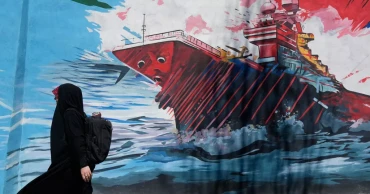
US-Iran 'peace deal': What we know so far
US President Donald Trump has announced that a deal with Iran will be signed this Friday, following a series of statements this week suggesting a ceasefire agreement after more than 100 days of war.
Tehran has since confirmed the announcement, saying that an end to the war – which began following a US-Israeli assault on Iran on 28 February – will be declared early on Monday morning GMT.
Here is what has been said could be included in the US-Iran deal, as well as reactions from the parties involved.
Who announced the deal first?
“America is lucky to have a leader with such incredible courage, remarkable strength, an unmatched sense of humor, and an unparalleled love of country. Happy Birthday, Mr. President!” Rubio said in a post on X.
Pakistani Prime Minister Shehbaz Sharif, whose country has been mediating indirect talks between Tehran and Washington, broke the news on X on Sunday.
Sharif said that a “permanent termination of military operations on all fronts” had been agreed upon, including in Lebanon.
Trump confirmed the news in a post on Truth Social shortly after, writing: “The Deal with the Islamic Republic of Iran is now complete”.
The agreement fully authorises “the toll-free opening of the Strait of Hormuz” and, simultaneously, “the immediate removal of the United States naval blockade”, he wrote.
Earlier, Trump told The Washington Post that he planned to announce a US-Iran agreement “imminently.” According to the newspaper, he said the agreement would be signed electronically, either by him or Vice President JD Vance.
Later on Sunday, Trump told The New York Times that the US could restart military operations or become “the guardian of the Middle East” in exchange for 20 percent of the region’s revenues. It was not clear whether the interview was conducted before or after the agreement was announced.
US Secretary of State Marco Rubio congratulated Trump on the announcement and noted that it came on the president’s birthday.
“America is lucky to have a leader with such incredible courage, remarkable strength, an unmatched sense of humor, and an unparalleled love of country. Happy Birthday, Mr. President!” Rubio said in a post on X.
Vice President Vance said the newly announced ceasefire could usher in a “new era” for the Middle East. He credited Trump’s diplomacy with Gulf countries and other regional partners for helping bring about the deal.
“What the president has done is create the real space to transform that region,” Vance said in an interview with Fox News. “And now, hopefully, a new era with the Iranians.”
Vance also reiterated what he described as a central US objective, saying: “I think we can safely say, with confidence, that Iran will never have a nuclear weapon.”
What did Iran say?
Kazem Gharibabadi, Iran’s deputy foreign minister for legal and international affairs, confirmed that an end to military operations was expected “soon”.
According to remarks carried by Iran’s Tasnim news agency, Gharibabadi said that an “immediate and permanent end to the war and military operations on various fronts, including Lebanon”, would be announced starting on Monday.
He added that negotiations on a final agreement would take place during a 60-day period, contingent on Iran verifying that the US had fulfilled its commitments. The commitments include ending hostilities, lifting the naval blockade, and releasing frozen Iranian assets.
What does the deal entail?
According to the Iranian news agency Mehr, the draft agreement contains 14 points.
It includes: a permanent and immediate cessation of hostilities on all fronts, including Lebanon; the complete lifting of the naval blockade within 30 days; a US commitment to withdraw its forces from around Iran; and the reopening of the Strait of Hormuz.
The draft also mentions the suspension of sanctions on oil sales, reaching a final agreement on nuclear issues within 60 days of signing the deal, and the release of $24bn in frozen Iranian assets during the 60-day negotiation period.
Mehr also reported that final negotiations would not begin until half of Iran’s frozen assets had been released and restrictions affecting the Strait of Hormuz had been lifted.
Discussions concerning Iran’s missile programme and its support for resistance groups have been removed from the negotiating agenda, it added.
Al Jazeera could not independently confirm the details reported by Mehr.
What did the mediators say?
Pakistan, along with Qatar, has been a key mediator in the ceasefire agreement and was involved in the last-minute talks before the deal was announced.
Sharif said on Sunday that a US-Iran agreement had been reached and that mediators would facilitate a series of meetings this week.
He added that both sides had declared the “immediate and permanent termination of military operations on all fronts, including in Lebanon”.
The prime minister thanked the US and Iran for their commitment, as well as Qatar for its support “in reaching this agreement”.
“I would also especially thank the visionary leadership of the Kingdom of Saudi Arabia and the Republic of Türkiye for their immense contributions in this regard,” he added.
A series of meetings will follow this week to lay the foundation for technical talks and the official signing ceremony, he said.
Qatar’s Ministry of Foreign Affairs also issued a statement, welcoming “the agreement reached on the Memorandum of Understanding” between the US and Iran on “addressing the outstanding issues between them”.
The ministry added that it viewed the agreement, including the opening of the Strait of Hormuz, as an “important step” towards consolidating sustainable peace and promoting economic growth, both regionally and internationally.
Qatari Prime Minister and Minister of Foreign Affairs Sheikh Mohammed bin Abdulrahman bin Jassim Al Thani also praised Pakistan and “all regional and international parties who contributed to creating the conditions for reaching this understanding”.
The Iranian Embassy in Turkiye posted an image on its official X account of an Iranian flag planted on a rock motif over the Strait of Hormuz.
“Welcome to the Middle East of a new era,” the post said.
When will the deal be signed?
The official signing ceremony will take place on June 19 in Switzerland, according to Pakistan’s Sharif. Technical talks will be held throughout the week.
Since the start of the war in late February, Tehran has effectively gained control over the Strait of Hormuz by attacking, or threatening to attack, vessels transiting through the strategic chokepoint.
From what can be understood from the still-unconfirmed details touted by international parties, the deal would largely restore the status quo that existed before the war.
Sourece: Aljazeera
1 month ago
Trump announces Iran deal, ends Hormuz blockade
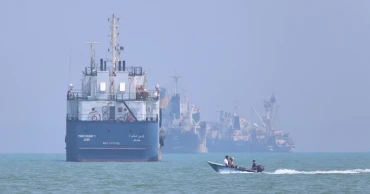
The United States and Iran reached an initial agreement early Monday to open the Strait of Hormuz and further extend a shaky ceasefire in the Iran war, potentially allowing desperately needed oil and natural gas to reach the global market.
Details of the deal were not immediately released and Iran signaled implementation would not start until the signing, which key mediator Pakistan said would occur Friday in Switzerland. It could provide a way to end a war that killed thousands across the Middle East, including the top leaders of Iran’s theocracy, and sparked a historic energy crisis.
But the memorandum of understanding over the war already faced intense challenges. Israel’s continued hostilities with the Iranian-backed militia Hezbollah in Lebanon, where Israel bombed Beirut’s southern suburbs Sunday, nearly derailed the negotiations.
Meanwhile, the deal gives just 60 days to resolve what to do about Iran’s stockpile of highly enriched uranium and its atomic program. That took years to resolve in Tehran’s 2015 nuclear deal with world powers. U.S. President Donald Trump unilaterally withdrew America from that accord in his first term, setting the stage for the tensions that culminated in the war.
“Congratulations to all!” Trump wrote on social media as he celebrated his 80th birthday Sunday with a UFC cage match fight at the White House.
He added, “I hereby fully authorize the toll free opening of the Strait of Hormuz, and, simultaneously herewith, authorize the immediate removal of the United States Naval blockade,” which was imposed in retaliation for Iran’s grip on the crucial waterway.
He soon hedged, however, saying the strait wouldn’t open until Friday’s signing.
Iran’s deputy foreign minister, Kazem Gharibabadi, confirmed the agreement on state television but said Iran would not start implementing it until it was signed Friday. He said the deal followed talks with Qatar, another mediator.
Israel, which has insisted it be allowed a freehand to pursue Hezbollah as it occupies southern Lebanon and has extended its military operations into areas its forces haven’t been in a quarter century, did not immediately comment. Israel joined the U.S. in launching the war on Feb. 28.
Benchmark Brent crude oil fell more than $3 a barrel on the news as Asian stock markets rallied.
Pakistan, a key mediator, announces deal
Pakistan first announced the deal, with Prime Minister Shehbaz Sharif saying “both sides have declared the immediate and permanent termination of military operations on all fronts, including in Lebanon.” It remains unclear whether Israel, which relies on the U.S. but has launched in wars against its enemies since Hamas’ Oct. 7, 2023, attack on Israel, agreed to that term.
He added that mediators this week will facilitate meetings to “lay the foundation for the technical talks.”
Broader negotiations on outstanding issues like Iran’s nuclear program would continue over the next 60 days, two senior Pakistani officials said earlier Sunday, speaking on condition of anonymity because they were not authorized to discuss the matter publicly. If the sides fail to reach a resolution within that time, the timeline could be extended.
Iranian state television cited the secretariat of the Supreme National Security Council saying the war on all fronts “will end immediately and permanently beginning tonight” — but that the U.S. blockade “will be terminated immediately and in full.”
Qatari mediators later left Tehran following 17 hours of negotiations, said an official briefed on the developments who spoke on condition of anonymity due to sensitivity of the talks. Separate preparatory meetings with each side will take place in Doha this week, the official said.
It was not clear who from Iran would sign the deal on Friday. U.S. Vice President JD Vance told Fox News the White House was still figuring out who would attend: “I certainly plan to be there, but it’s possible the president himself could be there.”
But concern among Republicans in the U.S. already could be seen. They included U.S. Sen. Lindsey Graham of South Carolina, who described Vance as “the architect of the deal.”
“I am somewhat concerned that Iran’s view of the agreement seems different than what the American negotiating team is claiming,” Graham wrote online.
U.S. Rep. Gregory Meeks of New York, the top Democrat on the House Foreign Affairs Committee, said Congress would exercise oversight on any accord with Iran.
“We have seen time and again: War cannot change the Iranian regime,” he said.
Interim deal faces intense scrutiny
The first strike of the war killed Iran’s supreme leader, Ayatollah Ali Khamenei, and Khamenei’s son, Ayatollah Mojtaba Khamenei, is now supreme leader. He has not been seen in the public since the war began, but his approval was needed for Iran to sign off on the deal.
There was apparent friction inside Iran in the hours before the announcement, as the government warned that division at home over the deal weakened its negotiating position.
The deal likely returns the region to a status that existed before the war, but with Iran having proven its ability to disrupt shipping in the strait. The waterway is crucial to significant shipments of oil, natural gas and related products like fertilizer, and its effective closure rocked the global economy.
Even with a deal, it will take months for oil and gas supplies to flow freely enough for the world’s needs to be met because shipping and insurance companies want to be confident the agreement will last, energy experts said.
Tehran also still has a ballistic missile arsenal and enough highly enriched uranium to build several nuclear weapons, should it choose to pursue them.
Iran has long maintained its nuclear program is peaceful and has not publicly committed to giving up the enriched uranium, which is believed to be buried under three nuclear sites that were badly damaged by U.S. strikes last year.
The U.S. has sought the removal of the enriched uranium from Iran as part of a deal. Russia has offered to take it. But Iran insists it wants to keep the uranium.
1 month ago
Russian strike hits historic Kyiv religious site, kills 5 in Kharkiv
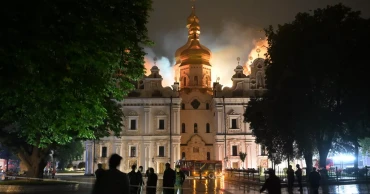
A large-scale Russian attack on Ukraine killed five rescuers in Kharkiv and wounded at least 20 people in the capital Kyiv on Monday as strikes set apartment buildings ablaze and sparked a fire at one of the country’s most significant religious landmarks.
The rescuers were killed in Kharkiv by a second Russian strike as they fought a blaze caused by an earlier attack, Interior Minister Ihor Klymenko said. At least five other emergency workers were wounded.
A series of powerful explosions echoed across Kyiv, with a wave of ballistic missiles followed by Shahed drones as many people sought shelter underground and officials urged residents to take cover.
“Kyiv is under the main strike. There is significant destruction of civilian infrastructure,” Klymenko said.
Twenty people, including a child, sought medical help in the capital, said Tymur Tkachenko, head of the Kyiv City Military Administration.
Five strikes hit civilian sites in the city’s Shevchenkivskyi district in less than 30 minutes, he said, including a 25-story apartment building, while a market and a grocery store caught fire. In the Obolonskyi district, a nine-story residential building took a direct hit.
Tkachenko accused Russia of striking apartment blocks on purpose.
“This is their deliberate decision,” he said.
Damage at the Kyiv-Pechersk Lavra, a monastic complex, was substantial and a serious fire had broken out, said Tkachenko, who accused Russia of deliberately striking “the heart of one of the largest Christian shrines.”
The roof of the Dormition Cathedral caught fire during the overnight attack, said Metropolitan Epiphanius, head of the Orthodox Church of Ukraine. He condemned the strike as another Russian crime “against humanity, against history, against Christianity” and appealed for prayers to save the site.
The Kyiv-Pechersk Lavra, also known as the Monastery of the Caves, is a sprawling complex of monasteries and churches, including some underground, built from the 11th to the 19th century. Some of the churches at the UNESCO-listed World Heritage site are connected by a labyrinthine complex of caves spanning more than 600 meters (2,000 feet).
The cathedral, churches and other buildings overlook the right bank of the Dnipro River and have been a pilgrimage site for centuries.
1 month ago
Oil, gas supplies could take months to return to normal after Iran deal: Experts
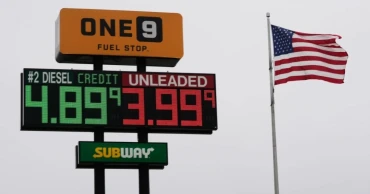
High oil and gasoline prices and energy supply problems won’t be solved overnight, despite an agreement to end the Iran war and open the Strait of Hormuz announced Sunday.
It will likely take months before energy companies can resume operations to the point of meeting the world’s demand, according to energy experts. The slow pace of the process of shipping and refining crude oil, and doubts about the security of traveling through the strait mean the effect won’t be seen immediately, they said.
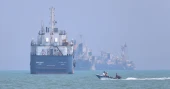
Ships loaded with crude oil have been stranded in the Persian Gulf for more than three months, unable to safely travel through the waterway, through which about a fifth of the world’s oil and gasoline supplies typically traveled before the war began.
“It’s going to take time for people to feel comfortable and for insurance to be in place ... particularly to get people on the ground to restart some of these assets,” said Daniel Evans, global head of fuels and refining research at S&P Global Energy.
First, ships that have been stranded will have to exit the strait, and then new tankers will have to come in to be loaded, Evans said.
“To bring a ship in, you need to be confident that you’ve got a big enough window of safety to bring it in, load it and move it out,” he added.
Oil tankers also move slowly, he explained. It takes months to travel from the strait to distant countries, deliver the crude oil to a refinery for processing and then arrive at its final destination.
1 month ago
Thousands protest G7 in Geneva as Trump and world leaders meet in France
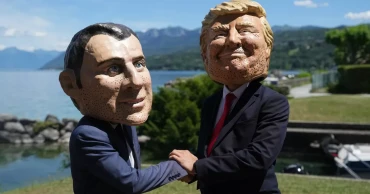
Thousands of demonstrators converged Sunday to show their discontent against the G7 group of rich countries, with U.S. President Donald Trump and counterparts set to hold a summit starting a day later in nearby France.
Environmentalists and feminists joined foes of imperialism, defenders of independent media, supporters of Palestinian rights and others in a lakeside park in Geneva for a march across town. A boat whose sail read “No G7” floated by, as sunbathers and swimmers basked under blue skies.
Swiss and French authorities have deployed thousands of police to provide security for the three-day summit starting Monday in the resort town of Evian-les-Bains, France. The leaders are set to discuss issues including the Middle East, Ukraine and global economic imbalances.
Authorities have blocked off roads, banned unauthorized gatherings and pledged financial support for businesses who could be hit by unrest. Scores of businesses and shops have boarded up their storefronts with wooden panels as a precaution — leery of upheaval that left a trail of damage in Geneva during a similar summit in Evian in 2003. Only seven of the 35 roadway border crossings will remain open.
Demonstrators have been gathering for days in advance of Sunday’s march in Geneva, the largest city in the area and designated gathering spot for activists who oppose the G7.
A flotilla of around 20 boats appeared on Lake Geneva off the coast of Evian on Saturday, displaying anti-G7 and pro-Palestinian banners. Some 20 protesters were detained on Friday evening, according to Swiss media reports.
Earlier, between 100 and 150 people had gathered in Geneva for a protest bicycle ride, slowing down traffic and chanting anti-G7 and pro-Palestinian slogans, public broadcaster RTS reported.
Local resident Robin Hedz lamented the “mess” and expressed bafflement about the “wood-wall everywhere,” while acknowledging the memories of the trail of damaged property at the summit over 20 years ago.
France will deploy more than 13,000 police and gendarmerie officers to ensure security in the summit area just across the border. Over 800 French border control officers will be active, up from about 60 normally.
French gendarmes buzzed around in motorboats off the coast of Evian on Saturday, and one officer hoisted up a bulky drone-interception device in a display of the security measures being rolled out for the summit.
Protests are nothing new around such elite gatherings. This time, activists want to demonstrate frustration with Trump’s leadership on issues as diverse as tariffs, the war in Iran and the climate, or even highlight his past ties to convicted sex offender Jeffrey Epstein.
“We are very afraid of the policy and the politics of Mr. Trump and also of the other leaders of the G7, because they are fighting, making war all over the place,” said Francoise Nyffeler, spokesperson for the NoG7 coalition, which has organized the demonstration and march on Sunday.
“The planet is in danger and we are very scared about it and we want to protest and say that the people of the world are against their policies,” she added.
1 month ago
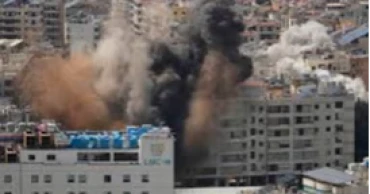
Israeli strikes hit Beirut as US-Iran deal nears finalisation
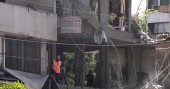
Israel carried out airstrikes on Beirut’s southern suburbs on Sunday, targeting what it described as Hezbollah infrastructure, even as diplomatic efforts intensified to secure a U.S.-Iran agreement aimed at ending months of regional conflict.
Columns of smoke were seen rising over parts of the Lebanese capital following the strikes, which came amid concerns that renewed military action could undermine ongoing negotiations. The attacks marked another escalation after similar Israeli strikes last week heightened tensions despite a fragile ceasefire that has largely held since April.
Israeli Prime Minister Benjamin Netanyahu’s office said the operation was launched in response to Hezbollah rocket fire into northern Israel. Earlier Sunday, the Israeli military reported that three projectiles had been fired from Lebanon, releasing footage showing smoke rising from the impact area.
Witnesses in Beirut said the strikes hit a residential building in the city’s southern suburbs, damaging several floors and prompting residents to flee. Many had recently returned to the area following weeks of relative calm.
The latest violence comes as international mediators work to finalize a U.S.-Iran agreement. Tehran is seeking a ceasefire arrangement that also addresses fighting in Lebanon and includes access to billions of dollars in frozen assets. Negotiations have largely been led by Pakistan and other regional actors.
Israeli leaders reiterated that attacks on Israeli territory would not be tolerated, while Hezbollah had not issued an immediate response.
According to regional officials, Qatari mediators arrived in Tehran on Sunday in an effort to conclude the deal. While optimism remains cautious, officials believe an agreement could help end hostilities that have claimed thousands of lives and reopen the strategically important Strait of Hormuz, whose disruption has rattled global markets.
U.S. President Donald Trump and Pakistani Prime Minister Shehbaz Sharif indicated that an agreement could be finalized as early as Sunday, although Iranian officials suggested it may take several more days. The signing is expected to take place electronically rather than through a formal ceremony.
Despite progress, major issues remain unresolved, including Iran’s nuclear programme, its stockpile of enriched uranium and frozen financial assets. The proposed agreement is expected to establish a framework for further technical discussions rather than provide immediate solutions.
Critics, including some within Trump’s Republican Party, argue that the emerging deal falls short of earlier U.S. and Israeli objectives, including curbing Iran’s missile and nuclear capabilities and limiting its support for regional proxy groups.
The future of Iran’s nuclear programme remains a key point of contention. According to the International Atomic Energy Agency (IAEA), Iran possesses more than 440 kilograms of uranium enriched to 60 percent purity, close to weapons-grade levels. Tehran continues to insist that its nuclear activities are intended for peaceful purposes.
1 month ago