Thailand and Cambodia on Sunday signed an expanded ceasefire agreement during a ceremony attended by U.S. President Donald Trump, whose threats of economic pressure earlier this year helped end deadly clashes along their disputed border.
Under the agreement, Thailand will release Cambodian prisoners while Cambodia will begin withdrawing heavy artillery. Regional observers will monitor compliance to prevent a resumption of fighting.
Trump, who witnessed the signing with Cambodian Prime Minister Hun Manet and Thai Prime Minister Anutin Charnvirakul, called the accord a major achievement. “We did something that a lot of people said couldn’t be done,” he said. Hun Manet described it as a “historic day,” and Anutin said the deal lays “the building blocks for a lasting peace.”
The signing took place on the sidelines of the annual ASEAN Summit in Kuala Lumpur, marking Trump’s first event at the summit. His visit, which will continue to Japan and South Korea and may include a meeting with Chinese President Xi Jinping, is seen as an effort to strengthen U.S. influence in the region amid ongoing trade tensions and domestic political disputes at home.
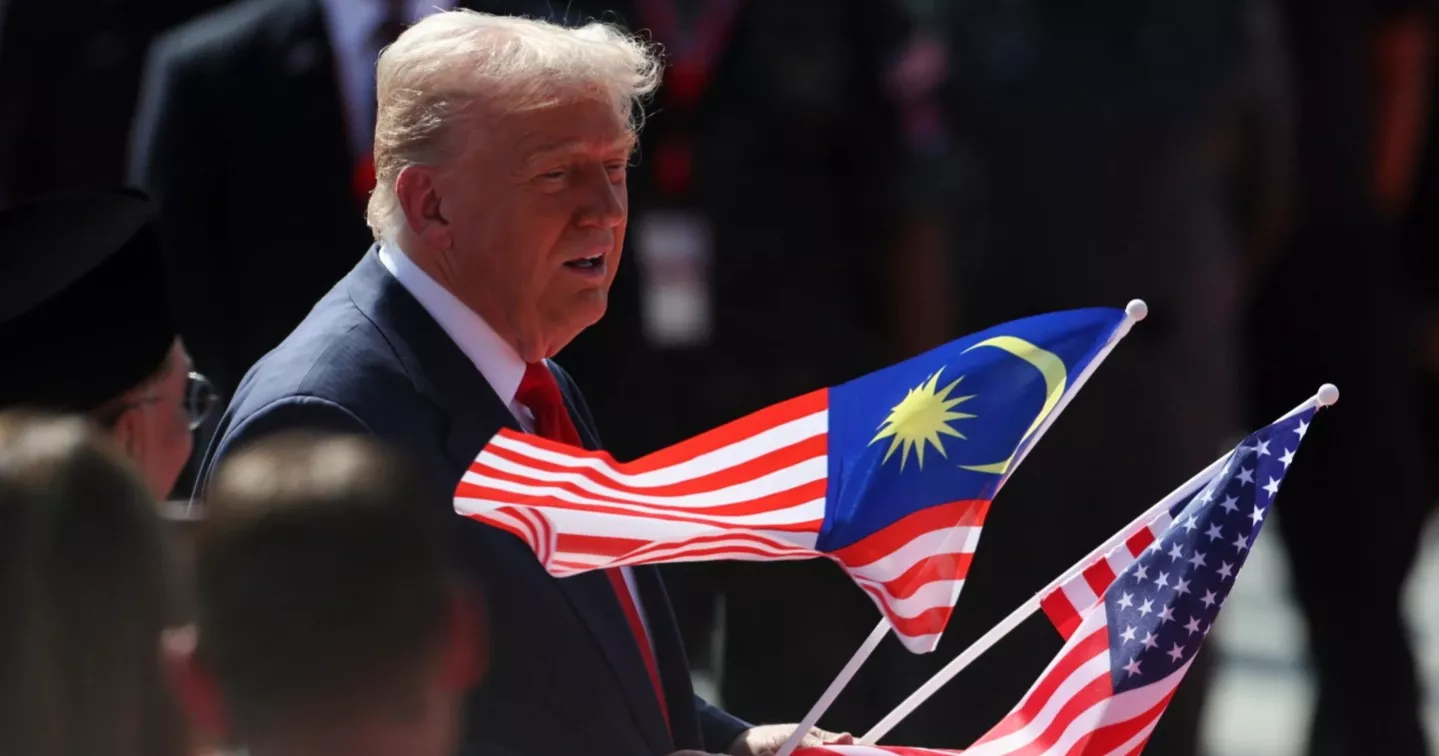
Trump also participated in cultural events upon arrival, performing a campaign-style dance with local performers while waving both American and Malaysian flags. He is expected to sign trade agreements with Malaysia and maintain focus on expanding U.S. supply chains to reduce reliance on China.
The July border clashes, which lasted five days, killed dozens and displaced hundreds of thousands. Trump had warned both nations that trade agreements could be withheld if fighting continued—a move analysts say was pivotal in prompting negotiations. Following Sunday’s ceremony, Trump also signed separate economic deals with Thailand and Cambodia.
Malaysian Prime Minister Anwar Ibrahim praised the ceasefire, emphasizing that reconciliation “is not concession, but an act of courage.” Thai Foreign Ministry spokesperson Nikorndej Balankura called the agreement a “joint declaration” signaling both countries’ commitment to renewing relations, adding that “work has just begun.”
Trump’s visit has also highlighted trade disputes, including ongoing tensions with China and recent friction with Canada over tariffs. He expressed optimism about negotiating comprehensive deals with Japan, South Korea, and China during the trip, emphasizing support for U.S. farmers and broader economic cooperation.
Indian Prime Minister Narendra Modi, who was close with Trump during his first term, is absent from this year’s summit, reflecting more strained relations after recent disputes over tariffs and regional conflicts.
Source: AP