others
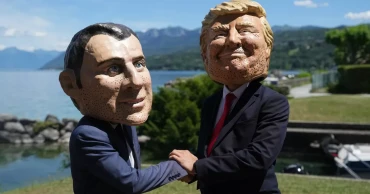
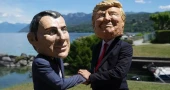
Thousands protest G7 in Geneva as Trump and world leaders meet in France
Thousands of demonstrators converged Sunday to show their discontent against the G7 group of rich countries, with U.S. President Donald Trump and counterparts set to hold a summit starting a day later in nearby France.
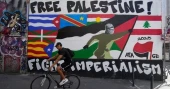
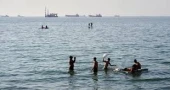
Environmentalists and feminists joined foes of imperialism, defenders of independent media, supporters of Palestinian rights and others in a lakeside park in Geneva for a march across town. A boat whose sail read “No G7” floated by, as sunbathers and swimmers basked under blue skies.
Swiss and French authorities have deployed thousands of police to provide security for the three-day summit starting Monday in the resort town of Evian-les-Bains, France. The leaders are set to discuss issues including the Middle East, Ukraine and global economic imbalances.
Authorities have blocked off roads, banned unauthorized gatherings and pledged financial support for businesses who could be hit by unrest. Scores of businesses and shops have boarded up their storefronts with wooden panels as a precaution — leery of upheaval that left a trail of damage in Geneva during a similar summit in Evian in 2003. Only seven of the 35 roadway border crossings will remain open.
Demonstrators have been gathering for days in advance of Sunday’s march in Geneva, the largest city in the area and designated gathering spot for activists who oppose the G7.
A flotilla of around 20 boats appeared on Lake Geneva off the coast of Evian on Saturday, displaying anti-G7 and pro-Palestinian banners. Some 20 protesters were detained on Friday evening, according to Swiss media reports.
Earlier, between 100 and 150 people had gathered in Geneva for a protest bicycle ride, slowing down traffic and chanting anti-G7 and pro-Palestinian slogans, public broadcaster RTS reported.
Local resident Robin Hedz lamented the “mess” and expressed bafflement about the “wood-wall everywhere,” while acknowledging the memories of the trail of damaged property at the summit over 20 years ago.
France will deploy more than 13,000 police and gendarmerie officers to ensure security in the summit area just across the border. Over 800 French border control officers will be active, up from about 60 normally.
French gendarmes buzzed around in motorboats off the coast of Evian on Saturday, and one officer hoisted up a bulky drone-interception device in a display of the security measures being rolled out for the summit.
Protests are nothing new around such elite gatherings. This time, activists want to demonstrate frustration with Trump’s leadership on issues as diverse as tariffs, the war in Iran and the climate, or even highlight his past ties to convicted sex offender Jeffrey Epstein.
“We are very afraid of the policy and the politics of Mr. Trump and also of the other leaders of the G7, because they are fighting, making war all over the place,” said Francoise Nyffeler, spokesperson for the NoG7 coalition, which has organized the demonstration and march on Sunday.
“The planet is in danger and we are very scared about it and we want to protest and say that the people of the world are against their policies,” she added.
1 month ago
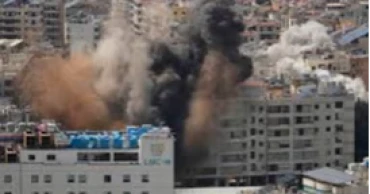
Israeli strikes hit Beirut as US-Iran deal nears finalisation
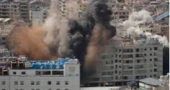
Israel carried out airstrikes on Beirut’s southern suburbs on Sunday, targeting what it described as Hezbollah infrastructure, even as diplomatic efforts intensified to secure a U.S.-Iran agreement aimed at ending months of regional conflict.
Columns of smoke were seen rising over parts of the Lebanese capital following the strikes, which came amid concerns that renewed military action could undermine ongoing negotiations. The attacks marked another escalation after similar Israeli strikes last week heightened tensions despite a fragile ceasefire that has largely held since April.
Israeli Prime Minister Benjamin Netanyahu’s office said the operation was launched in response to Hezbollah rocket fire into northern Israel. Earlier Sunday, the Israeli military reported that three projectiles had been fired from Lebanon, releasing footage showing smoke rising from the impact area.
Witnesses in Beirut said the strikes hit a residential building in the city’s southern suburbs, damaging several floors and prompting residents to flee. Many had recently returned to the area following weeks of relative calm.
The latest violence comes as international mediators work to finalize a U.S.-Iran agreement. Tehran is seeking a ceasefire arrangement that also addresses fighting in Lebanon and includes access to billions of dollars in frozen assets. Negotiations have largely been led by Pakistan and other regional actors.
Israeli leaders reiterated that attacks on Israeli territory would not be tolerated, while Hezbollah had not issued an immediate response.
According to regional officials, Qatari mediators arrived in Tehran on Sunday in an effort to conclude the deal. While optimism remains cautious, officials believe an agreement could help end hostilities that have claimed thousands of lives and reopen the strategically important Strait of Hormuz, whose disruption has rattled global markets.
U.S. President Donald Trump and Pakistani Prime Minister Shehbaz Sharif indicated that an agreement could be finalized as early as Sunday, although Iranian officials suggested it may take several more days. The signing is expected to take place electronically rather than through a formal ceremony.
Despite progress, major issues remain unresolved, including Iran’s nuclear programme, its stockpile of enriched uranium and frozen financial assets. The proposed agreement is expected to establish a framework for further technical discussions rather than provide immediate solutions.
Critics, including some within Trump’s Republican Party, argue that the emerging deal falls short of earlier U.S. and Israeli objectives, including curbing Iran’s missile and nuclear capabilities and limiting its support for regional proxy groups.
The future of Iran’s nuclear programme remains a key point of contention. According to the International Atomic Energy Agency (IAEA), Iran possesses more than 440 kilograms of uranium enriched to 60 percent purity, close to weapons-grade levels. Tehran continues to insist that its nuclear activities are intended for peaceful purposes.
1 month ago
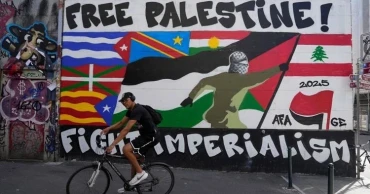
Downtown Geneva shutters shops as tight security imposed ahead of anti-G7 protests
Businesses in central Geneva have boarded up storefronts with wooden panels as authorities ramp up security ahead of planned anti-G7 protests expected on Sunday.
The move comes as French and Swiss officials deploy heavy security measures for the Group of Seven (G7) summit, which begins Monday in the nearby French town of Evian-les-Bains. U.S. President Donald Trump and other world leaders are attending the gathering, where concerns remain about possible unrest during the events.
The summit, scheduled for June 15–17 on the shores of Lake Geneva, will focus on major global issues including the Middle East conflict, the war in Ukraine and global economic tensions. At the same time, activist groups including environmentalists, feminist organisations and anti-capitalist movements have called for large demonstrations.
On Saturday, around 20 boats were seen on Lake Geneva near Evian displaying anti-G7 and pro-Palestinian banners. Swiss media reported that about 20 protesters were detained on Friday evening.
Earlier, between 100 and 150 people took part in a bicycle protest in Geneva, slowing traffic while chanting slogans against the G7 and in support of Palestine, according to public broadcaster RTS.
Local business owners and residents have expressed concern over possible violence, recalling the destruction caused during protests linked to the 2003 G8 summit, when Russia was part of the group.
Some residents described the security preparations, including wooden barriers across shopfronts, as unsettling but said they understood fears of a repeat of past unrest.
Swiss authorities have mobilised around 4,000 army personnel to assist police during the summit. Security operations include airspace and road restrictions, as well as patrols on Lake Geneva. Of 35 border crossings in the region, seven will remain open. A major public park in Geneva has also been closed to prevent gatherings.
On the French side, more than 13,000 police and gendarmerie officers have been deployed, along with over 800 border control personnel, significantly higher than usual. Security forces were seen patrolling Lake Geneva in motorboats, while officers also tested drone-interception equipment as part of preparations.
Protests are common during major global summits, and this year activists say they are demonstrating against a range of issues including Donald Trump’s policies on trade tariffs, the war in Iran, climate change, and his past associations with convicted sex offender Jeffrey Epstein.
Francoise Nyffeler, spokesperson for the NoG7 coalition organising the protest, said participants are concerned about global conflicts and climate threats.
“We are very afraid of the policies of Mr Trump and other G7 leaders because they are involved in wars around the world,” she said. “The planet is in danger, and we want to show that people are against these policies.”
1 month ago
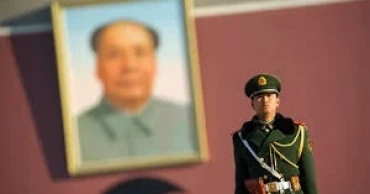
China’s absence from G7 raises questions as leaders meet in France
The exclusion of China from the Group of Seven (G7) major economies is again under discussion as leaders of the bloc gather in France, with growing debate over whether the global economic powerhouse should remain outside the group.
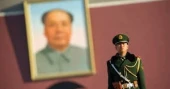
When the first summit of major Western economies was held in 1975 at a French chateau, China was not part of the discussion. At that time, the country was politically and economically unstable under Mao Zedong and far from the global economic influence it holds today.
Now, nearly five decades later, China has become the world’s second-largest economy and a major driver of global trade, prompting questions about whether its absence from the G7 still makes sense. Some experts say its economic size alone would make it a natural fit alongside G7 members such as the United States, Japan, Germany, France, the United Kingdom, Italy and Canada.
However, the G7 has traditionally been a group of democratic nations, a standard China does not meet. Critics point to restrictions on political freedoms and civil liberties in China, which they say place it far behind G7 countries in democratic governance.
Despite its exclusion, China remains a central topic at the summit. Its growing trade surplus, dominance in key minerals, rapid technological progress and expanding military strength are all seen as major global concerns. It is also the world’s largest emitter of carbon pollution, adding to its importance in climate discussions.
French President Emmanuel Macron has reportedly set aside time for leaders to discuss ways to respond to China’s trade practices, including concerns that its expanding exports could harm industries in G7 countries. Analysts say that while leaders often disagree on many issues, China may be one topic that brings them closer together.
Beijing, meanwhile, has long criticized the G7 as an exclusive group rooted in Cold War thinking. In a statement ahead of the summit, China’s Foreign Ministry said the group should promote cooperation rather than division, while also acknowledging the G7’s continued global influence.
Experts say China is closely watching the group, even if it views it as aligned with Western interests. At the same time, they argue that bringing China into the G7 could create divisions within the bloc due to differences in political systems and foreign policy positions.
Analysts also point to Russia’s past membership as a warning. Russia joined the group in 1998 but was later suspended following its actions in Ukraine, a move that continues to shape G7 attitudes toward expansion.
Some experts say this experience has made G7 members more cautious about admitting countries that are not fully democratic, fearing it could weaken unity within the group.
1 month ago
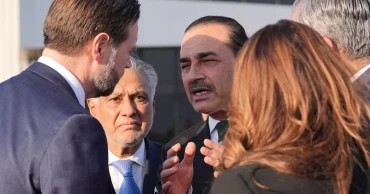
Iran war deal closer than ever, says Pakistan
Momentum for a deal to end the Iran war appeared to grow Saturday as key mediator Pakistan said an agreement was closer than “ever before” and Iran made some of its most optimistic statements yet.
U.S. President Donald Trump said on social media the deal was “scheduled to get signed tomorrow,” and that the Strait of Hormuz would open immediately. Iran foreign ministry spokesperson Esmail Baghaei, however, said “although it will not happen tomorrow, the possibility that it could take place in the coming days cannot be ruled out."
Each side was expected to sign electronically.
Meanwhile, Trump was expected to discuss demining the Strait of Hormuz during the Group of Seven summit that starts Monday. And Iran’s state-run television said funeral ceremonies for former Supreme Leader Ayatollah Ali Khamenei, killed in the war's opening attack, will take place in July.
A senior U.S. official, who briefed journalists on condition of anonymity under rules set by the White House, said Trump planned to meet on the G7 sidelines with the leaders of Egypt, Qatar and United Arab Emirates to discuss efforts to wind down the war.
G7 members Britain and France have expressed interest in assisting with demining once the conflict is paused. It was not clear how many mines are in the strait that Iran has effectively controlled since shortly after the war began, virtually shutting down oil and natural gas shipments from the Persian Gulf. The U.S. has blockaded Iranian ports in response.
A tenuous ceasefire has been in place since April 7.
Pakistan says a deal to end the war is imminent
Pakistani Prime Minister Shehbaz Sharif said a deal aimed at ending the war was expected to be finalized within 24 hours. Pakistan's foreign ministry said the electronic signing ceremony was scheduled for Sunday, but did not provide details.
Sharif told his Qatari counterpart “a peace deal was ready for signatures by the relevant parties very shortly,” another statement said.
Iran signaled optimism but indicated more time was needed. Baghaei said in a statement carried by state TV that "the likelihood of finalizing the memorandum of understanding in the coming days is high.”
Iran has long expressed wariness in negotiations, pointing out that previous talks with the U.S. last year and early this year ended with attacks by the U.S. and Israel.
Baghaei said the memorandum under discussion was focused on ending the war and "at this stage, it has been decided that there will be no discussion of the nuclear issue.”
Iran's nuclear program and highly enriched uranium have long been at the center of tensions with the U.S. and Israel and an international source of concern.
Trump on social media asserted that “when all is calm,” the U.S. would go in and “downblend and destroy” the enriched uranium in Iran or in the U.S.
The apparent breakthrough came after Iran exchanged fire with the U.S. and Israel earlier in the week, threatening to rupture the ceasefire and push the Middle East back into full-scale war.
Iranian Foreign Minister Abbas Araghchi posted on X on Friday that an agreement “has never been closer.” Trump, who has asserted multiple times in recent weeks the countries were on the cusp of a deal, shared Araghchi’s post on social media.
Trump on Thursday claimed significant progress in negotiations, hours after he threatened to seize Iran’s oil industry.
Khamenei to be buried at the holiest of Shiite shrines
The funeral, burial and farewell events for Khamenei will occur between July 4 and 9 during Muharram, a traditional period of mourning in the Shiite Muslim calendar.
Khamenei is succeeded by his son, Mojtaba, who is considered less compromising and has not been seen publicly since the war began.
Funeral ceremonies are expected to begin in Tehran and move to Qom, a stronghold of many senior Shiite clerics, then to Mashhad, Khamenei's birthplace. He’ll be buried there at the Imam Reza Shrine, considered the holiest place among Shiite devotees.
Khamenei remolded the Islamic Republic following the death in 1989 of Ayatollah Ruhollah Khomeini, the fiery, charismatic ideologue who led the overthrow of the shah and installed rule by Shiite Muslim clerics.
Khamenei ruled far longer than Khomeini. He greatly expanded the Shiite clerical class and built the paramilitary Revolutionary Guard into the most important body underpinning his rule. The Guard became a military and business behemoth, the country’s most elite force and head of its ballistic missile arsenal — a key target for Israel and the U.S. in the war.
1 month ago
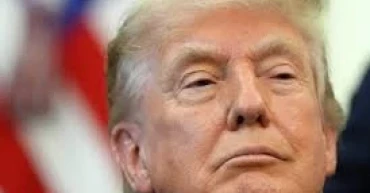
Trump says US strike kills Tren de Aragua leader in Venezuela
US President Donald Trump announced Friday that a U.S. military operation had killed Hector Rusthenford Guerrero Flores, also known as “Niño Guerrero,” the alleged leader of the notorious Tren de Aragua criminal organization.
According to Trump, the operation was a rapid and targeted strike carried out in Venezuela. U.S. Defense Secretary Pete Hegseth said the strike took place earlier in the week against a Tren de Aragua compound and highlighted cooperation between the United States and Venezuela in combating organized crime and narcotics trafficking.
Tren de Aragua, a Venezuelan-based gang that has expanded across Latin America and into the United States, has been designated a terrorist organization by U.S. authorities. Guerrero Flores had previously been charged in federal court in New York with racketeering, terrorism-related offenses, drug trafficking, extortion, and other criminal activities spanning more than a decade.
In a statement on social media, Trump declared that members of the gang would no longer find safe haven in Venezuela or elsewhere, vowing continued action against criminal organizations involved in violence and drug trafficking. His post included aerial footage showing a building being destroyed in an apparent strike.
The U.S. State Department had previously offered a reward of up to $5 million for information leading to Guerrero Flores’ capture.
The operation is part of a broader campaign by the Trump administration targeting what it describes as “narcoterrorist” groups. In recent months, U.S. forces have conducted operations against vessels suspected of smuggling drugs across the Caribbean Sea and eastern Pacific Ocean.
Trump and senior administration officials have frequently cited Tren de Aragua as a major contributor to crime and illegal drug activity affecting communities in the United States. The administration has also accused the gang of maintaining ties to the Venezuelan government, although U.S. intelligence assessments have disputed claims that the organization operated under the direct control of President Nicolás Maduro.
Tren de Aragua emerged more than a decade ago inside a prison in Venezuela’s Aragua state. Under Guerrero Flores’ leadership, the gang reportedly gained control of the facility and expanded its influence through extortion, violence, and other criminal enterprises. The prison eventually became known for its unusual level of inmate control, with amenities including restaurants, sports facilities, and entertainment venues.
As economic hardship and political instability drove millions of Venezuelans to migrate abroad, the gang expanded its presence throughout the region. Authorities in countries such as Peru and Colombia have linked the group to violent crimes and extortion targeting migrant communities.
The announcement comes as immigration and crime remain key issues in U.S. politics. Trump, who campaigned on strengthening border security and combating organized crime, continues to emphasize those priorities during his second term.
1 month ago
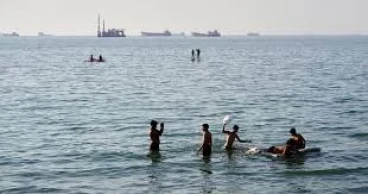
US and Iran agree on draft peace deal, Pakistan says
The United States and Iran have reportedly agreed on the wording of a draft agreement intended to end the ongoing conflict in the Middle East, according to Pakistan’s Prime Minister Shehbaz Sharif.
Speaking on Friday, Sharif said both countries had reached consensus on a final text and that mediators are now working with Washington and Tehran to complete the remaining steps needed to formalize the deal. Pakistan has played a leading role in the mediation efforts.
In a post on X, Sharif expressed optimism, saying that a peaceful resolution appears closer than ever.
The development follows several days of military exchanges involving Iran, the United States, and Israel, raising fears of a broader regional conflict. Iranian Foreign Minister Abbas Araghchi also suggested that an agreement was within reach, while U.S. President Donald Trump shared similar sentiments by reposting Araghchi’s remarks on social media.
According to Araghchi, the proposed agreement would initially focus on ending hostilities across the region, including in Lebanon. Discussions concerning Iran’s nuclear program would continue for up to 60 days after the signing of the initial accord, with the possibility of extending that timeline if necessary.
Iran’s nuclear activities remain one of the most contentious issues in the negotiations. The United States and Israel argue that Tehran’s program could eventually be used to develop nuclear weapons, while Iran maintains that its nuclear efforts are strictly peaceful.
A senior U.S. official indicated that the draft agreement would begin the process of eliminating or removing Iran’s highly enriched uranium. The following 60-day period would be used to address technical details related to that process.
The negotiations also address the Strait of Hormuz, a critical route for global oil and natural gas shipments. Disruptions in the waterway have contributed to higher energy costs worldwide. The proposed deal reportedly includes measures to reopen the strait and restore normal shipping operations.
Iran has signaled that it wants to retain the right to charge transit fees for vessels using the strait, arguing that such payments would compensate for services provided during passage.
Regional officials familiar with the discussions said the agreement is also expected to include a gradual easing of sanctions on Iran and the release of frozen Iranian assets. They believe a formal signing ceremony could take place within days, pending final approval from both governments.
Although Israel is not directly involved in the negotiations, Prime Minister Benjamin Netanyahu reiterated that Iran must not acquire nuclear weapons. Israeli Defense Minister Israel Katz also emphasized that Israel expects its security concerns—including Iran’s missile capabilities and regional proxy networks—to be addressed.
Katz added that Israel reserves the right to take independent action against Iran if necessary and indicated that Israeli forces would remain in certain areas of Lebanon, Syria, Gaza, and parts of the West Bank.
Officials said the mediation effort has been led primarily by Pakistan, under the guidance of Army Chief Field Marshal Asim Munir, with support from Saudi Arabia, Turkey, Egypt, and Qatar.
1 month ago
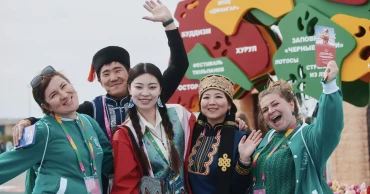
Global media invited to cover International Festival of Youth 2026 in Russia
Accreditation for Russian and international media representatives and content creators for the International Festival of Youth is open from May 5 to July 17.
The Festival will take place from September 11 to 17, 2026, in Ekaterinburg as part of the national project "Youth and Children." Applications can be submitted via the World Youth Festival Directorate International Platform of Opportunities at the link provided. The accreditation procedure consists of two stages. In the first stage, media representatives and content creators must register on the International Platform of Opportunities, after that they can submit an application for accreditation to work at the Festival venue via the link.
Dmitry Ivanov, Director General of the World Youth Festival Directorate, noted that the International Media Center will be set up at the IFY–2026 venue. As part of the Media Center, journalists will have access to workstations, rest areas, zones for press approaches and press conferences (which will be held daily), as well as special studios for recording interviews. Media representatives will also be provided with transfer services within Ekaterinburg and catering at the Festival venue. "We see a strong interest in the International Festival of Youth from both Russian and international media representatives and content creators. For us, it is important not only to invite the media community but also to create the most comfortable and inviting working conditions at the Festival venue. All accredited participants will have a greater access to key events, the opportunity to work with leading speakers, and direct interaction with participants from different countries. The Media Center will serve as a fully functional workspace, where journalists will be supported by media volunteers. We are open to cooperation and invite media representatives and content creators from around the world to join us in covering one of the main international youth events of 2026,” - said Dmitry Ivanov, Director General of the World Youth Festival Directorate. Also, Dmitry Ivanov added that the Festival is expected to host at least 500 media representatives from around the world. International guests will be provided with transfer services to Ekaterinburg and accommodation in city hotels. The International Festival of Youth will become part of the "family" of events held under the World Youth Festival, which dates back to the Festival on the “Sirius” Federal Territory in 2024. The WYF‑2024 created a community of proactive young leaders united by the ideas of equality among nations and peoples and the construction of a shared future — a multipolar world based on cooperation and a balance of interests. In order to preserve and build on the legacy of the WYF‑2024, international youth events are held annually on the territory of Russia by instruction of Russian President Vladimir Putin. Last year, the World Youth Festival Assembly took place in Nizhny Novgorod, bringing together 2,000 young people from 120 countries This year, the International Festival of Youth will bring together 10,000 young leaders: 5,000 from Russia and 5,000 from foreign countries. The Decree on Holding the International Festival of Youth was signed by the President of the Russian Federation, Vladimir Putin, on December 29, 2025. The delegations will include young people from around the world who have already achieved results in the fields of creative industries, public administration, science and education, sports, entrepreneurship, media, digitalization and IT, and civic participation. Traditionally, the Festival will also involve 1,000 children aged 14 to 17: 500 from Russia and 500 from foreign countries. The Volunteer Corps of 2,000 people will assist in organizing the Festival and supporting participants and guests. The Festival will be held under the motto: "Follow Your Dream. Together with Russia." It will serve as a space for open international dialogue and finding like-minded people, as well as allowing young leaders from different countries to get to know the real Russia – a country of limitless opportunities where everyone can find their vocation and turn their dreams into reality. The organizers of the International Festival of Youth 2026 are the Federal Agency for Youth Affairs (Rosmolodezh) and the Government of the Sverdlovsk Region. The operator of the event is the World Youth Festival Directorate. The World Youth Festival took place on March 1–7, 2024 at the “Sirius” Federal Territory, according to the Decree of Russian President Vladimir Putin on the development of international youth cooperation. The WYF-2024 brought together 20,000 young leaders from 190 countries. In accordance with the instructions of the President of the Russian Federation Vladimir Putin on preserving and developing the legacy of the World Youth Festival, festival events on the territory of the Russian Federation will be held annually.
The World Youth Festival Assembly was held in Nizhny Novgorod in 2025 and brought together 2,000 young people from 120 countries. In 2026, the International Festival of Youth will gather 10,000 participants. The next World Youth Festival for 20,000 participants will be held in 2030. The World Youth Festival Directorate continues the work aimed at strengthening international youth cooperation and developing a community of young people who care about the future of the world.
1 month ago
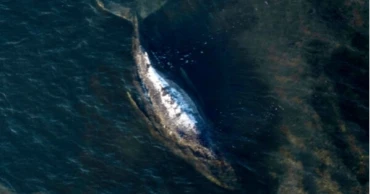
Germany’s stranded humpback whale likely survived only days after failed rescue attempt
A humpback whale that had captured public attention across Germany likely survived only about five days after a controversial rescue operation failed to return it safely to the Atlantic Ocean, officials said Friday.
The whale, widely nicknamed “Timmy” and “Hope” by German media, was found dead on May 14 near the small Danish island of Anholt in the Kattegat strait between Denmark and Sweden, which links the Baltic Sea to the North Sea.
Its discovery brought an end to months of intense debate and rescue efforts. The final attempt took place on May 2, when the animal was moved on a barge in hopes of guiding it back to deeper waters. Scientists, authorities, and animal welfare advocates were divided over whether continued intervention was humane or whether the sick and weakened whale should be left alone.
Tracking data from a transmitter attached to the whale’s dorsal fin suggests it died around May 6 or 7, according to Till Backhaus.
Officials said the whale had travelled about 215 kilometres over those days but was moving in the wrong direction, back toward the Baltic Sea instead of toward the Atlantic Ocean. After that, it likely drifted or the tracking signal was lost.
The whale was first spotted off the German coast on March 3, sparking widespread media attention, live updates, and public concern over its condition.
Experts are still unsure why the whale entered the Baltic Sea, a region unsuitable for its survival. Some believe it may have become disoriented while following fish or during migration.
An autopsy has not confirmed the exact cause of death, but officials said no serious injuries, foreign objects, or signs of violence were found. Authorities also confirmed the whale was female, correcting earlier assumptions that it was male.
Some of the remains will be processed into biodiesel in Denmark, while parts of the skeleton will be preserved in a Danish museum, according to reports.
1 month ago
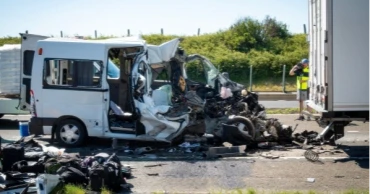
8 killed in two separate crashes on Hungarian highway
Eight people were killed in two separate road accidents that occurred within a short span of time on a highway in western Hungary early Friday, police said.
The first accident took place around 4:30 am near the city of Győr when a truck collided with a road construction vehicle and caught fire. One person was killed in the crash, which also caused major traffic disruption on the highway.
About 30 minutes later, a minibus carrying Moldovan registration plates crashed into a truck that had stopped on the highway following the earlier accident. Seven people died in the second collision, while two others suffered serious injuries, according to police.
Following the accidents, authorities shut down one lane of the M1 motorway heading toward Austria.
Hungarian Prime Minister Péter Magyar expressed sympathy to the families of those who lost their lives.
1 month ago